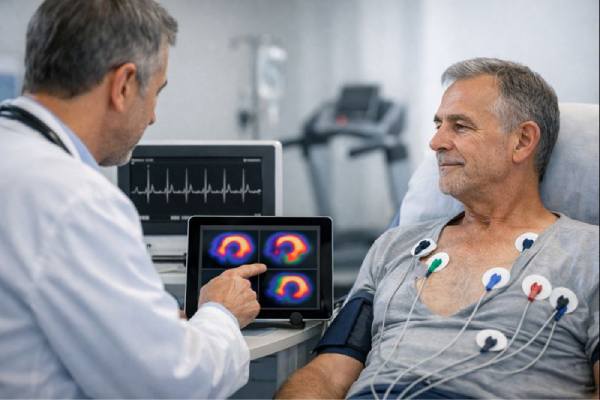
The coronary steal phenomenon describes a situation where blood flow is diverted away from a part of the heart muscle that already has limited supply. The result is a paradox: overall coronary blood flow may rise, yet the most vulnerable region receives less at the very moment it needs more. This is not one single disease. It is a pattern that can occur in several settings—during vasodilator stress tests, when collateral “detour” vessels feed an area beyond a blockage, when an abnormal connection (a fistula) siphons blood into a low-resistance chamber or vessel, or when a bypass graft’s flow reverses because of a blocked subclavian artery. Understanding the mechanism matters because the treatment is different in each case. In many people, addressing the underlying anatomy or trigger can reduce symptoms quickly and lower future risk.
Table of Contents
- What coronary steal phenomenon is
- Why it happens: common causes and triggers
- Risk factors and who gets it
- Symptoms, complications, and red flags
- How coronary steal is diagnosed
- Treatment options: what actually fixes the steal
- Management, prevention, and when to seek care
What coronary steal phenomenon is
Coronary steal is best understood as a mismatch in the heart’s “flow distribution.” The heart normally balances blood supply across regions by adjusting tiny resistance vessels (arterioles). When you exercise, get stressed, or receive a vasodilator medication, healthy arterioles open wider and blood flow can increase several-fold. The problem arises when one territory is already living at the edge—because a blockage, scarring, or an abnormal connection has forced its arterioles to stay maximally dilated just to maintain resting flow. If other regions suddenly dilate even more, blood preferentially travels down the path of least resistance, and the vulnerable region may lose perfusion pressure and flow.
A simple mental model is a highway system:
- A “normal” route can widen and accept more cars during rush hour.
- A route beyond a bottleneck is already fully open but still limited by what can get through.
- If you open new express lanes elsewhere, traffic shifts away from the bottlenecked region—making the underserved area relatively worse off.
Clinically, coronary steal is used to describe several related scenarios:
- Vasodilator-induced steal: during pharmacologic stress tests (often using adenosine-like agents), normal regions dilate markedly while diseased regions cannot increase flow, producing relative—or sometimes absolute—perfusion reduction.
- Collateral-flow steal: collateral vessels feed an area beyond a severe narrowing or chronic total occlusion. Under stress, the donor vessel’s microcirculation dilates, and pressure in the donor can fall, reducing collateral delivery.
- Shunt-related steal: a coronary artery fistula or arteriovenous malformation provides a low-resistance “runoff” that siphons blood away from the myocardium, especially during exertion.
- Coronary-subclavian steal: in people with a left internal mammary artery (LIMA) bypass graft, a significant proximal subclavian stenosis can reverse flow away from the coronary circulation to supply the arm.
Not every mention of “steal” implies true flow reversal. In many modern discussions, “steal” refers to a drop in stress flow to a territory, even if the net flow direction remains forward. The practical point is the same: symptoms and ischemia can occur because distribution becomes unfavorable, not because the heart suddenly needs less blood.
Why it happens: common causes and triggers
Coronary steal requires two ingredients: (1) an imbalance in resistance between vascular pathways and (2) a trigger that amplifies that imbalance. The most common triggers are exercise, emotional stress, and vasodilator medications used in testing or treatment.
Core mechanisms
- Fixed upstream limitation
- A tight coronary stenosis or chronic total occlusion limits how much pressure and flow can reach downstream myocardium.
- Downstream arterioles compensate by dilating at rest, leaving little “reserve” for stress.
- Preferential dilation elsewhere
- When a vasodilator is given or the body releases endogenous vasodilators during exercise, arterioles in healthier territories open widely.
- The relative resistance drops more in healthy regions than in the already-maxed diseased region.
- Pressure drop and redistribution
- Blood follows the lower-resistance pathway.
- The vulnerable region may experience reduced perfusion pressure, reduced collateral delivery, or increased competitive flow into a low-resistance shunt.
Common clinical scenarios
- Vasodilator stress testing
- Agents such as adenosine, dipyridamole, and regadenoson create hyperemia by dilating coronary microvessels. Regions supplied by severely diseased arteries may not increase flow and can appear as perfusion defects. In some patients, absolute perfusion can fall in the affected territory, which is a stricter form of steal.
- Collateral-dependent myocardium
- Collaterals are lifesaving “detours,” especially in chronic total occlusion. But collateral flow depends on pressure in the donor artery and resistance in both donor and recipient beds. When donor microvessels dilate during stress, donor pressure can drop, reducing the gradient that drives collateral flow.
- Coronary artery fistula
- A fistula creates a low-resistance outflow path, often draining into a cardiac chamber or pulmonary artery. During stress, flow preferentially runs through the fistula rather than perfusing the myocardium, causing exertional angina or ischemia.
- Coronary-subclavian steal
- After CABG using the LIMA, a significant subclavian stenosis proximal to the LIMA origin can pull blood backward through the graft to feed the arm, especially during arm exertion.
Triggers that reveal steal
- Sudden exertion without a warm-up
- Cold exposure (which raises vascular tone and myocardial demand)
- Large meals (which shift blood flow and can provoke symptoms in susceptible people)
- Stimulants (which raise heart rate and oxygen demand)
- Vasodilator medications or testing agents (in the wrong physiology, at the wrong time)
The key idea is that coronary steal is a “systems problem.” Treating it well means identifying the exact pathway that is stealing flow—and then removing the anatomic or physiologic reason that pathway is favored.
Risk factors and who gets it
Coronary steal is not evenly distributed across the population because it depends on specific heart and vessel anatomy. Risk factors therefore fall into two buckets: those that create vulnerable coronary physiology and those that create steal-capable connections (collaterals, grafts, or shunts).
People at higher risk for vasodilator- or collateral-related steal
- Known coronary artery disease with severe stenosis
- The more a region relies on resting arteriolar dilation to maintain baseline perfusion, the less reserve remains during stress.
- Chronic total occlusion with collateral dependence
- Collaterals can preserve resting function, but stress flow can be fragile.
- Prior heart attack or regional scar
- Scarred regions may have altered microvascular density and reserve, making redistribution effects more pronounced.
- Microvascular dysfunction alongside epicardial disease
- When small-vessel regulation is impaired, the “normal” territories may not distribute flow efficiently, worsening mismatch under stress.
Traditional cardiovascular risks feed into this group because they accelerate atherosclerosis and reduce endothelial function:
- High LDL cholesterol, high blood pressure, diabetes, smoking, chronic kidney disease, and inflammatory states
People at higher risk for graft-related steal
- History of CABG using the left internal mammary artery
- This is the classic setting for coronary-subclavian steal. The key additional risk is significant subclavian artery stenosis on the graft side.
- Unaddressed peripheral or cerebrovascular atherosclerosis
- Atherosclerosis is often multi-territory; if leg or carotid disease is present, subclavian disease becomes more likely.
Practical clues that raise suspicion in a post-CABG patient include:
- Angina during left arm exertion (carrying groceries, shoveling, repetitive overhead work)
- Arm fatigue or coolness on the graft side
- A meaningful blood pressure difference between arms
People at higher risk for shunt-related steal
- Congenital coronary anomalies or fistulas
- Some fistulas are incidental; others enlarge over time and become symptomatic.
- Acquired fistulas
- These can occur after cardiac procedures, trauma, or in association with certain cardiac tumors or inflammatory conditions.
Why risk matters clinically
Coronary steal often sits at the intersection of “symptoms that feel cardiac” and “tests that look confusing.” For example:
- A person with severe coronary disease may have a dramatic perfusion defect during vasodilator testing because normal territories steal the hyperemic flow.
- A post-CABG patient may have recurrent angina despite open coronary grafts, because the true culprit is proximal subclavian stenosis.
- A patient with a fistula may have angina with otherwise mild plaque, because a low-resistance runoff is siphoning perfusion.
If you already know you fit one of these anatomical groups, it is worth naming it explicitly during medical visits. Coronary steal is not a vague concept—it is a mechanistic explanation that should change what clinicians look for and how they treat.
Symptoms, complications, and red flags
Symptoms from coronary steal are fundamentally symptoms of myocardial ischemia: the heart muscle is not receiving enough oxygenated blood for its workload. What makes steal different is that symptoms may appear in patterns that don’t match a simple “one blockage, one threshold” story.
Common symptoms
- Chest pressure, tightness, or burning (often exertional, sometimes at rest)
- Shortness of breath during activity or emotional stress
- Unusual fatigue, reduced stamina, or needing more recovery time after exertion
- Discomfort in jaw, neck, shoulder, back, or upper abdomen
- Palpitations or a sense of “heart flutters,” especially during ischemic episodes
Patterns that hint at specific steal types
- Vasodilator-induced steal
- Symptoms may occur during pharmacologic stress testing (chest discomfort, breathlessness, flushing) and may be accompanied by ischemic ECG changes.
- Some people notice angina after taking potent vasodilators for other reasons, especially if severe coronary disease is present.
- Collateral-flow steal
- Symptoms can be disproportionate to what a single-vessel narrowing “should” cause because the heart is relying on collateral routes that become less effective under stress.
- Angina may be triggered by brisk activity without warm-up, when rapid demand outpaces a fragile collateral supply.
- Shunt-related steal
- Exertional angina and breathlessness may occur even when major coronary arteries are otherwise unobstructed.
- Some fistulas produce a continuous murmur, though many are silent.
- Coronary-subclavian steal
- Angina linked to arm exertion on the graft side is a classic clue.
- Arm fatigue, coolness, or a notable blood pressure difference between arms may accompany chest symptoms.
Complications
The complication risk depends on the underlying cause:
- Severe coronary atherosclerosis with steal physiology can be associated with higher ischemic burden, which may increase risk of heart attack or heart failure if untreated.
- Coronary-subclavian steal can cause recurrent myocardial ischemia and, rarely, acute coronary syndromes in vulnerable patients.
- Large fistulas can contribute to volume overload, arrhythmias, or heart failure over time, in addition to ischemia.
Red flags that should prompt urgent evaluation
Seek emergency care immediately for:
- New, severe, or persistent chest pressure lasting more than a few minutes
- Chest symptoms with sweating, nausea, fainting, or severe shortness of breath
- Sudden collapse or sustained palpitations with dizziness
- Neurologic symptoms (facial droop, weakness, trouble speaking)
Seek prompt medical attention (same day or urgent clinic) for:
- Increasing frequency or severity of exertional symptoms
- Angina appearing at lower and lower activity levels
- New arm exertion–related angina after CABG
- Symptoms that occur during or soon after a stress test, especially if they were not expected
A practical safety rule is simple: if you are unsure whether symptoms represent “your usual” or something new, treat them as new until proven otherwise. Coronary steal can be stable and manageable, but it can also be a sign that the heart’s reserve is running low.
How coronary steal is diagnosed
Diagnosing coronary steal means identifying ischemia and then proving the mechanism responsible for redistribution. Clinicians often start with common tools (ECG, troponin, echocardiography) and then choose more targeted testing based on the suspected scenario.
Step 1: Confirm ischemia or rule out an emergency
If symptoms are acute or concerning, evaluation typically includes:
- ECG looking for ischemic changes
- Cardiac troponin to assess myocardial injury
- Echocardiography to evaluate function and regional wall motion
These steps answer an urgent question: is there active injury that requires emergency management? Coronary steal itself is not a diagnosis you “wait out” if a heart attack is possible.
Step 2: Define coronary anatomy
Anatomic assessment is often necessary because steal physiology is shaped by structure:
- Coronary CT angiography can identify plaque and some anomalies in stable patients.
- Invasive coronary angiography is used when symptoms suggest high-risk coronary disease, when interventions may be needed, or when noninvasive testing is inconclusive.
In certain steal syndromes, anatomy outside the coronary arteries is also critical:
- In suspected coronary-subclavian steal, clinicians assess subclavian artery patency and compare arm blood pressures.
Step 3: Demonstrate stress-related perfusion mismatch
Many cases are identified through stress imaging:
- Nuclear perfusion imaging with pharmacologic vasodilators often relies on the concept of steal-like redistribution to reveal relative perfusion defects.
- Stress imaging can also clarify whether symptoms correlate with meaningful ischemic burden.
A key nuance: a “perfusion defect” does not automatically prove true flow reversal. It shows that one region did not increase flow as expected relative to others. In some settings, advanced approaches quantify absolute blood flow and flow reserve, helping distinguish relative redistribution from absolute reductions.
Step 4: Pin down the endotype when needed
When the diagnosis remains uncertain or symptoms persist despite therapy, more specialized testing may be used:
- Physiologic measurements of coronary pressure and flow to evaluate how stenoses behave during hyperemia
- Evaluation of collateral-dependent territories when a chronic total occlusion is present
- Focused imaging for coronary fistula (to identify the origin, course, and drainage site)
Questions that improve clarity during care
If you are undergoing evaluation, consider asking:
- Are we looking for severe epicardial disease, microvascular disease, or a steal mechanism—or all three?
- If a perfusion defect is present, does it match a single artery territory, a collateral pattern, or a shunt pattern?
- If I had CABG, have we evaluated subclavian artery stenosis on the graft side?
- If a fistula is present, how large is it, where does it drain, and is it likely to cause ischemia?
Good diagnosis ends with a specific mechanism and a plan. “You have ischemia” is not enough. “You have ischemia because collateral flow drops during stress” or “because LIMA flow reverses with subclavian stenosis” points directly to the next therapeutic step.
Treatment options: what actually fixes the steal
Because coronary steal is a mechanism rather than a single disease, effective treatment starts by matching therapy to the scenario. The overarching goals are to (1) improve blood delivery to the threatened myocardium, (2) reduce myocardial oxygen demand when supply is limited, and (3) correct the anatomic “low-resistance pathway” that is siphoning flow when feasible.
Vasodilator- or stenosis-related steal
When steal reflects severe coronary artery disease physiology, core treatments typically include:
- Aggressive risk reduction: lipid lowering, blood pressure control, diabetes management, and smoking cessation to stabilize plaque and improve endothelial function.
- Anti-anginal medications: chosen to reduce demand and improve supply-demand balance. Options may include beta-blockers, calcium channel blockers, nitrates, and ranolazine, individualized to heart rate, blood pressure, and symptom pattern.
- Revascularization when indicated: if ischemia is significant and anatomy is suitable, PCI or CABG may improve supply to the at-risk territory, reducing the conditions that allow steal to manifest.
Collateral-flow steal in chronic total occlusion
Management often focuses on symptom burden, ischemia extent, and viability:
- Optimized medical therapy can reduce episodes and improve exercise tolerance.
- CTO PCI in selected patients may improve symptoms and quality of life when performed in experienced centers, especially when there is viable myocardium and substantial ischemia.
- Exercise programming with longer warm-ups and gradual intensity increases can reduce abrupt demand spikes that outpace collateral supply.
Coronary-subclavian steal
The “fix” is typically restoring subclavian inflow:
- Subclavian artery stenting or surgical repair can correct the pressure gradient that drives reverse flow, improving myocardial perfusion through the LIMA graft.
- Meanwhile, clinicians often advise avoiding heavy exertion with the affected arm until the problem is addressed, especially if symptoms are reproducible with arm activity.
Shunt-related steal from coronary fistula
Treatment depends on fistula size, drainage, symptoms, and complications:
- Observation may be reasonable for small, asymptomatic fistulas with low risk features.
- Closure (transcatheter or surgical) is often considered when there is evidence of ischemia, arrhythmia, ventricular dilation, heart failure symptoms, endocarditis risk, or progressive enlargement.
- Symptom control with anti-anginal therapy may help while planning definitive repair.
What not to do: one-size-fits-all treatment
A common pitfall is treating symptoms without identifying the steal pathway. For example:
- Escalating nitrates in a post-CABG patient with coronary-subclavian steal may offer limited benefit if the underlying inflow problem persists.
- Dismissing symptoms after a “non-obstructive” angiogram can miss fistula-related steal or microvascular contributors.
The most effective treatment plans explicitly name the steal mechanism and target it directly, while also addressing the universal foundation: plaque stabilization, endothelial protection, and safe symptom management.
Management, prevention, and when to seek care
Long-term management focuses on preventing recurrence of ischemia, protecting heart function, and creating an “if-then” plan for symptoms. Many people feel more secure when they understand that coronary steal is predictable: it tends to appear under specific physiologic conditions, and those conditions can often be modified.
Daily management strategies that matter
- Make exertion more gradual
- Use longer warm-ups (5–10 minutes of easy movement) before increasing pace or incline.
- Avoid sudden bursts—carrying heavy loads upstairs, sprinting to catch transport, shoveling snow without a ramp-up.
- Control triggers that tighten vessels or raise demand
- Limit nicotine exposure completely.
- Use caution with stimulants and decongestants that can raise heart rate or vascular tone.
- Address sleep apnea, anemia, and thyroid disorders if present, because they increase cardiac workload.
- Use medications consistently
- Anti-anginal and preventive cardiovascular medications work best when taken reliably.
- Do not stop antiplatelet or anticoagulant therapy without clinician guidance, especially after stenting or if you have atrial fibrillation.
Prevention tailored to the underlying cause
- If the steal is driven by atherosclerosis, prevention centers on LDL lowering, blood pressure control, glucose optimization, and structured physical activity.
- If the steal is graft-related, prevention includes vascular surveillance when symptoms suggest subclavian disease, especially in people with known multi-territory atherosclerosis.
- If the steal is shunt-related, prevention includes periodic reassessment of fistula size and symptoms, since anatomy can change over time.
What to do during symptoms
A practical, clinician-approved episode plan often includes:
- Stop activity, sit upright, and note the start time.
- Use prescribed rescue medication exactly as directed.
- If symptoms are severe, new, or do not improve promptly, seek urgent evaluation.
The most important principle is safety: coronary steal can mimic other serious causes of chest pain, and you should never try to self-diagnose a new pattern at home.
When to seek urgent or emergency care
Seek emergency care immediately for:
- Chest pain or pressure that is new, severe, or persistent
- Chest symptoms with fainting, heavy sweating, severe breathlessness, or confusion
- Sustained palpitations with dizziness or collapse
- Signs of stroke
Seek prompt medical evaluation for:
- Angina that appears at lower activity levels than before
- New arm-exertion angina after CABG
- A noticeable difference in blood pressure between arms plus chest symptoms
- Worsening exercise tolerance over weeks to months
Coronary steal is treatable when it is taken seriously and defined precisely. The best outcomes come from a clear mechanism-based diagnosis, targeted correction of the steal pathway when possible, and steady prevention that strengthens coronary reserve over time.
References
- Coronary Steal: Mechanisms of a Misnomer 2021 (Review)
- Coronary steal: how many thieves are out there? 2023 (Review)
- Coronary Subclavian Steal Syndrome 2024 (Case Report)
- Pharmacologic Stress Testing 2023 (Clinical Review)
Disclaimer
This article is for educational purposes only and does not provide medical advice, diagnosis, or treatment. Chest pain, shortness of breath, and related symptoms can be caused by life-threatening conditions, including heart attack. If you have severe, new, or persistent chest discomfort; fainting; severe shortness of breath; or symptoms of stroke, seek emergency care immediately. Do not start, stop, or change heart or blood-thinning medications without guidance from a qualified clinician who can evaluate your individual risks and test results.
If you found this article helpful, please share it on Facebook, X (formerly Twitter), or any platform you prefer, and follow us on social media. Your support through sharing helps our team continue producing accurate, practical health content.