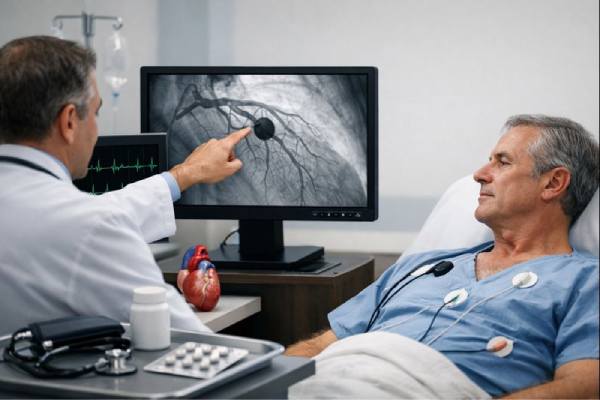
Coronary embolism happens when material traveling in the bloodstream suddenly blocks a coronary artery and starves part of the heart muscle of oxygen. The “embolus” is most often a blood clot, but it can also be infected tissue from endocarditis, a fragment from a heart valve, tumor material, or even air introduced during procedures. What makes coronary embolism challenging is that it looks like a typical heart attack at the bedside—chest pain, ECG changes, rising troponin—yet the underlying problem may not be cholesterol plaque. That difference matters, because preventing a second event often depends less on stents and more on finding and treating the source of the embolus (such as atrial fibrillation or valve infection). With rapid emergency care and a thoughtful long-term plan, many people recover well and meaningfully reduce recurrence risk.
Table of Contents
- What is coronary embolism?
- What causes coronary emboli?
- Risk factors and who should worry
- Symptoms and dangerous complications
- How coronary embolism is diagnosed
- Treatment and what to expect
- Long-term management, prevention, and when to seek care
What is coronary embolism?
Coronary embolism is an abrupt blockage of a coronary artery caused by material that formed elsewhere and then traveled (“embolized”) into the coronary circulation. The result is reduced or absent blood flow to part of the heart muscle, which can produce acute coronary syndrome—including ST-elevation myocardial infarction (STEMI) or non–ST-elevation myocardial infarction (NSTEMI).
The key concept is location versus origin:
- Location of damage: the heart muscle supplied by the blocked artery.
- Origin of the problem: a clot or debris from another site—commonly the left atrium (especially the left atrial appendage), a heart valve, the left ventricle, or (less often) the venous system through a heart shunt.
This differs from the most common type of heart attack, where a cholesterol plaque ruptures and a clot forms on that plaque. In coronary embolism, the artery may look mostly normal except for the obstructing material. Sometimes there is mild plaque present, but the clot burden and pattern can be “out of proportion” to the plaque seen.
There are several clinically important subtypes:
- Thromboembolic coronary occlusion: a blood clot, often related to atrial fibrillation, cardiomyopathy, prosthetic valves, or hypercoagulable states.
- Septic coronary embolism: infected material, typically from infective endocarditis, that can cause infarction and vessel inflammation.
- Paradoxical embolism: a venous clot crossing into arterial circulation through a shunt (often a patent foramen ovale) and lodging in a coronary artery.
- Iatrogenic embolism: material introduced during procedures (air, thrombus, or plaque debris), usually around catheterization or cardiac surgery.
Why it matters: immediate treatment focuses on restoring blood flow, but long-term safety depends on identifying the embolic source. Without that second step, the risk of recurrence—coronary or systemic (such as stroke)—can remain unacceptably high.
What causes coronary emboli?
Most coronary emboli arise from conditions that allow clot or debris to form inside the heart or great vessels. A helpful way to think about causes is to group them by the “factory” where the embolus forms.
Left atrium: atrial fibrillation and related states
Atrial fibrillation (AF) is one of the most common and clinically important sources. When the atria quiver instead of contracting effectively, blood can stagnate—especially in the left atrial appendage—forming clot that can dislodge. AF may be persistent, intermittent, or newly discovered during the heart attack evaluation. Other atrial contributors include severe mitral valve disease and markedly enlarged atria.
Heart valves: prosthetic valves and endocarditis
- Mechanical or bioprosthetic valves can develop thrombus if anticoagulation is subtherapeutic or if valve function is abnormal.
- Infective endocarditis can shower “vegetations” (infected clumps of platelets, fibrin, and microbes). These emboli can be larger and more destructive than typical clot. They may also be associated with fever, chills, or signs of infection, but not always.
Left ventricle: low flow, scar, or injury
Clots can form in the left ventricle when there is poor contractility or an akinetic segment:
- After a recent large heart attack
- In dilated cardiomyopathy
- In apical aneurysm or severe heart failure
These clots may be silent until they embolize.
Aorta and arteries: debris and atheroembolism
Less commonly, complex aortic plaque can shed debris. This may happen spontaneously or during instrumentation. Compared with classic plaque-rupture MI, the story can include recent procedures or a known “shaggy” aorta on imaging.
Other sources: tumors, hypercoagulability, and iatrogenic causes
- Cardiac tumors (such as atrial myxoma) can embolize fragments.
- Cancer-associated clotting and inherited or acquired hypercoagulable conditions can increase the tendency for intracardiac thrombus.
- Procedure-related embolism can occur during catheterization, ablation, valve interventions, or surgery, including rare but dramatic air embolism.
A practical clinical lesson: when the coronary event seems “too embolic”—large thrombus, minimal plaque, or multiple territories—clinicians should widen the search beyond the coronary artery itself and ask, “Where did this come from?”
Risk factors and who should worry
Coronary embolism is uncommon compared with plaque-driven heart attacks, but certain risk profiles increase the odds. Many people discover these risks only after an event, so recognizing them early can be protective.
High-yield risk factors
These are strongly associated with embolic events and deserve proactive management:
- Atrial fibrillation or atrial flutter, even if intermittent
- History of stroke or systemic embolism
- Mechanical heart valves or prior valve repair/replacement
- Infective endocarditis risk (intravenous drug use, prior endocarditis, indwelling catheters, prosthetic valves, certain congenital heart diseases)
- Severe heart failure or cardiomyopathy, especially with low ejection fraction
- Known left ventricular thrombus or apical aneurysm
- Recent large myocardial infarction with akinetic segments
- Known hypercoagulable condition (for example, antiphospholipid syndrome) or strong clotting history
- Active cancer, particularly with previous thrombosis
Situational and iatrogenic risks
Some risks are time-linked and should raise suspicion when symptoms occur:
- Recent cardiac catheterization or structural heart procedure
- Recent cardiothoracic surgery
- Recent interruption of anticoagulation, missed doses, or subtherapeutic INR (for warfarin users)
- Dehydration or prolonged immobility (more relevant for venous clots, but important if paradoxical embolism is possible)
Who should be especially alert to symptoms
Coronary embolism can affect younger patients without typical cholesterol risk factors. The following groups should take new chest pain particularly seriously:
- People with AF who are not anticoagulated or have inconsistent dosing
- Patients with prosthetic valves, especially with recent medication changes
- Anyone with fever plus chest pain (endocarditis is uncommon but high-stakes)
- People with known cardiomyopathy and prior clots
- Patients who recently stopped anticoagulation for a procedure
A subtle but important point: coronary embolism is not “protected against” by a low cholesterol level or good fitness. Those factors help overall heart health, but they do not address clot formation from AF, valves, infection, or ventricular stasis. Prevention hinges on diagnosing the embolic source and applying the right protective therapy—often anticoagulation and, in specific situations, treating infection or structural heart problems.
Symptoms and dangerous complications
Coronary embolism usually presents like a classic heart attack. The body does not care whether the artery is blocked by plaque-related clot or an embolus—the downstream heart muscle becomes ischemic either way.
Typical symptoms
Common symptoms include:
- Chest pressure, tightness, squeezing, or burning
- Pain radiating to arm, jaw, neck, or back
- Shortness of breath
- Sweating, nausea, or vomiting
- A sudden sense of severe illness or impending doom
Symptoms can start at rest or with exertion. Episodes are often abrupt and severe because embolic obstruction is sudden.
Clues that suggest an embolic mechanism
Patients and clinicians may notice details that don’t fit the standard plaque story:
- A heart attack in someone with few traditional coronary risk factors, especially with known AF or valve disease
- A history of missed anticoagulant doses or low INR
- Recent fever, chills, or unexplained weight loss (possible endocarditis)
- Symptoms or history of clots elsewhere
- A “shower” pattern: multiple symptoms suggesting multi-territory emboli
Complications to take seriously
Coronary embolism can be associated with meaningful short- and long-term risks:
- Ventricular arrhythmias: Severe ischemia can trigger ventricular tachycardia or ventricular fibrillation, leading to collapse or sudden cardiac arrest.
- Cardiogenic shock: Large territory infarction or poor baseline heart function can cause dangerously low blood pressure and organ hypoperfusion.
- Mechanical complications of MI: Rare but catastrophic outcomes (papillary muscle rupture, ventricular septal defect) are possible in any major infarct.
- Recurrent embolism: This is the distinguishing danger. If the source remains untreated, recurrence can involve the heart again or other organs.
- Stroke or systemic embolization: Embolic sources (especially AF and endocarditis) can send clots to the brain, kidneys, spleen, or limbs.
Because systemic embolization can occur alongside the heart attack, clinicians may ask about:
- New weakness, facial droop, speech difficulty
- Sudden severe headache or visual loss
- Abdominal pain out of proportion to exam (possible splenic or mesenteric emboli)
- Cold, painful limb with decreased pulses
If any neurologic or limb ischemia symptoms occur during a heart attack evaluation, it should change the urgency and breadth of the workup. The “job” becomes not only opening the coronary artery, but also preventing a second embolus from landing somewhere even more devastating.
How coronary embolism is diagnosed
Diagnosis is often a two-part investigation: confirming the coronary event and then identifying the embolic source. Many missed cases occur because care stops after the artery is reopened, even though the root cause still exists.
Step 1: Confirm acute coronary syndrome
Standard heart attack evaluation applies:
- ECG to detect ST elevation, ST depression, or dynamic ischemic changes
- Cardiac troponin to document myocardial injury
- Urgent coronary angiography when STEMI or high-risk ACS is suspected
Step 2: Look for embolic angiographic patterns
On angiography, embolism may be suggested by:
- A sudden “cutoff” in a vessel segment without a long plaque segment
- A globular filling defect or “saddle” thrombus appearance
- Thrombus in an artery that otherwise looks minimally diseased
- Multiple occlusions in different branches or territories
- An infarct pattern that does not match severe chronic atherosclerosis
In many cases, clinicians use intracoronary imaging to avoid mislabeling plaque rupture as embolism:
- OCT (optical coherence tomography) and IVUS (intravascular ultrasound) can identify plaque rupture, erosion, or calcified nodules. If plaque disruption is clearly present, the mechanism is more likely plaque-driven than embolic.
Thrombus aspiration, when performed, can sometimes provide additional evidence if the extracted material appears “red clot” without atherosclerotic debris, though pathology is not always available.
Step 3: Apply structured diagnostic criteria
Specialists may use criteria frameworks (such as Shibata-derived criteria) that combine angiographic features with clinical evidence of an embolic source. The strength of a criteria-based approach is consistency: it reduces both under-diagnosis and over-diagnosis.
Step 4: Identify the source
Finding the source guides long-term prevention. Common tools include:
- Transthoracic echocardiography (TTE) to evaluate ventricular function, wall motion, and visible thrombus.
- Transesophageal echocardiography (TEE) for better visualization of the left atrial appendage, valves, and endocarditis vegetations.
- Rhythm monitoring (telemetry, Holter, patch monitor) to detect paroxysmal AF.
- Blood cultures and inflammatory markers when endocarditis is suspected (especially with fever or a new murmur).
- Cardiac MRI in selected cases to characterize infarct pattern, detect thrombus, and clarify alternative diagnoses.
- Assessment for shunts (bubble study) if paradoxical embolism is plausible, particularly when there is also venous thrombosis or unexplained systemic emboli.
A useful question for patients to ask after stabilization is: “Did the team identify why this clot happened?” If the answer is uncertain, follow-up with cardiology (often with imaging and rhythm evaluation) is not optional—it is central to preventing recurrence.
Treatment and what to expect
Treatment has immediate goals (restore coronary flow and stabilize the patient) and longer-term goals (prevent another embolus). The best plans explicitly address both.
Emergency care: treat as a heart attack first
In the emergency phase, clinicians generally follow ACS protocols:
- Rapid ECG and troponin testing
- Aspirin and other antiplatelet therapy when appropriate
- Anticoagulation during intervention based on clinical scenario
- Urgent catheterization for STEMI or high-risk NSTEMI
During catheterization, the strategy may differ from plaque-rupture MI:
- Aspiration thrombectomy or catheter-based thrombus management may be considered in select cases with large thrombus burden.
- Balloon angioplasty may be used to restore flow.
- Stenting is not always required if there is no underlying plaque lesion; avoiding unnecessary stents can reduce long-term dual antiplatelet exposure when anticoagulation is also needed.
When thrombolysis is considered
In settings without rapid access to PCI, thrombolytics might be considered for STEMI, but embolic causes (especially suspected endocarditis) complicate the decision. Septic emboli and intracranial risks require careful clinician judgment.
Source-specific therapy
The “second half” of treatment depends on the embolic source:
- Atrial fibrillation-related embolism: Long-term anticoagulation is usually central. Options include DOACs for many patients, or warfarin in specific contexts (notably mechanical valves). Clinicians also address rate/rhythm control and evaluate whether procedures like ablation or left atrial appendage occlusion are appropriate in selected patients.
- Prosthetic valve thrombosis: Management may involve optimizing anticoagulation, investigating valve function, and sometimes urgent intervention depending on valve type and obstruction.
- Left ventricular thrombus: Anticoagulation is typically used for months, with follow-up imaging to confirm resolution.
- Infective endocarditis: Requires prolonged intravenous antibiotics and, in some cases, valve surgery. Antithrombotic decisions can be complex because bleeding risks can be higher.
- Hypercoagulable states or cancer-associated thrombosis: Treatment may include anticoagulation and addressing the underlying driver (for example, malignancy management).
Balancing antiplatelets and anticoagulants
Many patients with coronary embolism end up needing anticoagulation. If a stent is placed, antiplatelet therapy is also needed, at least for a period. Managing both safely is individualized and often involves:
- Using the shortest effective duration of combination therapy
- Choosing drug combinations that reduce bleeding risk
- Close follow-up for bruising, bleeding, anemia symptoms, and medication interactions
What to expect after discharge: most patients benefit from cardiac rehabilitation, structured medication review, and a clear plan for follow-up testing (repeat echo, rhythm monitoring, and evaluation of the embolic source). A good discharge plan answers three questions plainly: What caused it? What prevents another one? What symptoms mean “go to the ER”?
Long-term management, prevention, and when to seek care
Long-term success in coronary embolism is less about willpower and more about systems: reliable medication routines, monitoring, and prompt response to warning signs.
Medication adherence: make it hard to miss doses
If anticoagulation is prescribed, consistency is protective. Practical strategies include:
- Keeping the medication in a visible, daily-use location (while still safely stored)
- Phone reminders or a pill organizer
- A written backup plan for missed doses (your clinician can advise what is appropriate for your specific drug)
- For warfarin users, maintaining reliable INR monitoring and discussing diet and medication interactions
Do not stop anticoagulation without clinician guidance—even for dental work or minor procedures—because interruption can be a high-risk window for embolic events.
Follow-up checks that reduce recurrence risk
Depending on cause, follow-up commonly includes:
- Repeat echocardiography to confirm resolution of ventricular thrombus or reassess function
- Monitoring for recurrent AF or new arrhythmias
- Evaluation for valve dysfunction or recurrent infection if endocarditis was involved
- Assessment for systemic embolization complications when clinically suspected
- Review of bleeding risk and medication interactions at each visit
If the cause was uncertain, follow-up should be framed as an active investigation, not passive observation. That may mean TEE to evaluate the left atrial appendage or valves, longer rhythm monitoring, or targeted clotting evaluation based on history.
Lifestyle and general cardiovascular protection still matter
Even though the event is embolic, overall vascular health improves resilience and outcomes:
- Aim for a heart-healthy diet pattern (high in vegetables, legumes, whole grains, and unsalted nuts; limited ultra-processed foods)
- Build toward 150 minutes/week of moderate aerobic activity if cleared by your clinician
- Avoid smoking and manage blood pressure, diabetes, and lipids as advised
- Prioritize sleep and treat sleep apnea when present (sleep apnea can worsen arrhythmias such as AF)
When to seek urgent or emergency care
Call emergency services immediately for:
- Chest pain or pressure lasting more than a few minutes, especially with sweating, shortness of breath, nausea, or fainting
- Sudden weakness, facial droop, trouble speaking, or vision loss
- Collapse, sustained palpitations with dizziness, or severe shortness of breath
- A cold, painful limb with loss of pulse sensation
Seek same-day medical advice for:
- New or increasing episodes of chest discomfort
- Black stools, vomiting blood, heavy unexplained bruising, or prolonged nosebleeds while on blood thinners
- Fever with a history of valve disease or prior endocarditis, especially with new fatigue or shortness of breath
Coronary embolism is treatable, but it demands a complete story: opening the artery is the start; preventing the next embolus is the finish. Patients do best when they leave care with a named cause (or a plan to find it), a clear anticoagulation strategy when indicated, and a realistic map of warning signs that should never be ignored.
References
- Coronary artery embolism and acute coronary syndrome: A critical appraisal of existing data 2024 (Review)
- Coronary embolism resulting in myocardial infarction: diagnosis and treatment 2025 (Clinical Study)
- Atrial Fibrillation Related Coronary Embolism: Diagnosis in the Focus 2023 (Review)
- Acute myocardial infarction related to coronary artery embolism: A systematic cardiac and cerebral magnetic resonance imaging study 2022 (Prospective Study)
Disclaimer
This article is for educational purposes only and does not provide medical advice, diagnosis, or treatment. Coronary embolism can cause a heart attack and may be associated with life-threatening rhythm problems or stroke. If you have chest pain that is severe, new, persistent, or accompanied by shortness of breath, sweating, or fainting, seek emergency care immediately. If you take anticoagulants (“blood thinners”), do not change or stop them without guidance from a qualified clinician, because doing so can increase clot risk. Always discuss symptoms, medications, and your personal risk factors with your healthcare team.
If you found this article useful, please share it on Facebook, X (formerly Twitter), or any platform you prefer, and follow us on social media. Your support through sharing helps our team continue producing accurate, practical health content.