When the liver is under long-term strain, the heart often has to “work around” the consequences. Hepatocardiac syndrome is a practical umbrella term for heart problems that develop because of liver disease—most commonly advanced cirrhosis (long-term scarring of the liver). Many people feel fine at rest, yet their heart cannot step up when the body demands more—during infection, bleeding, surgery, or even a sudden fluid shift. This hidden gap in performance can turn a manageable liver problem into a dangerous spiral.
The encouraging part is that careful screening, smart medication choices, and early action during warning signs can reduce risk. In this guide, you’ll learn what hepatocardiac syndrome means, why it happens, who is most vulnerable, what symptoms to watch for, how doctors confirm it, and what treatment and daily management typically look like.
Table of Contents
- What hepatocardiac syndrome means
- Why liver disease stresses the heart
- Who is at higher risk
- Symptoms, red flags, and complications
- How clinicians diagnose it
- Treatment, monitoring, and prevention
What hepatocardiac syndrome means
Hepatocardiac syndrome describes heart dysfunction driven by liver disease, rather than by primary heart conditions like blocked coronary arteries or long-standing valve disease. In real-world practice, it usually points to the cardiovascular changes seen in advanced chronic liver disease—especially a pattern called cirrhotic cardiomyopathy, where the heart’s structure and performance subtly change over time.
A key idea is that the heart may look “okay” at rest. Blood pressure can even be low-normal, and the heart rate may run higher than usual. But under stress—fever, dehydration, blood loss, anesthesia, or a major procedure—the heart may fail to increase output enough to keep organs perfused. Clinicians often call this a problem of reduced cardiac reserve (the ability to boost performance when needed).
Hepatocardiac syndrome isn’t one single test result. It’s a clinical pattern that can include:
- Impaired relaxation of the heart muscle (diastolic dysfunction), which makes the heart sensitive to rapid fluid changes.
- Blunted contractile response to stress, meaning the heart cannot pump harder when demand rises.
- Electrical changes, such as prolonged QT interval on an ECG, which can contribute to rhythm problems.
- High-output physiology in some patients: the body’s blood vessels become widely dilated, so the heart pumps more at baseline—but this can be misleading and exhausting over time.
It is also closely intertwined with other liver-related circulation problems. For example, altered blood flow through the lungs can raise pressure in the pulmonary arteries (portopulmonary hypertension) and strain the right side of the heart. Even if a person never hears the term “hepatocardiac syndrome,” the practical question stays the same: Does liver disease make the heart more fragile during stress?
If you’re being evaluated for procedures such as TIPS (a shunt used for portal hypertension complications) or liver transplantation, identifying hepatocardiac syndrome early can change monitoring, anesthesia planning, and medication decisions in a way that improves safety.
Why liver disease stresses the heart
Liver disease can reshape the cardiovascular system through a chain reaction that starts with portal hypertension (high pressure in the vein system feeding the liver). Over time, the body adapts in ways that help in the short term but strain the heart in the long term.
Several mechanisms tend to work together:
- Widespread blood-vessel dilation. The body produces more vessel-relaxing signals, which lowers systemic resistance. The heart compensates by beating faster and pumping more blood, sometimes creating a “hyperdynamic” circulation that can mask early dysfunction.
- Fluid shifts and volume overload. Cirrhosis often leads to salt and water retention. Extra fluid increases the workload on the heart, but the circulation remains unstable—patients can swing from “too dry” to “too overloaded” quickly, especially during diuretic changes, vomiting/diarrhea, large-volume paracentesis, or bleeding.
- Inflammation and infections. Chronic low-grade inflammation is common in advanced liver disease. Infections (including spontaneous bacterial peritonitis) can trigger sudden widening of blood vessels and a steep rise in heart demand. If cardiac reserve is limited, blood pressure can crash and organs can suffer.
- Neurohormonal overdrive. The body responds to low effective blood volume by activating stress systems (sympathetic nervous system and renin-angiotensin-aldosterone signaling). This helps maintain circulation, but prolonged activation can stiffen heart muscle, worsen fluid retention, and increase arrhythmia risk.
- Changes within the heart muscle. Research suggests shifts in cell membrane function, signaling pathways, and responsiveness to adrenaline-like stimulation. In plain terms: the heart becomes less “responsive” when asked to accelerate or contract more strongly.
- Pulmonary vascular complications. In some patients, portal hypertension is linked to increased pulmonary artery pressures (portopulmonary hypertension). This strains the right ventricle and can cause exercise intolerance, fluid retention, and fainting episodes.
A practical way to think about it: the liver disease environment makes the circulatory system low-resistance and high-demand, while simultaneously making the heart less able to adapt. The mismatch often becomes visible during stress events—major infection, surgery, a sudden bleed, or even a new medication that lowers blood pressure.
This is why people with advanced liver disease may develop complications that look “out of proportion” to their prior heart history. The heart is not necessarily weak in the classic sense; it’s operating in a physiologically hostile setting.
Who is at higher risk
Not everyone with liver disease develops hepatocardiac syndrome. Risk rises when the liver condition is advanced, when circulation is already unstable, or when other medical factors reduce the heart’s margin for error.
Common risk factors include:
- Decompensated cirrhosis, especially with ascites, variceal bleeding, jaundice, or episodes of confusion due to liver failure.
- Higher severity scores used by clinicians (such as MELD or Child-Pugh), which often correlate with more profound circulation changes.
- Frequent infections or inflammation, including prior spontaneous bacterial peritonitis or repeated hospitalizations for sepsis-like episodes.
- Kidney dysfunction or a history of hepatorenal syndrome. The heart-kidney-liver relationship is tightly linked; reduced cardiac reserve can worsen kidney perfusion.
- Pulmonary vascular disease, particularly portopulmonary hypertension, which increases right-heart workload.
- Anemia or ongoing blood loss, which forces the heart to pump harder to deliver oxygen.
- Alcohol-related liver disease (especially if alcohol use also affected the heart) and metabolic dysfunction–associated fatty liver disease, which often travel with diabetes, obesity, and high blood pressure—each adding cardiovascular risk.
- Older age and existing cardiovascular disease risk factors (smoking history, diabetes, hypertension, chronic kidney disease).
Risk is also situational. Even a person with mild symptoms can become high-risk under certain triggers:
- Major fluid shifts (large-volume paracentesis without appropriate replacement, aggressive diuretic changes, severe diarrhea).
- Bleeding events (particularly gastrointestinal/variceal bleeding).
- Procedures that change circulation (TIPS, major abdominal surgery, liver transplant).
- Medications that lower blood pressure in someone already vasodilated from cirrhosis.
A helpful self-check: if you have liver disease and you notice you “crash” with minor illnesses—rapid weakness, dizziness, shortness of breath, swelling, or confusion after a stomach bug or a small infection—it may be a sign your circulatory reserve is limited.
For patients heading toward transplant evaluation, risk assessment is not just paperwork. It shapes decisions such as whether you need a stress echo, right-heart catheterization, rhythm monitoring, medication adjustments, or closer ICU-level monitoring after procedures.
Symptoms, red flags, and complications
Symptoms can be subtle because liver disease itself causes fatigue and reduced stamina. The goal is to spot patterns that suggest the heart is struggling, especially under stress.
Common symptoms that may reflect hepatocardiac syndrome include:
- Shortness of breath, especially when walking uphill, climbing stairs, or lying flat
- Reduced exercise tolerance (you can do less than you could a few months ago)
- Swelling in legs, ankles, or abdomen that worsens despite usual management
- Unusual rapid heartbeat or palpitations
- Chest discomfort (not always “classic” crushing chest pain)
- Lightheadedness or near-fainting, especially after standing up
- Poor sleep due to breathlessness or waking up gasping
Because the condition often reveals itself during stress, pay attention to what happens during infections, dehydration, or bleeding. A typical story is: “I was stable, then I got sick and suddenly my breathing, swelling, or blood pressure became a problem.”
Red flags that need urgent medical care include:
- New or worsening shortness of breath at rest
- Fainting, severe dizziness, or confusion
- Chest pain lasting more than a few minutes, especially with sweating or nausea
- A fast, irregular heartbeat with weakness or breathlessness
- Very low blood pressure symptoms (cold clammy skin, severe fatigue, minimal urine)
- Coughing up blood or signs of major gastrointestinal bleeding (black tarry stool, vomiting blood)
Complications clinicians worry about include:
- Acute heart failure during stress, such as sepsis, a major bleed, or surgery
- Arrhythmias, particularly atrial fibrillation, which can worsen fluid balance and kidney perfusion
- Cardiorenal decline, where reduced heart output contributes to worsening kidney function
- Right-heart failure in patients with portopulmonary hypertension, leading to fluid overload and exercise limitation
- Procedure-related decompensation, including after TIPS placement or during transplant surgery
One practical insight: symptoms may not track with “fluid amount” alone. For example, some people develop breathlessness not because they are more swollen, but because the heart cannot handle the same preload it managed last month. That’s why worsening shortness of breath in cirrhosis should never be assumed to be “just ascites.”
How clinicians diagnose it
Diagnosis is usually a stepwise process, because the findings can be mild and easily confused with symptoms of liver disease itself. Clinicians aim to answer two questions: Is there heart dysfunction? and Is it likely driven by the liver disease and its circulation changes?
Typical evaluation includes:
- History and exam
- Symptom pattern (especially stress-triggered shortness of breath, dizziness, swelling)
- Medication review (diuretics, beta-blockers, blood pressure–lowering agents)
- Signs of fluid overload (leg edema, lung crackles) and low perfusion (cool extremities, low urine output)
- Electrocardiogram (ECG)
- Looks for rhythm problems and electrical changes such as QT prolongation
- Blood tests
- Cardiac biomarkers may be used (for example, natriuretic peptides), but interpretation can be tricky because liver disease, kidney function, and volume status influence levels.
- Standard liver/kidney tests help assess severity and guide safe medication choices.
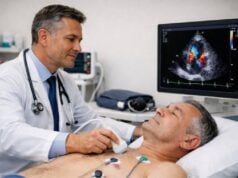
- Echocardiography (heart ultrasound)
- Assesses pumping function, heart chamber size, valve disease, and diastolic function.
- Modern echo often includes advanced measures (like strain imaging) to detect subtle dysfunction when the ejection fraction looks normal.
- Stress testing
- In selected patients, stress echo or cardiopulmonary exercise testing helps reveal limited cardiac reserve.
- The aim is not athletic performance; it’s to see whether the heart’s response matches physiologic demand.
- Screening for pulmonary vascular disease
- If symptoms or echo suggest elevated pulmonary pressures, clinicians may evaluate for portopulmonary hypertension.
- Confirmation typically requires right-heart catheterization when transplant or major procedures are being considered.
Because hepatocardiac syndrome is often a “diagnosis of context,” clinicians also work to exclude other causes that can mimic it:
- Coronary artery disease
- Valvular disease
- Primary cardiomyopathies
- Lung disease causing shortness of breath
- Severe anemia or thyroid disease
A helpful clinical principle is that “normal at rest” does not equal “safe under stress.” That’s why patients with advanced liver disease may undergo cardiac testing even if they have no known heart disease—especially before TIPS, major surgery, or transplant evaluation.
Treatment, monitoring, and prevention
Treatment focuses on three priorities: stabilize circulation, treat triggers early, and reduce heart strain while protecting kidney perfusion. The plan is highly individualized because blood pressure, fluid balance, and kidney function can change quickly in advanced liver disease.
1) Treat immediate triggers fast
Common triggers include infection, bleeding, dehydration, and medication changes. Early treatment may involve:
- Rapid infection workup and antibiotics when indicated
- Control of gastrointestinal bleeding and careful transfusion strategies
- Thoughtful fluid resuscitation (too little worsens perfusion; too much can provoke heart failure)
- Review of medications that may lower blood pressure excessively
2) Optimize fluid balance
This is often the “make-or-break” skill in hepatocardiac syndrome.
- Diuretics may help swelling and ascites but can cause kidney injury or low blood pressure if pushed too hard.
- After large-volume paracentesis, clinicians often plan volume support and monitoring to prevent circulatory collapse.
- Daily weight trends and symptom tracking (breathlessness, dizziness, urine output) can be more informative than swelling alone.
3) Address rhythm and cardiac function
Depending on findings, clinicians may:
- Manage atrial fibrillation or other arrhythmias with a plan tailored to liver function and bleeding risk.
- Consider heart-failure style therapies cautiously. Some standard heart medications are helpful in selected patients, but low blood pressure or kidney impairment can limit options.
- Use beta-blockers carefully: they can reduce portal pressure and bleeding risk in many cirrhosis patients, yet may worsen fatigue, low blood pressure, or kidney perfusion in others. Dosing and reassessment matter.
4) Screen and plan before procedures
For patients headed to TIPS or transplant:
- Pre-procedure echo (and sometimes stress testing) helps predict who may decompensate.
- If portopulmonary hypertension is present, targeted pulmonary arterial hypertension therapy and careful transplant planning may be needed.
5) Prevention and day-to-day management
You can lower risk by reducing sudden physiologic stress:
- Avoid dehydration (especially during vomiting/diarrhea); seek early care rather than “waiting it out.”
- Follow the agreed sodium/fluid plan if you have ascites.
- Avoid alcohol and address metabolic risks (diabetes, obesity) if applicable.
- Keep vaccinations up to date and treat infections promptly.
- Bring a current medication list to every visit—small changes can have big effects in cirrhosis.
When to seek care
If you have liver disease and develop new breathlessness, fainting, fast irregular heartbeat, chest pain, or a sudden drop in urine output, treat it as urgent—especially if it follows infection, bleeding, or a procedure.
References
- Cirrhotic cardiomyopathy: a systematic review and meta-analysis of prevalence across various diagnostic approaches – PMC 2025 (Systematic Review)
- Update on cirrhotic cardiomyopathy: from etiopathogenesis to treatment – PMC 2024 (Review)
- Portopulmonary Hypertension: An Updated Review – PMC 2023 (Review)
- Current concepts of Cirrhotic Cardiomyopathy – PMC 2021 (Review)
Disclaimer
This article is for educational purposes and does not replace medical advice, diagnosis, or treatment from a licensed clinician. Hepatocardiac syndrome can become urgent during infections, bleeding, dehydration, or procedures, and it may require prompt evaluation in an emergency setting. If you have liver disease and develop chest pain, fainting, severe shortness of breath, confusion, or signs of major bleeding, seek emergency care immediately.
If you found this article helpful, please share it on Facebook, X (formerly Twitter), or any platform you prefer, and follow us on social media. Your support through sharing helps our team continue producing practical, high-quality health content.