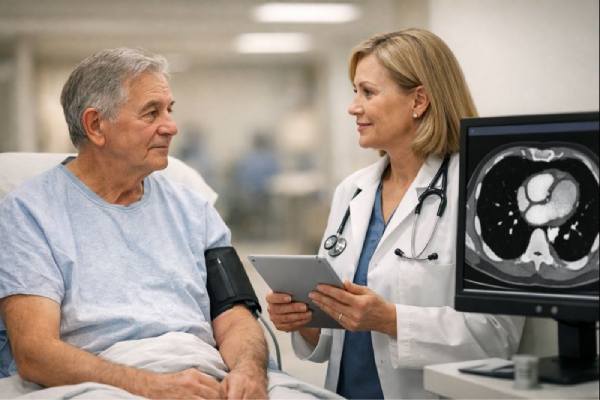
An intramural aortic hematoma is a dangerous type of “bruise” inside the wall of the aorta—the body’s main artery. Instead of blood flowing only through the center channel, blood collects within the aortic wall itself, weakening it from the inside out. This can start suddenly and feel like “something tore” in the chest or back, but it can also be quieter at first. Either way, it deserves urgent attention because it can progress to an aortic dissection (a tear in the inner lining) or even rupture. The good news is that fast diagnosis, careful blood pressure control, and the right procedure for the right person can dramatically reduce risk. This guide explains what it is, why it happens, how it’s found, and what treatment and recovery typically look like.
Table of Contents
- What is an intramural aortic hematoma?
- What causes it and who is at risk?
- Symptoms, red flags, and complications
- How doctors diagnose it fast
- Treatments that work and what to expect
- Recovery, follow-up, and when to seek help
What is an intramural aortic hematoma?
Intramural aortic hematoma (often shortened to IMH) is part of a group of emergencies called acute aortic syndromes—conditions where the aorta becomes suddenly unstable. In classic aortic dissection, blood enters through a tear in the inner lining and splits the wall into layers. In IMH, there may be no obvious inner tear at first. Instead, bleeding occurs within the aortic wall, usually from tiny vessels that nourish the wall (the vasa vasorum). That trapped blood forms a thickened “crescent” along the wall and can spread up or down the aorta.
Why a wall bleed is so risky
The aorta is built like a reinforced hose: layers of elastic tissue allow it to expand with each heartbeat. When blood accumulates inside those layers, three things can happen:
- The wall weakens and stiffens, raising the chance of a full tear.
- The inner lining can split later, turning IMH into a classic dissection.
- The outer layer can fail, leading to rupture (life-threatening bleeding).
A practical way clinicians think about IMH is by location:
- Type A: involves the ascending aorta (the segment coming out of the heart). This is generally more dangerous and more likely to need urgent surgery.
- Type B: involves the descending aorta (past the left subclavian artery). This is often treated first with intensive medical therapy unless complications arise.
IMH vs dissection vs penetrating ulcer
IMH can overlap with related aortic problems:
- A penetrating atherosclerotic ulcer is a crater-like lesion that breaks into the aortic wall and can trigger IMH.
- A small, hard-to-see intimal tear may exist even if imaging does not show a clear flap.
- Some cases evolve over hours to days, which is why repeat imaging is so important.
The key message: IMH is not a “wait and see at home” condition. It is a time-sensitive aortic injury that demands expert monitoring and a plan that can adapt as the wall changes.
What causes it and who is at risk?
IMH usually starts when the aortic wall becomes fragile enough that bleeding can occur inside it—or when a small ulcer or micro-tear allows blood to force its way into the wall. Most people who develop IMH have a background of long-term stress on the aorta, even if they felt well the day before.
Common causes and triggers
Most cases relate to one or more of these mechanisms:
- Uncontrolled high blood pressure: repeated high-pressure pulses strain the wall and its tiny nourishing vessels.
- Atherosclerosis (plaque disease): stiff, irregular segments are more likely to ulcerate or crack.
- Penetrating aortic ulcer: a plaque “breaks through” the inner layer and causes bleeding within the wall.
- Iatrogenic injury (less common): catheter procedures involving the aorta can occasionally irritate or injure the lining.
- Trauma: high-speed deceleration injuries can affect the aorta; IMH is less common than other traumatic injuries but can occur.
Sometimes people want one clear event—“Was it that workout?” Often the truth is more boring: the wall was already vulnerable, and a routine blood-pressure spike (pain, stress, heavy lifting, stimulant use) was simply the final push.
Who is at higher risk?
Risk rises with age and with conditions that damage the aortic wall. The most important risk factors include:
- Hypertension (especially long-standing or poorly controlled)
- Smoking (current or past)
- High cholesterol and diabetes
- Chronic kidney disease
- Known aortic aneurysm or enlarged aorta
- Connective tissue disorders (such as Marfan syndrome, Loeys–Dietz syndrome, or vascular Ehlers–Danlos)
- Family history of aortic dissection, aneurysm, or sudden unexplained death at a young age
- Bicuspid aortic valve (associated with aortic enlargement in some people)
A simple risk snapshot you can use
Clinicians often become more concerned when several of these cluster together:
- Age over ~60 plus hypertension
- Chest/back pain plus known aortic enlargement
- New severe pain plus a connective tissue disorder or strong family history
Even without classic risk factors, sudden severe chest or back pain should be treated as urgent. The goal is not self-diagnosis—it is getting to the right imaging quickly, because early treatment can prevent the most feared complications.
Symptoms, red flags, and complications
IMH often announces itself dramatically, but not always. Some people feel a sudden, intense pain and know something is wrong within seconds. Others have vague discomfort that escalates, or symptoms that mimic other emergencies like a heart attack, pulmonary embolism, or kidney stone.
Typical symptoms
The most common symptom is sudden pain that may be:
- Chest pain (often deep, pressure-like, or tearing)
- Upper back pain between the shoulder blades
- Pain that migrates as the hematoma extends along the aorta
- Abdominal or flank pain (more common in descending aorta involvement)
People may also experience:
- Shortness of breath
- Sweating, nausea, or feeling faint
- A sense of doom or severe anxiety (often pain-driven)
Red flags that deserve emergency care now
Call emergency services if any of the following occur, especially if abrupt:
- Severe chest, back, neck, jaw, or abdominal pain
- Fainting, collapse, or new confusion
- Weakness or numbness on one side of the body, trouble speaking, sudden vision changes
- New severe shortness of breath
- New cold, painful, weak limb (possible reduced blood flow)
Major complications clinicians watch for
IMH is dangerous because it can destabilize quickly. Key complications include:
- Progression to classic aortic dissection (development of an intimal flap)
- Aortic rupture (the most immediately life-threatening event)
- Organ ischemia (reduced blood flow to kidneys, intestines, spinal cord, or limbs)
- Stroke (especially with ascending aorta involvement)
- Pericardial tamponade (blood around the heart preventing it from filling)
- Persistent or recurrent pain despite treatment, suggesting ongoing wall injury
Why pain control matters beyond comfort
Severe pain triggers adrenaline surges, which raise heart rate and blood pressure—exactly what the injured aorta cannot tolerate. In hospital care, pain relief is not “optional”; it is part of stabilizing the aortic wall by lowering the force of each heartbeat.
A useful rule of thumb: symptoms alone cannot reliably distinguish IMH from other emergencies, but the pattern of abrupt, severe pain—especially with risk factors—should lower the threshold for immediate evaluation and advanced imaging.
How doctors diagnose it fast
Diagnosing IMH is a race against time—but also a careful process, because treatment choices depend heavily on where the hematoma is, how extensive it is, and whether complications are already developing.
First steps in the emergency setting
Clinicians typically do several things in parallel:
- Rapid vital sign control: blood pressure, heart rate, oxygen, pain level.
- Focused history: onset time, pain description, risk factors (hypertension, known aneurysm, connective tissue disorder).
- Physical exam: neurologic status, pulses in all limbs, signs of poor perfusion.
- Basic tests: ECG and bloodwork to evaluate for heart attack and other causes (these do not rule in or rule out IMH, but they help keep the full picture safe).
Imaging that confirms IMH
The diagnosis is made with imaging—most often:
- CT angiography (CTA) of the chest/abdomen/pelvis: fast, widely available, and highly informative. IMH often appears as crescent-shaped thickening of the wall and may show associated ulcers or subtle tears.
- Transesophageal echocardiography (TEE): an ultrasound probe in the esophagus that can visualize the aorta close to the heart. Useful when CTA is not possible or when rapid bedside information is needed.
- MRI: excellent detail and avoids radiation, but slower and less commonly used in the acute setting.
How clinicians classify severity
Several features guide urgency and treatment direction:
- Location: ascending (Type A) vs descending (Type B)
- Aortic diameter: a larger aorta is generally higher risk
- Hematoma thickness: thicker collections suggest more wall stress
- Ulcer-like projections: may indicate a focal entry point and higher progression risk
- Signs of complications: leak/rupture, organ ischemia, pericardial effusion, uncontrolled pain
Why repeat imaging is often planned
IMH can change quickly—improving with medical therapy or evolving into dissection. Many care teams plan repeat CTA within days (timing varies by risk) and then at scheduled intervals. This is not “extra testing for curiosity.” It is active surveillance of an unstable injury to a critical artery, used to decide whether medical management is working or whether an intervention has become safer and necessary.
If you or a loved one is being evaluated for IMH, the most important practical question to ask is: “Is this Type A or Type B, and what signs would make the plan change today?”
Treatments that work and what to expect
Treatment for IMH is highly structured, because the immediate goal is to reduce stress on the aortic wall and prevent progression. The plan depends most on Type A vs Type B, plus whether the case is “complicated” (showing rupture risk or impaired blood flow).
Immediate stabilization: lowering aortic wall stress
Most patients start with intensive medical therapy, often in an ICU:
- Heart rate control (commonly with beta blockers) to reduce the force of each beat.
- Blood pressure control (often IV medications at first) to lower wall tension.
- Strong pain control to reduce adrenaline-driven spikes.
- Careful monitoring of urine output, neurologic status, and limb perfusion.
A helpful way to understand this: clinicians are trying to reduce the aorta’s “impulse load”—how hard and how fast pressure hits the injured wall.
When surgery is favored: Type A IMH
If the hematoma involves the ascending aorta, teams often recommend urgent surgical repair, because the risks of rupture, tamponade, and stroke are higher. Surgery may involve replacing the affected section with a synthetic graft, and sometimes repairing or replacing the aortic valve or addressing nearby branches.
Even when early imaging looks stable, Type A IMH is typically treated as a surgical disease unless a specialized team judges that a short trial of medical therapy is safer in a specific scenario.
Type B IMH: medical first, intervene if complicated
For descending aorta IMH, many patients begin with medical therapy and close imaging follow-up. Intervention becomes more likely when there are complications such as:
- Persistent or recurrent severe pain despite therapy
- Uncontrolled hypertension despite medication
- Rapid enlargement of the aorta or hematoma
- Evidence of rupture or leak
- Organ ischemia (kidney, bowel, spinal cord, limbs)
The most common procedure for complicated Type B disease is TEVAR (thoracic endovascular aortic repair), where a stent-graft is placed inside the aorta via an artery in the groin to reinforce the wall and cover an ulcer or entry site.
What recovery can look like
Many people improve quickly once blood pressure and pain are controlled, but recovery is not “done” at discharge. Expect:
- New long-term blood pressure medicines (often more than one)
- A clear imaging schedule (early repeat scan, then spaced out)
- Activity restrictions early on (especially avoiding heavy lifting)
- A plan to treat risk factors (smoking cessation, cholesterol management)
Treatment is less about one dramatic moment and more about a coordinated arc: stabilize, image, reassess, and protect the aorta long term.
Recovery, follow-up, and when to seek help
Living well after an intramural aortic hematoma means treating it as a long-term vulnerability, even if you feel normal again. The aorta can remodel and heal, but it can also enlarge over time. The best outcomes come from a clear follow-up plan and steady control of the factors that stress the vessel.
Your first weeks at home
Most clinicians emphasize three priorities:
- Medication adherence: take blood pressure and heart-rate medicines exactly as prescribed. Missing doses can cause rebound spikes.
- Activity modifications: early on, avoid heavy lifting, straining, and high-intensity bursts. Gentle walking is often encouraged, with progression guided by your care team.
- Symptom awareness: learn which sensations are expected (mild fatigue, medication side effects) versus dangerous (new severe pain).
Practical tip: use a home blood pressure cuff and track readings once or twice daily at consistent times. Bring the log to follow-up visits so your team can fine-tune therapy.
Long-term prevention that truly matters
These changes are not “nice extras”—they are part of preventing recurrence and aortic enlargement:
- Keep blood pressure controlled every day, not just at appointments.
- Stop smoking completely; nicotine and smoke both damage vessels.
- Treat cholesterol if recommended; plaque disease can contribute to ulcers.
- Aim for steady aerobic activity once cleared (think: consistent, moderate effort rather than intense bursts).
- Discuss stimulant exposure with your clinician, including certain decongestants and non-prescribed stimulants.
- Family and genetics: if you have early disease, a strong family history, or features of a connective tissue disorder, ask whether genetic evaluation and family screening are appropriate.
Follow-up imaging: why it’s non-negotiable
IMH can resolve, stabilize with scar-like remodeling, or progress. Imaging is how clinicians distinguish these paths. Missing scheduled scans can mean missing silent enlargement until it becomes dangerous. Ask for your schedule in writing: which test, when, and what change would trigger earlier evaluation.
When to seek urgent care again
Do not try to “wait it out” if you develop:
- Sudden chest, back, or abdominal pain similar to the first episode
- Fainting, new weakness/numbness, trouble speaking, or new confusion
- New severe shortness of breath
- A cold, weak, painful limb
- Unexplained severe sweating, nausea, or a feeling of impending collapse
Recovery is real, but so is vigilance. The aim is a stable aorta for decades—not just getting through the first hospital stay.
References
- 2022 ACC/AHA Guideline for the Diagnosis and Management of Aortic Disease: A Report of the American Heart Association/American College of Cardiology Joint Committee on Clinical Practice Guidelines 2022 (Guideline)
- 2024 ESC Guidelines for the management of peripheral arterial and aortic diseases 2024 (Guideline)
- EACTS/STS Guidelines for Diagnosing and Treating Acute and Chronic Syndromes of the Aortic Organ 2024 (Guideline)
- Systematic review and meta-analysis of mid-term outcomes for uncomplicated type B intramural hematoma: a comparison of best medical therapy vs. thoracic endovascular aortic repair 2024 (Systematic Review)
Disclaimer
This article is for educational purposes only and does not replace personalized medical care. Intramural aortic hematoma can be life-threatening and requires urgent evaluation by qualified clinicians. If you have sudden severe chest, back, or abdominal pain; fainting; stroke-like symptoms; or trouble breathing, seek emergency care immediately. Treatment choices depend on imaging findings, your anatomy, and your overall health, so always follow the guidance of your medical team.
If you found this article helpful, please consider sharing it on Facebook, X (formerly Twitter), or any platform you prefer, and follow us on social media. Your support through sharing helps our team keep producing clear, reliable health content.