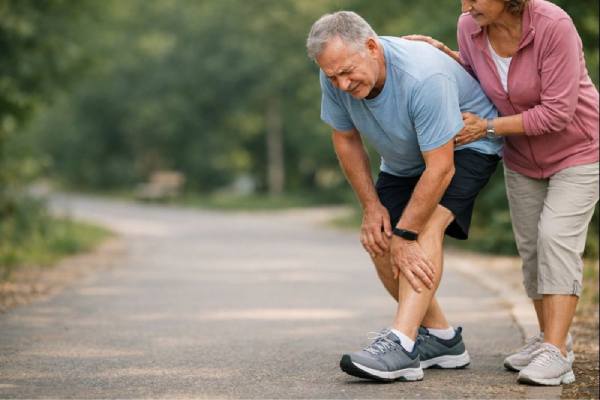
Intermittent claudication is a warning signal from the legs: walking brings on a tight, cramping, or aching pain—then rest makes it fade. Many people describe it as “my calves run out of fuel.” The usual reason is peripheral artery disease (PAD, narrowed leg arteries), which limits blood flow when your muscles demand more oxygen during activity. Symptoms can be mild at first, so it’s easy to blame aging, shoes, or “being out of shape.” But intermittent claudication matters because it can restrict daily life and often travels with higher heart and stroke risk. The good news is that the most effective first steps are practical: targeted walking programs, risk-factor control, and the right medications—often improving walking distance within weeks to months.
Table of Contents
- What it is and what it means
- What causes it and who is at risk
- Symptoms, red flags, and complications
- How doctors diagnose it
- Treatments that improve walking and safety
- Daily management, prevention, and when to seek care
What it is and what it means
Intermittent claudication is exercise-triggered leg discomfort caused by a mismatch between what your leg muscles need and what your arteries can deliver. When you walk uphill, speed up, or climb stairs, working muscles demand more oxygen-rich blood. If leg arteries are narrowed, blood flow can’t rise enough, and the muscle “complains” with pain, heaviness, cramping, or fatigue.
A classic pattern helps separate claudication from other causes of leg pain:
- Predictable trigger: discomfort starts after a similar walking distance or intensity.
- Rest relief: it improves within minutes of standing still (often within 2–10 minutes).
- Repeatability: symptoms return when you resume walking at the same pace.
- Location clues: calf pain often points to blockage above the knee; buttock or thigh symptoms can suggest more upstream narrowing; foot discomfort can reflect more distal disease.
Intermittent claudication is most commonly a symptom of chronic symptomatic lower-extremity peripheral artery disease, usually due to atherosclerosis (plaque buildup). Importantly, claudication is not only a “leg problem.” PAD frequently coexists with coronary and carotid artery disease, meaning the arteries supplying the heart and brain may also be affected. That’s why clinicians treat PAD with two goals: (1) improve walking and quality of life and (2) reduce the risk of heart attack, stroke, and limb complications.
The condition can look different across people. Some feel pain; others report “leg tiredness” or slowing down without obvious cramping. People with diabetes or nerve problems may have blunted pain signals and notice reduced walking speed instead. Cold feet, slow-growing toenails, or diminished leg hair are sometimes present, but many people have normal-looking legs.
A helpful way to think about it: claudication is an “activity-limited circulation problem.” You may be comfortable at rest because baseline blood flow is enough—until exercise raises the bar.
What causes it and who is at risk
The most common cause of intermittent claudication is atherosclerotic narrowing of the arteries that feed the legs. Plaque forms inside artery walls over years. At rest, blood squeezes through well enough; during walking, that narrowing becomes a bottleneck. In addition to fixed narrowing, arteries may not widen normally during exercise, further limiting flow.
Key risk factors cluster into a few major buckets:
- Tobacco exposure: current or prior smoking is one of the strongest links to PAD progression and worse symptoms.
- Diabetes: accelerates atherosclerosis and is associated with more diffuse, distal disease.
- High blood pressure: damages artery walls and speeds plaque buildup.
- High LDL cholesterol: directly contributes to plaque formation.
- Age: risk rises with age, especially after midlife.
- Kidney disease: associated with more aggressive vascular disease and higher complication risk.
- Family history and genetics: early cardiovascular disease in close relatives increases suspicion.
- Sedentary lifestyle and obesity: worsen metabolic risk and reduce conditioning, which can amplify symptom impact.
Claudication can also be caused by less common issues, which matter because they change treatment:
- Spinal stenosis (neurogenic claudication): leg pain or weakness triggered by standing/walking but often relieved by sitting or bending forward; may include back pain or tingling.
- Muscle or tendon overuse injuries: pain may persist after stopping, be tender to touch, or vary with specific movements.
- Chronic compartment syndrome: tightness and pain with exertion in athletes; relief may be slower and associated with swelling.
- Arterial entrapment or cystic adventitial disease: uncommon structural causes, often in younger, otherwise healthy people.
- Blood vessel inflammation or clotting disorders: rare, but considered when symptoms appear suddenly or at unusually young ages.
In real life, risk factors often stack. A person with diabetes, hypertension, and a long smoking history may develop symptoms sooner and have faster progression than someone with only one risk factor. Another nuance: anemia, heart failure, and lung disease can worsen exertional leg symptoms by reducing overall oxygen delivery, even if the leg arteries are only moderately narrowed.
If you recognize multiple risk factors in yourself, it’s worth treating claudication as a prompt to check the whole cardiovascular picture—not just the legs.
Symptoms, red flags, and complications
Intermittent claudication usually feels like a deep, muscular discomfort rather than a sharp surface pain. People describe:
- Cramping, aching, tightness, heaviness, or fatigue in the calf, thigh, buttock, or sometimes the foot.
- A predictable “walking limit,” such as symptoms starting after a few blocks or one flight of stairs.
- Quick improvement with rest, then recurrence with activity.
Symptoms can be subtle. Some people don’t label it “pain”—they just slow down, stop to “look in a shop window,” or avoid hills. A useful self-check: if your symptoms reliably appear with walking and reliably ease with rest, claudication should be on the list.
Claudication can affect more than comfort. Over time it can lead to:
- Reduced mobility and conditioning, which can snowball into worse endurance.
- Loss of independence with errands, work, or travel.
- Lower activity levels, which can worsen blood pressure, glucose control, and cholesterol.
Potential limb-related complications are less common than people fear, but they’re important to recognize:
- Progression to chronic limb-threatening ischemia: persistent rest pain, non-healing sores, or gangrene from severely reduced blood flow.
- Poor wound healing: even small blisters can become serious if circulation is limited.
Red flags that should prompt urgent medical evaluation include:
- Pain in the foot or toes at rest, especially at night, that improves when you dangle the leg off the bed.
- New sores, ulcers, blackened skin, or wounds that aren’t healing over 1–2 weeks.
- Sudden coldness, numbness, severe pain, or color change (pale or blue) in one leg or foot—this can suggest acute blockage.
- Rapidly worsening walking distance over days to weeks.
- Fever, spreading redness, or drainage from a foot wound (possible infection).
It’s also wise to get prompt care if you have claudication plus chest pressure, shortness of breath with minimal exertion, or neurologic symptoms like sudden weakness or speech difficulty, since PAD often coexists with heart and brain artery disease.
Claudication is not “just sore muscles.” It’s a symptom that deserves both symptom-focused care and long-term risk reduction.
How doctors diagnose it
Diagnosis usually begins with a careful story—because the pattern of symptoms is highly informative. A clinician will ask where the discomfort occurs, what triggers it, how quickly rest relieves it, and whether it’s stable or changing. They’ll also review cardiovascular risks (smoking, diabetes, blood pressure, cholesterol), medications, and any history of heart or stroke problems.
A focused exam follows, often including:
- Pulse check at the groin, behind the knee, ankle, and foot.
- Skin and nail inspection for color changes, temperature differences, hair loss, or slow healing.
- Auscultation (listening) for arterial “bruits” that can suggest narrowing.
- Foot assessment for pressure points, calluses, or hidden wounds—especially in diabetes.
The cornerstone test is the ankle-brachial index (ABI): blood pressure at the ankle compared with the arm. A lower ankle pressure suggests reduced flow to the leg. ABI is quick, noninvasive, and often available in clinics. If symptoms are typical but resting ABI is normal, clinicians may do an exercise ABI (measuring after treadmill walking) because some people only show changes under stress.
If ABI is hard to interpret—common when arteries are stiff from long-standing diabetes or kidney disease—other tests may be used:
- Toe-brachial index (TBI): toe pressures can remain reliable when ankle arteries are incompressible.
- Duplex ultrasound: shows blood flow and can locate blockages.
- CT angiography or MR angiography: detailed maps of the arteries, often used when planning an intervention.
- Catheter angiography: typically reserved for when a procedure is likely, as it’s invasive but highly detailed.
Just as important is ruling out look-alikes. If symptoms suggest spinal stenosis, a clinician may look for back pain, posture-related relief, or neurologic findings. Joint disease, nerve pain, and muscle injuries can also mimic claudication, and sometimes a person has more than one problem.
Finally, because PAD is a systemic condition, clinicians often evaluate overall cardiovascular risk—blood pressure, cholesterol, diabetes control, kidney function—and tailor prevention strategies alongside symptom care.
Treatments that improve walking and safety
Treatment works best when it targets both walking ability and vascular risk. Many people improve substantially without procedures, especially when they commit to the right exercise approach and risk-factor control.
1) Supervised or structured walking therapy (first-line for most people)
A well-designed walking program is one of the most effective symptom treatments. The typical structure is:
- Walk until you reach moderate discomfort, then rest until it eases.
- Repeat this cycle for 30–45 minutes per session, 3 times per week, for at least 12 weeks.
- Progress gradually by increasing total walking time and reducing rest breaks.
Supervised programs (often called supervised exercise therapy) add coaching, safety monitoring, and progression planning—helpful for motivation and results. If supervised programs aren’t available, a structured home plan can still work when it’s specific, tracked, and progressed.
2) Medications that reduce risk (often long-term)
Even when the main complaint is leg pain, medication choices usually focus on preventing heart attack and stroke:
- Cholesterol-lowering therapy (statins): reduces cardiovascular risk and can stabilize plaque.
- Blood pressure control: protects arteries and the heart.
- Diabetes optimization: lowers progression risk and helps wound healing.
- Antithrombotic therapy: many patients benefit from an antiplatelet medication; in selected higher-risk patients, a dual-pathway approach may be considered by clinicians.
3) Medications that improve walking symptoms
In some patients, a medication specifically aimed at walking performance (such as cilostazol) can increase walking distance. It isn’t appropriate for everyone, and clinicians consider heart history, side effects, and interactions.
4) Revascularization procedures (when symptoms remain limiting)
Procedures are usually considered when:
- Symptoms meaningfully restrict daily life despite a solid trial of exercise and medical therapy, or
- There is severe disease threatening the limb (a different urgency level than typical claudication).
Options include:
- Endovascular therapy: balloon angioplasty, stents, or other catheter-based approaches.
- Surgical bypass: creates a new route for blood flow around a blockage, often used for complex disease patterns.
A practical expectation: procedures can improve walking and quality of life, but they don’t “cure” atherosclerosis. Long-term success depends heavily on smoking cessation, exercise continuation, and risk-factor control.
5) Foot care and protection
Especially for diabetes: daily foot checks, properly fitted shoes, and early attention to blisters or cuts reduce the risk of small problems becoming major.
Daily management, prevention, and when to seek care
Living well with intermittent claudication is less about “pushing through pain” and more about building a repeatable system that improves circulation, confidence, and long-term safety.
Daily and weekly habits that make the biggest difference
- Follow a walking plan you can repeat. Aim for structured walking on most days, even if some sessions are shorter. Many people do best with planned routes (flat and safe), a stopwatch, and simple notes: start time, discomfort level, total minutes.
- Quit tobacco completely. If you smoke, stopping is the single most powerful step for slowing PAD progression and improving outcomes. Combine counseling with pharmacologic aids when needed.
- Take prescribed prevention medications consistently. These are often “silent helpers”—you may not feel a difference day-to-day, but they reduce the risk of major events over years.
- Strength and balance work 2 days per week. Adding light resistance training and balance drills can improve overall mobility and reduce fall risk.
- Choose heart-healthy eating patterns. Emphasize vegetables, legumes, fruit, whole grains, fish, and unsalted nuts; reduce ultra-processed foods and trans fats; keep sodium modest if you have hypertension.
- Protect your feet. Check daily for cuts, blisters, redness, or hot spots; moisturize dry skin (not between toes); wear well-fitted shoes; avoid walking barefoot.
How to gauge progress (and keep motivation realistic)
Improvement is often measured in function, not perfection. Common wins include:
- Longer distance before symptoms start.
- Faster recovery after stopping.
- More total walking time with fewer breaks.
- Better confidence on hills, stairs, and errands.
Many people notice changes within 4–8 weeks of consistent walking therapy, with further gains over 3–6 months. Progress is rarely linear; illness, weather, or busy weeks can set you back temporarily.
When to contact a clinician sooner rather than later
- Your walking distance is shrinking quickly.
- You develop rest pain, especially at night.
- You see a new sore, ulcer, or color change on toes or feet.
- You have sudden severe leg pain, coldness, numbness, or weakness in one limb.
- You’re considering a procedure and want a clear, shared decision about benefits, durability, and follow-up.
Long-term outlook
Many people live for years with stable claudication, especially when they stop smoking and manage cholesterol, blood pressure, and diabetes. The major long-term goal is reducing cardiovascular risk while preserving mobility. Think of claudication as a strong reason to take prevention seriously—and a condition where consistent, practical habits can deliver real, measurable improvement.
References
- 2024 ACC/AHA/AACVPR/APMA/ABC/SCAI/SVM/SVN/SVS/SIR/VESS Guideline for the Management of Lower Extremity Peripheral Artery Disease: A Report of the American College of Cardiology/American Heart Association Joint Committee on Clinical Practice Guidelines – PubMed 2024 (Guideline)
- 2024 ESC Guidelines for the management of peripheral arterial and aortic diseases 2024 (Guideline)
- Editor’s Choice — European Society for Vascular Surgery (ESVS) 2024 Clinical Practice Guidelines on the Management of Asymptomatic Lower Limb Peripheral Arterial Disease and Intermittent Claudication – PubMed 2024 (Guideline)
- Society for Vascular Surgery Clinical Practice Guideline on the management of intermittent claudication: Focused update – PubMed 2025 (Guideline)
Disclaimer
This article is for educational purposes only and does not replace personalized medical advice, diagnosis, or treatment. Intermittent claudication can signal peripheral artery disease and may be associated with serious cardiovascular risk. If you have new or worsening leg pain with walking, rest pain in the foot, non-healing wounds, or sudden coldness or numbness in a limb, seek medical care promptly. Always discuss symptoms, medications, exercise plans, and procedure decisions with a licensed clinician who can evaluate your individual risks and goals.
If you found this helpful, please share it on Facebook, X (formerly Twitter), or any platform you prefer—and follow us on social media. Your shares help support our team and keep quality health content coming.