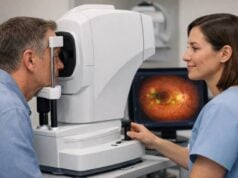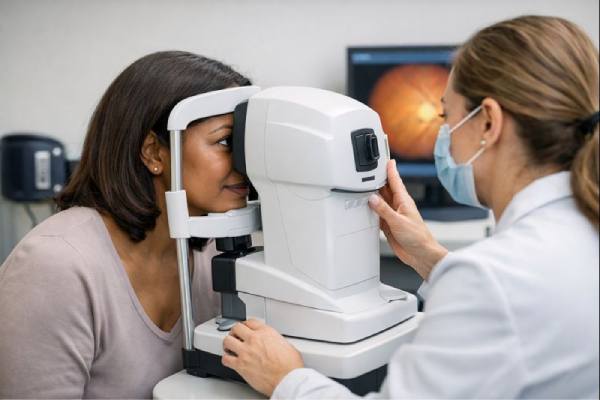
High blood pressure is often called a “silent” condition because it can damage blood vessels for years before you feel anything unusual. The eyes are one of the few places in the body where those vessels can be viewed directly, which makes vision changes an important clue—not just for eye health, but for overall vascular risk. Hypertension can affect the retina, the optic nerve, and the delicate circulation that nourishes the back of the eye. Sometimes the effects are subtle and discovered only during a routine exam. Other times, blood pressure spikes can cause sudden blurring, dark spots, or even painless vision loss that needs urgent care.
The good news is that many hypertension-related eye problems are preventable. Consistent blood pressure control, early detection, and timely treatment can protect vision and reduce the likelihood of complications elsewhere in the body.
Key Takeaways
- Keeping blood pressure in a healthy range lowers the risk of retinal bleeding, vascular blockages, and optic nerve damage over time.
- Hypertension can cause silent retinal changes long before you notice vision symptoms, which is why eye exams matter even when you feel fine.
- Sudden vision loss, new flashing lights, or a painful red eye with blur can signal an emergency and should not be watched at home.
- If you already have diabetes, kidney disease, or high cholesterol, blood pressure control becomes even more important for protecting the retina.
- Bring your recent blood pressure readings to eye appointments so your care team can connect symptoms and exam findings to real numbers.
Table of Contents
- How hypertension changes eye blood vessels
- Hypertensive retinopathy signs and symptoms
- Blood pressure spikes and sudden vision changes
- Retinal vascular occlusions and eye stroke warning
- Hypertension and other eye diseases
- Eye exams and tests that matter
- Treatment and prevention that protects vision
How hypertension changes eye blood vessels
Your eyes depend on a dense network of tiny arteries, veins, and capillaries. These vessels deliver oxygen and nutrients to the retina (the light-sensing tissue), the choroid (a vascular layer that supports the retina), and the optic nerve (the “cable” that carries visual signals to the brain). High blood pressure strains this system in two main ways: it increases mechanical stress on vessel walls and it disrupts how vessels regulate blood flow.
Over time, chronic hypertension encourages the walls of small arteries to thicken and stiffen. In the retina, this can narrow the vessel channel, reduce flexibility, and change how arteries and veins interact where they cross. Reduced flexibility matters because the eye’s circulation needs to adjust quickly to normal daily changes—standing up, exercising, sleeping, and even shifting from bright light to dim conditions.
Hypertension can also damage the endothelium, the thin inner lining of blood vessels. When the endothelium is less healthy, vessels may constrict more than they should, leak fluid more easily, and become more prone to clotting and blockage. In the retina, leakage can lead to swelling, small hemorrhages, or deposits of fatty material. In the optic nerve head, impaired circulation can contribute to swelling or ischemic damage.
One reason eye findings are clinically meaningful is that retinal vessels resemble small vessels in the brain and kidneys. When an eye exam shows certain vascular changes, it can suggest a broader pattern of small-vessel disease. That does not mean a diagnosis based only on the eye, but it does mean the eye can act like a window into vascular health.
Hypertension-related eye changes also vary by tempo:
- Slow, cumulative damage: vessel narrowing, thickening, and subtle retinal changes that may not cause symptoms at first.
- Acute damage from severe elevation: sudden leakage, swelling, or circulation failure that can cause noticeable vision changes quickly.
Another important nuance is that symptoms do not always match severity. Some people have significant retinal signs without obvious vision problems. Others notice blur early because swelling affects the central retina, where sharp vision lives.
The practical takeaway is simple: hypertension affects vision by altering blood flow, vessel integrity, and tissue health. Protecting the eye is not about a single trick—it is about steady blood pressure control and timely evaluation when symptoms change.
Hypertensive retinopathy signs and symptoms
Hypertensive retinopathy is the term for retinal changes caused by high blood pressure. It is often discovered during a dilated eye exam because early stages may not cause noticeable symptoms. As changes become more advanced, the risk of vision effects rises—especially if the macula (the center of the retina) becomes swollen or if blood flow is impaired.
What clinicians may see on exam
Retinopathy signs often reflect a progression from vessel constriction to vessel wall changes to leakage and ischemia. Common findings include:
- Generalized arteriolar narrowing: arteries look thinner than expected for the size of accompanying veins.
- Arteriovenous crossing changes: stiffened arteries can compress veins where they cross, suggesting chronic vascular stress.
- Retinal hemorrhages: small bleeding spots that indicate vessel fragility or rupture.
- Cotton-wool spots: tiny areas of nerve fiber layer ischemia that look like soft white patches.
- Hard exudates: yellowish deposits from leaking fluid and lipids, sometimes forming patterns near the macula.
- Optic disc swelling: a more serious sign that can occur with severe blood pressure elevation.
These findings do not appear in isolation from the rest of your health. They are more likely and often more severe when hypertension is long-standing or poorly controlled, or when other risk factors—high cholesterol, diabetes, smoking, kidney disease—are also present.
Symptoms you might notice
Many people with mild retinopathy notice nothing. When symptoms occur, they often include:
- Blurred vision that is new or increasing
- Fluctuating clarity, especially when blood pressure is poorly controlled
- Difficulty with contrast (for example, seeing in low light)
- Distortion or a smudged spot in the center of vision if the macula is affected
- New floaters in some cases, particularly if bleeding is more significant
A helpful rule of thumb is that gradual blur tends to reflect slow structural or vascular changes, while sudden blur deserves faster evaluation because it can signal swelling, bleeding, or a vascular blockage.
Why grading matters
Clinicians sometimes describe retinopathy severity in stages. While the details are medical, the point is patient-friendly: more advanced signs suggest higher risk to vision and may correlate with higher systemic vascular risk. If your clinician mentions “hemorrhages,” “cotton-wool spots,” or “disc swelling,” ask what that implies about urgency and follow-up. It is reasonable to request a clear plan: how soon to recheck the eyes, what blood pressure targets are being pursued, and whether coordination with your primary care clinician or cardiology is needed.
Hypertensive retinopathy is often a warning that the eye has been under pressure for a while. The earlier it is found, the more likely it is that stabilizing blood pressure will prevent progression and protect vision.
Blood pressure spikes and sudden vision changes
Not all hypertension-related eye issues develop slowly. A rapid or extreme rise in blood pressure can overwhelm the eye’s ability to autoregulate blood flow. When that happens, the retina and choroid can leak fluid, the cornea can become slightly hazy, and the optic nerve can show swelling. These situations are less common than gradual retinopathy, but they are important because they can be vision-threatening and may signal a broader medical emergency.
What a severe blood pressure elevation can do to vision
During a spike, you may experience:
- Sudden blurring in one or both eyes
- Hazy vision, as if looking through fog
- New central distortion, especially if swelling involves the macula
- Headache or pressure sensations around the eyes
- Light sensitivity in some cases
It is easy to mislabel these symptoms as “eye strain” or “migraine,” especially if they come and go. The key differentiator is that blood pressure-driven changes often coincide with feeling unwell overall—headache, chest tightness, shortness of breath, confusion, or nausea—though symptoms can also be subtle.
Hypertensive choroidopathy and optic nerve involvement
The choroid is a highly vascular layer that supports the outer retina. In severe hypertension, choroidal circulation can be disrupted, leading to leakage under the retina and sometimes serous retinal detachments. This tends to be more dramatic and is often seen in situations like pregnancy-related hypertension, kidney disease, or secondary causes of severe hypertension.
The optic nerve can also be affected when blood pressure is dangerously high. Optic disc swelling is a serious sign because it suggests significant vascular stress and tissue compromise. Even when vision seems only mildly affected, optic nerve findings may indicate the need for urgent medical evaluation.
Why rapid changes should not be self-managed
If you have sudden vision changes and you suspect your blood pressure may be very high, the safest approach is to treat it as urgent. Adjusting medications on your own can be risky, and waiting to see if symptoms clear can delay necessary care.
Seek urgent evaluation when sudden vision changes occur alongside:
- Severe headache, confusion, weakness, or speech difficulty
- Chest pain, shortness of breath, or fainting
- A red, painful eye (which points away from routine hypertension effects and toward eye emergencies)
- New neurological symptoms
A practical step, if safe to do without delaying care, is to measure your blood pressure with a reliable cuff and record the numbers. Those readings can help clinicians connect symptoms to severity. Still, numbers are not the only deciding factor—new vision symptoms deserve attention because the goal is to protect both eyesight and overall organ health.
Retinal vascular occlusions and eye stroke warning
High blood pressure increases the risk of vascular blockages in the retina. These events are sometimes called “eye strokes” because they involve sudden loss of blood flow to retinal tissue. Retinal vascular occlusions are urgent, not only because vision may be at stake, but also because they can be a warning sign of broader cardiovascular risk.
Retinal vein occlusion
In a retinal vein occlusion, blood cannot drain properly from the retina. Pressure builds, vessels leak, and the retina can swell—especially in the macula. Symptoms may include:
- Sudden blurred vision in one eye
- A dark spot or smudged area, often central if macular swelling is present
- Vision that worsens over hours to days rather than seconds
Hypertension is a major risk factor because it contributes to artery wall thickening at artery-vein crossing points, which can compress veins and promote clot formation. Treatment commonly focuses on managing retinal swelling and preventing complications, but systemic management is equally important: controlling blood pressure and addressing cholesterol, diabetes, and smoking status reduces future vascular risk.
Retinal artery occlusion
Retinal artery occlusion usually causes sudden, painless vision loss in one eye. It may be profound—like a curtain or near-blackout—or it may present as a missing sector of vision. This is a time-sensitive emergency. Even when vision does not recover fully, urgent evaluation matters because the underlying cause may be an embolus or vascular disease that also increases stroke risk.
Hypertension contributes by accelerating atherosclerosis and increasing the likelihood of vascular instability and clotting. If you experience sudden painless vision loss, do not wait for it to improve. The safest path is immediate medical assessment.
Why these events change the conversation
Many people think of the eye as separate from the rest of the body. Retinal occlusions are a strong reminder that the eye shares the same vascular risks as the brain and heart. If you have a retinal occlusion, it is reasonable to expect a broader medical evaluation. That may include blood pressure assessment, cardiac and carotid evaluation when appropriate, and review of clotting risk factors depending on age and context.
What you can do now to reduce risk
You cannot “feel” your retinal vessels narrowing or becoming vulnerable. What you can do is control the levers that matter:
- Keep blood pressure consistently controlled, not just occasionally “good”
- Avoid tobacco exposure
- Treat cholesterol and diabetes if present
- Maintain regular follow-up with your clinician, especially after any vascular eye event
If you have any history of transient vision loss—vision that goes dark and returns—it deserves prompt evaluation even if it resolved. Transient symptoms can be a warning shot before a more permanent event.
Hypertension and other eye diseases
Hypertension rarely acts alone. In real life, it often coexists with other conditions that also affect vision—diabetes, sleep apnea, kidney disease, and high cholesterol, among others. Even when hypertension is not the sole cause of an eye disease, it can accelerate damage, worsen outcomes, or complicate treatment decisions.
Diabetic retinopathy and mixed vascular risk
If you have diabetes, blood pressure control becomes one of the most important protectors of the retina. Diabetes can weaken small vessels and increase leakage; hypertension adds extra force and vascular stress. Together, they raise the likelihood of macular edema (central retinal swelling) and can speed progression of retinal disease. A practical implication is that blood pressure targets and consistency matter as much as occasional readings. “Mostly controlled” blood pressure may still allow cumulative damage if there are frequent spikes.
Glaucoma and optic nerve vulnerability
Glaucoma is primarily linked to optic nerve damage, often associated with elevated intraocular pressure, but the optic nerve is also sensitive to blood flow. Hypertension can contribute to vascular stress and small-vessel disease that affects the nerve’s blood supply. The relationship is complex: excessively low blood pressure at night can also be problematic for some people with glaucoma, especially if the optic nerve is already vulnerable. If you have glaucoma, do not adjust blood pressure medications solely based on eye concerns, but do tell both your eye clinician and prescribing clinician about each other’s plans. Coordination is the safest way to balance optic nerve perfusion and cardiovascular protection.
Age-related macular degeneration and vascular health
Macular degeneration is not caused by hypertension alone, but vascular health influences retinal resilience. Hypertension can worsen oxidative stress and microvascular dysfunction, potentially affecting how the macula tolerates aging changes. Practical prevention overlaps: smoking avoidance, blood pressure control, and managing lipids support both systemic and ocular health.
Dry eye and blood pressure medications
While hypertension itself does not directly cause dry eye, some people notice ocular dryness or irritation with certain systemic medications or with dehydration. If your eyes feel persistently dry after medication changes, mention it. Often, the fix is straightforward—lubrication, environmental changes, or adjusting timing—without compromising blood pressure treatment.
Sleep apnea, hypertension, and eye risk
Obstructive sleep apnea frequently travels with hypertension and can affect optic nerve health and retinal circulation. If you have snoring, daytime fatigue, or witnessed apneas, evaluation can be helpful not only for blood pressure control but also for protecting long-term vascular health.
The main point is this: hypertension amplifies risk when other eye diseases are present. The best approach is integrated care—treating blood pressure as part of an eye-protection plan rather than as a separate, unrelated issue.
Eye exams and tests that matter
Because hypertension-related eye damage can be silent, the value of an eye exam is often in what it detects before symptoms appear. A comprehensive evaluation can document baseline retinal health, identify early vascular changes, and provide a reference point if you develop vision symptoms later.
How often to be examined
The right interval depends on your risk profile:
- If you have hypertension that is newly diagnosed, poorly controlled, or accompanied by diabetes or kidney disease, more frequent eye exams are often appropriate.
- If blood pressure is well controlled and you have no retinal findings, routine intervals may be sufficient.
- If you have hypertensive retinopathy, a retinal vascular event, or optic nerve concerns, follow-up may be closer until stability is confirmed.
If you are unsure, ask your eye clinician for a clear, written follow-up interval based on your specific findings, not a generic schedule.
Core parts of an exam that help connect blood pressure and vision
A clinician may perform:
- Dilated retinal examination: to look for hemorrhages, cotton-wool spots, vessel narrowing, and optic nerve changes.
- Optic nerve evaluation: to assess swelling or structural vulnerability.
- Imaging when needed: retinal photography can document changes over time and make subtle progression easier to detect.
- Optical coherence tomography (OCT): a noninvasive scan that measures retinal thickness and can detect macular edema that may not be obvious on visual acuity testing.
- OCT angiography in selected cases: to evaluate retinal microvascular perfusion without dye, especially when vascular compromise is suspected.
What you should bring to the appointment
To make the visit more informative, bring:
- Recent home blood pressure readings, including time of day
- A list of current medications and dosing times
- Notes about any episodes of transient blur, darkening, or new floaters
- Information about other vascular risk factors, such as diabetes, cholesterol levels, smoking history, or sleep apnea
These details help translate eye findings into action. For example, a clinician may be more concerned about retinal hemorrhages if your readings show frequent spikes, or they may suspect a different cause of swelling if your blood pressure is consistently controlled.
When to request faster evaluation
Do not wait for your next routine exam if you develop:
- Sudden vision loss or a new blind spot
- A rapid increase in floaters or flashes of light
- A new distortion of straight lines
- Persistent blurring that does not clear with blinking
Hypertension-related eye problems can be treatable, but timing matters. Early assessment increases the chance of preserving vision and detecting systemic risk that needs attention.
Treatment and prevention that protects vision
Protecting vision in the setting of hypertension is largely about preventing vascular injury before it becomes irreversible. While some eye complications require direct ocular treatment, the foundation is steady blood pressure control and risk-factor management that reduces strain on retinal and optic nerve circulation.
Blood pressure control is the primary eye treatment
For hypertensive retinopathy without acute occlusion, the main intervention is improving blood pressure control. Many early retinal changes stabilize and some can partially improve when blood pressure becomes consistently controlled. The emphasis is on consistency: frequent spikes can continue to cause damage even when average readings look acceptable.
If you take blood pressure medication, adherence matters more than most people realize. Skipped doses can create rebound elevations that stress small vessels. If side effects make adherence difficult, ask your clinician about alternatives rather than stopping on your own.
Lifestyle steps with measurable eye benefits
The same lifestyle changes that protect the heart and brain also protect the retina:
- Regular aerobic activity, tailored to your medical status
- Reducing sodium intake if advised by your clinician
- Maintaining a healthy weight and waist circumference
- Limiting alcohol and avoiding tobacco
- Prioritizing sleep and evaluating possible sleep apnea
- Managing stress in a sustainable way, especially if it triggers blood pressure surges
A practical strategy is to focus on one high-impact lever at a time. For many people, home blood pressure monitoring and medication consistency produce the fastest improvement.
When eye-specific treatment is needed
If hypertension contributes to retinal swelling or vascular occlusion, eye treatment may be required to protect central vision and prevent complications. Depending on the condition, that may involve therapies aimed at reducing retinal edema, controlling abnormal vessel growth, or managing secondary complications like elevated eye pressure. These treatments are most effective when combined with systemic risk control; otherwise, recurrence risk remains higher.
What not to do
- Do not ignore sudden vision loss, even if you think it might be blood pressure related. Sudden painless loss can be a vascular emergency.
- Do not “chase numbers” by rapidly changing medication doses without guidance. Overcorrection can cause dizziness, falls, and in some people, reduced perfusion to sensitive tissues.
- Do not rely on supplements as a substitute for blood pressure control. Supplements may have a role in overall health for some individuals, but they do not replace proven blood pressure management.
A simple action plan
If you have hypertension and want an eye-protection plan you can follow:
- Track home blood pressure readings for two weeks, including mornings and evenings.
- Schedule a comprehensive eye exam if you have not had one recently or if readings are often elevated.
- If retinal findings are present, ask for a clear follow-up interval and what symptom changes should prompt urgent care.
- Address other vascular risks—cholesterol, diabetes, smoking, sleep apnea—in parallel.
Vision is often protected quietly, through routine habits and timely detection. With hypertension, that quiet work is exactly what prevents sudden, frightening changes later.
References
- 2025 AHA/ACC/AANP/AAPA/ABC/ACCP/ACPM/AGS/AMA/ASPC/NMA/PCNA/SGIM Guideline for the Prevention, Detection, Evaluation and Management of High Blood Pressure in Adults: A Report of the American College of Cardiology/American Heart Association Joint Committee on Clinical Practice Guidelines – PubMed 2025 (Guideline)
- 2024 ESC Guidelines for the management of elevated blood pressure and hypertension – PubMed 2024 (Guideline)
- Hypertensive retinopathy can predict stroke: A systematic review and meta-analysis based on observational studies – PubMed 2024 (Systematic Review)
- Retinal Artery Occlusion: A Review of Current Management Practices – PMC 2024 (Review)
Disclaimer
This article is for educational purposes only and does not provide medical advice, diagnosis, or treatment. High blood pressure can contribute to eye conditions that range from mild retinal changes to urgent problems such as retinal vascular occlusion or severe hypertension-related retinal and optic nerve injury. Seek immediate medical evaluation for sudden vision loss, a new blind spot, rapidly increasing flashes or floaters, a painful red eye, or vision changes accompanied by severe headache, confusion, chest pain, shortness of breath, weakness, or speech difficulty. For individualized guidance, diagnosis, and treatment, consult a licensed healthcare professional and an eye care clinician.
If you found this article helpful, please consider sharing it on Facebook, X (formerly Twitter), or any platform you prefer.