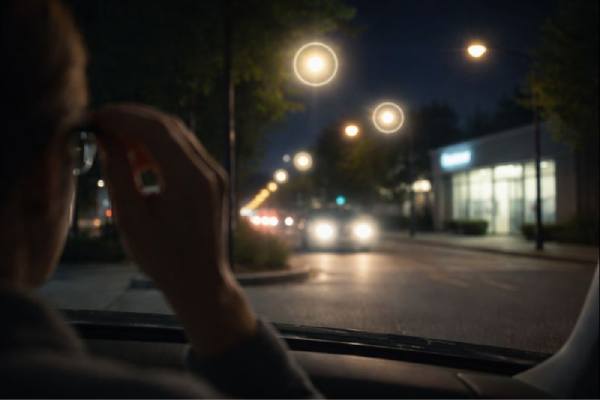
Seeing halos around lights—rings, glow, or radiating haze around headlights and streetlamps—can be unsettling, especially at night. The encouraging part is that halos are often caused by fixable issues on the front surface of the eye, such as dry eye, contact lens dryness, or an outdated glasses prescription. In other cases, halos are an early clue that the eye’s optics have changed, such as with cataracts or corneal swelling. And rarely, halos can appear alongside symptoms that signal an urgent eye-pressure problem.
This guide helps you sort through what halos typically mean, why they are worse in dim lighting, and how to narrow down the most likely cause based on timing, triggers, and associated symptoms. You will also learn practical at-home steps that reduce halos safely, what treatments an eye doctor may recommend, and which warning signs should prompt you to seek care immediately.
Top Highlights
- Many halos improve when the tear film is stabilized with consistent lubrication, blink habits, and reduced airflow to the eyes.
- Correcting refractive errors and lens issues (astigmatism, contact lens deposits, scratched coatings) can reduce nighttime halos quickly.
- Halos with severe eye pain, nausea, a red eye, or sudden vision loss can signal an eye emergency and need urgent evaluation.
- Track when halos are worst (morning versus night driving) and what helps (blinking, artificial tears) to guide the most targeted fix.
- If halos persist longer than 1–2 weeks or interfere with driving, schedule a comprehensive eye exam with cornea and eye-pressure checks.
Table of Contents
- What halos around lights really mean
- Dry eye and tear film instability
- Prescription and lens-related causes
- Corneal problems that create halos
- Cataracts and after-surgery dysphotopsias
- When halos can signal dangerous eye pressure
- Treatments and what to expect at your visit
What halos around lights really mean
A halo is a light-scatter problem. Instead of light rays focusing into a crisp point on the retina, some of that light spreads out and forms a ring or glow. People describe it differently—“a circle,” “a foggy aura,” “a rainbow ring,” or “headlights look like they have a crown”—but the mechanism is usually the same: the eye’s optical system is not transmitting light cleanly.
Halos tend to be most noticeable at night for three practical reasons:
- Pupils enlarge in dim light, letting light pass through more of the cornea and lens. Any irregularities have a bigger effect.
- Contrast is higher (bright lights against a dark background), which makes scatter stand out.
- Your brain relies more on subtle cues for depth and contrast, so any blur or scatter feels more dramatic.
It helps to separate halos from related symptoms:
- Glare: discomfort or reduced visibility from bright lights, often with a “washed out” feeling.
- Starbursts: rays or spikes around lights, commonly linked to astigmatism or optical aberrations.
- Ghosting: a shadow image next to objects, often from refractive error or corneal shape changes.
A simple self-check can be informative without turning into constant monitoring:
- Blink slowly and fully several times. If halos temporarily improve, the tear film is likely involved.
- Try the symptom with each eye separately. If one eye is clearly worse, that can suggest an uneven surface issue, a lens problem in that eye, or a corneal or cataract difference.
- Note whether halos are worse in the morning (often surface swelling or eyelid-related dryness) or worsen as the day goes on (often evaporative dryness, screen use, or contact lens wear).
Two caution points matter. First, halos are common and often benign, but they should be taken seriously when they are new or worsening, because they can be an early sign of a change that is easier to treat earlier (like a developing cataract or corneal edema). Second, halos are not a diagnosis; they are a symptom that needs context: pain level, redness, speed of onset, and whether vision is changing.
If you keep the focus on patterns—timing, triggers, and associated symptoms—you can often narrow the list of causes quickly and choose the safest next step.
Dry eye and tear film instability
Dry eye is one of the most frequent, most underestimated causes of halos—especially if halos fluctuate from moment to moment. The tear film is the eye’s first refracting surface. When it is smooth and stable, it acts like a perfectly polished optical coating. When it breaks up, the cornea becomes optically “rough,” and light scatter increases.
Clues that halos are linked to tear film instability include:
- Halos that change while you stare, then improve right after blinking
- A gritty, burning, or tired-eye sensation
- Blurred vision that comes and goes, especially during screen use
- Symptoms that worsen in wind, air conditioning, or heated indoor air
- Contact lens discomfort that builds during the day
Dry eye is not one thing; the most common pattern in adults is evaporative dry eye, often related to oil-gland dysfunction along the eyelid margin. In that situation, watery tears may still be produced, but they evaporate too quickly. That is why some people have both watering and dryness at the same time—the eyes tear reflexively, but the tear film still fails to remain stable.
A practical two-week plan for tear-related halos:
- Use preservative-free lubricating drops 3–4 times daily. If you need drops frequently, preservative-free options are typically gentler on the surface.
- Add a thicker gel drop at night if you wake with halos or blur that improves later in the morning.
- Reduce airflow to the face: redirect car vents, avoid fans aimed at the eyes, and consider a bedside humidifier in dry seasons.
- Train complete blinking: every hour during screen work, do five slow blinks—close gently, pause, then complete the blink with a light squeeze.
- If eyelids look inflamed or you have crusting, start daily warm compresses for 8–10 minutes and gentle lid cleansing once daily.
A key insight: if halos improve with lubrication but return quickly, that often means the tear film is breaking up fast, not that drops “do not work.” In that case, improving blink quality, reducing evaporation, and addressing eyelid oil flow usually makes the biggest difference.
If halos are dry-eye driven, you should see gradual improvement over days to a couple of weeks with consistent care. If nothing changes, or if pain and light sensitivity are prominent, the cause may be something other than routine dryness and deserves a closer evaluation.
Prescription and lens-related causes
When halos are most noticeable during night driving and feel fairly consistent (not fluctuating minute-to-minute), refractive and lens-related issues move higher on the list. Small optical imperfections matter more in low light, when pupils dilate and the visual system has less “margin” to compensate.
Common culprits include:
- Uncorrected or undercorrected astigmatism
- A glasses prescription that is slightly outdated, especially if you drive at night often
- “Night myopia,” where the eyes focus slightly differently in dim light
- Contact lens deposits, a dry lens surface, or a lens that does not fit well
- Scratches or a degraded anti-reflective coating on glasses lenses
- Smudges, microfilm, or cleaning residue on lenses
A useful clue: if halos shrink when you look through a pinhole (for example, loosely curling your finger into a tiny opening and looking through it), refractive blur may be a major factor. The pinhole reduces scattered peripheral rays and can temporarily sharpen focus.
Practical fixes you can try immediately:
- Clean lenses thoroughly with a proper lens cleaner and microfiber cloth. Avoid shirts or tissues that can create micro-scratches.
- If your glasses are older, inspect under bright light for fine scratches or coating damage. Even small defects can cause disproportionate halos at night.
- If you wear contact lenses, try a lens-free day or switch to fresh lenses sooner than usual. A dramatic improvement points toward lens surface or deposit issues.
- Use lubricating drops that are compatible with contacts (if you wear them) and consider limiting lens wear during flare-ups.
Nighttime halos can also be influenced by certain lens designs:
- Multifocal contact lenses and progressive glasses can increase halos for some people, especially during adaptation or when the optical zones are not perfectly aligned.
- Blue-light filtering coatings are not a guaranteed fix and can sometimes alter perception of glare without addressing the underlying scatter.
If your halos are primarily refractive, the most effective treatment is usually straightforward: update the prescription, address astigmatism, optimize lens fit, and ensure lens surfaces are pristine. If a new prescription does not improve halos as expected, that is an important signal to investigate the cornea, lens clarity, and tear film more closely rather than repeatedly adjusting glasses.
Because the safest fixes here are simple, this is often a high-yield first step: rule out lens and prescription contributors before assuming something more complex is happening.
Corneal problems that create halos
The cornea is the clear front window of the eye, and even subtle changes in its smoothness or clarity can create halos. Corneal causes often produce halos that are more pronounced in certain patterns—especially in the morning or after contact lens wear.
Corneal edema (swelling) is a classic halo trigger. When the cornea holds extra fluid, light scatters more. People often report:
- Morning blur and halos that improve over a few hours
- Increased glare and reduced contrast in low light
- A sensation of “foggy vision” rather than simple blur
One condition associated with corneal edema is Fuchs endothelial corneal dystrophy, where the inner corneal cell layer gradually loses its ability to keep the cornea dehydrated and clear. Early on, symptoms may be intermittent and most noticeable on waking, when evaporation is lower overnight.
Corneal shape irregularities can also create halos and starbursts. Keratoconus and other ectatic disorders cause progressive corneal steepening and irregular astigmatism. People may notice:
- Frequent prescription changes
- Ghosting or double images in one eye
- Halos that do not improve much with blinking or standard glasses
Surface injuries and inflammation can produce halos as well:
- A corneal abrasion (scratch) can cause sharp pain, tearing, and light sensitivity along with halos or blur.
- Infectious keratitis (corneal infection) is less common but urgent; it often causes increasing pain, redness, light sensitivity, and worsening vision—especially in contact lens wearers.
- Significant allergy-related swelling and rubbing can disrupt the surface and increase scatter.
What you can do safely at home depends on symptoms. If halos are mild and paired with dryness, lubrication and eyelid care are reasonable. But if halos come with any of the following, you should be evaluated promptly:
- Moderate to severe pain, especially in one eye
- Marked light sensitivity
- A red eye with worsening vision
- Thick discharge
- A history of trauma, chemical exposure, or metal grinding
- Contact lens wear with rapidly escalating discomfort
Corneal causes often require an exam because many are only distinguishable under magnification with a slit lamp, sometimes with additional tests such as corneal topography, pachymetry (thickness measurement), or endothelial assessment. The benefit of early evaluation is that corneal conditions are often treatable and, in some cases, progression can be slowed when addressed early.
Cataracts and after-surgery dysphotopsias
Cataracts are a leading cause of halos and glare in adults, particularly when driving at night. A cataract is a gradual clouding or optical change in the eye’s natural lens. Early cataracts do not always reduce daytime visual acuity on a chart, which is why some people feel confused: “My eye test is fine, but headlights look terrible.” Night driving demands contrast sensitivity and clean optics; cataracts often degrade those first.
Typical cataract-related patterns include:
- Halos and glare that feel steady rather than fluctuating
- Increasing difficulty with night driving in rain or oncoming headlights
- Colors looking slightly muted or yellowed
- A sense that brighter lighting helps at first, then later becomes uncomfortable
- Gradual progression over months or years
After cataract surgery, halos can still occur, but the causes change. Some people experience dysphotopsias—unwanted visual phenomena such as halos, arcs, rings, glare, or shadows—despite an otherwise successful surgery. These symptoms can relate to the intraocular lens (IOL) design, edge effects, pupil size, lens position, or how light enters the eye in different environments.
Practical points that often help patients navigate post-surgery halos:
- Early postoperative halos sometimes improve over weeks as the eye heals and the brain adapts to new optics.
- If halos are new months to years later, one common cause is posterior capsular opacification (a clouding of the lens capsule behind the IOL), which can often be treated with a brief laser procedure.
- If halos feel extreme, are paired with double vision, or seem linked to lens decentration, an exam is important to rule out mechanical issues.
It is also worth knowing that certain IOL types can increase the likelihood of halos for some people, especially multifocal and extended depth-of-focus designs that trade some night vision quality for greater range of focus. For many patients, the trade-off is acceptable; for others—especially frequent night drivers—it can be a significant quality-of-life issue.
If you suspect cataract changes, the goal is not to wait until vision becomes “bad enough” in a general sense. The right time to address cataracts is often when they interfere with function: driving confidence, reading endurance, glare tolerance, or work demands. A thorough exam can distinguish cataract-related halos from tear film problems, corneal changes, and prescription issues—so treatment matches the real cause.
When halos can signal dangerous eye pressure
Most halos are not an emergency. But halos that appear suddenly with pain and systemic symptoms can be a warning sign of dangerously high eye pressure, most notably acute angle-closure glaucoma. This is uncommon, yet important, because delaying care can lead to permanent vision damage.
In acute angle closure, the drainage angle inside the eye becomes blocked, eye pressure rises quickly, and the cornea can become hazy from swelling—creating dramatic halos. The symptom cluster often includes:
- Sudden eye pain or severe brow ache (often one-sided)
- Blurry vision with halos around lights
- A red eye
- Headache
- Nausea and vomiting
- A pupil that looks larger or reacts poorly to light
The timeline is a major clue. Dry eye and cataracts typically change gradually. Acute angle closure is often abrupt and intense.
There are also “warning episodes” in some people: intermittent angle closure can cause short bouts of halos and blur, sometimes triggered in dim lighting when the pupil dilates. Because these episodes can partially resolve, they may be dismissed as migraine or “eye strain,” which is risky.
Certain situations can increase risk in predisposed eyes, such as medications that cause pupil dilation or fluid shifts. You do not need to memorize medication lists, but it is wise to mention to your clinician if halos began shortly after starting a new medication, especially if symptoms are severe or one-sided.
What to do if you suspect an emergency:
- Treat it as urgent if halos are paired with pain, redness, sudden blur, or nausea.
- Do not drive yourself if vision is significantly affected.
- Seek emergency eye care immediately rather than waiting for a routine appointment.
Even when the cause turns out not to be glaucoma, this symptom pattern still warrants prompt evaluation because other urgent eye problems can look similar. From a safety standpoint, it is better to be evaluated quickly and reassured than to miss the window for pressure-lowering treatment when it is needed.
If you have been told you have narrow angles or are at risk for angle closure, ask your eye doctor what symptoms should trigger urgent care for you personally and whether preventive steps are appropriate.
Treatments and what to expect at your visit
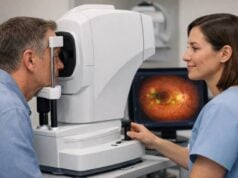
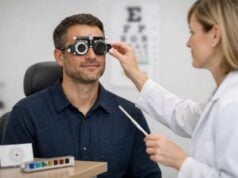
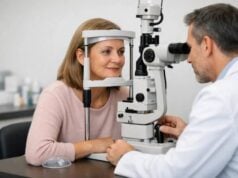
Because halos have multiple possible causes, the best treatment plan is usually cause-specific rather than “one-size-fits-all.” A good eye evaluation focuses on narrowing down where scatter is coming from: tear film, cornea, lens, or eye pressure.
What an eye doctor may check:
- Visual acuity and refraction, with attention to astigmatism and night-vision complaints
- Slit-lamp exam of the tear film, eyelids, cornea, and lens
- Assessment for dry eye subtype and eyelid oil gland function
- Corneal tests when needed (topography for shape, pachymetry for thickness, endothelial evaluation for swelling risk)
- Eye pressure measurement and angle assessment if symptoms suggest pressure issues
- Dilated exam to evaluate the lens (cataract patterns) and overall ocular health
Treatments typically follow the underlying cause:
For tear film and eyelids:
- Preservative-free lubricants, thicker nighttime gels, and environmental adjustments
- Warm compresses and lid hygiene for meibomian gland dysfunction
- Anti-inflammatory dry eye therapies when irritation is persistent and drops alone are not enough
- Addressing allergy overlap if itch and seasonal flares are prominent
For refractive and lens surface issues:
- Updating glasses, optimizing astigmatism correction, and addressing lens coatings and scratches
- Adjusting contact lens type, fit, wear schedule, or care system
- Considering night-driving-specific strategies, such as ensuring pupils are not excessively dilated by certain factors and optimizing contrast
For corneal disorders:
- Treating the specific condition (for example, managing edema triggers, addressing inflammation, or using specialized lenses for irregular astigmatism)
- Urgent management for suspected corneal infection or significant injury
For cataracts and postoperative causes:
- Confirming whether lens changes explain symptoms and discussing timing of cataract surgery when function is affected
- Treating posterior capsular opacification when present
- Managing dysphotopsias with individualized counseling and, in select cases, additional interventions if symptoms are severe and persistent
For eye-pressure emergencies:
- Immediate pressure-lowering therapy and specialist care when angle closure is suspected
While you are working toward a diagnosis or waiting for an appointment, safety matters—especially with driving. If halos make it hard to judge distances, read signs, or tolerate oncoming headlights, avoid night driving when possible and choose safer routes and times. Also avoid experimenting with leftover eye drops from other conditions; the wrong drop can worsen certain problems.
The most helpful preparation is simple: note when halos happen, what makes them better, whether one eye is worse, and whether pain, redness, or nausea occurs. That information often shortens the path to the correct diagnosis and the most effective treatment.
References
- Dry Eye Syndrome Preferred Practice Pattern® 2024 (Guideline)
- Dysphotopsias or Unwanted Visual Phenomena after Cataract Surgery 2022 (Review)
- Fuchs endothelial corneal dystrophy: an updated review 2024 (Review)
- European Glaucoma Society – Terminology and guidelines for glaucoma, 6th Edition 2025 (Guideline)
Disclaimer
This article is for educational purposes only and does not provide medical advice, diagnosis, or treatment. Halos around lights can result from dry eye disease, contact lens and prescription issues, cataracts, corneal conditions, or less common problems that require urgent care. Seek immediate medical evaluation for halos with severe eye pain, a rapidly worsening red eye, sudden vision loss, marked light sensitivity, nausea or vomiting, or symptoms after eye trauma or chemical exposure. For personalized evaluation and treatment, consult a licensed eye care professional.
If you found this article helpful, please consider sharing it on Facebook, X (formerly Twitter), or any platform you prefer.