Glaucoma is often called the “silent” cause of vision loss for a reason: the most common forms can damage the optic nerve for years before you notice anything wrong. That makes symptoms an imperfect guide—but not a useless one. Knowing what can show up early, what tends to appear late, and which changes are urgent helps you act at the right time, not just the alarming time. It also helps you understand why eye exams matter even when your vision seems sharp, and why “normal” eye pressure does not always mean “no risk.”
This article breaks down early warning signs people actually report, the difference between gradual and sudden-onset glaucoma symptoms, and the risk factors that should move eye testing higher on your priority list. You will also learn what a glaucoma evaluation typically includes and how to make the most of your appointment.
Key Insights
- Early glaucoma often has no noticeable symptoms, so routine testing is the most reliable way to catch it before vision loss.
- Sudden severe eye pain, nausea, and blurry vision with halos can signal an emergency form of glaucoma that needs urgent care.
- Age, family history, higher eye pressure, thinner corneas, and certain medical conditions can increase risk even if vision feels normal.
- A targeted eye exam is especially important if you use steroid medicines or have had eye trauma or eye surgery.
- If you are at higher risk, schedule a comprehensive eye exam and ask specifically whether your optic nerve and eye pressure trends suggest glaucoma.
Table of Contents
- Why early glaucoma is easy to miss
- Early signs people notice first
- Symptoms by glaucoma type
- Risk factors that change your testing plan
- When to get tested and what testing includes
- Urgent symptoms and when to seek care today
- What results mean and how to follow up
Why early glaucoma is easy to miss
Glaucoma is a group of conditions that damage the optic nerve, usually in a slow, stepwise way. In the most common form—primary open-angle glaucoma—the drainage system of the eye becomes less efficient over time, and the optic nerve gradually loses nerve fibers. The key problem is that the brain is very good at “filling in” missing information. When small patches of peripheral vision fade, you do not see a black curtain. You see a world that looks normal because your brain stitches together the best available picture.
That is why symptoms and glaucoma do not match neatly. Many people expect a disease that threatens vision to feel dramatic. In reality, early glaucoma is often symptom-free, and even moderate glaucoma may not be obvious in day-to-day life. By the time central vision is affected, damage can be advanced—and the goal of treatment is usually to prevent further loss, not to restore what has already disappeared.
Eye pressure (intraocular pressure, or IOP) is central to glaucoma, but it is not the whole story. Some people develop optic nerve damage at pressures that are not considered high (“normal-tension glaucoma”), while others can tolerate higher pressures without clear damage for years (“ocular hypertension”). That makes it risky to self-reassure based on a single past pressure reading or the absence of symptoms. Guideline-based care emphasizes tracking the optic nerve, visual field function, and IOP trends over time—not just one snapshot. ([PubMed][1])
It is also common to confuse glaucoma symptoms with more familiar problems such as dry eye, allergies, eye strain, cataracts, or changes in glasses prescriptions. Those issues can cause discomfort, blur, and fluctuating vision, while early open-angle glaucoma typically does not. In practical terms, this means two things can be true at once: you may have bothersome eye symptoms that are not glaucoma, and you may have glaucoma with no symptoms at all.
The most helpful mindset is to treat symptoms as a reason to seek care—but not as the gatekeeper for whether glaucoma is possible. Your eyes do not need to “feel wrong” to justify a proper glaucoma evaluation.
Early signs people notice first
Because glaucoma often starts silently, “early signs” are usually subtle patterns rather than a single unmistakable symptom. Some people notice changes only in hindsight—after testing shows early damage. Still, there are real experiences that should raise suspicion, especially if you have risk factors.
Here are early changes people most commonly describe when glaucoma begins to affect daily life:
- Bumping into objects on one side or misjudging doorframes, shelves, and steps. This can reflect early peripheral vision loss that is more noticeable in certain lighting or environments.
- Difficulty driving at night that feels out of proportion to your glasses prescription. Cataracts are a very common cause, but early glaucoma can make low-contrast situations harder because peripheral awareness and motion detection are affected.
- Needing more light to see comfortably, especially for reading. This is not specific to glaucoma, but it can coexist with glaucoma and should prompt a full eye exam rather than a quick refraction alone.
- Trouble with stairs or “missing” the last step occasionally. The issue is not always sharpness of vision—it can be contrast and peripheral field awareness.
- One eye doing more work without you realizing it. If one eye has more damage, the other eye can compensate until testing reveals the difference.
It also helps to know what is not typical of early open-angle glaucoma. Early disease usually does not cause:
- Persistent eye pain
- Obvious redness as the main feature
- Sudden severe blur
- A constant headache that clearly originates from the eye
Those symptoms can happen in other eye conditions and in some glaucoma types, but they are not the classic early picture for open-angle glaucoma.
A practical way to check yourself—without turning it into a daily anxiety ritual—is to cover one eye at a time once every few weeks (for example, when reading large print on a TV screen). If you notice a consistent difference between eyes in clarity, contrast, or the “completeness” of what you see, that is worth mentioning. Glaucoma often affects eyes unequally, especially early on.
Finally, remember that family members sometimes notice changes first: a relative who starts turning their head more to one side, hesitates at curbs, or seems less confident in unfamiliar places. If someone close to you expresses concern about your peripheral awareness, it is worth taking seriously—even if you feel fine.
Symptoms alone cannot diagnose glaucoma. But patterns, especially when paired with risk factors, can be the nudge that gets you tested before meaningful loss occurs.
Symptoms by glaucoma type
“Glaucoma” is not one disease. Different types behave differently, and symptom patterns can be surprisingly distinct. Knowing the broad categories helps you recognize what requires routine evaluation versus urgent care.
Primary open-angle glaucoma and normal-tension glaucoma
These are usually gradual and painless. Symptoms, if they appear, tend to be late and related to peripheral vision loss:
- Difficulty noticing objects off to the side
- Reduced awareness in crowds or busy visual environments
- Trouble driving, particularly in low light or rain
Normal-tension glaucoma follows a similar symptom pattern; the difference is that damage occurs despite IOP readings that may look “normal” in clinic. ([PubMed][2])
Angle-closure glaucoma
Angle-closure involves a narrowed or blocked drainage angle, which can cause sudden pressure spikes. It may present as:
- Severe eye pain or brow ache
- Headache, often with nausea or vomiting
- Sudden blurry vision and sometimes halos around lights
- A red eye with significant discomfort
This is a medical emergency when acute because very high pressure can damage the optic nerve quickly. Some people have intermittent “subacute” episodes—brief periods of pain or blur in dim lighting—that resolve, creating dangerous delays in diagnosis.
Secondary glaucoma
Secondary glaucoma has an identifiable cause, and symptoms often reflect that cause. Examples include:
- Steroid-induced pressure rise: may have no symptoms until testing shows elevated IOP; risk increases with steroid eye drops, injections around the eye, and sometimes high-dose inhaled or oral steroids.
- Pigmentary glaucoma: may cause intermittent blur or halos after exercise, along with pigment dispersion signs found on exam.
- Pseudoexfoliative glaucoma: often asymptomatic early but can have higher pressure spikes and faster progression, so detection matters.
- Neovascular glaucoma: may present with pain, redness, and reduced vision, usually in the setting of severe retinal ischemia (for example, advanced diabetic eye disease).
Congenital and childhood glaucoma
In infants and young children, symptoms look very different:
- Excessive tearing
- Light sensitivity
- Eyelid squeezing (blepharospasm)
- An enlarged or cloudy-looking cornea
This requires urgent pediatric ophthalmology evaluation because early treatment is critical for visual development.
What this means for real life
If your symptoms are gradual, painless, and subtle, prioritize a comprehensive eye exam and glaucoma testing. If your symptoms are sudden, painful, and paired with nausea or rapid blur, treat it as urgent—especially if one eye is much worse than the other. Guidelines emphasize differentiating chronic open-angle disease from angle-closure patterns because the timeline and risk profile are so different. ([PubMed][2])
Even when the type is not obvious to you, describing the tempo (sudden vs gradual), pain level, and whether symptoms come in episodes can help clinicians choose the right tests and urgency.
Risk factors that change your testing plan
Risk factors do not mean you have glaucoma. They mean the “silent” nature of glaucoma is more likely to apply to you—and that earlier or more frequent testing may be warranted. A useful way to think about risk is in layers: baseline factors you cannot change, medical factors that can raise pressure or stress the optic nerve, and eye-specific anatomy that changes how glaucoma behaves.
Higher-impact risk factors
- Age: risk increases with age, and glaucoma becomes more common after midlife.
- Family history: having a first-degree relative with glaucoma increases risk and should move you toward proactive testing.
- Higher eye pressure (IOP): elevated IOP is a major risk factor, even if you have no symptoms.
- Thinner central cornea: a thinner cornea is associated with higher glaucoma risk and can also affect how IOP readings are interpreted.
- Race and ancestry: risk profiles differ across populations; for example, people of African ancestry have higher rates of primary open-angle glaucoma and often more severe disease at diagnosis, while certain Asian populations have higher rates of angle-closure patterns.
These risk associations are reflected in major guidelines and practice patterns used for case-finding and diagnosis. ([PubMed][1])
Eye and medical history that matters more than many people realize
- Steroid exposure: steroid eye drops are the most obvious, but injections around the eye, long-term oral steroids, and sometimes high-dose inhaled steroids can contribute.
- Eye injury or surgery: trauma can damage the drainage system and cause pressure problems years later.
- Severe nearsightedness (myopia): increases risk for certain glaucoma patterns and can make optic nerve assessment more complex.
- Diabetes and vascular conditions: these do not automatically cause glaucoma, but they can influence eye health and glaucoma risk in certain contexts.
- Sleep apnea and low blood pressure at night: may be discussed in normal-tension glaucoma conversations, especially if progression occurs despite “good” IOP.
Anatomy-related risk factors (often unknown until an exam)
- Narrow angles: the drainage angle is physically crowded, increasing angle-closure risk—sometimes without symptoms until an acute event.
- Optic nerve appearance: certain nerve shapes and asymmetries raise suspicion even before visual field loss is measurable.
A simple self-triage checklist
You should treat yourself as “higher priority for glaucoma testing” if you can answer yes to any of these:
- A parent, sibling, or child has glaucoma.
- You have ever been told your eye pressure is high or “borderline.”
- You have used steroid eye drops for more than a few weeks or have repeated steroid injections.
- You have had a significant eye injury, even years ago.
- You have been told you have narrow angles, optic nerve cupping, or are a “glaucoma suspect.”
If you fall into a higher-risk group, the most protective action is not guessing your risk—it is getting a baseline evaluation that includes optic nerve assessment and appropriate glaucoma testing, then following the reassessment schedule your clinician recommends. ([NICE][3])
When to get tested and what testing includes
Because early glaucoma is often symptom-free, “when to get tested” is less about waiting for warning signs and more about matching your exam schedule to your risk. Many countries emphasize case-finding (identifying higher-risk people in routine eye care) rather than mass screening of the general population. For example, the U.S. Preventive Services Task Force has concluded that evidence is insufficient to recommend population-wide screening for primary open-angle glaucoma in asymptomatic adults, while still recognizing the importance of clinical evaluation and treatment once glaucoma is detected. ([PubMed][4])
When to book a comprehensive exam sooner rather than later
Consider prioritizing a comprehensive eye exam (and explicitly mentioning glaucoma concerns) if:
- You are 40 or older and have any major risk factor (family history, prior high IOP, steroid exposure, significant myopia, or certain ancestry-related risks).
- You notice new peripheral awareness issues, repeated near-misses on stairs, or consistent differences between eyes.
- You have episodes of eye pain with blur or halos, especially in dim light.
- You have been told you have narrow angles, optic nerve cupping, or are a glaucoma suspect.
- You are starting or continuing steroid medications and have not had recent eye pressure monitoring.
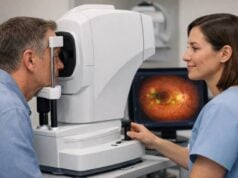
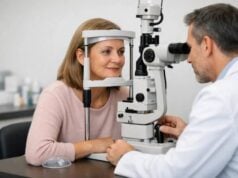
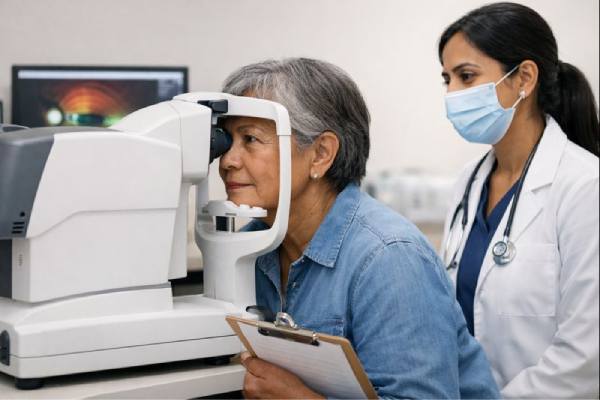
What glaucoma testing typically includes
A glaucoma-focused evaluation usually combines several pieces, because no single test is enough:
- Eye pressure measurement (tonometry): a starting point, not the final word.
- Optic nerve exam: the clinician evaluates the optic nerve head for cupping, rim thinning, hemorrhages, and asymmetry.
- Optical coherence tomography (OCT): imaging that measures nerve fiber layer thickness and ganglion cell complex patterns.
- Visual field testing: checks functional vision, typically detecting patterns of loss in peripheral vision before you notice them.
- Angle assessment: often done with gonioscopy or imaging to determine whether angles are open or narrow.
- Corneal thickness measurement: helps interpret IOP readings and overall risk.
How to prepare so your visit is more useful
- Bring a list of all medications, especially steroids (eye drops, inhalers, creams used near the eye, pills, injections).
- Mention any family history clearly: “My mother has glaucoma and uses drops,” is more actionable than “eye problems run in the family.”
- If symptoms come in episodes, write down the time of day, lighting conditions, and whether nausea or headache occurred.
- Ask one direct question: “Based on my optic nerve and tests, am I a glaucoma suspect, and what follow-up interval do you recommend?”
Testing is most valuable when it creates a baseline. Even if your results are normal, having a documented starting point makes future change easier to detect—often the difference between early intervention and late discovery. ([PubMed][1])
Urgent symptoms and when to seek care today
Most glaucoma is slow-moving. A small but important subset is not. The challenge is that people often delay because they assume eye emergencies must involve trauma, or they attribute symptoms to migraine, sinus issues, or “tired eyes.” If you remember one thing from this section, let it be this: severe eye pain with sudden vision change is not something to watch and wait.
Symptoms that should be treated as urgent
Seek urgent care the same day—ideally emergency eye care—if you experience:
- Severe eye pain (often one-sided), with or without a headache
- Sudden blurry vision that does not clear within minutes
- Halos around lights paired with pain or significant redness
- Nausea or vomiting alongside eye pain or sudden blur
- A very red eye with reduced vision
These can be signs of acute angle-closure glaucoma or another serious eye condition that can threaten vision quickly.
Clues that point toward angle-closure episodes
People often describe angle-closure symptoms as coming “out of nowhere,” sometimes after:
- Entering a dark environment (pupil dilation can narrow the angle further)
- Starting certain medications that can dilate the pupil in susceptible eyes
- Feeling sudden brow ache, then blur and halos, then nausea
Some episodes are intermittent and partially resolve, which can create dangerous reassurance. If you have recurring episodes of pain and blur—especially in the same eye—treat it as urgent even if it improves.
Red flags that are not glaucoma but still urgent
Not every eye emergency is glaucoma. The same urgent symptom list can also reflect conditions such as uveitis, corneal infection, or retinal problems. From a safety standpoint, that distinction should not delay evaluation. The correct action is urgent assessment, not self-diagnosis.
Situations where urgency is easy to underestimate
- After starting steroid eye drops: pressure can rise without pain, but if you develop sudden blur or headache after steroids, it warrants prompt evaluation.
- After eye surgery: new pain, redness, and blurred vision after surgery should be assessed quickly.
- In people with known narrow angles: any acute symptoms should be treated as a potential emergency.
Guidelines for glaucoma management emphasize identifying angle-closure risk and responding quickly to acute presentations because the timeline for damage can be much shorter than in chronic open-angle disease. ([PubMed][2])
If you are unsure whether your symptoms “qualify,” err on the side of urgent care. A false alarm is far safer than delayed treatment when eye pressure is dangerously high.
What results mean and how to follow up
A glaucoma evaluation often ends with a label that feels vague: “glaucoma suspect,” “ocular hypertension,” “narrow angles,” or “early glaucoma.” These terms matter because they determine follow-up timing and the threshold for starting treatment. Understanding them makes it easier to participate in decisions instead of just receiving them.
Common outcome categories
- No glaucoma detected: This usually means tests and optic nerve appearance are not concerning right now. It does not mean “never.” Your next exam interval depends on your risk profile.
- Ocular hypertension: Eye pressure is higher than typical, but there is no clear optic nerve or visual field damage. Some people remain stable for years; others convert to glaucoma. Monitoring focuses on pressure trends and early structural change.
- Glaucoma suspect: Something about your optic nerve, IOP, angles, or test results raises concern, but the diagnosis is not definitive. This is common and not a failure of testing—it is how early detection works.
- Confirmed glaucoma: Damage patterns on the optic nerve and/or visual field support the diagnosis. Treatment decisions then focus on a target pressure range and how to reach it with the least burden.
Major practice patterns emphasize that glaucoma care is fundamentally about change over time—progression risk, rate of change, and preserving function—rather than a single “pass/fail” test. ([PubMed][1])
Follow-up questions that improve clarity
If you leave the appointment with only a diagnosis label, consider asking:
- “Which findings make you concerned—pressure, optic nerve appearance, OCT, visual field, or angles?”
- “Do my results suggest stable risk, or signs of progression?”
- “What follow-up interval do you recommend, and what would make it shorter?”
- “If we start treatment, what is the goal pressure range for me?”
- “Are there lifestyle or medication factors (like steroids) that I should change or monitor?”
How to make follow-up easier in daily life
- Keep a simple record of your eye pressure readings and the names of any drops if prescribed. Trends matter.
- Bring your medications (or a photo of each bottle) to every visit; errors happen when bottles look similar.
- Mention missed doses or side effects honestly. Clinicians can only adjust a plan they understand.
- Protect your next appointment time if you are a suspect or have early glaucoma. In glaucoma, follow-up timing is part of treatment.
If you are told “we will watch it”
Watching is not passive. It usually means your clinician is building enough data to decide whether your optic nerve is stable. That approach is supported by guidelines and is often safer than starting unnecessary treatment—especially when the diagnosis is uncertain. ([NICE][3])
The best outcome of glaucoma testing is not just a result—it is a plan: what your risk appears to be today, what changes would be concerning, and exactly when you should be rechecked.
References
- Primary Open-Angle Glaucoma Preferred Practice Pattern® 2021 (Guideline)
- European Glaucoma Society – Terminology and guidelines for glaucoma, 6th Edition 2025 (Guideline)
- Screening for Primary Open-Angle Glaucoma: US Preventive Services Task Force Recommendation Statement 2022 (Guideline)
- Glaucoma: diagnosis and management 2022 (Guideline)
Disclaimer
This article is for educational purposes only and does not provide medical advice, diagnosis, or treatment. Glaucoma risk and symptoms vary by glaucoma type, eye anatomy, and overall health. Do not delay care for severe eye pain, sudden vision changes, nausea with eye symptoms, or a rapidly worsening red eye—seek urgent medical evaluation. For individualized guidance about testing intervals, risk factors (including steroid use), and interpretation of eye pressure and imaging results, consult a licensed eye care professional.
If you found this article useful, please consider sharing it on Facebook, X (formerly Twitter), or any platform you prefer.