Gene therapy is changing what “treatable” can mean for some inherited retinal diseases. Instead of managing symptoms alone, it aims to restore or improve a missing or faulty retinal gene signal so remaining cells can function better. For the right person, this can translate into safer navigation in dim light, more stable day-to-day vision, and a clearer understanding of what to expect next. It is not a cure, and it does not rebuild retinal cells that are already lost, which is why timing and careful selection matter as much as the procedure itself.
This guide walks you through who may qualify, how clinicians confirm eligibility, what the surgery and recovery typically involve, and what outcomes are realistic. You will also learn the key risks and the follow-up steps that protect your results and your eye health over time.
Core Points for Patients and Families
- Gene therapy can improve functional vision when enough viable retinal cells remain, but it cannot restore cells that have already degenerated.
- Eligibility depends on a confirmed genetic diagnosis, the specific disease mechanism, and objective evidence that the retina can still respond.
- The process usually includes genetic testing, detailed retinal imaging, and a surgical subretinal injection with close follow-up.
- Seek prompt specialist evaluation early in the disease course, because treatment options often narrow as retinal tissue thins.
Table of Contents
- What Gene Therapy Can Do for IRD
- Who Qualifies for Retinal Gene Therapy
- The Eligibility Workup and Testing
- What the Treatment Process Looks Like
- Expected Benefits and Realistic Timelines
- Risks, Side Effects, and Follow-Up Care
What Gene Therapy Can Do for IRD
“Inherited retinal disease” (IRD) is an umbrella term for many genetic conditions that damage the light-sensing retina. Some primarily affect rod cells (night vision and peripheral vision), some affect cones (central vision and color), and others involve the retinal pigment epithelium that supports photoreceptors. Although symptoms can feel similar—night blindness, glare sensitivity, narrowing peripheral vision, or slow loss of central detail—the underlying gene and the stage of disease can be very different. Gene therapy is built around those differences.
Most current retinal gene therapies are designed as gene augmentation: a healthy working copy of a gene is delivered into retinal cells so they can make the missing or faulty protein. This is most straightforward when a disease is caused by loss-of-function mutations, and when the gene is small enough to fit into the delivery “vector” (often an adeno-associated virus, or AAV). Other approaches under active study include gene editing, RNA-based treatments, and gene-agnostic strategies aimed at protecting cells or reintroducing light sensitivity, but these are not yet routine care in most settings.
A practical way to think about gene therapy is that it can:
- Improve how existing retinal cells work if enough of them are still alive and structurally capable of responding.
- Slow functional decline in a targeted pathway in some cases, even if it does not stop disease progression completely.
- Change daily function more than a letter chart does, because mobility in dim light, obstacle detection, and light sensitivity can improve even when standard acuity changes are modest.
It cannot:
- Bring back retinal cells that are gone. If photoreceptor layers are severely thinned or absent, there is nothing left to “switch on.”
- Treat every IRD. Eligibility is gene- and mechanism-specific, and many therapies are still in clinical trials.
- Guarantee stable results forever. Some people maintain meaningful gains for years, but outcomes vary with age, retinal health at treatment time, and disease biology.
Because the goal is to help functioning cells do better work, the central message is early and accurate diagnosis: the earlier the gene and retinal status are clarified, the more options you can consider while retinal tissue is still viable.
Who Qualifies for Retinal Gene Therapy
Qualification is not based on symptoms alone. Two people with similar night blindness may have different genes, different rates of progression, and different retinal “reserve.” Clinicians typically assess eligibility across three pillars: genetics, retinal viability, and functional profile.
1) A confirmed genetic diagnosis that matches an available therapy
For gene-specific treatments, the exact gene matters, and the mutation pattern matters. Some therapies require biallelic pathogenic variants (mutations in both copies of a gene), while others may target dominant or X-linked mechanisms depending on the strategy. In practice, this means:
- A clinical suspicion of an IRD is not enough by itself.
- Genetic results must be interpreted carefully to confirm that variants are truly disease-causing.
- Variant classification can evolve over time as databases improve, so a prior “uncertain” result may deserve re-review.
2) Evidence of viable retinal cells
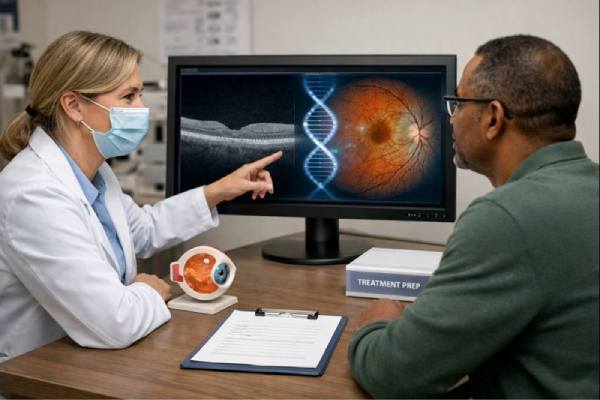
Even with the right gene, the retina must still be capable of responding. Clinicians look for objective signs that a meaningful number of target cells remain. This often includes structural imaging (especially optical coherence tomography, or OCT) and additional measures like retinal sensitivity testing. Viability is not a single cutoff; it is a clinical judgment based on multiple findings, including:
- Preserved retinal layers in the region expected to receive treatment
- Lack of end-stage atrophy in key functional zones
- A functional profile consistent with “dysfunction” rather than “absence”
3) A pattern of vision that could realistically benefit
Most people imagine improvements in reading. In reality, some gene therapies are best known for improving functional vision in low light and navigation rather than sharply increasing best-corrected visual acuity. Your clinician will look at which visual functions are most affected and which are most likely to change.
Other common eligibility considerations include:
- Age and disease stage: Many programs treat both children and adults, but earlier disease often offers more substrate for benefit. Very advanced degeneration may limit gains.
- Eye-specific factors: One eye may qualify while the other does not, depending on scarring, retinal thickness, or prior complications.
- Medical and surgical suitability: Because some therapies are delivered via intraocular surgery, factors like uncontrolled inflammation, severe ocular surface disease, or active infection must be addressed first.
- Ability to complete follow-up: Monitoring is not optional. If someone cannot attend early post-op visits or adhere to medication instructions, safety risks rise.
If you are unsure whether you qualify, the most productive first step is not guessing from symptoms—it is obtaining a validated genetic diagnosis and a retina specialist evaluation that includes detailed imaging. That combination quickly clarifies whether you are a current candidate, a future candidate as trials expand, or better served by other supportive strategies right now.
The Eligibility Workup and Testing
The workup is designed to answer two questions: Do we have the right target? and Is the retina capable of responding safely? Many clinics follow a structured pathway, even if the exact sequence varies.
Genetic testing and result confirmation
Most people begin with a gene panel focused on inherited retinal diseases, sometimes followed by broader sequencing if the first test is negative. The key is not just getting a report, but ensuring it is clinically usable:
- Variants should be classified with recognized standards (pathogenic, likely pathogenic, uncertain significance, etc.).
- In many cases, results are reviewed with a genetics professional who can confirm inheritance patterns and clarify what the result does—and does not—prove.
- If a result is uncertain, clinicians may recommend segregation testing (testing family members) or updated analysis.
Retinal imaging to evaluate structure and “treatable” tissue
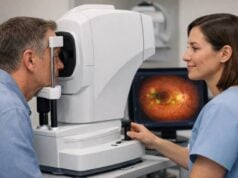
Imaging is the backbone of eligibility assessment. OCT is used to evaluate retinal layer integrity, thickness, and the presence of atrophy. Widefield imaging can show the extent of peripheral degeneration. Depending on the disease, clinicians may also use fundus autofluorescence to map stressed versus lost retinal pigment epithelium.
Common findings that influence candidacy include:
- Preserved outer retinal layers in a region relevant to the therapy
- Absence of extensive central scarring or advanced atrophy
- A treatable zone that can be reached surgically without excessive risk
Functional testing to document baseline and guide expectations
Baseline testing often includes best-corrected visual acuity, but that is rarely the only endpoint that matters. Depending on the condition and the therapy program, clinics may also use:
- Visual field testing (central and/or peripheral)
- Full-field stimulus testing or dark-adapted sensitivity measures for low-light function
- Contrast sensitivity
- Mobility or navigation assessments in controlled lighting environments (when available)
General eye health and surgical readiness
Before any intraocular procedure, clinicians check for issues that could raise complication risk or blur outcomes, such as:
- Cataract status and lens clarity
- Vitreoretinal interface abnormalities
- History of uveitis or significant inflammation
- Intraocular pressure trends and glaucoma risk
Finally, many programs include counseling about practicalities: how long vision may be blurry after surgery, how activity restrictions work, and what “success” will look like for your specific daily tasks. This is where the workup becomes personal—your baseline function and goals are used to align expectations with the biology of your disease.
What the Treatment Process Looks Like
Although details vary by therapy and center, most currently available retinal gene therapies are delivered to the retina through a subretinal injection performed in an operating room. The goal is to place the treatment in direct contact with target cells in a controlled, sterile environment.
Before surgery
Preparation typically includes:
- A final confirmation of the treatment plan, including which eye is treated first
- Baseline measurements and imaging for comparison later
- A medication plan to reduce inflammation risk around the time of the procedure (commonly involving systemic steroids with a defined start date and taper schedule, when indicated by the protocol)
- Guidance on practical safety issues, such as arranging transportation and avoiding eye makeup or contact lenses near surgery
Some programs treat each eye on separate days, with a planned interval between them. Even when both eyes qualify, staged treatment allows clinicians to monitor response and safety before proceeding.
During surgery
A subretinal delivery procedure is often described in three conceptual steps:
- Access: The surgeon performs a vitrectomy (removing the gel inside the eye) to safely reach the retinal surface.
- Create a controlled bleb: A small localized retinal detachment is created to open a space under the retina.
- Deliver the therapy: The gene therapy solution is injected into that subretinal space in a carefully measured volume.
This approach is precise, but it is still retinal surgery, and that reality should be respected. The procedure is designed to minimize trauma while ensuring the therapy reaches the intended layer.
Immediately after surgery
In the first days to weeks, it is common to experience:
- Blurry vision that gradually improves as the eye settles
- Mild discomfort, scratchiness, or light sensitivity
- Temporary changes in visual perception as the retina reattaches and inflammation resolves
Clinicians typically provide clear instructions about:
- Eye drops (antibiotic and anti-inflammatory regimens)
- Activity restrictions, including avoiding heavy lifting and high-risk activities for a period
- Warning signs that require urgent contact (increasing pain, sudden drop in vision, marked redness, or flashes and floaters)
Follow-up schedule
Follow-up is front-loaded. Early visits help detect inflammation, pressure elevation, or retinal changes before they threaten results. Imaging is repeated at defined intervals, and functional testing may be scheduled later once the eye has stabilized enough to give meaningful measurements.
The most important mindset is that gene therapy is not a single-day event. It is a structured medical process with a surgical day at the center, surrounded by careful preparation and monitoring designed to protect both safety and outcomes.
Expected Benefits and Realistic Timelines
People often ask, “How much better will I see?” A more useful question is, “Which parts of my vision are most likely to change, and when?” For many inherited retinal diseases, the most meaningful improvements relate to function—especially in challenging lighting—rather than dramatic changes in sharpness on a standard eye chart.
What improvements commonly look like
Depending on the condition and baseline status, improvements may include:
- Better navigation in dim environments, such as hallways, restaurants, or dusk conditions
- Faster adaptation when moving between bright and dark settings
- Improved ability to detect obstacles or locate objects that were previously hard to see
- Reduced “visual uncertainty” that forces constant scanning and slows movement
Some people notice changes in specific daily tasks, like moving around a familiar home at night without turning on every light, or recognizing shapes and edges more confidently.
Why acuity may not tell the whole story
Visual acuity measures central detail under ideal lighting and contrast. Many IRDs primarily affect low-light sensitivity, contrast, and peripheral function first. A therapy can improve retinal response to light without producing a dramatic letter-chart jump, and still be life-changing for mobility and independence.
Timeline: when changes may appear
While every protocol differs, a realistic timeline often looks like:
- First days to weeks: Vision may be temporarily worse from surgery-related blur and inflammation. Early changes can be subtle.
- Weeks to a few months: Functional improvements may emerge as the retina stabilizes and post-op inflammation settles.
- Several months and beyond: Testing becomes more reliable, and gains may consolidate. Clinicians reassess your baseline-to-post baseline trajectory using the same tools used before treatment.
What shapes outcomes
Outcomes vary for understandable biological reasons:
- Age at treatment: Earlier treatment can mean more viable cells and less remodeling of retinal circuits.
- Retinal viability: More preserved retinal structure generally correlates with more potential to respond.
- Disease mechanism: Some diseases progress even after a pathway is improved, meaning function can still change over time.
- Eye-to-eye differences: One eye may respond differently than the other due to baseline structure and surgical factors.
A high-quality clinic will help you define “success” in measurable, personal terms—such as safer mobility in low light, fewer falls, more confident navigation, or improved performance on specific visual function tests—rather than implying that gene therapy restores normal vision. For many patients, that grounded clarity is as valuable as the treatment itself.
Risks, Side Effects, and Follow-Up Care
Gene therapy is often described as “one-time,” but the eye’s response unfolds over time, and risks need to be taken seriously. Most complications, when they occur, relate to intraocular surgery, inflammation, or retinal vulnerability in already fragile tissue.
Potential risks and side effects
Your clinician will review risks specific to the therapy and the delivery method. Common categories include:
- Inflammation: The immune system can react to the vector or to surgical manipulation. Anti-inflammatory regimens are used to reduce this risk, and follow-up checks look for early signs of excessive inflammation.
- Increased intraocular pressure: Pressure can rise temporarily from steroid response or post-op changes, requiring monitoring and sometimes medication.
- Retinal complications: These can include tears, detachment, or localized retinal thinning or atrophy in or near the treated area. Risk varies by retinal condition and surgical complexity.
- Cataract progression: Vitrectomy can accelerate cataract formation in some adults, which may later require cataract surgery.
- Infection (rare but serious): Any intraocular surgery carries a small risk of endophthalmitis, which is an emergency.
Red flags after treatment
Seek urgent evaluation if you develop:
- Increasing eye pain that does not improve with expected recovery
- A sudden drop in vision, a curtain-like shadow, or rapidly increasing flashes and floaters
- Marked redness and light sensitivity that worsens rather than stabilizes
- New nausea or severe headache with blurred vision that raises concern for pressure elevation
Why follow-up is part of the therapy
Follow-up protects both safety and results. It allows clinicians to:
- Adjust anti-inflammatory medications based on your actual eye response
- Detect pressure changes early, before optic nerve damage occurs
- Track retinal structure to identify changes that may affect function
- Re-test visual function at the right time, once measurements are reliable
Long-term care still matters
Even if gene therapy improves vision, you may still benefit from low-vision strategies, contrast optimization, glare control, and mobility training—especially if the underlying disease can continue to progress. Think of gene therapy as a powerful tool in a broader care plan, not as the end of care. The best outcomes usually occur when treatment is paired with long-term retinal monitoring and practical rehabilitation support that helps you use gains safely and confidently.
References
- LUXTURNA | FDA 2022 (Regulatory Summary)
- Package Insert – LUXTURNA 2022 (Prescribing Information)
- Gene Therapy for Inherited Retinal Disease: Long-Term Durability of Effect – PubMed 2023 (Review)
- 12-month outcomes after voretigene neparvovec gene therapy in paediatric patients with RPE65-mediated inherited retinal dystrophy – PubMed 2025
- Inherited Retinal Disorders Genetic Testing and Management Guideline 2024 (Guideline)
Disclaimer
This article is for educational purposes and does not replace individualized medical advice, diagnosis, or treatment. Gene therapy for inherited retinal disease is highly specific to the underlying genetic cause, retinal health, and clinical context, and it requires evaluation by qualified eye care and genetics professionals. If you have sudden vision loss, severe eye pain, rapidly increasing redness, new flashes or floaters, or a curtain-like shadow in your vision, seek urgent medical care immediately.
If you found this article useful, please consider sharing it on Facebook, X (formerly Twitter), or any platform you prefer so others can better understand gene therapy eligibility and the importance of timely evaluation.