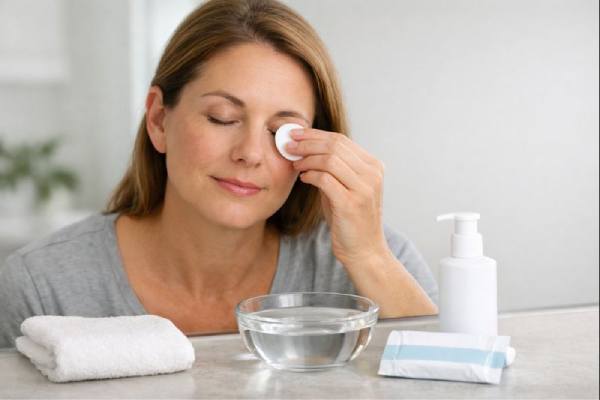
Eyelid hygiene is one of the most practical, low-tech ways to improve blepharitis and many forms of dry eye—because the problem often starts at the lid margin, not the eyeball. When oils, skin flakes, bacteria, or mites build up where lashes and meibomian glands meet, the tear film becomes less stable and the eyes can feel gritty, watery, and tired. A consistent routine can reduce lid inflammation, improve the quality of the tear’s oil layer, and make other treatments—like artificial tears or prescription drops—work better. The key is doing the steps correctly: enough warmth to soften thick oils, gentle cleaning that targets the lash line without scrubbing the eye, and a schedule you can maintain. This guide walks you through what to use, what to avoid, and how to tailor a routine to your symptoms so you get results without irritating delicate eyelid skin.
Quick Overview
- Consistent lid hygiene can reduce burning, crusting, and morning stickiness by improving lid margin cleanliness and oil flow.
- Warm compresses work best when they stay comfortably warm for 5 to 10 minutes, not when they cool after 30 seconds.
- Over-scrubbing and harsh soaps can worsen inflammation; gentle, targeted technique is safer and more effective.
- New pain, marked redness, light sensitivity, or vision changes are not typical “routine adjustment” symptoms and need prompt evaluation.
- Start with once-daily care for 2 weeks, then scale to a maintenance schedule based on symptom control.
Table of Contents
- Why lid hygiene changes dry eye
- What to use and what to avoid
- Warm compress technique that actually helps
- Lid cleaning step by step
- Tailoring the routine to your type
- When home care is not enough
Why lid hygiene changes dry eye
Blepharitis is inflammation of the eyelid margins. Dry eye is a problem of tear film stability and ocular surface comfort. The two are tightly linked because the eyelids are part of the tear system: every blink spreads tears, and the meibomian glands in the lids secrete oils that slow tear evaporation. When that lid environment is irritated or clogged, your tears can become “thin,” break up quickly, and leave the surface vulnerable to burning, gritty sensations, and fluctuating blur.
The lid margin is a busy biological zone
The lash line collects skin cells, makeup residue, and environmental debris. Bacteria that normally live on skin can overgrow and form biofilm. In some cases, Demodex mites contribute to lash “collarettes” (cylindrical debris at the base of lashes). Any of these can trigger inflammation that spreads to nearby glands and the ocular surface.
Meibomian gland dysfunction is a common bridge
Many people with dry eye have evaporative dry eye driven by meibomian gland dysfunction. The gland openings sit right at the lid margin; if the secretions become thick and waxy, the openings can clog. You may feel dryness, but you can also paradoxically water a lot—because irritation triggers reflex tearing that does not solve the oil-layer problem.
Signs lid hygiene may help include:
- Crusting, flakes, or “grit” on the lashes in the morning
- Burning that worsens with wind, fans, heating, or screens
- Frequent styes or tender lid bumps
- Oily lids with irritation, or very dry lids with redness at the lash line
- Blurry vision that improves after blinking or after warm compresses
Why technique beats intensity
People often respond to blepharitis by scrubbing harder. Unfortunately, harsh rubbing can inflame the lid skin, disrupt the lash follicles, and irritate the eye. Effective lid hygiene is more like dental care: gentle, targeted, and consistent. You are trying to remove debris at the margin, keep gland openings clear, and reduce inflammatory load—not sand the skin.
What realistic improvement looks like
Some people notice less morning crusting within a few days. Dryness and irritation often improve over 2 to 4 weeks as inflammation calms and glands become more functional. The routine is not a one-time “reset.” For many, it becomes maintenance: less frequent when stable, more frequent during flares, allergy seasons, or heavy screen periods.
What to use and what to avoid
A good eyelid hygiene routine is simple enough to repeat and gentle enough to tolerate. The goal is to avoid two common mistakes: using products that irritate eyelid skin, and using tools that are too rough for the lid margin.
What you need for a basic routine
You can do effective lid hygiene with minimal supplies:
- Clean hands and a clean towel
- A warm compress method that holds heat for 5 to 10 minutes
- A gentle lid-cleaning option (wipe, foam, or diluted cleanser)
- Cotton-tipped applicators or a clean, soft pad for precise cleaning
- Optional: preservative-free lubricating drops if dryness is prominent
If you wear contact lenses, plan your routine so cleaning happens before lens insertion or after lens removal.
Choosing a cleanser: gentle and eye-appropriate
Many people have heard of baby shampoo for lid scrubs. Some still tolerate it well, but others find it drying or irritating, especially with chronic dry eye or sensitive skin. If you use a cleanser, aim for something designed for the eye area and avoid strong fragrances. The best option is the one you can use consistently without stinging, lid skin cracking, or rebound redness.
Practical selection tips:
- If your lid skin is sensitive, start with the gentlest option and escalate only if needed.
- If you suspect Demodex involvement (itching and lash-base debris), you may need a targeted approach rather than “more soap.”
- If you have eczema patterns around the eyes, prioritize minimal ingredients and stop quickly if skin irritation develops.
Tools: soft beats scratchy
Avoid anything that feels abrasive. The lid margin is delicate, and micro-trauma can prolong inflammation. A soft pad or wipe is usually safer than a rough cloth. Cotton-tipped applicators can be useful because they let you clean precisely at the lash base without rubbing the entire lid.
What to avoid
These choices commonly worsen symptoms:
- Undiluted household soaps, face scrubs, or exfoliating acids near the lash line
- Alcohol-based products applied close to the eyelids
- Essential oils applied directly to the lid margin (irritation and chemical burn risk)
- Aggressive scraping with fingernails or tweezers
- Over-cleaning (multiple hard scrubs daily) when your lid skin is already inflamed
Safety basics that prevent setbacks
- Wash hands before every session.
- Do not share eye products, towels, or washcloths.
- Replace eye makeup regularly, and avoid eye makeup during flares.
- If a product stings sharply, causes swelling, or creates worsening redness that lasts, stop using it.
The routine should feel soothing or neutral. If it consistently makes your eyes feel worse, that is a sign to adjust technique, frequency, or product choice rather than “pushing through.”
Warm compress technique that actually helps
Warm compresses are a cornerstone of lid hygiene because they soften thickened oils in the meibomian glands and relax tight lid margins. But many people get disappointing results because the compress is warm for 30 seconds and then cool for the remaining minutes. Heat dose matters: the lids need steady warmth long enough to change the consistency of gland secretions.
How warm and how long
Aim for “comfortably warm,” never hot. A practical target is warmth that you could hold against the inside of your wrist without discomfort. For many people, the effective window is:
- Duration: 5 to 10 minutes
- Frequency: once daily during flares; 3 to 5 times per week for maintenance (adjust to symptoms)
- Consistency: the compress should stay warm most of the time, not cool quickly
If you are prone to redness or rosacea, shorter sessions may be better tolerated. If you have very thick secretions and significant evaporative dry eye, you may need the full 10 minutes consistently to notice change.
Compress options and how to keep heat stable
You have a few practical choices:
- Warm, clean washcloth: rewarm it repeatedly so it stays warm throughout the session.
- Microwavable eye mask: follow the heating instructions carefully and test temperature before applying.
- Warm shower compress: letting warm water run near the face can help, but it is often less targeted than a dedicated compress.
Whichever method you choose, the best one is the one you will use consistently with safe temperature control.
Should you massage afterward?
Gentle massage can help express softened oils, but it must be light. Think “moving toothpaste in a tube,” not “pressing a bruise.”
A simple method after warming:
- With clean hands, close your eyes gently.
- Using a fingertip, make a light sweeping motion toward the lash line:
- Upper lid: sweep downward toward the lashes.
- Lower lid: sweep upward toward the lashes.
- Do 5 to 10 gentle sweeps per lid.
- Stop if you feel pain, sharp tenderness, or significant redness afterward.
If massage makes you sore or you develop tender bumps, scale back and focus on warmth plus gentle cleaning. Some lids are more reactive than others, especially during active inflammation.
Common mistakes that reduce benefit
- Using heat that is too low to change the oil consistency
- Using heat that is too high and irritates the skin
- Skipping the compress when symptoms improve, then restarting only when flares are severe
- Doing compresses but not cleaning the lid margin afterward, leaving loosened debris at the lash base
A warm compress is not a stand-alone treatment for most people. It is the “prep step” that makes lid margin cleaning and gland function improvement more likely.
Lid cleaning step by step
Lid cleaning works best when it targets the lash line—the narrow strip where eyelashes emerge and gland openings sit. The goal is to remove debris and reduce microbial load without irritating the eye surface. This is one of those routines where gentle precision beats force.
Step 1: Set up for success
- Wash hands thoroughly.
- Remove contact lenses.
- If you wear eye makeup, remove it gently first so you are not dragging pigment into the lash line during cleaning.
- Make sure your lighting is good; you should be able to see the lash base.
If you are doing warm compresses, do them first. Cleaning afterward is often more effective because debris loosens.
Step 2: Apply the cleanser to the tool, not the eye
Whether you use a pre-moistened lid wipe, a foam cleanser, or diluted cleanser, put the product on your pad or applicator. Avoid splashing cleanser directly into the eye.
Step 3: Clean the upper lid margin gently
- Close the eye softly (do not squeeze).
- Using the wipe or pad, sweep along the lash line from inner to outer corner with small, controlled motions.
- If you are using a cotton-tipped applicator, roll it lightly at the lash base to pick up debris rather than scrubbing back and forth.
Spend 10 to 20 seconds per lid. If you have visible debris, you can repeat once with a fresh pad or applicator.
Step 4: Clean the lower lid margin gently
- Look up to expose the lower lash line while keeping the eye relaxed.
- Sweep along the lash base with minimal pressure.
- Avoid dragging the tool onto the eye surface.
If your eyes are very sensitive, cleaning with the lids closed for both upper and lower margins may be more tolerable at first.
Step 5: Rinse or not?
This depends on the product. Some lid wipes are designed to be left on; some cleansers should be rinsed. Follow the product’s instructions carefully. If you notice stinging that persists, a gentle rinse with clean water can reduce residue.
Step 6: Dry without friction
Pat the area dry. Rubbing can re-irritate the lid margin and worsen inflammation.
Frequency and progression
A practical schedule many people tolerate well:
- Weeks 1 to 2: once daily cleaning (plus warm compress if you have evaporative symptoms)
- Weeks 3 to 4: taper to every other day if symptoms are clearly improving
- Maintenance: 2 to 4 times weekly, increasing during flares
Signs you are cleaning too aggressively
- Lid skin becomes raw, flaky, or cracked
- Eyes burn sharply during or after cleaning
- Redness lasts longer than a couple of hours after the routine
- You feel compelled to “scrub harder” to get relief
If these happen, reduce pressure, reduce frequency, switch to a gentler product, and focus on consistency rather than intensity. Lid hygiene should calm the lids over time, not keep them in a cycle of irritation.
Tailoring the routine to your type
Blepharitis and dry eye are umbrella terms. Your routine should match your dominant pattern—because what helps one type can irritate another if overdone. The goal is a personalized “minimum effective routine”: enough to control symptoms without creating new problems.
If your main issue is oily, crusty lids
This pattern often benefits from consistent cleaning:
- Warm compress once daily for 5 to 10 minutes
- Lid cleaning once daily for 2 weeks
- Maintenance cleaning 3 to 4 times weekly
Focus on removing lash-base debris and keeping the lid margin calm. If you wear makeup, prioritize gentle removal and avoid old products that can re-seed the lash line with bacteria.
If your main issue is dry eye with burning and wind sensitivity
This often reflects evaporative dry eye or meibomian gland dysfunction. Emphasize warmth and blink quality:
- Warm compress once daily during flares, then 3 to 5 times weekly
- Gentle lid cleaning after compresses (often less cleanser is needed)
- Add “blink breaks” during screen work: every 20 minutes, 5 slow blinks
Also consider environment: direct airflow from fans or vents can sabotage progress even with perfect lid hygiene.
If itching is prominent, especially at the lash base
Itching can come from allergy, inflammation, or Demodex involvement. Practical guidance:
- Avoid rubbing, which worsens swelling and irritation
- Keep the routine gentle; over-cleaning can worsen itching by damaging skin barrier
- If itching is persistent, especially with lash-base debris that looks like sleeves around lashes, ask about targeted evaluation and treatment rather than escalating home scrubs
In this scenario, your routine may still include warm compresses and cleaning, but it should be paired with a clinician-guided plan if symptoms persist.
If your eyelid skin is sensitive or eczema-prone
Protect the skin barrier:
- Use the gentlest cleanser option and minimal pressure
- Consider shorter compress duration if warmth triggers facial flushing
- Clean less often but more consistently, and avoid fragranced products around the eyes
A flare of eyelid dermatitis can mimic worsening blepharitis. If the skin is clearly inflamed, the best “lid hygiene” may temporarily be a simpler routine until the skin barrier recovers.
A weekly rhythm that keeps people consistent
Many people do better with a predictable schedule than daily decision-making:
- 3 days per week: warm compress + lid cleaning
- Other days: quick lid rinse in the shower and a few slow blinks during screen breaks
- Flare days: return to daily compresses and cleaning for 7 to 14 days, then taper
The best routine is the one you can sustain. If you only manage 4 minutes of warmth and gentle cleaning consistently, that often beats a perfect 10-minute plan done twice and abandoned.
When home care is not enough
Home eyelid hygiene is powerful, but it is not a cure-all. Some cases of blepharitis and dry eye require additional treatment—especially when inflammation is significant, when Demodex is involved, or when glands are severely blocked. Knowing when to escalate protects your comfort and prevents avoidable complications.
Give the routine a fair trial
If your technique is gentle and consistent, a reasonable trial is:
- 2 weeks for changes in crusting, morning stickiness, and lid comfort
- 4 weeks for more meaningful dry eye improvement and tear stability
If nothing improves over this period, it does not mean you “failed.” It suggests either the routine needs adjustment (heat quality, product choice, frequency) or another driver is dominating (allergy, significant gland dysfunction, medication effects, autoimmune dry eye, contact lens factors).
Signs you should seek evaluation sooner
Get prompt eye-focused care if you develop:
- Moderate to severe eye pain
- Light sensitivity
- New or worsening vision changes
- A very red eye, especially with discharge
- A swollen, tender lid bump that enlarges quickly
- Symptoms that worsen sharply after starting a new product
These signs can indicate corneal involvement, infection, or a problem that should not be managed with cleansing alone.
When persistent blepharitis suggests a specific cause
Certain patterns benefit from targeted diagnosis:
- Recurrent styes or chalazia: may indicate significant meibomian gland dysfunction or inflammation requiring additional therapies
- Persistent itching with lash-base debris: may suggest Demodex-related blepharitis needing specific treatment strategies
- Ongoing redness and burning despite good hygiene: may indicate ocular surface inflammation that needs prescription-level anti-inflammatory treatment
Questions that lead to a useful plan
If you see a clinician, these questions often produce actionable guidance:
- What type of blepharitis do I have (anterior, posterior, mixed, Demodex-associated)?
- Are my meibomian glands obstructed, and how severe is the dysfunction?
- Is my ocular surface inflamed enough to need prescription treatment in addition to hygiene?
- How often should I do warm compresses and lid cleaning long term, and what is my taper plan?
- Are contact lenses, makeup practices, or environmental factors undermining my progress?
How to avoid common setbacks
- Do not stop immediately when you feel better; taper to maintenance.
- Avoid switching products repeatedly in the first week; give one gentle routine time to work.
- Keep pressure light—more force rarely equals more benefit.
- Treat screens and airflow as part of the plan, not separate issues.
If you approach lid hygiene like a skill—one you refine over a few weeks—you are more likely to get steady comfort and fewer flare-ups. And if you need additional care, a solid routine becomes the foundation that makes advanced treatments more effective.
References
- Blepharitis Preferred Practice Pattern® – PubMed 2024 (Guideline)
- Eyelid cleaning: Methods, tools, and clinical applications – PMC 2023 (Review)
- Effect of Heating and Massaging of Meibomian Glands on Their Imaging – PMC 2024 (Review)
- Randomized double-blind trial of wipes containing terpinen-4-ol and hyaluronate versus baby shampoo in seborrheic blepharitis patients – PMC 2021 (RCT)
Disclaimer
This article is for general educational purposes and does not replace medical advice, diagnosis, or treatment from a qualified health professional. Blepharitis and dry eye have multiple causes, and symptoms such as pain, marked redness, light sensitivity, discharge, swelling that worsens quickly, or changes in vision require prompt medical evaluation. If you have contact lens-related symptoms, recurrent styes, suspected allergy, or persistent discomfort despite consistent eyelid hygiene for several weeks, schedule a comprehensive eye exam to identify treatable contributors such as meibomian gland dysfunction, Demodex-associated blepharitis, or ocular surface inflammation.
If you found this article helpful, please consider sharing it on Facebook, X (formerly Twitter), or any platform you prefer.