Eye twitching can feel oddly personal: a small flutter in the eyelid that shows up during meetings, while driving, or exactly when you are trying to fall asleep. Most of the time, this is eyelid myokymia—a benign, temporary spasm of the eyelid muscle that reflects a nervous system running a little “hot” from stress, fatigue, caffeine, or screen-heavy days. The reassuring part is that it often improves with practical changes you can start today, and it rarely signals a serious disease. The more useful part is knowing what your twitch is telling you: whether you need more sleep, less stimulant load, better tear-film support, or a closer look at your vision and eyelid health. This guide explains what myokymia is, why it happens, how to calm it, and which patterns deserve medical evaluation.
Core Points
- Most eyelid twitching is benign myokymia that settles within days to a few weeks with targeted habit changes.
- Reducing stimulant load, improving sleep, and managing dryness often lowers twitch frequency quickly.
- Screen marathons can worsen twitching by increasing visual strain and reducing blink quality.
- Twitching that spreads, causes forced eye closure, or comes with weakness or numbness is not typical and needs evaluation.
- Try a 7-day reset: cut caffeine after midday, protect sleep, use structured breaks, and reduce airflow to the eyes.
Table of Contents
- What eyelid myokymia actually is
- Stress, sleep, and stimulant triggers
- Screen time, dry eye, and visual load
- What helps most at home
- When twitching is not normal
- How clinicians evaluate persistent twitches
- Prevention and long-term pattern control
What eyelid myokymia actually is
Eyelid myokymia is a small, involuntary contraction of the orbicularis oculi—the thin muscle that closes the eyelids. People often describe it as a flutter, vibration, or “little jump” under the skin, usually in one eyelid (often the lower lid). It can come and go throughout the day, lasting seconds at a time, or it may feel nearly continuous for a few hours. The key word is benign: in typical cases, myokymia is not dangerous and does not damage the eye.
It helps to separate myokymia from a few other common sensations:
- Pulsing or throbbing near the eye can be related to stress, sinus pressure, or tension headache rather than eyelid muscle activity.
- A gritty feeling can come from dryness or eyelid inflammation; dryness can coexist with twitching but is not the same symptom.
- A visible eyelid “jump” that others notice can still be myokymia, but stronger spasms raise a broader differential.
Why does the eyelid twitch in the first place? The eyelids sit at the crossroads of several systems that are sensitive to daily life: sleep quality, stress hormones, stimulants, hydration, and visual workload. When the nervous system is more excitable—after too much caffeine, too little sleep, or prolonged concentration—the eyelid muscle fibers can misfire in a way that you feel more than anyone else can see.
A useful clue is that myokymia often worsens when you pay attention to it. That doesn’t mean it is “in your head.” It means the twitch is small, and your awareness is sharp. Many people notice it most in quiet moments—at a desk, in bed, or when staring at a screen—because there are fewer distractions.
Most cases settle on their own. Still, the duration matters. A twitch that fades over a few days behaves differently than one that persists daily for weeks, spreads beyond the eyelid, or causes the eye to clamp shut. Those patterns suggest you should move from “self-care and observation” to “structured evaluation.”
Stress, sleep, and stimulant triggers
If eyelid twitching feels random, it is often because the triggers build quietly and show up late—when your nervous system has been running on reserve for days. Three drivers show up repeatedly: stress load, sleep disruption, and stimulants (especially caffeine).
Stress as nervous system “volume”
Stress does not cause twitching because you are worried; it contributes because it increases baseline arousal. The eyelid muscle is finely controlled, and in a higher-arousal state the threshold for small muscle firing drops. This is why twitching often appears during deadlines, exams, travel, or emotionally intense periods—even when you feel you are coping well.
A practical way to spot stress contribution is to ask: does the twitch worsen after emotionally demanding conversations, multitasking, or long stretches without breaks? If yes, stress is likely part of the fuel.
Sleep quality matters more than sleep hours
Many people get “enough” time in bed but still have fragmented sleep. Myokymia often tracks with:
- Late nights or early wake times for several days
- Irregular schedules (weekday versus weekend swings)
- Alcohol close to bedtime
- High screen exposure late at night
- Sleep that feels shallow, even if it is long
If twitching appears alongside daytime sleepiness, morning headaches, or loud snoring, improving sleep quality (and discussing possible sleep disorders) can be more impactful than cutting caffeine alone.
Caffeine and other stimulants
Caffeine increases alertness by blocking adenosine signaling, and in some people it also increases muscle excitability. For twitch-prone individuals, the combination of caffeine plus sleep debt is especially potent.
Instead of guessing, run a simple experiment for one week:
- Keep total caffeine steady for 2 days while improving sleep and reducing screen intensity late at night.
- If the twitch persists, reduce caffeine gradually (for example, cut the last caffeinated drink first, then reduce total).
- Avoid adding new stimulants during the test, including certain pre-workout products, energy drinks, and nicotine changes.
A useful boundary for many adults is to avoid caffeine after midday, because caffeine can degrade sleep even when you feel it “doesn’t.” If you are sensitive, your cutoff may need to be earlier.
Other contributors people overlook
- Illness and recovery: the body’s stress response can persist for weeks after infection.
- Medication changes: some medications can increase muscle twitching or alter sleep.
- Alcohol and dehydration: alcohol can fragment sleep and worsen dryness, both of which can amplify twitching.
The takeaway is not perfection. It is pattern recognition: if you can identify your top two triggers, you can usually reduce twitch frequency without chasing every possible cause.
Screen time, dry eye, and visual load
Screens do not cause eyelid twitching in everyone, but they often worsen it in people who are already primed by stress, fatigue, or stimulants. The mechanism is usually indirect: intense near work changes blinking, dries the ocular surface, and increases visual effort. The eyelids are then doing more work—both mechanically and neurologically—at the same time.
Why blink quality drops during concentration
When you focus on a screen, blink frequency often decreases and blinks become incomplete. Incomplete blinks leave part of the eye surface exposed, and the tear film becomes patchy. This can cause:
- Burning or gritty sensation
- Watery eyes (a reflex response to irritation)
- Fluctuating blur that clears after a few blinks
- A sense of “tension” around the eyes
Dryness and irritation can trigger small protective reflexes in the eyelids, including increased blinking, eyelid squeezing, and twitch-like sensations. Some people misinterpret the early dryness signal as “eye strain,” then respond by staring harder and blinking less—creating a loop.
Visual workload and uncorrected vision
If you have mild uncorrected astigmatism, early presbyopia, or a prescription that is not optimized for your working distance, your eyes may work harder to keep text crisp. That increased effort is not always felt as blur; it is often felt as fatigue, brow tension, and heightened awareness of the eyelids. A twitch may be the symptom you notice first.
Helpful clues that vision strain is contributing:
- Twitching worsens on reading-heavy days and improves on low-screen days
- You lean closer without realizing it
- Your eyes feel “better” when you enlarge text
- You feel brow or forehead tension by afternoon
Airflow is a silent amplifier
Dry office air, fans, car vents, and air conditioning directed at the face can accelerate tear evaporation and increase eyelid irritation. If twitching is worse in the car, at a particular desk, or under a vent, airflow may be part of the trigger.
A screen strategy that reduces twitching risk
You do not need to ban screens. You do need to reduce their physiological cost:
- Increase text size so you are not squinting or leaning in
- Position the screen slightly below eye level for a gentle downward gaze
- Use regular breaks that include slow blinking
- Reduce glare so your eyes are not constantly micro-adjusting
If your twitch is stubborn, treat screens like a dosage. A few changes to reduce “visual load per hour” can matter more than simply reducing total hours.
What helps most at home
Most eyelid myokymia responds best to a short, structured reset rather than scattered tips. The goal is to calm nervous system excitability, reduce eyelid irritation, and remove avoidable triggers long enough for the twitch to burn out.
The 7-day reset plan
- Protect sleep with a consistent window. Aim for a steady wake time and a wind-down routine. Even two or three nights of improved sleep can reduce twitch frequency.
- Move caffeine earlier. Keep total intake stable at first, then shift your last caffeinated drink earlier in the day. If you are sensitive, consider limiting caffeine to the morning.
- Reduce stimulant stacking. Avoid pairing caffeine with high-dose nicotine changes, energy drinks, or pre-workout stimulants while you are trying to quiet twitching.
- Address dryness and irritation. Use slow, complete blinks during breaks. Reduce airflow directed at your face. If your eyes feel gritty, prioritize hydration and environmental humidity.
- Lower screen intensity, not necessarily screen time. Increase font size, reduce glare, and take structured breaks (see below).
- Add a short stress off-ramp daily. Ten minutes of walking, breathing practice, or gentle stretching can reduce baseline arousal. The eyelid is often a “canary” for stress load.
- Track patterns, not moments. Record whether twitching is better, worse, or unchanged each day and what the day looked like (sleep, caffeine timing, screen load).
Breaks that actually work
A reliable option is the 20-20-20 routine: every 20 minutes, look at distance for 20 seconds. Make it more twitch-focused by adding five slow blinks during the break. The blinks matter because they restore the tear film, and dryness is a common hidden driver.
Warm compresses and gentle lid care
If twitching is paired with eyelid irritation, morning crusting, or frequent styes, eyelid inflammation may be contributing. Warm compresses can help relax the eyelid muscles and improve oil flow from the eyelid glands. Keep compresses comfortably warm, not hot, and limit sessions to a short, consistent routine.
Magnesium and “quick fixes”
Magnesium is commonly suggested online. While magnesium deficiency can cause muscle irritability, most eyelid twitching is not a simple deficiency problem. If you consider supplementation, be cautious:
- High doses can cause diarrhea and dehydration, which can worsen symptoms for some people.
- People with kidney disease should avoid magnesium supplements unless advised by a clinician.
- A food-first approach (nuts, legumes, leafy greens, whole grains) is a safer baseline.
How long should it take to improve?
Many cases improve within days once triggers are reduced. Some linger for a few weeks, especially if sleep debt or dryness is persistent. If twitching continues daily beyond a few weeks, or if it escalates, move to evaluation rather than endlessly repeating home experiments.
When twitching is not normal
Most eyelid twitching is myokymia. The job of this section is to help you identify patterns that are not typical—either because they suggest a different movement disorder or because they point to an underlying neurological or ocular problem that should be assessed.
Red flags that deserve medical evaluation
Seek evaluation promptly if you notice any of the following:
- Twitching spreads beyond the eyelid to the cheek, mouth, or the entire side of the face
- Forced eye closure or spasms strong enough to keep the eye shut
- New drooping eyelid, facial weakness, numbness, or speech changes
- Persistent twitching every day for several weeks without improvement despite trigger reduction
- Significant vision changes, double vision, or a jumping image
- A painful, very red eye or marked light sensitivity
These patterns are not “proof” of something serious, but they are outside the usual myokymia lane.
Conditions that can look like a simple eyelid twitch
- Hemifacial spasm: typically starts around one eye but can spread to other muscles on the same side of the face. Spasms can be stronger than myokymia and may occur even when you are not stressed or tired.
- Blepharospasm: involuntary eyelid closure, often affecting both eyes. People may describe excessive blinking that progresses to spasms and difficulty keeping the eyes open, especially in bright light or wind.
- Superior oblique myokymia: a different kind of “twitch” that usually causes brief episodes of visual shimmering or a jumping image rather than eyelid flutter.
- Ocular surface disease: dryness, allergy, or eyelid inflammation can increase blinking and create twitch-like sensations that persist until the surface problem is treated.
When anxiety makes the symptom feel bigger
Eyelid myokymia can be alarming because it is visible and hard to control. Anxiety can increase body scanning, which makes the twitch feel more frequent and more intense. That does not invalidate the symptom—it just means the nervous system is amplifying the experience. If you find yourself checking the mirror repeatedly or feeling stuck in worry loops, it can help to set a simple observation rule (for example, check once per day) while you run the reset plan.
A clear threshold for “not normal”
A practical benchmark is this: if the twitch is progressing, spreading, interfering with eye opening, or lasting beyond a few weeks, it deserves a structured medical evaluation. That step often brings relief, because the most feared causes are uncommon—and the treatable causes are common.
How clinicians evaluate persistent twitches
If you seek care for eyelid twitching, a good evaluation is usually straightforward. The clinician’s goal is to confirm whether this is typical myokymia and to rule out patterns that suggest a different diagnosis.
What to bring to the appointment
Your story matters as much as the exam. Helpful details include:
- When it started and whether it is improving, stable, or worsening
- Which eyelid is involved (upper, lower, left, right)
- Whether it happens at rest, during reading, or throughout the day
- Sleep changes, stress changes, caffeine intake, and new medications
- Whether the twitch spreads to other facial muscles
- Any associated symptoms: dryness, redness, pain, blurred vision, headache, numbness, weakness
A short smartphone video can be extremely helpful, especially if the twitch comes and goes and is absent during the visit.
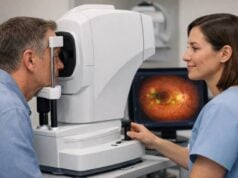
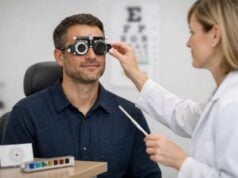
What the eye exam may focus on
An eye-focused evaluation often includes:
- Eyelid and ocular surface assessment for dryness, allergy, or eyelid inflammation
- Vision and refraction check, especially if symptoms are screen-linked
- General eye health screening if there are irritation or vision complaints
If the clinician sees signs of ocular surface disease, treating the surface can reduce the reflexive eyelid activity that keeps twitching alive.
What a neurological evaluation may focus on
If symptoms suggest hemifacial spasm or another neurological cause, evaluation may include:
- Observation of which muscles are involved and whether contractions are rhythmic or forceful
- Facial nerve function testing (strength, symmetry, sensation)
- Consideration of imaging if the pattern suggests facial nerve irritation or other causes
Not everyone needs tests. Many people leave with reassurance and a plan. Testing becomes more likely when the twitch is spreading, persistent, or accompanied by neurological symptoms.
When treatment escalates beyond self-care
For typical myokymia, reassurance and trigger management are often enough. For stronger or persistent spasms, clinicians may discuss:
- Treating eyelid inflammation or dryness to reduce irritation-driven blinking
- Adjusting prescriptions or near-work lens strategies if visual strain is a major driver
- Botulinum toxin injections in select cases where spasms are persistent or functionally limiting
The value of evaluation is not just “finding something.” It is matching the symptom pattern to the simplest effective plan—and ruling out the uncommon scenarios that should not be missed.
Prevention and long-term pattern control
Once a twitch resolves, the best next step is to prevent the next cycle. Myokymia often returns when the same combination of triggers returns—usually stress plus sleep disruption plus high screen load. Prevention works best when it is lightweight and consistent.
Create a personal trigger map
You do not need a perfect diary. You need a short list of your top drivers. After a twitch episode, ask:
- Was I sleeping less or sleeping poorly?
- Did my caffeine timing drift later in the day?
- Did my screen hours spike without breaks?
- Were my eyes dry, irritated, or exposed to airflow?
- Did I start, stop, or change a medication or supplement?
Most people find two dominant triggers. If you can control those two, you usually control the symptom.
Set “guardrails” rather than rules
Guardrails are easier to maintain than strict routines:
- Keep caffeine earlier than mid-afternoon, or earlier if you are sensitive
- Use text scaling so you do not read with tension or squinting
- Place screens slightly below eye level and reduce glare
- Build a short break ritual you can repeat without thinking
- Protect a consistent wake time most days of the week
Support the ocular surface routinely
If your eyes tend to feel dry or gritty, consider dryness prevention part of twitch prevention:
- Reduce direct airflow at the face
- Use slow blinks during breaks
- Consider whether contact lens wear time matches your screen-heavy days
- Address eyelid inflammation early if you get recurrent irritation
Dryness is often the “multiplier” that turns a small twitch into a persistent one.
Special situations
- Pregnancy and breastfeeding: stimulant sensitivity and sleep disruption can change quickly. If you reduce caffeine, do it gradually to avoid withdrawal headaches. Discuss supplement use with a clinician.
- High-pressure work seasons: plan for a “maintenance week” with earlier caffeine cutoff and tighter break structure rather than waiting for symptoms.
- Frequent recurrence: if twitch episodes recur monthly or last longer each time, consider a structured eye exam to check vision demands, ocular surface health, and eyelid inflammation.
A realistic definition of success
The goal is not to eliminate every twitch forever. It is to shorten episodes, reduce intensity, and prevent the “spiral” where fatigue and worry extend the symptom. When you can reliably calm a twitch within days, you have effectively gained control over it—even if it still shows up occasionally during stressful weeks.
References
- Eyelid Myokymia – StatPearls – NCBI Bookshelf 2023 (Clinical Review)
- Association Between Eyelid Twitching and Digital Screen Time, Uncorrected Refractive Error, Intraocular Pressure, and Blood Electrolyte Imbalances – PMC 2024
- Hemifacial spasm: an update on pathophysiology, investigations and management – PMC 2025 (Review)
- The pathogenesis of blepharospasm – PubMed 2024 (Review)
Disclaimer
This article is for general educational purposes and does not replace medical advice, diagnosis, or treatment from a qualified health professional. Eyelid twitching is often benign, but persistent twitching, twitching that spreads to other facial muscles, forced eyelid closure, new drooping, facial weakness or numbness, significant vision changes, or a painful red eye should be evaluated promptly. If you have neurological symptoms, severe headache, or sudden changes in vision, seek urgent medical care. If symptoms continue despite reasonable sleep, stimulant, and screen adjustments, schedule a comprehensive eye exam to identify treatable contributors such as dry eye, eyelid inflammation, or vision correction needs.
If you found this article helpful, please consider sharing it on Facebook, X (formerly Twitter), or any platform you prefer.