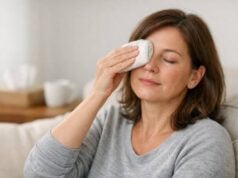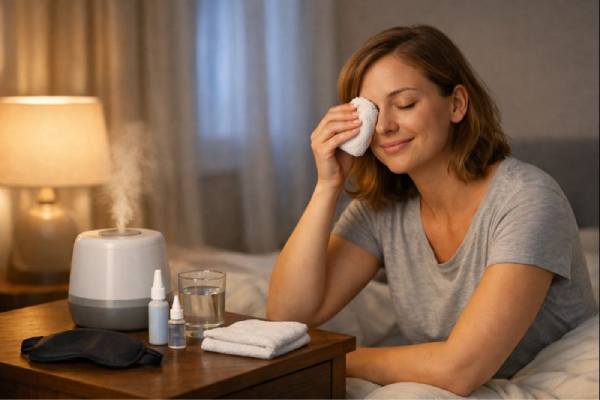
Dry, gritty eyes that wake you up can feel confusing: you were asleep, not staring at a screen or sitting in wind. But nighttime is a perfect setup for dryness. Your tear system runs “quieter” during sleep, your blinking stops, and even small problems—like a bedroom fan, low humidity, or eyelids that do not seal fully—can let the corneal surface dry out for hours. The result is that classic morning sting, burning, blur, or the feeling of sand under the lids.
The good news is that most nighttime dry eye triggers are practical to identify and fix. With the right bedtime routine, a few room adjustments, and targeted treatment, many people can reduce wake-ups quickly and protect the eye surface long-term.
Quick Overview
- Reduce overnight evaporation by aiming for a bedroom humidity around 40–50% and keeping air flow off your face.
- Use thicker lubrication at bedtime (gel or ointment) when watery drops are not lasting through the night.
- Treat the eyelids, not just the tears: warm compresses and lid hygiene can improve oil flow and slow evaporation.
- Seek urgent care for severe pain, sudden vision changes, marked light sensitivity, or a red eye with discharge.
- If you suspect sleeping with partly open eyes, add a moisture-seal strategy (sleep mask, moisture goggles, or lid taping guidance).
Table of Contents
- Why dry eyes get worse at night
- What nighttime dry eye feels like and when it is urgent
- Bedroom and sleep habits that prevent morning irritation
- Sleeping with eyes partly open and other hidden triggers
- The best bedtime treatments, from drops to prescriptions
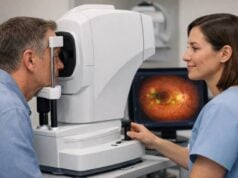
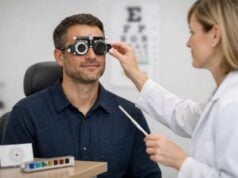
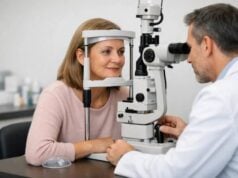
- How an eye clinician figures out your dry eye type
Why dry eyes get worse at night
Nighttime dryness usually comes down to a simple equation: fewer protective inputs and more time for small problems to add up.
Your tear system slows down during sleep. Tear production and tear turnover generally drop at night. That is normal physiology, but it means your eyes rely more heavily on the quality of the tear film you already have—especially the oily outer layer that slows evaporation.
Blinking stops, so the tear film is not refreshed. While awake, each blink spreads tears evenly and “squeegees” debris toward the tear ducts. During sleep, that maintenance loop is gone. If the tear film breaks up quickly (common in dry eye), the corneal surface can develop dry spots that persist.
Evaporation can continue even with closed lids. Eyelids are not a perfect seal for everyone. Tiny gaps, poor lid tone, prominent eyes, or mild eyelid laxity can let air reach the ocular surface. Add a ceiling fan, heater vent, or AC draft and you have hours of slow drying.
Oil-gland dysfunction is a major driver at night. The meibomian glands in your eyelids release oils that sit on top of tears. When those glands are clogged or inflamed (meibomian gland dysfunction, often linked with blepharitis or rosacea), tears evaporate faster. Nighttime is when that weakness shows up the most.
Inflammation lowers the “comfort threshold.” Dry eye is not just “not enough tears.” In many people, the eye surface becomes inflamed and nerve signaling becomes hypersensitive. That is why symptoms can feel intense even if the eye looks only mildly dry—and why waking pain can be disproportionate.
Common nighttime amplifiers include:
- Sleeping with a fan on or vents aimed at the bed
- Low indoor humidity (especially in winter or in air-conditioned rooms)
- CPAP or BiPAP air leaks blowing toward the eyes
- Allergy flares and nasal congestion (more mouth-breathing, drier air flow)
- Medications that reduce tear production (some antihistamines, antidepressants, acne medications, and others)
- Contact lens wear, especially if lenses are worn long hours during the day
The key takeaway: if you fix evaporation and improve tear-film stability, nighttime symptoms often drop sharply even before you address every underlying contributor.
What nighttime dry eye feels like and when it is urgent
Nighttime dry eye can present in a few recognizable patterns. Knowing which pattern you have helps you choose the most effective solution.
Typical, non-urgent symptoms often include:
- Burning, stinging, or “sand in the eye” feeling on waking
- Mild-to-moderate redness that improves over an hour or two
- Intermittent blurry vision that clears after blinking or lubricating drops
- Stringy mucus, especially if allergies are also present
- A tired, heavy-lid sensation late evening and first thing in the morning
Two patterns are especially common:
- “Morning grit and blur that improves quickly.” This often points to tear evaporation and meibomian gland issues. A thicker bedtime lubricant and better lid care usually help.
- “Sharp pain on waking, like a scratch.” This can happen when the corneal surface gets very dry overnight and the eyelid sticks slightly to the cornea. When you open the eye, it can feel like a paper cut. Recurrent corneal erosion (where the corneal surface layer is fragile) can also mimic this and deserves clinical evaluation.
Red flags that need prompt medical attention (same day if possible):
- Moderate-to-severe eye pain that does not improve with lubrication
- New or worsening light sensitivity
- Sudden, persistent decrease in vision (not just momentary blur)
- A very red eye with thick discharge, swelling, or fever
- A sensation of something stuck in the eye that persists after rinsing
- Eye injury, chemical exposure, or metal/wood dust exposure
- Contact lens wearers: pain, light sensitivity, redness, or discharge can signal a corneal infection and should be treated as urgent
If you are unsure, treat it like an eye-surface problem that needs evaluation—because the main risk of untreated severe dryness is damage to the corneal surface, and the cornea is responsible for most of your optical clarity.
What you can safely do while arranging care
- Stop contact lens wear until you are assessed
- Use preservative-free lubricating drops or gel
- Avoid “get-the-red-out” drops (they can worsen dryness and rebound redness)
- Keep your environment calm: no fan on your face, avoid smoke or strong fumes
Most nighttime dryness is manageable, but persistent waking pain, repeated “scratches,” or worsening symptoms are signs that your eye surface needs a more tailored plan.
Bedroom and sleep habits that prevent morning irritation
If you want the fastest improvement, start with the bedroom. Overnight is a long exposure window, so small changes can pay off quickly.
Aim for a humidity “comfort zone.” In many homes, humidity drops dramatically with heating or air conditioning. A practical target is about 40–50% relative humidity. Below that, evaporation speeds up; much higher than that can aggravate dust mites or mold in some environments. A simple hygrometer can tell you where you are starting.
Eliminate direct air flow to the face.
- Point fans away from the bed or turn them off overnight.
- Redirect vents so air is not blowing across your eyes.
- If you need white noise, consider a non-airflow option (sound machine) or place a fan across the room aimed away from you.
Rethink your bedtime face routine. Products migrate during sleep.
- Keep heavy face creams, retinoids, and fragranced products away from the eyelid margins.
- If you use acne or anti-aging products, apply earlier in the evening and wash hands after.
Make a 3-step “eye wind-down” routine (5–7 minutes).
- Warm compress for 5–10 minutes (comfortably warm, not hot). This softens meibomian oils.
- Gentle lid massage toward the lash line (light pressure).
- Lid hygiene if you have crusting, dandruff-like flakes, or eyelid redness (use a gentle lid cleanser or wipes).
Control allergens and irritants where you sleep.
- Wash bedding weekly in hot water if allergies are a factor.
- Keep pets out of the bedroom if you notice morning itch and mucus.
- Avoid scented candles, incense, or smoking indoors.
Hydration and timing matter more than volume. Chugging water right before bed can disrupt sleep and does not instantly hydrate your tear film. A better strategy is steady hydration during the day and limiting alcohol close to bedtime (alcohol can worsen dehydration and sleep quality, and dryness can feel worse the next morning).
If you use CPAP: check for mask leak.
- Air jets that reach the eyes are a classic cause of waking dryness.
- Mask refitting, strap adjustments, or alternative mask styles often reduce leaks.
- Some people benefit from adding a moisture-seal sleep mask or eye shield when they cannot eliminate the leak.
These environmental steps do not replace medical treatment when dry eye is moderate or severe, but they often reduce the nightly “evaporation load” enough that other treatments finally start working.
Sleeping with eyes partly open and other hidden triggers
Some people do everything “right” with drops and humidity and still wake up irritated. When that happens, look for a hidden mechanical trigger—something that physically exposes the eye surface overnight.
Nocturnal lagophthalmos (sleeping with eyes partly open) is more common than many people realize. You may not notice it yourself. Clues include:
- Dryness that is worse in one eye
- A dry strip or irritation mainly on the lower half of the eye
- Waking with tearing that turns into burning (reflex tearing from surface irritation)
- A partner noticing slightly open lids during sleep
- Symptoms that persist even with a humidifier and nighttime gel
What causes incomplete eyelid closure? Sometimes it is anatomy (prominent eyes, shallow eyelid closure). Other times it is related to:
- Eyelid laxity from aging or chronic eye rubbing
- Facial nerve weakness (even mild)
- Thyroid eye disease (eye prominence, lid retraction)
- Scarring, previous eyelid surgery, or trauma
A simple self-check (while awake):
- Close your eyes gently as if falling asleep (do not squeeze).
- In a mirror, look for any visible gap between the lids.
- If you see a gap, mention it to an eye clinician—because targeted protection can make a dramatic difference.
Mouth-breathing and nasal obstruction can also dry the bedroom micro-environment around your face. If you wake with a dry mouth, snoring, or frequent congestion, improving nasal airflow (and addressing sleep-disordered breathing if present) can indirectly help eye comfort.
Nighttime medications can matter. If your symptoms started after a new medication, ask your prescribing clinician whether dryness is a known side effect. Common culprits include some:
- Allergy medications (especially drying antihistamines)
- Antidepressants and anxiety medications
- Acne treatments (including isotretinoin)
- Blood pressure medications and diuretics (via dehydration in some people)
Do not stop prescription medication on your own, but do bring the timing into the conversation. Sometimes switching timing or choosing a different agent reduces dry eye symptoms.
Eyelid inflammation is often underestimated. If you have:
- Flaking at the lash line
- Frequent styes
- Itching and redness of the lid margins
- Oily lid edges or “capped” glands
…then eyelid disease may be the main driver, and bedtime lubrication alone will never fully fix the problem.
When hidden triggers are addressed—especially incomplete eyelid closure—people often describe the change as “night and day” within a week.
The best bedtime treatments, from drops to prescriptions
Bedtime dry eye treatment works best when it matches the problem you are trying to solve: evaporation, inflammation, poor oil quality, low tear production, or exposure from incomplete lid closure.
Start with the right type of lubrication at night
Watery artificial tears are great for daytime touch-ups, but many do not last through the night. Consider these step-ups:
- Preservative-free drops: best if you use drops frequently or your eyes are sensitive.
- Gel drops: thicker, longer lasting, usually with less blur than ointment.
- Lubricating ointment: longest lasting, but can blur vision and feel greasy—ideal right before sleep.
A practical approach is: gel or ointment at bedtime, and preservative-free drops as needed if you wake during the night.
Protect the eye surface if exposure is the issue
If you suspect partial lid opening, you often need a seal, not just tears:
- A comfortable sleep mask that gently supports lid closure
- Moisture-chamber goggles designed to reduce evaporation
- In some cases, carefully applied eyelid tape (done with clinician guidance to avoid skin injury or misapplication)
Treat the eyelids to improve the tear film
If oil glands are not working well, improving them reduces night evaporation:
- Warm compresses nightly for 2–4 weeks, then maintenance
- Lid hygiene (gentle cleanser or lid wipes)
- If Demodex (eyelash-mite related blepharitis) is suspected, targeted lid therapy may be recommended
When prescriptions enter the picture
If symptoms persist despite a strong bedtime routine, prescription therapy may be appropriate—especially when inflammation is prominent. Clinicians may use:
- Anti-inflammatory eye drops that target the chronic immune cycle of dry eye
- A short course of a steroid drop in selected cases (monitored, not long-term self-treatment)
- Oral antibiotics at low dose for rosacea-related eyelid inflammation (not for everyone)
In-office and advanced options for stubborn cases
For moderate-to-severe disease or significant meibomian gland dysfunction, options may include:
- Punctal plugs to reduce tear drainage (helpful for low tear volume, not ideal for everyone)
- Heat-based gland treatments or expression techniques
- Light-based therapies for selected patients
- Biologic tear substitutes (such as autologous serum) in more severe ocular surface disease
- Scleral lenses in advanced cases to protect the cornea and maintain a fluid reservoir
A helpful “next-step rule”: if you are waking irritated most days after 2–3 weeks of consistent bedtime gel/ointment plus environmental fixes, it is reasonable to book an eye evaluation. Persistent dryness is often treatable—but the plan should be customized to your dry eye subtype.
How an eye clinician figures out your dry eye type
Dry eye is a broad label. The reason nighttime symptoms linger for some people is that the underlying driver has not been identified. A good evaluation aims to answer two questions: what is failing in the tear system, and what is damaging the surface overnight?
The history often reveals the pattern
A clinician will usually ask:
- When symptoms are worst (morning vs evening)
- Whether one eye is consistently worse
- Screen time, contact lens wear, and work environment
- Bedroom conditions (fan, heating, humidity, pets)
- CPAP use and whether air hits the eyes
- Medications, autoimmune symptoms (dry mouth, joint pain), thyroid disease, skin rosacea
- Prior eye surgery, eyelid surgery, facial weakness, or trauma
Night-dominant symptoms plus unilateral dryness often raises suspicion for exposure, eyelid position, or a CPAP leak.
The exam checks both the surface and the lids
Common exam elements include:
- Eyelid margin assessment: inflammation, gland blockage, lash issues
- Blink and closure quality: incomplete blink, lid laxity, subtle gaps on gentle closure
- Tear film stability: how quickly tears “break up” after a blink
- Ocular surface staining: dyes highlight dry or damaged cells on cornea and conjunctiva
- Tear volume tests: helpful when low tear production is suspected
Some clinics add specialized testing such as tear osmolarity, meibomian imaging, or inflammatory markers. These can help refine the plan, especially when symptoms do not match the visible findings.
What “success” looks like—and how long it takes
Nighttime improvements can be quick when the main issue is evaporation or exposure. But when inflammation is entrenched, it often takes several weeks of consistent therapy to see stable results. Many prescription anti-inflammatory drops are not instant “rescue” treatments; they work by gradually improving surface health and nerve stability.
Questions worth asking at your visit
- Do my lids close fully on gentle closure?
- Is this mostly evaporative dry eye, low tear production, or both?
- Are my meibomian glands blocked, inflamed, or atrophied?
- Do you see signs of allergy, blepharitis, or Demodex?
- What is the simplest bedtime plan I can follow for 4 weeks?
A clear diagnosis turns dry eye from a frustrating guessing game into a structured plan—especially for symptoms that hit hardest at night.
References
- Dry Eye Syndrome Preferred Practice Pattern® 2024 (Guideline)
- TFOS DEWS III: Management and Therapy 2025 (Review)
- TFOS Lifestyle – Evidence quality report: Advancing the evaluation and synthesis of research evidence 2023 (Consensus Report)
- Association between sleep quality and dry eye disease: a literature review and meta-analysis 2024 (Meta-analysis)
- Lagophthalmos – StatPearls – NCBI Bookshelf 2023 (Clinical Review)
Disclaimer
This article is for general education and does not replace individualized medical advice, diagnosis, or treatment. Dry eye symptoms can overlap with infections, injuries, medication effects, autoimmune disease, and corneal surface disorders that require a clinician’s assessment. Seek urgent care for significant eye pain, sudden vision changes, marked light sensitivity, eye trauma, or a red eye with discharge—especially if you wear contact lenses. If you are using prescription medications or have chronic health conditions, talk with your eye clinician before starting new eye products or changing your treatment routine.
If this guide helped you, please consider sharing it on Facebook, X (formerly Twitter), or any platform you prefer. Your support through sharing helps our team keep producing clear, practical health content.