Contact lenses offer crisp vision and freedom from frames, but they also change the eye’s surface environment. A lens can trap germs against the cornea, reduce oxygen, and create tiny areas of irritation that make infection easier to start. The challenge is that early infection can look like “ordinary” contact lens discomfort—dryness, mild redness, or a lens that suddenly feels scratchy. That uncertainty leads many people to wait, swap lenses, add drops, and hope it passes.
Knowing the early signs and the urgent warning symptoms helps you act quickly and safely. When a true contact lens–related infection is caught early, treatment is often simpler and outcomes are better. When care is delayed, the cornea can scar, vision can drop, and recovery can take weeks. This guide shows you how to tell when symptoms are likely minor irritation versus a possible infection, what to do immediately, and when you should treat the situation as urgent.
Quick Facts
- Removing lenses early and switching to glasses is the safest first move for nearly any suspicious symptom.
- Worsening pain, light sensitivity, and sudden blurry vision are red flags that should not be managed at home.
- Reusing lenses, sleeping in lenses, and water exposure meaningfully increase infection risk.
- Keep the lens, case, and solution available for an eye exam if a clinician asks for them.
- Do not restart contact lenses until you are symptom-free and have a clear plan to prevent recurrence.
Table of Contents
- Early signs that are easy to miss
- Urgent warning symptoms that need care now
- What to do the moment symptoms start
- Why contact lens infections happen
- What urgent evaluation and treatment involve
- How to lower your risk long term
Early signs that are easy to miss
A contact lens–related eye infection most often begins on the cornea, the clear dome over the colored part of the eye. Early on, symptoms can feel annoyingly non-specific. Many people assume they have a dry lens, a bit of dust, or mild allergy. The goal is not to self-diagnose. The goal is to recognize patterns that are unusual for you and treat them as a signal to stop lens wear and reassess.
Symptoms that can look minor but deserve respect
Early infection can present as:
- A sudden scratchy or gritty feeling in one eye that was fine earlier the same day
- Redness that is more intense in one eye than the other
- A “foreign body” sensation that does not improve after removing the lens
- New tearing that feels out of proportion to how dry the eye seems
- Mild blur that does not fully clear with blinking or a fresh pair of glasses
- Eyelid swelling or tenderness near the lash line that is new for you
A helpful clue is how the symptom behaves after lens removal. With simple dryness or a slightly dirty lens, irritation often improves within an hour or two after removing the contact lens, especially if you switch to glasses and rest the eye. With early infection, you may notice the discomfort persists or steadily worsens even after the lens is out.
When “it feels like an eyelash” is not benign
People often describe early corneal problems as “something in my eye.” That can be a harmless speck of debris, but it can also be the cornea reacting to inflammation or surface disruption. If you cannot find a visible eyelash, flushing does not help, and the sensation persists, take that as a sign to stop lens wear.
Early infection often favors one eye
One-eye symptoms can be especially important for contact lens wearers. Lenses rarely fit identically in both eyes, and a slightly tighter lens or a lens exposed to more water, makeup, or deposits can tip one eye into trouble first. If one eye repeatedly becomes red or painful while the other stays comfortable, that pattern deserves an exam.
How to tell infection risk from ordinary irritation
Use these questions:
- Is the pain getting worse rather than better after lens removal?
- Is light bothering you more than usual?
- Is your vision noticeably worse than your baseline in glasses?
- Is there increasing redness that is concentrated around the cornea?
If any of those are true, treat the situation as higher risk. Early recognition does not mean panic. It means prompt, protective decisions that give your cornea the best chance to heal without scarring.
Urgent warning symptoms that need care now
Contact lens wearers should be conservative with symptoms because corneal infections can progress quickly. Some signs suggest the cornea may be involved and that waiting can meaningfully worsen outcomes. If you are deciding whether something is urgent, it helps to focus on three “big” warning categories: pain, light sensitivity, and vision change.
Urgent warning symptoms
Remove your contact lens immediately and seek same-day urgent evaluation if you have:
- Moderate to severe pain, especially if it is sharp, deep, or worsening
- Light sensitivity that makes you want to keep the eye closed or avoid bright rooms
- Sudden blurry vision or a noticeable drop in clarity compared with your usual vision in glasses
- A rapidly worsening one-eye problem, especially over hours rather than days
- A white spot, gray haze, or visible defect on the cornea
- Marked redness with discharge, especially thick or colored discharge
- Swollen eyelids with increasing redness and tenderness
- Pain that persists after lens removal, rather than quickly easing
These signs do not prove infection, but they are “do not wait” symptoms.
Why these symptoms matter
The cornea is responsible for much of the eye’s focusing power. Inflammation or infection can cause swelling and surface disruption that makes vision drop quickly. Light sensitivity often means the cornea or internal eye tissues are irritated. Pain that escalates can signal a corneal abrasion, infiltrate, ulcer, or infection. The common thread is that these problems are time-sensitive in contact lens wearers.
Special mention: severe pain with relatively mild redness
Severe pain that seems out of proportion to visible redness is an important clue in contact lens wearers. It can occur with certain infections and with corneal nerve involvement. It is not a symptom to manage at home, especially if you have any history of water exposure while wearing lenses.
What not to do when warning symptoms appear
Avoid these common but risky steps:
- Do not put the lens back in “just to see if it feels better.”
- Do not patch the eye. Patching can trap germs and worsen infection risk.
- Do not use leftover antibiotic drops unless a clinician has instructed you to do so for this specific episode.
- Do not try to rinse the eye with tap water or rinse the lens with water.
The safest action sequence is simple: remove lenses, switch to glasses, and seek prompt evaluation if warning symptoms are present. If you cannot access an eye clinic quickly, consider an urgent care or emergency department, especially if pain, light sensitivity, or vision loss is significant.
What to do the moment symptoms start
When symptoms start, you have two priorities: protect the cornea and preserve information that helps a clinician treat you correctly. Even if the symptom turns out to be dryness or allergy, these steps are generally safe and often bring relief.
Step 1: remove the contact lens immediately
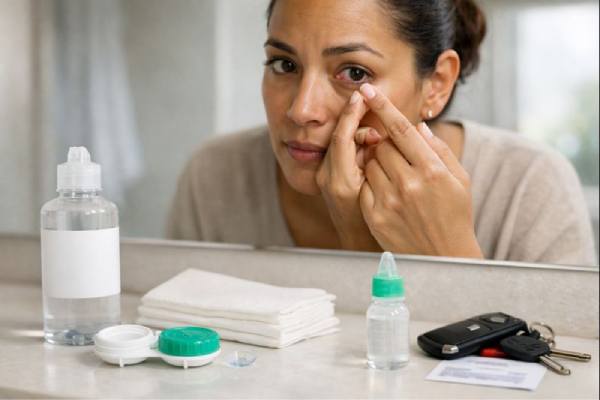
Do not “finish the day.” Remove the lens from the symptomatic eye, and usually from both eyes. If a lens feels stuck, add a few drops of contact lens–safe lubricating drops, wait a minute, and try again gently. Forcing removal can scratch the cornea.
Step 2: switch to glasses and pause lens wear
Assume you will be in glasses for at least 24 hours, longer if symptoms persist. This reduces friction, restores oxygen exposure, and prevents a lens from trapping microbes against the cornea.
Step 3: avoid common home mistakes
- Do not rinse lenses or cases with water.
- Do not reuse a lens from a “problem day.”
- Do not sleep in lenses after symptoms begin.
- Do not use whitening eye drops for redness relief; they can mask symptoms and may worsen irritation.
If you use lubricating drops, choose a gentle option and avoid touching the bottle tip to the eye.
Step 4: save the lens and case if infection is possible
If symptoms are concerning (especially pain, light sensitivity, or blur), keep the lens, case, and solution available. A clinician may want to see them or, in some settings, culture them. Do not continue using the same lens.
Step 5: decide whether you need same-day care
Use a simple rule:
- If symptoms are mild, improving after lens removal, and vision is normal in glasses, you may monitor for a short period.
- If symptoms are worsening, one-eye dominant, or include light sensitivity or vision change, seek same-day evaluation.
Step 6: prepare for the appointment
Bring practical details that speed diagnosis:
- What time symptoms started and how quickly they progressed
- Whether you slept or napped in lenses
- Any water exposure (shower, pool, hot tub, lake, even heavy rain)
- Lens type (daily, two-week, monthly) and how long the current pair has been used
- Care system used and whether you topped off solution or reused lenses
These details matter because they shape the clinician’s suspicion for bacterial, fungal, or amoebic infection and influence treatment urgency.
Even when symptoms improve, be cautious about restarting lenses too quickly. Restarting before the surface is calm can trigger a rebound flare and increase the chance of a longer recovery.
Why contact lens infections happen
A contact lens–related infection usually develops when microbes gain access to a vulnerable cornea and multiply. Contact lenses do not “cause” infection on their own, but they can increase risk by changing the eye’s defenses: reducing oxygen, altering tear flow, trapping organisms, and creating micro-abrasions.
The most common pathways to infection
Several routes are especially important:
- Overwear and overnight wear: Long hours and sleeping in lenses reduce oxygen and slow surface repair, making it easier for germs to invade.
- Water exposure: Showering, swimming, hot tubs, and rinsing lenses or cases with water can introduce organisms that are particularly dangerous for contact lens wearers.
- Case contamination: A lens case can develop a biofilm, an invisible layer where microbes persist. Reusing solution and failing to let the case dry are common contributors.
- Deposit buildup: Proteins and lipids can coat lenses, increasing friction and providing a surface where microbes can adhere.
Which germs are involved
Most contact lens–related corneal infections are bacterial. Certain bacteria can thrive in moist environments and can be associated with more aggressive disease. Fungal infections are less common but can be difficult to treat. Amoebic infections, such as Acanthamoeba keratitis, are uncommon but can be severe and are strongly associated with water exposure and poor lens hygiene.
The key point is that different organisms can look similar early on. That is why clinicians treat suspicious corneal infections urgently and may choose broad initial therapy.
Who is at higher risk
You may be at higher risk if you:
- often extend wear time or sleep in lenses
- wear reusable lenses and have inconsistent case hygiene
- routinely expose lenses to water
- have chronic dry eye, allergy, or eyelid inflammation that makes the surface more vulnerable
- smoke or have health conditions that reduce healing
- wear cosmetic lenses without consistent professional oversight
Risk is not all-or-nothing. Many infections occur in people who do “most things right” but have one high-impact habit, such as occasional showering in lenses or periodic overnight wear.
Why early symptoms can be confusing
Dryness, allergy, and mild abrasions can mimic infection symptoms. At the same time, early infection can mimic dryness. The practical takeaway is to treat sudden, unusual, or one-eye symptoms conservatively: stop lens wear, remove the lens early, and escalate to urgent care if pain, light sensitivity, or vision change appears.
Prevention is ultimately about removing the largest risk multipliers: water exposure, overnight wear, and poor case hygiene.
What urgent evaluation and treatment involve
People often delay care because they assume an eye exam will be slow or that they will be told “it is just irritation.” In reality, clinicians take contact lens symptoms seriously because the cornea is too important to gamble with. Knowing what evaluation involves can make it easier to seek care promptly.
What clinicians look for
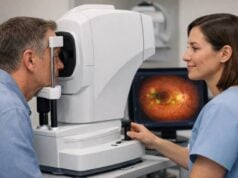
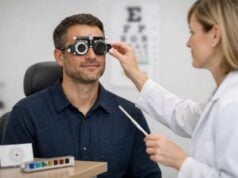
An urgent contact lens evaluation typically includes:
- checking vision in each eye
- examining the cornea under magnification
- using fluorescein dye to highlight abrasions, ulcers, or staining
- assessing the pattern of redness and discharge
- checking the eyelids and inside the lids for inflammation
- asking detailed questions about lens wear, hygiene, and water exposure
Clinicians are often trying to distinguish between dry eye irritation, allergic inflammation, sterile infiltrates, abrasion, and true microbial keratitis. The distinction matters because treatments differ, and delaying the right treatment can increase scarring risk.
When cultures or scrapings may be done
If a clinician suspects microbial keratitis or sees a corneal ulcer, they may take a sample from the cornea or request the lens and case for analysis. This is more likely when the lesion is central, large, rapidly progressive, or not responding to initial therapy. Sampling can guide targeted treatment if the infection is unusual or severe.
What treatment can look like
Treatment depends on severity and suspected organism, but commonly includes:
- frequent prescription antimicrobial drops for suspected bacterial infection
- pain control strategies and protective measures
- strict lens cessation until the cornea heals
- close follow-up, sometimes within 24 to 48 hours
For more severe cases, treatment intensity increases and may require specialist care. In rare situations, hospitalization or surgical intervention may be necessary to preserve vision.
Why follow-up matters
Corneal infections can change quickly. Early improvement is reassuring, but clinicians often want to confirm the cornea is stabilizing and that treatment is appropriate. It is also common for the eye to feel better before it is fully healed. Stopping treatment early or restarting lenses too soon can cause relapse.
What you can do to help treatment succeed
- Bring your lenses, case, and solution if asked.
- Follow dosing exactly, even if symptoms improve.
- Avoid contact lenses until a clinician confirms it is safe.
- Replace old lenses and cases after an infection episode, even if they look clean.
The best outcome usually comes from acting early. Prompt evaluation turns uncertainty into a plan and protects the cornea from preventable damage.
How to lower your risk long term
The most effective prevention strategies are not complicated. They are the few habits that remove the biggest risk multipliers. If you want a sustainable routine, aim for consistency rather than intensity.
Make these habits non-negotiable
- Keep water away from lenses and cases: no showering, swimming, hot tubs, or rinsing with tap water.
- Avoid sleeping in lenses unless your clinician has specifically prescribed overnight wear for your lenses and your eyes.
- Use fresh disinfecting solution every time: empty the case, do not top off, and allow the case to dry fully between uses.
- Replace lenses on schedule: do not stretch daily, two-week, or monthly lenses beyond their intended use.
- Wash and fully dry hands before handling lenses: wet hands increase contamination and water exposure.
Consider a switch if your lifestyle makes hygiene hard
If you frequently have long days, travel often, or struggle with consistent case care, daily disposable lenses can reduce variables by eliminating the case and reducing deposit buildup. If you use reusable lenses and suspect solution sensitivity or recurring irritation, discuss whether a different care system might be better tolerated.
Use “red flag rules” to guide behavior
Treat these as automatic lens-stopping triggers:
- pain that is more than mild dryness
- light sensitivity that is new
- noticeable blur in glasses
- a one-eye problem that worsens over hours
- redness that does not improve after lens removal
Having clear rules prevents the common error of repeatedly restarting lenses during an evolving problem.
After a suspected infection, reset your equipment
Once an infection or serious inflammatory episode is suspected, it is safer to replace:
- the current lenses
- the lens case
- any opened solution bottles involved in the episode
This reduces the chance you reintroduce contamination and helps break the relapse cycle.
Plan for the day you make a mistake
Even careful wearers slip. Keep a small “exit ramp” kit available: backup glasses, a spare case, and your solution. The ability to remove lenses safely prevents risky improvisation like sleeping in lenses or storing them in water.
Long-term safety is not about fear. It is about reducing exposure, shortening response time, and giving the cornea the respect it deserves. When you treat unusual symptoms as actionable information rather than an inconvenience, you protect both your comfort and your vision.
References
- What Causes Contact Lens-related Eye Infections | Healthy Contact Lens Wear and Care | CDC 2025 (Government Guidance)
- Contact Lens–Associated Keratitis— an Often Underestimated Risk – PMC 2022 (Review)
- Risk Factors for Bacterial Keratitis and Severe Disease in Hydrogel Contact Lens Users: A Multi-Center Case Control Study and Case-Only Analysis – PMC 2024
- Acanthamoeba keratitis – A review – PMC 2024 (Review)
Disclaimer
This article is for educational purposes and does not replace medical advice, diagnosis, or treatment. Contact lens–related infections and corneal complications can become serious quickly and may threaten vision if care is delayed. Remove your contact lenses and seek prompt evaluation if you have significant pain, new or worsening light sensitivity, sudden blurry vision, rapidly worsening redness, symptoms that are much worse in one eye, or any concern for a corneal injury or infection. Do not restart contact lenses until symptoms have resolved and a clinician has confirmed it is safe.
If you found this helpful, please consider sharing it on Facebook, X (formerly Twitter), or any platform you prefer. Your support helps our team continue producing quality content.