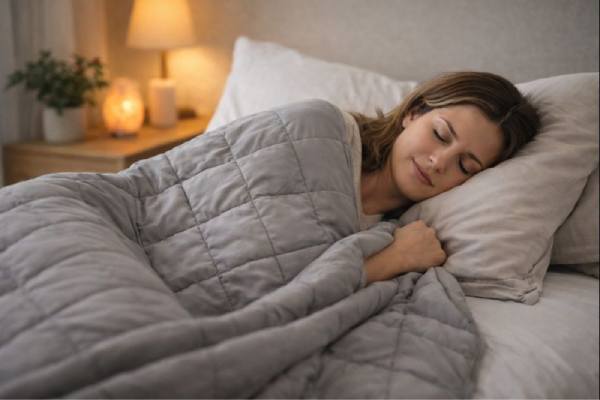
A weighted blanket is designed to feel like steady, gentle pressure across the body—closer to a sustained hug than a regular comforter. Many adults try one for anxiety, restless sleep, or the hard-to-describe feeling of being “wired but tired.” When it works, the effect is often simple: your body settles first, and your mind follows. The most meaningful benefits tend to show up in three areas—easier relaxation at night, fewer stress spikes during wind-down, and a greater sense of comfort that makes bedtime feel safer and more predictable.
At the same time, weighted blankets are not a cure-all. Results vary, and the wrong weight or fabric can be uncomfortable or too warm. This guide explains what benefits you can realistically expect, how to choose the best blanket weight and size, and how to use one safely and effectively.
Top Highlights
- Weighted blankets can help some people feel calmer during evening wind-down and reduce “restless body” sensations at bedtime.
- Many users report improved subjective sleep quality, especially when anxiety and tension are part of the insomnia pattern.
- Benefits are typically modest and depend on comfort, temperature control, and consistent use over 1–4 weeks.
- Avoid weighted blankets for infants and use caution if you have breathing problems, limited mobility, or conditions that make heat or pressure unsafe.
- Start with a blanket around 8–12% of body weight and trial it for 10–20 minutes before using it all night.
Table of Contents
- How weighted blankets may reduce anxiety
- Sleep quality and insomnia outcomes
- Best blanket weight and fit
- Safety and who should avoid them
- Materials temperature and maintenance
- How to use a weighted blanket well
How weighted blankets may reduce anxiety
Weighted blankets are most often described as calming, but the mechanism is less about “making you sleepy” and more about shifting your nervous system out of high alert. Anxiety commonly shows up in the body first: tight chest, shallow breathing, restless legs, clenched jaw, or a sense that you cannot settle. Gentle, evenly distributed pressure can support a different bodily state—one associated with safety, stillness, and slower breathing.
Deep pressure and the body’s safety signals
The sensation of weight across large muscle groups is sometimes called deep pressure stimulation. Many people find deep pressure soothing because it can reduce sensory “noise” and give the body a clear, steady signal to organize around. This matters if your anxiety includes physical agitation or a racing internal tempo. Instead of trying to think your way into calm, you are giving your body a direct cue that it can downshift.
What anxiety relief can look like in real life
Anxiety improvement is often subtle rather than dramatic. Common “wins” people report include:
- Feeling less fidgety while lying down
- Fewer adrenaline-like surges during bedtime transitions
- Less urge to check the phone, pace, or restart a bedtime routine
- Easier return to baseline after a stressful thought or sensation
- Greater comfort in quiet, which can be hard when you feel keyed up
Some people also use a weighted blanket during the day, especially for concentrated work or recovery time. If you try that, treat it as a targeted tool rather than something to wear for hours. A 10–30 minute “pressure break” can be enough to change state without causing stiffness or overheating.
Who tends to benefit most
Weighted blankets are often most helpful when anxiety has a strong body component: tension, sensory sensitivity, hypervigilance, or difficulty transitioning from activity to rest. They may be less helpful if your anxiety is primarily cognitive (endless worry) unless you pair the blanket with a mental skill, such as worry postponement or a short breathing practice. The blanket can lower intensity, but it usually works best as part of a plan: predictable wind-down, fewer stimulants late in the day, and a consistent sleep window.
Sleep quality and insomnia outcomes
Sleep problems are one of the most common reasons adults buy a weighted blanket. The goal is not sedation. The goal is to make the body feel settled enough that sleep can begin and continue. Many people with insomnia describe a mismatch: their mind is tired, but their body feels alert. That pattern is especially common when stress and anxiety are driving sleep disruption.
What the research and real-world use suggest
Overall, the evidence points to modest improvements for some people, especially in self-reported sleep quality. Benefits are not universal, and some studies show little change in objective sleep measurements. That split makes sense: comfort and perceived restfulness can improve even if total sleep time does not change dramatically at first. For many adults, “I slept better” means fewer tense awakenings, less time spent struggling, and a calmer mood the next day.
Sleep problems weighted blankets may help
Weighted blankets appear most promising for these patterns:
- Sleep onset difficulty driven by tension: you feel wired at bedtime, with a restless body.
- Frequent waking with difficulty resettling: the blanket may help you return to a calmer baseline.
- Stress-linked insomnia: when your sleep changes during high-pressure periods.
- Sensory sensitivity: when small noises, light shifts, or uncomfortable touch sensations keep you alert.
They may be less helpful when insomnia is primarily caused by irregular sleep timing, untreated sleep apnea, or significant pain that requires medical management. In those cases, the blanket might improve comfort but cannot fix the main driver.
What “better sleep quality” can mean
Sleep quality is multi-dimensional. You can improve in one area while another stays the same. A realistic set of improvements to watch for includes:
- Falling asleep with less struggle, even if it still takes time
- Fewer “startle awake” moments
- A steadier mood upon waking
- Less bedtime dread and fewer rituals
- Better consistency over time, not just one good night
If you want to evaluate whether a weighted blanket is helping, track two quick numbers for two weeks: (1) time to fall asleep and (2) how rested you feel in the morning on a 0–10 scale. The goal is not perfection. The goal is a trend.
Pairing a blanket with habits that amplify results
Weighted blankets tend to work best when you reduce competing signals that keep the nervous system alert: late caffeine, bright screens in bed, irregular sleep timing, or emotionally intense content right before sleep. Think of the blanket as a stabilizer. It supports downshifting, but you still want your routine to point in the same direction.
Best blanket weight and fit
Choosing the best weight is where most people either succeed quickly or give up. A weighted blanket should feel grounding, not restrictive. Too light may feel like “nothing.” Too heavy can cause discomfort, overheating, or a trapped feeling that increases anxiety rather than reducing it.
The most useful starting rule
A common starting point is about 8–12% of your body weight. Many people begin near 10% and adjust based on comfort.
- If you are sensitive to pressure, get hot easily, or feel claustrophobic, aim closer to 8–9%.
- If you like firm pressure and do not overheat, 10–12% may feel better.
- If you are between sizes, choose the lighter option first. Comfort is more important than “maximizing” weight.
Example:
- 150 lb (68 kg) → start around 15 lb (7 kg)
- 200 lb (91 kg) → start around 20 lb (9 kg)
If you use kilograms, a simple estimate is body weight × 0.1. Then adjust up or down for comfort.
Weight distribution matters as much as weight
Two blankets can weigh the same but feel very different. Look for even distribution (often achieved with smaller stitched squares) so the blanket does not bunch and create pressure points. If weight shifts to one area, it can irritate shoulders, hips, or knees and lead to nighttime repositioning.
Size and coverage
Weighted blankets are often smaller than comforters on purpose. They should lie on top of you, not drape far over the sides of the bed. A good fit usually:
- Covers from about chest to feet for sleep use
- Does not hang excessively off the sides (which can pull the blanket and feel heavier than intended)
- Matches your body size more than your mattress size
If you share a bed, two separate blankets often work better than one large heavy blanket. This reduces tugging, overheating, and uneven pressure.
Choosing for daytime use
If your main goal is anxiety relief while awake, you may not need a full blanket. A smaller option (like a lap-sized weight) can provide calming pressure without overheating or restricting movement. For daytime use, many people prefer a lighter percentage because the goal is regulation, not full-body coverage.
Safety and who should avoid them
Weighted blankets are generally considered low-risk for many healthy adults, but they are not appropriate for everyone. Safety is mostly about two issues: the ability to move freely and the ability to breathe comfortably and regulate temperature.
Do not use for infants and very young children
Weighted blankets are not recommended for infants and toddlers. Small children may not reliably remove a heavy blanket, and overheating or restricted breathing can become dangerous. For older children, use should be discussed with a pediatric clinician and supervised based on the child’s size, strength, and health conditions.
Use caution with these conditions
Talk with a clinician before using a weighted blanket if you have:
- Breathing problems that worsen when lying down or under covers
- Limited mobility, muscle weakness, or conditions that make it hard to remove the blanket independently
- Circulatory issues, severe neuropathy, or skin conditions where pressure could cause discomfort or reduced sensation of warning signs
- Heat intolerance, night sweats, or conditions where overheating is a frequent problem
- Claustrophobia or panic symptoms triggered by feeling restrained
If you have sleep apnea, a weighted blanket is not a treatment for airway obstruction. Some people still use one comfortably, but if you are undiagnosed and have symptoms like loud snoring, choking or gasping at night, or significant daytime sleepiness, it is safer to seek evaluation rather than relying on a blanket for “better sleep.”
Practical safety checks before sleeping with one
- You can remove it easily with both hands and without straining.
- You can change position freely, including rolling to your side.
- Your breathing feels normal and uncompressed when it is on.
- You are not overheating within 10–20 minutes of use.
If any of those checks fail, reduce the weight, change the material to a cooler option, use it only for short periods, or stop.
When to stop and reassess
Discontinue use if you develop numbness, tingling, shoulder or hip pain, increased nighttime awakenings, or anxiety spikes linked to the blanket. These are usually signs of too much weight, poor distribution, or too much heat retention. Comfort is not a luxury here—it is the indicator that the tool is working as intended.
Materials temperature and maintenance
The “best” weighted blanket is the one you can tolerate nightly. Many people quit not because the weight is wrong, but because the blanket is too warm, too stiff, or too hard to clean. Small design choices can make the difference between a calming routine and a nightly annoyance.
Common fill types and how they feel
- Glass beads: often feel smoother and less bulky, and may drape more naturally.
- Plastic pellets: can be slightly bulkier and may make more noise as you shift.
- Knitted weighted blankets: use heavy yarn rather than beads. They can feel breathable and flexible, but weight distribution depends on the knit pattern.
You do not need to chase a “perfect” fill. The more important factors are even distribution and comfort.
Fabric and temperature control
Heat is a frequent deal-breaker. If you run warm, prioritize breathable materials:
- Cotton and moisture-wicking blends often feel cooler.
- Very plush fabrics can feel comforting but may trap heat.
- If you sweat at night, consider a lighter weight or a breathable knit style.
If you live in a climate with warm nights or have hot flashes, plan for seasonal use: a lighter weighted blanket for warmer months and a heavier or plusher option for winter. Overheating can worsen sleep and anxiety, so temperature control is not optional.
Weight distribution and construction
Look for smaller stitched sections that keep the weight from pooling. Uneven weight can create pressure points and shoulder strain. A blanket that shifts easily may also wake you more often, especially if you are a light sleeper.
Cleaning and durability
Weighted blankets can be heavy and awkward to wash. Before you buy, consider:
- Is it machine washable at home, or does it require special care?
- Does it come with a removable cover that is easy to wash weekly?
- Will drying time be practical, or will it stay damp and musty?
A removable cover can make long-term use much easier, especially if you want the blanket as part of a nightly routine. Hygiene matters for sleep comfort, and convenience affects whether you will actually keep using it.
How to use a weighted blanket well
A weighted blanket is most effective when you treat it like a skill-building tool, not a one-night fix. Your nervous system may need time to learn that bedtime is safe and predictable. The best approach is gentle, consistent, and adjustable.
Start with a short trial
Before using it all night, try a 10–20 minute trial while awake:
- Lie down in a comfortable position
- Notice breathing, temperature, and any trapped feeling
- Adjust placement so weight is even and shoulders are not strained
If you feel calmer and comfortable, expand to 30–60 minutes, then a full night. If you feel overheated or tense, try a lighter weight or a cooler fabric.
Use placement strategically
For many adults, full-body coverage is not required. Options include:
- Across legs and hips: often reduces restlessness without chest pressure.
- Across torso and legs: grounding for anxiety, but avoid compressing the chest if you feel short of breath.
- As a “top layer” only: place it over a lighter blanket so you can remove it easily without losing all warmth.
If you wake at night anxious, a short period under the blanket while doing slow breathing can be enough. You do not have to force yourself to keep it on if it becomes uncomfortable.
Pair it with one calming habit
Weighted blankets work best when you add a single consistent cue that signals wind-down, such as:
- 5 minutes of paced breathing
- a brief stretch routine
- a low-light reading ritual
- a short “tomorrow list” to unload worries
This pairing trains your brain to associate the blanket with safety and routine, not with “trying to stop anxiety.”
Know what progress looks like
Early benefits are often about state change rather than perfect sleep. Good signs include:
- you settle faster after getting into bed
- nighttime awakenings feel less activating
- you worry less about sleep
- your mornings feel slightly steadier
If nothing changes after 2–4 weeks of consistent, comfortable use, it may simply not be the right tool for your body. In that case, it is reasonable to shift focus to higher-impact supports: sleep timing consistency, reducing late stimulants, and structured approaches for insomnia or anxiety. A weighted blanket should feel like help, not like homework.
References
- A randomized controlled study of weighted chain blankets for insomnia in psychiatric disorders – PMC 2020 (RCT)
- Effect of weighted blankets on sleep quality among adults with insomnia: a pilot randomized controlled trial – PMC 2024 (RCT)
- Safety and effectiveness of weighted blankets for symptom management in patients with mental disorders: A systematic review and meta-analysis of randomized controlled trials – PubMed 2024 (Systematic Review and Meta-Analysis)
- The effect of weighted blankets on sleep quality and mental health symptoms in people with psychiatric disorders in inpatient and outpatient settings: A systematic review and meta-analysis – PubMed 2024 (Systematic Review and Meta-Analysis)
Disclaimer
This article is for educational purposes and does not replace individualized medical advice, diagnosis, or treatment. Weighted blankets may not be safe for everyone, including infants and people with certain breathing, mobility, or temperature-regulation conditions. If you have significant medical issues, use sleep devices, take sedating medications, or experience severe anxiety or insomnia, consider speaking with a qualified clinician to determine the safest and most effective approach for you. If you develop chest pain, severe shortness of breath, fainting, confusion, or thoughts of self-harm, seek urgent medical care immediately.
If you found this helpful, please consider sharing it on Facebook, X (formerly Twitter), or any platform you prefer.