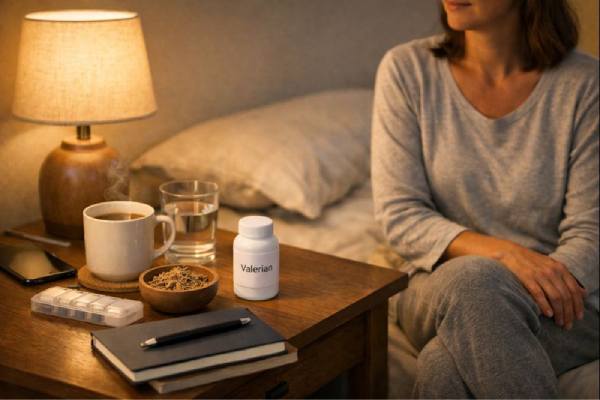
Valerian root sits in a curious middle ground between folk remedy and modern supplement: widely used, strongly scented, and backed by a patchwork of research that is neither a clear win nor a clear failure. For some people, it feels like a gentle “volume knob” for a busy mind at bedtime—less spiraling, easier settling. For others, it does very little, or it causes vivid dreams and next-day grogginess. That uneven experience is part of the story: valerian products vary, sleep problems vary, and the way researchers measure sleep often misses what people care about most—how they feel the next morning.
This guide explains what valerian is, what the evidence realistically suggests, how to use it with smart expectations, and how to reduce risk—especially if you take other medicines or have ongoing insomnia.
Essential Insights
- Valerian may modestly improve subjective sleep quality for some people, especially when stress and “wired-but-tired” arousal are part of the problem.
- Benefits often appear gradually, so a short, consistent trial is more informative than a single dose.
- Product quality and dose matter; extracts can differ widely in active compounds and standardization.
- Avoid combining valerian with alcohol or sedating medications unless a clinician confirms it is appropriate.
- If insomnia lasts more than a few weeks or causes daytime impairment, treat valerian as an add-on—not a substitute for medical evaluation and structured therapy.
Table of Contents
- What valerian root is
- Does valerian improve sleep
- How valerian may calm the brain
- Dosage forms and timing
- Side effects and interactions
- Valerian compared with other aids
- Building a safer sleep plan
- When to seek medical help
What valerian root is
Valerian (most commonly Valeriana officinalis) is a flowering plant whose roots and underground stems are used in teas, tinctures, and capsules marketed for sleep and relaxation. If you have ever opened a bottle and thought it smelled like “earthy socks,” you are not imagining it—valerian’s volatile compounds are part of what makes it distinctive. That smell also hints at why results can vary: the plant contains many constituents, and different growing conditions, harvest timing, and extraction methods can change the final chemical profile.
Most commercial products fall into two categories:
- Whole-root preparations (powdered root in capsules, or dried root for tea)
- Extracts (often labeled with a ratio such as 4:1, or standardized to a percentage of certain compounds)
One group of compounds often discussed is valerenic acids, which are sometimes used as a marker of potency in standardized extracts. Other constituents—like volatile oils and iridoids—may also contribute to effects, but they are less consistently measured across brands. The practical takeaway is simple: two bottles labeled “valerian” may not behave like the same product.
It also helps to set the right mental model. Valerian is not designed to “knock you out” like a strong sedative. People who respond well often describe a softer shift: less mental friction, fewer abrupt awakenings, and less bedtime agitation. That makes valerian most relevant for sleep problems tied to hyperarousal—the body is tired, but the nervous system stays on alert.
Finally, remember that valerian sits in different regulatory lanes depending on where you live. Some regions treat certain preparations as herbal medicines; others treat most products as dietary supplements. Either way, the burden is on you to choose a reputable product and to use it as part of a broader sleep strategy rather than a single magic fix.
Does valerian improve sleep
The honest answer is: valerian can help some people, a little, and it is not reliably effective for everyone. Research overall suggests a pattern that matches real-world reports—mixed results, modest average benefits, and meaningful differences based on the person and the product.
Why the uncertainty? There are three big reasons.
1) Sleep is measured in ways that do not always match lived experience
Clinical studies often focus on sleep latency (how long it takes to fall asleep), total sleep time, and sleep efficiency. These are useful, but many people care most about something harder to quantify: “Did I feel more restored?” Valerian’s potential benefits may show up more in subjective sleep quality than in lab-style measurements, which can make it look weaker on paper than it feels in daily life for certain users.
2) Trials often include different kinds of “insomnia”
Not all insomnia is the same. Someone with mild, stress-linked difficulty falling asleep is different from someone with chronic insomnia plus depression, chronic pain, or sleep apnea. Valerian is more likely to be explored—and possibly more likely to help—when the main problem is difficulty settling rather than complex sleep disruption driven by medical causes.
3) Products vary, and dose varies
Many older trials used poorly characterized preparations. If the active compounds differ, results will differ. Some newer studies using standardized extracts and longer run-in periods report more consistent improvements—especially when valerian is taken nightly for weeks rather than “as needed.”
So what should you expect if you try it? A realistic expectation is not a dramatic transformation, but a small-to-moderate improvement in how quickly you drift off and how satisfied you feel with sleep, without major next-day impairment. If you notice no meaningful change after a structured trial (more on that below), it is reasonable to stop rather than endlessly escalating doses.
A final nuance: valerian’s reputation sometimes benefits from the “natural equals safer” assumption. Natural does not automatically mean effective or risk-free. The right framing is that valerian is a low-to-moderate intensity option that may be worth a careful trial, especially for mild sleep-onset problems, but it should not delay evaluation for persistent insomnia.
How valerian may calm the brain
Sleep is not simply the absence of wakefulness—it is an active brain state shaped by a tug-of-war between sleep drive, circadian timing, and arousal systems. Valerian is thought to influence the arousal side of that equation, which is why it is often described as calming rather than purely sedating.
GABA and “turning down” neural noise
Many discussions of valerian center on GABA (gamma-aminobutyric acid), the brain’s primary inhibitory signaling system. In plain terms, GABA helps quiet excess firing in networks that keep you alert and reactive. Certain constituents of valerian—especially valerenic acids in some preparations—appear to interact with GABA-related pathways. That does not mean valerian works like a prescription benzodiazepine, but it does support a plausible mechanism for reducing the “buzz” that keeps people awake.
Adenosine and sleep pressure
Another way to think about sleep is as a pressure system. Adenosine builds up during the day and contributes to sleepiness; caffeine works partly by blocking adenosine receptors. Valerian has been studied for potential interactions with adenosine signaling. If valerian nudges that system, the effect would likely feel like an easier slide into sleep rather than heavy sedation.
Serotonin and mood-linked arousal
Sleep and mood are tightly linked: anxious rumination, irritability, and low mood can all raise bedtime arousal. Some experimental work suggests valerian may influence certain serotonin-related targets. If true, that could help explain why some people report not only better sleep but also a subtle improvement in “evening calm.”
Why effects can be gradual
A frequent pattern with valerian is that it works better with consistent use rather than a single night. That could reflect gradual shifts in arousal signaling, conditioned expectations, or simply the time it takes to stabilize a bedtime routine. It also fits user experiences: valerian is often most helpful when the goal is reducing friction and restlessness, not inducing immediate sleep.
One important safety implication follows from these mechanisms: because valerian may dampen arousal, combining it with other sedatives can produce excessive sleepiness or impaired coordination. “Gentle” does not mean “stackable.”
Dosage forms and timing
Choosing a valerian product is less about finding a “perfect” brand and more about using a consistent, measurable approach. Your goal is to reduce variability so you can tell whether it helps you.
Common forms
- Capsules or tablets (powdered root): Convenient, but potency can vary with plant material quality.
- Standardized extracts: Often designed to provide a more consistent amount of marker compounds (such as valerenic acids).
- Tea (dried root): Traditional and gentle, but dosing is imprecise and the taste and smell are strong.
- Tinctures or liquid extracts: Allow flexible dosing, but alcohol content and concentration vary.
Timing
Most people take valerian 30 to 60 minutes before bedtime. If your main issue is a long “wind-down” period, pairing valerian with a consistent pre-sleep routine can make the timing feel more effective because you are addressing arousal from two angles: physiology and behavior.
A practical dosing approach
Because labels differ, the most useful strategy is to follow the product’s instructions while staying within commonly used ranges and avoiding aggressive escalation. A cautious, structured approach looks like this:
- Start low for 2 to 3 nights to gauge next-day drowsiness and dream intensity.
- Use the same dose and timing nightly for at least 10 to 14 nights.
- Avoid mixing with other sedating aids during the trial unless they are already stable and clinician-approved.
- Evaluate function, not just minutes asleep: morning grogginess, concentration, mood, and safety-sensitive performance matter.
If you are using a product that provides a clear milligram dose, many commonly used short-term ranges for adults fall around 300 to 600 mg per day in supplement contexts, though some standardized extracts in clinical studies may use different amounts. Tea preparations are harder to standardize; if you go that route, treat it more like a calming ritual than a precision intervention.
What to look for on a label
- A clear amount per serving (not just “proprietary blend”)
- An extract ratio or standardization marker
- Third-party testing language (helpful, though not a guarantee)
- A short ingredient list without additional sedative herbs unless you specifically want a combination formula
If your sleep improves, resist the urge to keep increasing the dose “just in case.” The aim is the smallest effective amount with the least next-day cost.
Side effects and interactions
Valerian is generally tolerated by many adults when used short-term, but “generally tolerated” is not the same as “risk-free.” Side effects are usually mild, yet they can be meaningful if you drive, operate machinery, or already feel cognitively foggy from poor sleep.
Common side effects
- Next-day sleepiness or slowed reaction time
- Vivid dreams or unusual dream intensity
- Headache
- Stomach upset or nausea
- Dizziness or a “heavy” feeling on waking
- Occasional paradoxical effects (feeling restless rather than calm)
A subtle but important risk is sleep inertia—you technically slept, but you feel mentally dull the next morning. If that happens, reduce the dose or stop, especially if safety-sensitive tasks are involved.
Interactions to take seriously
Valerian may increase sedation when combined with other substances that depress the central nervous system. Use extra caution—or avoid the combination—if you take:
- Benzodiazepines or related medicines
- Prescription sleep medications
- Opioids
- Sedating antidepressants
- Sedating antihistamines
- Alcohol
Even if the combination does not feel dramatic, it can impair coordination and judgment, especially during nighttime awakenings.
Who should avoid valerian or get medical advice first
- Pregnant or breastfeeding individuals (safety data are limited)
- Children (unless specifically advised by a pediatric clinician)
- People with significant liver disease or unexplained elevated liver enzymes
- Anyone who has had an allergic reaction to herbal products in the past
- People taking multiple psychoactive or sedating medications
- People with a history of substance use disorder who are concerned about dependence patterns
Stopping valerian
Most people can stop without issues after short-term use. However, if someone has been taking high doses for a long time, a brief taper can be more comfortable than an abrupt stop—especially if rebound anxiety or insomnia appears.
Before procedures or anesthesia
Because valerian can affect sedation and arousal, disclose it before surgery or procedures that involve anesthesia or sedating medications. Many clinicians recommend stopping sedating supplements ahead of time for safety and predictability.
When in doubt, treat valerian like a medicine: disclose it, respect interactions, and prioritize safety over experimentation.
Valerian compared with other aids
People rarely ask “Does valerian work?” in isolation. The real question is often: “Is it the best next step for my kind of sleep problem?” The answer depends on whether your sleep issue is driven by circadian timing, hyperarousal, habits, medical causes, or a mix.
Valerian versus melatonin
- Melatonin is most helpful for circadian timing problems (jet lag, delayed sleep phase, shifting schedules).
- Valerian is more often tried for calming and sleep-onset easing when stress and arousal are central.
If your sleep problem is “I am not sleepy at a normal hour,” melatonin may fit better. If it is “I am sleepy but my mind will not settle,” valerian may be the more intuitive match.
Valerian versus magnesium and other calming supplements
Magnesium is often used for muscle relaxation and general calm, especially when cramps or tension contribute to sleep disruption. Valerian tends to be more directly associated with subjective sleep quality and bedtime settling. Some people tolerate magnesium better; others find it does little. The deciding factor is usually your symptom pattern and side-effect profile.
Valerian versus over-the-counter antihistamines
Sedating antihistamines can cause strong next-day grogginess, dry mouth, constipation, and tolerance. Valerian usually causes less anticholinergic burden, but it may also be less reliably sedating. If you are choosing between them for repeated use, the long-term tradeoffs generally favor structured behavioral treatment over either option.
Valerian versus prescription sleep medications
Prescription hypnotics can be effective but carry risks including dependence, falls (especially in older adults), and complex sleep behaviors for certain drugs. Valerian is not a substitute when insomnia is severe, persistent, or medically complicated. But it may be a reasonable short-term adjunct for mild cases when you want a lower-intensity option and you can use it responsibly.
Valerian versus CBT-I
For chronic insomnia, cognitive behavioral therapy for insomnia (CBT-I) has the strongest track record because it addresses the engine of insomnia—conditioned arousal, sleep habits, and sleep-related beliefs. If insomnia has lasted months, valerian is best viewed as supportive, not primary.
A useful way to decide is this: supplements can help you feel slightly more capable of sleeping; CBT-I helps you become reliably sleep-capable again.
Building a safer sleep plan
Valerian works best when it is not asked to do the whole job. The most practical use is as one piece of a plan that reduces arousal, strengthens sleep drive, and makes your sleep window consistent.
Step one: define the problem you are targeting
Before you start, pick one primary target:
- Sleep onset (time to fall asleep)
- Night awakenings
- Feeling unrefreshed
- Bedtime anxiety or racing thoughts
Trying to fix everything at once makes it hard to tell what changed.
Step two: run a two-week trial like an experiment
For 14 nights:
- Take valerian at the same time each night (often 30–60 minutes before bed).
- Keep your wake time consistent, even after a bad night.
- Avoid alcohol and new sedating products during the trial.
- Track three outcomes in a simple note:
- Estimated time to fall asleep
- Number of awakenings you remember
- Morning rating (0–10) for alertness
If your sleep latency improves but morning alertness worsens, the dose may be too high or the timing may be off.
Step three: pair valerian with a wind-down that actually lowers arousal
A “wind-down” should reduce stimulation, not just fill time. A simple sequence:
- Dim lights and lower screen intensity 60 minutes before bed
- Warm shower or face wash to signal transition
- 5 to 10 minutes of slow breathing (longer exhale than inhale)
- A low-effort activity (paper book, light stretching, calming music)
- Bed only when sleepy, not merely when it is “bedtime”
This matters because valerian’s potential benefit is often about smoothing the descent into sleep, not forcing sleep against strong arousal.
Step four: decide what to do at day 14
Use a clear decision rule:
- Continue if you see meaningful improvement without next-day impairment.
- Adjust (lower dose, earlier timing) if you see partial improvement but feel groggy.
- Stop if nothing changes after consistent use, or if side effects outweigh benefits.
If you stop, do not label it a failure. You learned something important: your insomnia may not be driven by the pathways valerian influences, or the product was not a good match.
Step five: protect the basics that supplements cannot replace
The most underrated sleep tools are still the most effective:
- Bright morning light exposure
- Regular daytime movement
- Caffeine boundaries (especially after midday)
- A stable wake time
- A bedroom that is cool, dark, and quiet
Valerian can support these habits, but it cannot compensate for consistently working against your circadian system.
When to seek medical help
Valerian can be reasonable for mild, short-term sleep difficulty. But if insomnia becomes persistent or impairing, the bigger risk is not that valerian is harmful—it is that it can delay proper evaluation.
Signs you should escalate beyond self-treatment
- Insomnia most nights for more than 3 months
- Daytime impairment: concentration problems, irritability, errors at work, near-miss accidents
- Loud snoring, gasping, or witnessed breathing pauses (possible sleep apnea)
- Strong urge to move the legs at night, creeping sensations, or rhythmic leg jerks (possible restless legs syndrome)
- Severe anxiety, panic symptoms, or depressive symptoms that are worsening
- Periods of unusually high energy, reduced need for sleep, or impulsive behavior (possible mood instability)
- Dependence patterns: needing larger and larger amounts of any sleep aid to get the same effect
What a clinician may look for
Insomnia is often a symptom, not a standalone problem. A clinician may review:
- Medications and stimulants (including caffeine timing)
- Alcohol use and withdrawal patterns
- Pain, reflux, asthma, or urinary symptoms that interrupt sleep
- Iron status (for restless legs risk)
- Thyroid issues, hormone changes, or other medical contributors
- Whether CBT-I is appropriate and accessible for you
If you suspect sleep apnea or another sleep disorder, a sleep study can be life-changing—not just for sleep, but for mood, cardiovascular risk, and daytime functioning.
How valerian fits when you are getting help
If you are working with a clinician, valerian may still have a place as a short-term adjunct, especially if it helps you settle while you implement CBT-I or address underlying triggers. The key is transparency: tell your clinician what you take, how often, and how it affects you.
Insomnia responds best to precision. Supplements can be part of that precision, but only when they do not distract from the real driver of the problem.
References
- Valerian: Usefulness and Safety | NCCIH 2025 (Government Health Resource)
- Does valerian work for insomnia? An umbrella review of the evidence – PubMed 2024 (Umbrella Review)
- Standardized Extract of Valeriana officinalis Improves Overall Sleep Quality in Human Subjects with Sleep Complaints: A Randomized, Double-Blind, Placebo-Controlled, Clinical Study – PMC 2023 (RCT)
- Herbal and Natural Supplements for Improving Sleep: A Literature Review – PMC 2024 (Review)
- Clinical Practice Guideline for the Pharmacologic Treatment of Chronic Insomnia in Adults: An American Academy of Sleep Medicine Clinical Practice Guideline – PMC 2017 (Guideline)
Disclaimer
This article is for educational purposes only and does not provide medical advice, diagnosis, or treatment. Herbal products can cause side effects and may interact with prescription and over-the-counter medicines. If you are pregnant or breastfeeding, have a chronic health condition (including liver disease), take sedating medications, or have persistent insomnia or significant daytime impairment, consult a qualified healthcare professional before using valerian or other sleep supplements. Seek urgent help if you have severe mood changes, thoughts of self-harm, or symptoms that suggest a serious sleep disorder such as sleep apnea.
If you found this article helpful, consider sharing it on Facebook, X (formerly Twitter), or any platform you prefer.