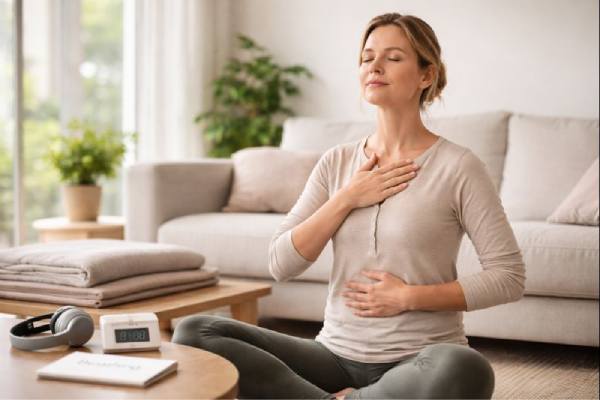
“Stimulate your vagus nerve” has become a catch-all promise for calmer mood, better digestion, and deeper sleep. There is a real scientific foundation behind vagus nerve stimulation (VNS), including implanted medical devices and growing research on noninvasive approaches. At the same time, the internet has turned “vagal tone” into a vague wellness score and “vagus hacks” into a long list of rituals that are rarely tested the way medical treatments are tested.
This article separates what is known from what is merely plausible. You’ll learn what the vagus nerve actually does, which techniques have the best evidence for sleep and stress, and how to use them safely. The goal is not to chase perfect calm, but to build reliable skills for shifting out of chronic threat-mode and into a steadier baseline.
Quick Overview
- Clinically tested VNS exists, but most consumer “vagus stimulation” is indirect and works best as a stress-regulation practice, not a cure.
- Slow, paced breathing and structured relaxation are among the most dependable ways to influence vagal pathways and perceived calm.
- Device-based transcutaneous VNS shows promise in certain conditions, but protocols and product quality vary widely.
- Avoid aggressive methods if you have fainting episodes, significant heart rhythm issues, or you use implanted electrical devices.
- A practical plan is a 10-minute daily routine plus a 60-second “reset” technique for acute stress.
Table of Contents
- Vagus nerve basics and real functions
- Techniques with strongest evidence
- Breathing and voice exercises that help
- Cold, movement, and body-based resets
- Popular claims and where hype creeps in
- Safety, contraindications, and smart routines
Vagus nerve basics and real functions
The vagus nerve (cranial nerve X) is a major communication highway between the brain and the body. It touches the throat and voice box, the heart and lungs, and much of the digestive tract. It also carries information in both directions: signals from the brain influence organs, and signals from organs inform the brain about safety, inflammation, fullness, breathing patterns, and internal state.
A few details matter when evaluating “vagus stimulation” claims:
- It is not a single on-switch for relaxation. The vagus contains many fiber types with different jobs. Some pathways support calming and recovery, while others coordinate reflexes like swallowing, coughing, and gut movement.
- Most vagus signaling is sensory (afferent). A large share of fibers carry information to the brain. That means “stimulating the vagus” can change brain state partly by changing what the brain perceives from the body.
- Vagus activity is one part of the autonomic system. Stress regulation depends on the balance between sympathetic arousal (mobilization) and parasympathetic regulation (rest, digestion, recovery). Real resilience is flexible switching, not being “parasympathetic all the time.”
You’ll often see the term vagal tone, a loose shorthand for how effectively vagal pathways support regulation. In research, vagal tone is sometimes inferred from heart rate variability (HRV) measures that reflect beat-to-beat variability influenced by breathing and baroreflex function. HRV can be useful, but it is not a direct meter of mental health. It changes with sleep, illness, alcohol, menstrual cycle, training status, and medications. A single HRV number rarely tells you whether a specific vagus technique is “working.”
A better question is functional: Can you reliably downshift your arousal when needed, and do you recover faster after stress? The most helpful vagus-related techniques are the ones that improve that ability without creating new problems like dizziness, breath hunger, or dependence on gadgets.
Techniques with strongest evidence
When people say “vagus nerve stimulation,” they often mix three very different categories. Sorting them first prevents confusion.
1) Implanted VNS
This is the most established form: an implanted pulse generator connected to the vagus nerve in the neck. It is used in specific medical contexts (most commonly drug-resistant epilepsy, and in some settings treatment-resistant depression). This is not a self-help technique. The key point for everyday readers is that direct vagus stimulation can change brain networks, but it requires precise dosing, careful monitoring, and medical oversight.
2) Transcutaneous VNS (tVNS or taVNS)
Noninvasive devices aim to stimulate vagus-related branches through the skin, often at the ear (auricular branch) or sometimes at the neck. Research is expanding in areas like sleep, pain, mood symptoms, and inflammation. This is where the evidence is promising but uneven: protocols differ (which ear region, what frequency, how long, how often), and “sham” stimulation is hard to design because people can feel tingling.
If you are considering a device, treat it like a medical tool: look for published protocols, transparent parameters, and clear safety guidance rather than marketing language about “resetting your nervous system.”
3) Indirect vagal engagement
This is where most “techniques” live: paced breathing, vocalization (humming or singing), meditation, cold exposure, and postural or movement practices. These do not electrically stimulate the vagus nerve in a targeted way. Instead, they shift autonomic balance and interoceptive signaling in ways that often involve vagal pathways.
Among indirect methods, paced slow breathing has one of the strongest and most consistent bodies of evidence for improving short-term autonomic regulation and perceived stress. It is also low cost, easy to scale, and adjustable to your health status.
A practical ranking for most people looks like this:
- Most dependable: paced breathing, relaxation training, sleep timing and light exposure, regular movement
- Promising with variability: taVNS devices for specific complaints (especially when protocols are structured and consistent)
- High uncertainty or narrow use: aggressive cold exposure, “vagus massages,” strong breath-holds, and social-media “one weird trick” routines
The rest of this article focuses on what you can do safely and how to avoid being pulled into hype that sounds scientific but does not hold up under closer inspection.
Breathing and voice exercises that help
Breathing is the fastest voluntary lever you have on autonomic state because it directly links to brainstem circuits that regulate arousal. The goal is not to breathe “more,” but to breathe slower and more efficiently, with a longer exhale than inhale, which often supports a calmer cardiovascular pattern.
The most useful breathing pattern
For many adults, a good starting point is 5 to 6 breaths per minute for 5 to 10 minutes. If you prefer structure, use a simple count:
- Inhale 4 seconds
- Exhale 6 seconds
- Repeat for 5 minutes, then reassess
If that feels too slow or creates air hunger, shift to 4 in and 5 out, or 3 in and 4 out. The “best” pace is the one that calms you without strain.
To make it practical, use a two-tier system:
- Daily training (10 minutes): paced breathing at a comfortable slow rhythm
- Acute reset (60 seconds): two or three “physiological sighs” (a normal inhale, a small top-up inhale, then a long exhale), followed by slow exhale-focused breathing
Daily training improves baseline regulation. Acute reset helps when stress spikes.
Common mistakes that mimic vagal activation but backfire
- Breathing too deeply and too fast, which can trigger lightheadedness
- Forcing belly breathing aggressively, which can increase tension
- Breath-holding as a primary strategy (often increases arousal in anxious people)
If you feel tingling in fingers, dizziness, or tightness in the chest, you are likely over-breathing. Slow down, reduce breath depth, and lengthen the exhale gently.
Voice-based techniques
The vagus nerve interfaces with the throat and larynx, which is why vocalization can feel regulating. The goal is not volume; it is steady vibration and prolonged exhale.
Try one of these for 2 to 3 minutes:
- Humming on a comfortable note with a long, smooth exhale
- Singing softly (even one repetitive phrase)
- Chanting a single tone while keeping shoulders relaxed
Voice techniques can be especially helpful when stress shows up as throat tightness, shallow breathing, or a “stuck” feeling. They also combine well with paced breathing: inhale normally, then hum on the exhale.
If you have asthma, COPD, vocal cord issues, or you feel breathless, keep these gentle and stop if symptoms worsen.
Cold, movement, and body-based resets
Some “vagus” techniques work less through the vagus nerve specifically and more through rapid shifts in attention, breathing, and cardiovascular reflexes. Cold exposure and movement can be effective, but they are also where people most often overdo it.
Cold as a short reset
A safer version of cold exposure is not an ice bath. It is brief cold-to-the-face contact, which can engage reflexive changes in heart rate and breathing in some people.
Options that are usually more manageable:
- Splash cool water on the face for 15 to 30 seconds
- Hold a cool pack against the cheeks and around the eyes (not directly on skin if it is very cold) for 20 to 60 seconds
- Step outside for a minute of cool air while slowing the exhale
This can interrupt panic-like spirals by giving the brain a strong, novel sensory signal and encouraging a slower breathing pattern afterward. The cold itself is not magic; the sequence matters: cold briefly, then slow exhale breathing.
Avoid cold techniques if you have a history of fainting, significant heart rhythm issues, or if cold triggers asthma symptoms.
Movement that supports regulation
Gentle rhythmic movement is one of the most reliable nervous system “organizers.” It improves sleep pressure, reduces stress hormones over time, and increases your tolerance for internal sensations.
Best choices when you are dysregulated:
- 10 to 20 minutes of brisk walking
- Light cycling or steady rowing
- Mobility work paired with slow breathing
- A slow yoga flow that avoids long breath-holds
If you are wired and restless, choose movement that raises heart rate mildly, then cool down with exhale-focused breathing. If you are shut down and low-energy, choose slightly more energizing movement and postpone deep relaxation until you feel more present.
Posture and pressure points
Gentle neck and jaw relaxation can reduce the sense of threat, but be cautious with claims about “pressing the vagus nerve.” The vagus nerve is not a surface button you can reliably press.
What does help is reducing accessory muscle tension that keeps breathing shallow:
- Unclench the jaw and let the tongue rest on the palate
- Drop shoulders away from ears
- Lengthen the back of the neck (avoid jutting the chin forward)
- Exhale longer than you inhale for 1 to 2 minutes
These changes often feel small, but they can meaningfully shift breathing mechanics and perceived calm.
A useful rule: if a technique makes you feel steadier and clearer within a few minutes, it is probably helping regulation. If it makes you dizzy, numb, or more panicked, it is not “detoxing” you—it is likely overstimulating you.
Popular claims and where hype creeps in
Vagus nerve content spreads quickly because it offers a compelling story: one nerve controls everything, and you can hack it. The truth is more nuanced. Many practices are helpful, but not because they are secret vagus switches. Here are common claims and how to interpret them.
“Increase vagal tone in 30 seconds”
You can change how you feel in 30 seconds. You cannot reliably create a lasting shift in baseline autonomic function in 30 seconds. What you can do is a rapid state change using exhale emphasis, a brief sensory reset, or attention refocusing. Treat short techniques as state tools, not trait-building interventions.
“Ear massage stimulates the vagus nerve”
The ear does have vagus-related innervation in specific regions, which is why some taVNS devices target parts of the outer ear. But most massage routines do not specify location, pressure, or stimulation parameters. Massage may help because it is soothing, it slows breathing, and it changes attention—not because it reliably stimulates the auricular branch in a consistent, measurable way.
If you enjoy ear massage, use it as a calming cue paired with breathing. Do not treat it as a substitute for evidence-based care.
“Gargling and gag reflex training activate the vagus”
Gargling and swallowing involve cranial nerve reflexes, including vagus-related pathways. That does not mean forcing gag reflexes is a good idea. Overly aggressive gag training can create distress, nausea, and avoidance patterns. If you want a throat-based technique, humming or gentle singing is usually a safer starting point.
“HRV proves your technique is working”
HRV can reflect changes in breathing and arousal, but it is sensitive to many factors. If you use HRV, use it correctly:
- Compare similar days (sleep, caffeine, alcohol, illness)
- Look at trends over weeks, not a single reading
- Pair numbers with lived outcomes (sleep quality, panic intensity, recovery speed)
A technique that improves your sleep and reduces rumination is valuable even if your HRV does not rise dramatically.
“Polyvagal theory explains everything”
Polyvagal language is popular because it gives meaning to shutdown, anxiety, and social safety. Some parts align with known physiology; other parts are debated and easy to oversimplify. The practical risk is using polyvagal labels as diagnosis (“I’m dorsal vagal”) rather than focusing on skills that improve functioning.
A grounded approach is to ask: Does this practice help me sleep better, relate better, and recover faster? If yes, keep it. If it encourages fear of normal sensations or promises unrealistic outcomes, step back.
Safety, contraindications, and smart routines
Most vagus-related practices are low risk when done gently. Problems arise when people stack multiple techniques, push intensity, or use devices without considering health context.
When to be cautious or get medical advice first
Use extra caution if you have:
- Fainting episodes, very low resting heart rate, or known rhythm disorders
- Significant cardiovascular disease or unexplained chest symptoms
- Seizure disorders (especially if considering electrical devices)
- Implanted electronic devices (such as pacemakers or neurostimulators)
- Pregnancy (device and cold-exposure decisions should be individualized)
- Severe PTSD symptoms where intense body sensations can trigger dissociation
Even breathing practices can be destabilizing if done aggressively. If you are prone to panic, start with shorter sessions and smaller changes in pace.
Device safety basics
If you are considering a transcutaneous VNS device:
- Prefer protocols with clear placement instructions and conservative starting intensities
- Avoid stimulation that causes pain, burning, or lingering numbness
- Do not use while driving or doing safety-sensitive tasks until you know your response
- Stop if you notice palpitations, faintness, severe headache, or worsening anxiety
“Stronger” is not better. The safest approach is the lowest intensity that produces a mild, tolerable sensation.
A simple routine that is more likely to work than random hacks
If your goal is calmer mood and better sleep, consistency beats novelty. Try this for 14 days:
- Morning (2 minutes): daylight exposure near a window or outside, plus 6 slow breaths with long exhales
- Midday (10 minutes): brisk walk or steady movement
- Evening (10 minutes): paced breathing at a comfortable slow rhythm
- In-bed (60 seconds if needed): two physiological sighs, then slow exhale breathing
This routine targets arousal, sleep drive, and conditioning without relying on gadgets.
When techniques are not enough
Seek professional support if you have:
- Insomnia that persists more than a few weeks with daytime impairment
- Panic attacks that lead to avoidance or functional decline
- Depressive symptoms, hopelessness, or thoughts of self-harm
- Suspected sleep apnea (snoring, gasping, morning headaches, excessive sleepiness)
Vagus-related techniques can be supportive, but they should not delay diagnosis and treatment of conditions that respond best to structured therapy, medical care, or both.
The most honest way to think about vagus nerve techniques is this: they are tools for improving regulation capacity. If you use them steadily, gently, and with clear expectations, they can make your nervous system more trainable—and your days easier.
References
- Vagus Nerve Stimulation Therapy for Epilepsy: Mechanisms of Action and Therapeutic Approaches – PMC 2025 (Review)
- Transcutaneous Auricular Vagus Nerve Stimulation for Chronic Insomnia Disorder: A Randomized Clinical Trial – PMC 2024 (RCT)
- The efficacy and safety of transcutaneous auricular vagus nerve stimulation in the treatment of depressive disorder: A systematic review and meta-analysis of randomized controlled trials – PubMed 2023 (Systematic Review and Meta-Analysis)
- Clinical application of transcutaneous auricular vagus nerve stimulation: a scoping review – PubMed 2024 (Scoping Review)
- Effects of voluntary slow breathing on heart rate and heart rate variability: A systematic review and a meta-analysis – PubMed 2022 (Systematic Review and Meta-Analysis)
Disclaimer
This article is for educational purposes only and does not provide medical advice, diagnosis, or treatment. Vagus nerve stimulation includes medical therapies that require professional oversight, and noninvasive techniques can still cause side effects such as dizziness, worsened anxiety, or changes in heart rhythm in susceptible individuals. If you have a heart condition, fainting episodes, an implanted medical device, a seizure disorder, are pregnant, or you take medications that affect the nervous system, consult a qualified healthcare professional before using electrical stimulation devices or intense breathing or cold-exposure practices. Seek urgent help if you experience chest pain, severe shortness of breath, fainting, or thoughts of self-harm.
If you found this article useful, consider sharing it on Facebook, X (formerly Twitter), or any platform you prefer.