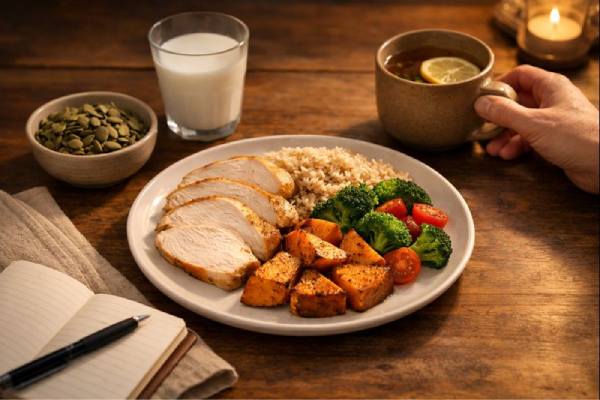
If you have ever searched for “serotonin foods,” you have probably seen lists that promise calmer moods and better sleep from a handful of ingredients. There is a real idea underneath the hype: tryptophan is an essential amino acid your body uses to build serotonin, and serotonin helps regulate mood, stress reactivity, appetite, and sleep timing. But the story is more specific than “eat turkey, feel happy.” Most serotonin is made outside the brain, serotonin from food does not simply travel into your nervous system, and the brain’s access to tryptophan depends on what else is in your bloodstream at the same time.
This article explains what tryptophan can and cannot do, why food pairings matter, and how to build meals that support steadier energy, a more stable mood, and more reliable sleep.
Essential Insights
- Consistent tryptophan intake supports serotonin and melatonin building blocks, but effects depend on overall diet pattern and timing.
- Pairing tryptophan-rich foods with fiber-rich carbohydrates can support steadier energy and may improve evening wind-down for some people.
- “Serotonin foods” are often oversold because serotonin itself does not meaningfully cross into the brain from the gut.
- If you take antidepressants, migraine medicines, or other serotonin-active drugs, do not add tryptophan or 5-hydroxytryptophan supplements without clinician guidance.
Table of Contents
- Tryptophan and serotonin reality check
- How tryptophan reaches the brain
- Food sources that deliver tryptophan
- Smart pairings for mood stability
- Tryptophan, sleep, and evening routine
- Supplements, interactions, and who to ask
Tryptophan and serotonin reality check
Tryptophan is an essential amino acid, meaning you must get it from food. Your body uses it for basic protein building, but it is also a starting material for two brain-relevant compounds: serotonin and melatonin. That connection is why tryptophan is often marketed as a “mood food” nutrient.
Here is the crucial clarification: serotonin itself is not a dietary nutrient you can “eat” in a way that reliably boosts brain serotonin. Most serotonin in the body is produced in the gut and stored in platelets, where it helps with digestion and blood vessel function. The brain makes its own serotonin locally, and brain serotonin levels are influenced by whether enough tryptophan reaches the brain and how your nervous system is signaling overall (stress hormones, sleep timing, inflammation, and more).
That is why “serotonin foods” lists can be confusing. Foods can supply tryptophan, but they cannot bypass the steps that control how much tryptophan gets into the brain and how much of it is routed toward serotonin versus other metabolic pathways. In day-to-day life, the most dependable benefit of tryptophan-rich foods is not an immediate mood lift. It is support for the background conditions that make mood and sleep more stable: adequate protein, regular meal timing, and a nutrient pattern that reduces large swings in blood sugar and stress signals.
It also helps to separate myths from mechanisms. The classic “turkey makes you sleepy” story is not really about turkey alone. Most holiday-meal sleepiness comes from a large overall meal, alcohol for some people, and the natural afternoon dip in alertness. Tryptophan plays a role in the body’s sleep chemistry, but it is not a sedative hiding in your dinner.
A more accurate way to think about tryptophan is this: it is a necessary ingredient for serotonin and melatonin production, but it works best as part of a broader plan that includes balanced meals, enough total calories, and circadian-friendly habits (regular light exposure in the morning and consistent sleep timing). In that context, tryptophan becomes a useful lever you can adjust with smart pairings, not a single-food solution.
How tryptophan reaches the brain
Whether tryptophan affects mood or sleep depends less on how much you eat and more on what happens after digestion. The key concept is competition.
Tryptophan crosses into the brain using a transporter that also carries other large neutral amino acids, including leucine, isoleucine, valine (the branched-chain amino acids), plus phenylalanine and tyrosine. If many of those amino acids are circulating at the same time, tryptophan has to compete for passage. In practical terms, the brain’s tryptophan supply is shaped by the ratio of tryptophan to competing amino acids in your bloodstream, not simply by the total grams of protein you ate.
This is where food pairing becomes more than a wellness slogan. Carbohydrates stimulate insulin release, and insulin helps move many amino acids from the blood into muscle tissue. Tryptophan behaves a bit differently because much of it travels bound to albumin, so it is not pulled into muscle as quickly as several other amino acids. In certain conditions, this can improve the relative availability of tryptophan for brain transport.
However, there is an important nuance: this “carbohydrate helps tryptophan” mechanism is easier to demonstrate with highly controlled meals than with typical mixed diets. Many carbohydrate foods also contain some protein, and even modest protein in the same meal can reduce the shift in the ratio. That does not mean pairing is useless. It means you should focus on patterns that reliably support mood and sleep even if the biochemical effect varies: steady blood sugar, adequate overall protein, and avoiding extreme meal compositions.
Another reason people feel disappointed by “serotonin foods” lists is that stress physiology can override subtle nutritional effects. When you are chronically sleep-deprived, under-fueled, or in a high-stress period, the brain prioritizes alertness and threat detection. Even a perfect tryptophan snack will not fully counteract a late-night work binge, too much caffeine, or ongoing anxiety.
There is also a second pathway worth knowing about: tryptophan is not only used for serotonin. A significant portion can be metabolized through the kynurenine pathway, which is influenced by inflammation, immune activation, and stress. Under inflammatory conditions, more tryptophan may be diverted away from serotonin production. This helps explain why “I eat well but still feel flat” can happen during illness, chronic stress, or poorly controlled metabolic health.
So the actionable takeaway is not “eat more tryptophan.” It is: protect the conditions that let tryptophan be used well. That means consistent meals, enough overall energy, and a diet pattern that reduces large spikes and crashes. When those basics are in place, specific pairings can become a meaningful finishing touch.
Food sources that deliver tryptophan
Tryptophan is widely available in protein-containing foods. Instead of chasing a single “best” source, it helps to think in categories and choose the ones you can eat consistently.
High-tryptophan protein anchors
These foods are common staples that reliably contribute tryptophan along with other nutrients your brain also needs:
- Eggs, especially when paired with whole-grain toast or oats
- Dairy foods such as yogurt, kefir, cottage cheese, and milk
- Poultry, fish, and lean meats
- Soy foods (tofu, tempeh, edamame)
- Legumes (lentils, chickpeas, beans)
Some dairy proteins, such as whey fractions rich in alpha-lactalbumin, are naturally higher in tryptophan relative to other amino acids. In food form, that often looks like a dairy-based snack or a milk-based drink rather than a supplement approach.
Plant-forward sources and supportive add-ons
Nuts and seeds contribute tryptophan too, but their bigger value is how they complement the overall “mood and sleep” nutrition pattern:
- Pumpkin seeds, sunflower seeds, sesame, and chia
- Peanuts and peanut butter (plus other nut butters)
- Oats and whole grains, which support steadier glucose patterns
- Dark leafy greens and beans, which support folate and magnesium intake
A common mistake is assuming you need very high protein to “make serotonin.” In practice, most people do better with moderate, steady protein distributed across the day. That stabilizes appetite and energy, supports neurotransmitter precursor availability, and reduces the late-day crash that often triggers irritability and poor sleep choices.
Why the whole meal matters more than the ingredient
Tryptophan is only one part of serotonin and melatonin synthesis. The conversion steps require micronutrients and a well-functioning metabolic context. Nutrients that often matter in this conversation include vitamin B6 (involved in enzymatic steps), folate, riboflavin, iron status, magnesium, and overall carbohydrate quality. You do not need to micromanage each nutrient; you need a varied diet where those nutrients show up naturally.
A practical way to evaluate your tryptophan intake is not by counting milligrams. It is by asking: “Do I have a protein anchor at most meals, and is it paired with fiber-rich carbohydrates and plants?” If the answer is yes, you are likely meeting the baseline requirement. The next step is refining timing and pairing based on your mood and sleep patterns, which is where the biggest real-world gains often appear.
Smart pairings for mood stability
Mood stability is often less about “boosting serotonin” and more about reducing the triggers that make mood fragile: blood sugar volatility, skipped meals, under-eating during the day followed by overeating at night, and nutrient-poor convenience foods. Smart tryptophan pairings fit neatly into that stabilizing strategy.
The pairing principle: anchor, steady, and support
For most people, the best meals for mood follow a simple structure:
- Anchor: a tryptophan-containing protein (eggs, yogurt, tofu, beans, fish, poultry)
- Steady: a fiber-rich carbohydrate (oats, quinoa, brown rice, potatoes with skin, beans, fruit)
- Support: color and fats (vegetables, olive oil, nuts, seeds)
This structure helps in two ways. First, it prevents the “fast fuel then crash” cycle that can mimic anxiety (racing thoughts, irritability, shaky energy). Second, it supports a more even supply of amino acids and glucose to the brain, which can make stress responses feel less sharp.
Practical meal templates
Use these as mix-and-match options rather than rigid prescriptions:
- Breakfast (steady energy): oats cooked with milk or soy milk, topped with pumpkin seeds and berries; or eggs with whole-grain toast and sautéed greens.
- Lunch (mood and focus): a lentil bowl with brown rice, vegetables, and olive oil; or a salmon salad with quinoa and beans.
- Afternoon (crash prevention): yogurt or kefir with fruit and a small handful of nuts; or hummus with whole-grain crackers and carrots.
- Dinner (calm without heaviness): tofu stir-fry with vegetables and rice; or chicken with roasted potatoes and a large side of vegetables.
When “more protein” backfires
Some people respond to stress by pushing protein higher and cutting carbs very low. That can work for appetite control in certain cases, but it can also lead to irritability, sleep disruption, and a persistent sense of being “wired.” If you notice that pattern, do not assume it is a willpower problem. It may be a fueling mismatch. Adding back a moderate portion of slow-digesting carbohydrates (especially at dinner) can smooth the nervous system response for some people.
A simple two-week experiment
If you want a structured way to test whether tryptophan-oriented pairing helps you:
- Choose one meal you usually rush or skip (often breakfast or lunch).
- Add a protein anchor plus a fiber-rich carbohydrate every day for two weeks.
- Track two signals: mid-afternoon mood stability and evening food cravings.
- If you notice fewer crashes, keep the structure and then refine dinner timing next.
The goal is not perfection. It is a repeatable pattern that makes “calm” your default setting more often.
Tryptophan, sleep, and evening routine
Sleep is where the tryptophan story becomes most tempting, because tryptophan is upstream of melatonin. But nutrition supports sleep best when you treat it as a systems problem: circadian timing, nervous system arousal, temperature, light exposure, caffeine, and then food.
What food can realistically do for sleep
A tryptophan-supportive evening routine tends to help in subtle, practical ways:
- fewer late-night cravings driven by under-fueling earlier in the day
- a calmer transition into bedtime because blood sugar is steadier
- less “tired but alert” restlessness for some people
If you expect a dramatic sedative effect, you will likely be disappointed. If you expect a small shift in sleep onset ease and nighttime settling, you are closer to what nutrition can deliver.
Timing matters more than the perfect ingredient
Many people sleep better when their last substantial meal is finished about 2–3 hours before bed. That timing reduces reflux risk, supports a natural drop in core body temperature, and prevents the “heavy digestion” feeling that can fragment sleep.
If you need a snack, keep it small and structured. A useful pattern is a modest tryptophan-containing protein plus a carbohydrate that digests steadily, with minimal added sugar. Examples:
- a small bowl of yogurt with sliced fruit
- a glass of milk or fortified soy milk with a piece of fruit
- oatmeal made thin, with a spoon of nut butter
- hummus with a small portion of whole-grain bread
These options work because they are predictable: they do not spike blood sugar sharply, and they do not overload fat or volume right before bed.
The hidden sleep disruptor: late-day restriction
One of the most common causes of “my brain will not shut off” at night is not serotonin deficiency. It is late-day restriction: not eating enough during the day, then trying to “be good” at dinner, followed by a physiological stress response and cravings at 9–11 p.m. The body does not interpret that as a diet plan. It interprets it as scarcity.
If that is you, the sleep strategy is simple and surprisingly effective: eat a real lunch with protein and carbohydrates, add a planned afternoon snack, and make dinner balanced rather than minimal. Many people find that bedtime becomes calmer when the body is no longer negotiating for calories.
Pair food with one non-food sleep cue
To improve the odds that tryptophan supports sleep chemistry, pair it with a clear circadian cue. Pick one:
- dim screens and bright lights 60–90 minutes before bed
- a short wind-down routine (shower, stretch, reading)
- consistent wake time most days of the week
Food helps most when the brain already knows it is “night.”
Supplements, interactions, and who to ask
Food-first strategies are safest for most people. Supplements are where the risk-benefit calculation changes, especially if you take any medication that affects serotonin.
L-tryptophan versus 5-hydroxytryptophan
- L-tryptophan is the dietary amino acid. In the body, it can be used for protein, converted toward serotonin and melatonin, or metabolized through other pathways. Food sources provide it in modest amounts spread across the day.
- 5-hydroxytryptophan is a downstream compound (often sold as 5-hydroxytryptophan) that sits closer to serotonin production. Because it is closer to the serotonin pathway, it may have stronger effects in some contexts, but it also comes with higher interaction risk.
In real-world terms, supplements can be “more noticeable,” but they are also more likely to cause side effects (nausea, vivid dreams, headaches) and medication interactions.
Serotonin toxicity risk is not theoretical
If you take medications that raise serotonin signaling, adding tryptophan or 5-hydroxytryptophan can increase the risk of serotonin toxicity in susceptible situations. Medicines that can matter here include many antidepressants (such as SSRIs and SNRIs), monoamine oxidase inhibitors, certain migraine medicines, and some other prescription drugs with serotonergic activity. The risk is not the same for everyone, but it is serious enough that self-experimenting is not worth it.
Signs that require urgent medical evaluation can include agitation, confusion, sweating, tremor, diarrhea, fever, muscle rigidity, and rapid heart rate, especially if symptoms appear after a new drug or supplement combination.
Who should be extra cautious
Food-based approaches are generally reasonable, but talk to a clinician before using supplements if you are in any of these groups:
- taking serotonin-active prescriptions or multiple psychoactive drugs
- history of bipolar disorder or mania (sleep-focused supplements can sometimes destabilize mood)
- pregnant or breastfeeding
- significant liver disease, or complex medical conditions with multiple medications
When supplements may be considered
Some clinicians may consider short-term, carefully monitored trials for specific sleep complaints or low-mood patterns, especially when basics are already optimized (consistent sleep schedule, reduced caffeine, balanced diet). If you go that route, the safest approach is to:
- use one product at a time (no stacks)
- start low and reassess within 1–2 weeks
- stop if side effects appear or sleep becomes more fragmented
- inform your prescribing clinician if you take any psychiatric or neurologic medication
For most people, the strongest “serotonin food” strategy is not a capsule. It is a steady diet pattern, a stable sleep schedule, and a few well-chosen pairings that reduce the stress load on your nervous system.
References
- A systematic review of the effect of L-tryptophan supplementation on mood and emotional functioning 2021 (Systematic Review)
- The impact of tryptophan supplementation on sleep quality: a systematic review, meta-analysis, and meta-regression 2022 (Systematic Review and Meta-Analysis)
- Carbohydrate and sleep: An evaluation of putative mechanisms 2022 (Review)
- The tryptophan catabolite or kynurenine pathway in major depressive and bipolar disorder: A systematic review and meta-analysis 2022 (Systematic Review and Meta-Analysis)
- The impact of 5-hydroxytryptophan supplementation on sleep quality and gut microbiota composition in older adults: A randomized controlled trial 2024 (RCT)
Disclaimer
This article is for educational purposes and does not provide medical advice, diagnosis, or treatment. Nutrition strategies that affect serotonin pathways can interact with prescription medicines and may not be appropriate for everyone, especially people taking antidepressants, migraine medicines, or other serotonin-active drugs, and people with bipolar disorder, pregnancy, or complex medical conditions. If you have persistent low mood, worsening anxiety, insomnia, or thoughts of self-harm, seek professional support promptly. For supplement decisions, consult a licensed clinician or pharmacist who can review your medications and health history.
If you found this helpful, consider sharing it on Facebook, X (formerly Twitter), or any platform you prefer so others can benefit from a clearer, safer understanding of “serotonin foods.”