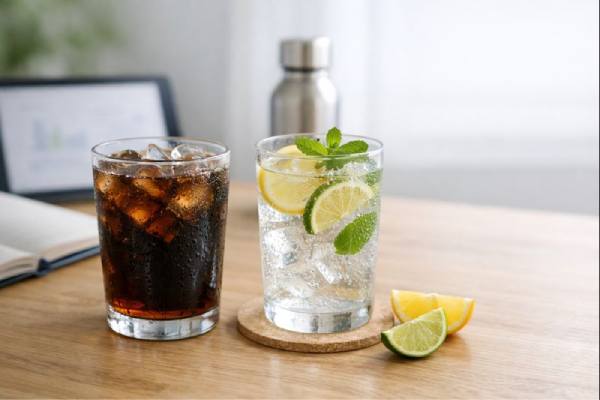
A sweet drink can feel like a quick reset: a burst of energy, a brighter mood, a moment of comfort in a busy day. But for many people, the “lift” is followed by a dip—foggy thinking, irritability, low motivation, or a craving for the next hit of sweetness. Over time, sugary beverages can quietly become a daily mood variable, not just a calorie source. Research cannot prove that sugar-sweetened beverages directly cause depression, yet patterns show that higher intake often travels with higher depressive symptoms and greater depression risk—especially when sugary drinks replace more nourishing options. The good news is practical: beverage choices are one of the easiest dietary levers to change, because they are specific, trackable, and highly substitutable. This guide explains what the evidence suggests, why liquid sugar can feel mentally “loud,” and how to swap in options that stabilize energy and mood.
Essential Insights
- Reducing sugar-sweetened beverages can smooth energy swings and may lessen day-to-day mood volatility for many people.
- Swapping sugary drinks for water, unsweetened tea, or lightly flavored seltzer can cut added sugar quickly without changing meals.
- If you rely on sugary beverages for alertness, address sleep and caffeine timing to prevent rebound fatigue and irritability.
- People with frequent cravings, afternoon crashes, or sleep disruption often benefit most from a structured, gradual reduction plan.
Table of Contents
- What studies suggest about SSBs and depression
- Why liquid sugar feels different
- Blood sugar swings and mood instability
- Inflammation gut signals and brain health
- Who may be most sensitive
- Healthier swaps and a two-week reset plan
What studies suggest about SSBs and depression
Sugar-sweetened beverages (SSBs) include regular soda, sweetened iced tea, sweetened coffee drinks, energy drinks, sports drinks, and “fruit drinks” that are not 100% juice. They are engineered for fast consumption and rapid reward: sweet, cold, easy to drink, and often paired with caffeine. That combination makes them a unique dietary exposure—closer to a repeated, concentrated dose than a slowly eaten food.
Across large observational studies, people who drink more SSBs tend to report more depressive symptoms and, in some cohorts, a higher likelihood of developing depression over time. The association is usually described as modest but consistent: it does not mean “soda equals depression,” yet it does suggest that frequent sugary beverages can be one piece of a broader risk picture. Dose-response patterns are especially notable. When risk changes with higher intake, it strengthens the case that the relationship is not purely random noise.
A careful way to interpret this evidence is to focus on three questions:
- Is there a gradient? Many analyses show a step-up in risk or symptoms as intake rises from occasional to daily to multiple servings per day.
- Is it specific to beverages? Several datasets find stronger signals for sugar in beverages than sugar in solid foods, which matters because liquids behave differently in the body and brain.
- What happens with substitution? Some prospective work suggests that replacing SSBs with lower-sugar options (like water or unsweetened beverages) aligns with a lower depression risk profile over time.
It is also important to be honest about what the research cannot prove. People who drink more SSBs may also sleep less, experience more stress, smoke more, exercise less, or have fewer regular meals—each of which can influence mood. Most studies adjust for many of these factors, but “adjustment” is not a time machine. Residual confounding can remain.
Still, even with those cautions, the pattern is meaningful for real life. SSBs are not a neutral habit. They are a repeated metabolic and neurological event—often several times per day—layered on top of the stress physiology, sleep quality, and nutrient intake that shape mental health. That is why changing beverages can be a reasonable, low-regret experiment for mood support, especially when symptoms include fatigue, irritability, and cravings.
Why liquid sugar feels different
If you have ever noticed that a sugary drink “hits” faster than a sweet snack, you are not imagining it. Liquids require minimal digestion, and they are often consumed quickly. That changes both the speed and the shape of the body’s response.
Fast reward, weak fullness
Sweet drinks deliver sugar without much chewing, fiber, or protein—three signals that normally help the brain register satiety. When calories arrive without a strong “I ate a meal” message, the brain may not compensate by reducing later intake. For mood, this matters because the reward system learns patterns: a sweet drink becomes an easy lever for comfort, stimulation, or stress relief, even when it does not solve the underlying need (rest, food, connection, or a break).
Sweetness, dopamine, and expectation
Sweet taste activates reward circuitry. That is not a moral problem; it is basic neurobiology. The challenge is the repetition and predictability of a sweet beverage ritual: same bottle, same flavor, same sugar dose, same “reset” feeling. Over time, some people experience a tightening loop—sweet drinks become less about pleasure and more about relief from low energy or irritability. That shift can feel like “I need it to function,” which is a red flag for any daily stimulant-reward habit.
The caffeine multiplier
Many sugary beverages contain caffeine (colas, sweetened coffees, energy drinks). Caffeine can improve alertness and mood in the short term, but it also raises stress hormones and can worsen anxiety in sensitive individuals. When caffeine is paired with sugar, people may attribute the “lift” to sugar, then chase sugar again later—while the caffeine is quietly disrupting sleep and raising baseline tension. Poor sleep then amplifies cravings and emotional reactivity the next day, setting up a self-reinforcing cycle.
A practical implication is that improving mood is not always about “willpower” around sugar. It is about changing the delivery system and the cue. If your brain has learned “sweet drink equals calm, focus, or a break,” the most effective strategy is to build a replacement ritual that delivers something real: hydration, steady energy, and a predictable sensory reward (cold, fizzy, flavored) without the metabolic whiplash.
Blood sugar swings and mood instability
Mood is not just a thought; it is a body state. When blood glucose rises and falls sharply, many people feel it as irritability, restlessness, low patience, or a “flat” mood. This does not mean everyone gets anxious or depressed from sugar. It means that, for a meaningful subset of people, glycemic volatility is an underappreciated mood trigger.
The spike-crash pattern
A typical 330 mL to 355 mL (11–12 oz) regular soda often contains roughly 35–45 grams of sugar—close to or above what many guidelines suggest as a daily upper limit for added sugar for some adults. When that sugar is taken without a meal, blood glucose can rise quickly. The body responds with insulin to move glucose into cells. If the response overshoots—especially in people with insulin resistance or irregular eating—glucose can drop faster than the brain prefers. The result can feel like:
- jittery energy that turns into fatigue
- head pressure or mild headache
- impatience or sudden low mood
- a strong urge for “something sweet” again
- difficulty focusing and increased rumination
This is why sugary drinks are often linked to afternoon crashes. They can temporarily mask tiredness, then worsen it once the rebound hits.
Stress hormones and emotional tone
When glucose dips, the body may release adrenaline and cortisol to stabilize it. Those hormones help you function, but they also push the nervous system toward a “threat-ready” state. In real terms, that can feel like anxiety, agitation, or a hair-trigger response to minor stressors. If your day already contains pressure—deadlines, caregiving, social strain—SSBs can add a physiological edge that makes emotions harder to regulate.
Why this can mimic depression
Not all low mood is depression, but repeated glucose swings can produce symptoms that look similar from the inside: low energy, less motivation, brain fog, and a sense that everything feels harder than it should. When these symptoms are frequent, people may interpret them as “something is wrong with me,” which adds a cognitive load on top of the biological state.
A useful self-check is timing. If low mood reliably appears 1–3 hours after a sugary drink—especially when paired with skipping meals—it is worth testing whether steadier eating and lower-sugar beverages change the pattern. This is not about blame; it is about identifying a modifiable trigger.
Inflammation gut signals and brain health
Depression is complex: genetics, life events, sleep, trauma history, social connection, and medical conditions all matter. But biology is not separate from psychology. Long-term high intake of sugary beverages can influence systems that are increasingly linked with depression risk: low-grade inflammation, metabolic health, and gut-brain signaling.
Inflammation as a background amplifier
Chronic, low-grade inflammation is associated with both metabolic disease and depression in many studies. Sugary beverages can promote weight gain in some people, contribute to fatty liver risk, and worsen insulin resistance—each of which can increase inflammatory signaling. Inflammation does not “create sadness,” but it can amplify fatigue, reduce stress resilience, and alter neurotransmitter dynamics. Many people describe this as a loss of mental clarity and emotional endurance.
Gut microbiome and the gut-brain axis
The gut and brain communicate through nerves, immune pathways, and metabolites produced by microbes. Diets high in added sugars and low in fiber can shift microbial balance in ways that may influence inflammation and stress reactivity. While microbiome science is still evolving, a simple takeaway is stable: a beverage pattern that crowds out water and accompanies lower-quality eating tends to be unfriendly to gut health, and gut health is increasingly recognized as relevant to mood.
Why fructose-heavy patterns matter
Many SSBs are sweetened with mixtures of glucose and fructose (often via sucrose or high-fructose corn syrup). Fructose is primarily processed in the liver. In high, repeated doses, it can contribute to liver fat accumulation and unfavorable triglyceride patterns in some individuals. Those metabolic changes are not just “physical health issues”; they also track with fatigue and lower perceived well-being—common companions of depressive symptoms.
A key nuance: none of this proves that an individual’s depression is caused by sugary drinks. But it supports a practical clinical logic—if a habit pushes the body toward inflammation, poor sleep, metabolic strain, and unstable energy, it is reasonable to test whether reducing that habit improves mood capacity. Many people find that the benefit is not a dramatic “happiness boost,” but a quieter, steadier baseline: fewer dips, less irritability, clearer thinking, and a feeling of being more emotionally buffered.
Who may be most sensitive
Not everyone reacts to SSBs the same way. Some people can drink a soda and move on. Others feel it as a measurable shift in energy, anxiety, and cravings. Sensitivity is not a character flaw—it is a mix of physiology, stress load, sleep, and learned coping patterns.
Groups that often notice bigger effects
You may be more likely to feel mood impacts from sugary beverages if any of the following are true:
- You often skip meals or eat irregularly. A sugary drink can become a stand-in for food, increasing glucose volatility and irritability.
- You experience frequent afternoon fatigue. Sweet drinks can create a short lift followed by a sharper crash.
- You have insulin resistance, prediabetes, diabetes, or fatty liver risk. Glycemic swings tend to feel more intense, and energy stability may depend more on meal structure.
- You are prone to anxiety or panic symptoms. Sugar plus caffeine can heighten body sensations that feed worry (racing heart, jitteriness, restlessness).
- You sleep poorly or sleep too little. Sleep loss increases sugar cravings, reduces impulse control, and lowers frustration tolerance.
- You are under high stress. When baseline cortisol is elevated, additional swings can push the nervous system toward “wired and tired.”
Clues that SSBs are a mood trigger for you
Consider tracking for seven days if you notice two or more of these patterns:
- cravings that feel urgent rather than pleasant
- mood dips 1–3 hours after a sugary drink
- headaches or “heavy eyes” later in the day
- feeling calmer only after sugar, then tense again
- waking up unrefreshed after evening sugary drinks (especially caffeinated)
A brief log can be simple: time of drink, what it was, whether you had eaten, and how you felt two hours later. The goal is not perfection. The goal is clarity.
If you live with depression, it is also wise to avoid an all-or-nothing story. Removing SSBs is not a substitute for therapy, medication when needed, social support, or treatment of underlying medical issues. But it can be one of the easiest lifestyle experiments to run because the input is concrete and the alternatives are plentiful.
Healthier swaps and a two-week reset plan
A good swap does not rely on discipline alone. It replaces the function of the sugary drink: energy, comfort, stimulation, taste, coldness, bubbles, or a break in the day. The best plan is the one you will actually repeat.
Swaps that satisfy the same cue
If you want fizz and refreshment:
- chilled sparkling water with lemon, lime, or a splash of 100% juice for flavor
- unsweetened seltzer with frozen berries (they act like ice and add aroma)
If you want a “treat” feeling:
- plain or lightly flavored sparkling water in a nice glass with ice
- herbal tea iced and served cold (mint, hibiscus, rooibos)
- “diluted juice” approach: start with mostly water, add a small amount of juice for taste, then taper
If you want energy:
- coffee or tea with minimal added sugar, ideally earlier in the day
- pairing caffeine with food (even a small snack with protein or fiber) to reduce jitter and crash
If you want something after dinner:
- decaf tea, sparkling water, or warm milk if it suits you
- avoid late-day caffeine and large sugar doses, which can quietly erode sleep quality
A realistic two-week reduction plan
This is designed for mood stability, not punishment.
- Days 1–3: Measure and map.
Keep your usual pattern, but note: what time, how much, and why you reached for it (fatigue, stress, habit, taste). - Days 4–7: Replace one daily drink.
Choose the easiest one to swap (often the “automatic” drink, not the most craved). Keep the replacement cold and ready. - Days 8–10: Add structure around the hardest time.
If cravings hit mid-afternoon, plan a snack with protein or fiber and hydrate earlier. Many “sugar emergencies” are dehydration plus fatigue plus long gaps between meals. - Days 11–14: Reduce the remaining servings by half.
If you drink two per day, aim for one. If you drink one, aim for three to four days per week. Keep the habit cue (a break, a walk, a favorite cup), but change the content.
How to handle cravings without white-knuckling
- Delay by 10 minutes, then decide. Cravings often peak and fade.
- Drink water first. Dehydration can masquerade as “need sugar now.”
- Do not go too low too fast if caffeine is involved. If your SSBs contain caffeine, taper to avoid headaches and low mood from withdrawal.
- Plan for the “first sip” problem. For many people, one sweet drink triggers the desire for another later. If that is you, choose smaller portions or reserve sweetness for meals rather than between them.
Many people notice benefits within 1–3 weeks: fewer afternoon crashes, steadier focus, less irritability, and reduced “urgent” cravings. If you do not feel a difference, that is still useful data. You will have ruled out one variable and can look at sleep, meal timing, alcohol, nutrient intake, and stress supports next.
References
- The Dose-Response Associations of Sugar-Sweetened Beverage Intake with the Risk of Stroke, Depression, Cancer, and Cause-Specific Mortality: A Systematic Review and Meta-Analysis of Prospective Studies – PMC 2022 (Systematic Review and Meta-Analysis)
- Consumption of sugary beverages, genetic predisposition and the risk of depression: a prospective cohort study – PMC 2024 (Prospective Cohort Study)
- Association of sugar intake from different sources with incident depression in the prospective cohort of UK Biobank participants – PMC 2022 (Prospective Cohort Study)
- Sugar-Sweetened Beverages and Adverse Human Health Outcomes: An Umbrella Review of Meta-Analyses of Observational Studies – PubMed 2024 (Umbrella Review)
- Guideline: Sugars Intake for Adults and Children – NCBI Bookshelf 2015 (Guideline)
Disclaimer
This article is for educational purposes and does not provide medical or mental health diagnosis, treatment, or personalized advice. Depression can have many causes, and dietary changes may help some people but are not a substitute for professional care. If you have persistent low mood, loss of interest, changes in sleep or appetite, thoughts of self-harm, or difficulty functioning, seek support from a qualified clinician promptly or contact local emergency services.
If you found this helpful, consider sharing it on Facebook, X (formerly Twitter), or any platform you prefer so others can benefit as well.