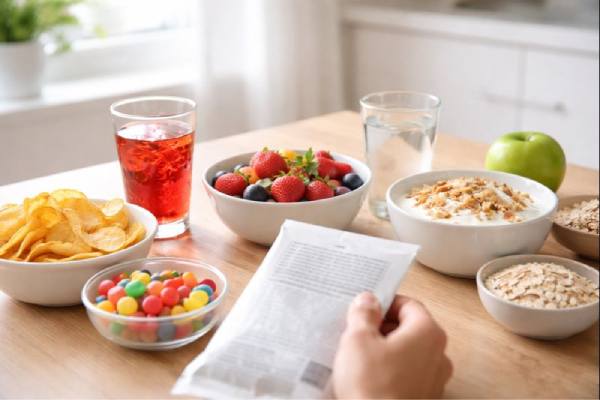
ADHD is complex: biology, environment, sleep, stress, learning demands, and nutrition can all shape how symptoms look day to day. Red Dye 40 (also called Allura Red AC) sits in the middle of a practical question many families ask: Could a bright color in food be making focus and behavior harder? For most people, Red Dye 40 is not a “cause” of ADHD. But research suggests a subset of children may be sensitive to synthetic food dyes, showing measurable shifts in hyperactivity, restlessness, irritability, or attention after exposure.
This article explains what Red Dye 40 is, what the evidence actually supports, why reactions vary, and how to reduce exposure without turning food into a constant negotiation. You will also find a structured, low-stress approach to testing sensitivity safely and realistically.
Core Points for Busy Readers
- Red Dye 40 does not appear to cause ADHD, but it may worsen hyperactivity or inattention in a sensitive subset of children.
- The strongest evidence involves synthetic dye mixtures, not a single dye, so results vary widely by person and product.
- A short elimination and reintroduction trial can clarify whether dyes matter for your household more than guesswork does.
- Prioritize dye reduction in the highest-exposure items (candies, drinks, frostings, chewable medicines) rather than chasing perfection.
- If your child has severe symptoms, weight loss, sleep disruption, or safety concerns, reduce dietary changes and involve a clinician early.
Table of Contents
- Red Dye 40 in everyday foods
- What research shows about ADHD
- Why some people react
- Signs of sensitivity and tracking
- Reducing exposure without stress
- A practical two-week reset plan
Red Dye 40 in everyday foods
Red Dye 40 is a synthetic color additive used to create consistent reds and pinks in processed products. In ingredient lists, you might see it as FD and C Red No. 40, Red 40, Red 40 Lake, or Allura Red AC. Outside the United States, labels may use E129 (commonly used in European labeling systems). The key point is not the chemistry lesson; it is the reality that dyes are often concentrated in foods marketed for fun, convenience, and bright visual appeal.
Where exposure tends to be highest
For many families, Red Dye 40 exposure is not evenly spread across the diet. It often clusters in a few categories:
- Candies and gummies (especially “red” assortments and mixed colors)
- Frostings, sprinkles, and cake decorations
- Fruit-flavored snacks and “fruit” chews
- Bright sports drinks and powdered drink mixes
- Flavored gelatin cups and frozen treats
- Some flavored yogurts and “kids” snack packs
- Chewable or liquid medications (including some cold, allergy, and pain products)
That last category matters more than many people expect. If a child takes a dyed medicine regularly, it can become a steady, repeat exposure even when the household is careful with food.
Why it can be hard to “spot”
Red Dye 40 is not only in obviously red foods. It can show up in:
- Brown or purple products that use red to deepen color
- Mixed-color items where the dye is not the dominant shade
- Seasonal and themed versions of familiar foods (holiday shapes, novelty packs)
A practical approach is to identify the top 5 repeat purchases where bright colors are part of the product identity. If you reduce dye there, you often reduce most exposure without changing the whole pantry.
A quick label-reading shortcut
When scanning an ingredient list, look for the dye names near the end. If Red Dye 40 appears alongside other dyes (Blue 1, Yellow 5, Yellow 6), that product is a “high-likelihood” candidate for a behavior experiment later. The goal is not to label foods as “good” or “bad.” It is to locate the items most likely to matter if sensitivity is present.
What research shows about ADHD
The evidence on synthetic food dyes and behavior is often misunderstood in two opposite directions: either “dyes cause ADHD” or “it is all a myth.” The more accurate summary is narrower and more useful: synthetic dyes can produce small average effects on behavior measures in children, and a smaller subset may show clearer, clinically noticeable changes.
What studies actually test
Many trials use a challenge design: children follow a controlled diet for a period, then receive a drink or food containing dyes (sometimes in a mixture, sometimes with preservatives), and researchers measure behavior ratings, attention tasks, or observer reports. These studies do not prove a child has ADHD, and they do not replace diagnosis. They test whether symptoms like restlessness, impulsivity, or inattention shift after exposure.
A major limitation is that many studies use mixtures of dyes because that reflects real-world eating patterns. This makes it hard to isolate Red Dye 40 specifically. Still, Red Dye 40 is commonly included in synthetic dye sets, and it is one of the most widely used reds in processed foods. So while “Red Dye 40 alone” is not always studied, “dye exposure that often includes Red Dye 40” is studied.
How big are effects, realistically?
Across research syntheses, reported effects tend to be small on average. Small does not mean meaningless. In real life, a small average effect can still matter if:
- A child is already near the edge of coping (sleep debt, school stress, high demands).
- The exposure is frequent (daily dyed drinks, snacks, or medicines).
- The child is among the sensitive subgroup who reacts more strongly than the average.
One careful meta-analytic approach has estimated that a minority of children with ADHD may have symptoms meaningfully linked to synthetic food colors. That is consistent with what many clinicians see: diet changes can be very helpful for some children, modestly helpful for others, and irrelevant for many.
What the research does not support
- It does not support the idea that Red Dye 40 “creates ADHD” in a child who otherwise would not have it.
- It does not support extreme claims that everyone must avoid all dyes for brain health.
- It does not show that removing dyes replaces evidence-based ADHD supports such as sleep routines, behavioral strategies, school accommodations, or clinician-guided treatment when needed.
The best use of this evidence is personal and practical: treat dye reduction as an experiment to see whether it improves day-to-day functioning.
Why some people react
Sensitivity is the central concept. If dyes affected everyone the same way, the conversation would be straightforward. Instead, responses differ widely. Several mechanisms have been proposed, and the most honest approach is to treat them as plausible pathways rather than settled facts.
Neurobehavioral sensitivity and brain signaling
Some hypotheses focus on how certain compounds may influence signaling related to attention and activity. That does not mean dyes act like stimulants or medications. It means subtle shifts in arousal, irritability, or impulse control could be detectable in some children, especially in structured testing.
What makes this tricky is that ADHD symptoms are already variable. A child can look “more hyperactive” after a dye exposure, but the same pattern could also be driven by poor sleep, excitement, conflict at home, or a challenging school day. That is why tracking and reintroduction matter more than assumptions.
Immune and histamine-style reactions
Another pathway involves sensitivity reactions (for example, hives, flushing, rhinitis, or asthma-like symptoms in some people). When discomfort rises, behavior often changes. A child who feels itchy, congested, or unwell may appear more restless, oppositional, or distracted. In that case, the “behavior effect” is partly a downstream response to physical symptoms.
If you notice skin symptoms, nasal symptoms, or headaches that cluster with dyed foods, it strengthens the case for a structured trial and a clinician check-in.
Gut factors and overall diet context
Many highly dyed foods are also high in added sugars, refined starches, or flavorings. That does not mean sugar “causes ADHD,” but it can affect energy swings, appetite regulation, and sleep timing. A dye reduction plan often changes the whole snack pattern: fewer candy-type items, more whole foods, and fewer ultra-processed options. Some improvement may come from that broader shift rather than from dye removal alone.
A useful way to think about it is “signal versus noise.” If you remove Red Dye 40 but the child’s sleep schedule is chaotic and breakfast is inconsistent, it can be hard to see what matters. A clean experiment tries to reduce the biggest sources of noise while changing one main variable.
Signs of sensitivity and tracking
Families often ask, “What does a reaction look like?” The honest answer is: it varies, and it can look like normal childhood behavior unless you track patterns. Sensitivity is most believable when you see repeatable timing and repeatable symptom shifts around exposure.
Common patterns families report
In children who appear sensitive, changes may show up as:
- Increased fidgeting, pacing, or “can’t settle” energy
- More impulsive interrupting or rough play
- Shorter fuse: irritability, whining, or quick frustration
- More trouble starting tasks or staying with them
- Bedtime resistance or difficulty winding down (sometimes)
Timing can be fast (within hours) or can look like a “later that day” shift. Some children show a rebound pattern: they seem fine during the treat, then unravel at homework time or dinner.
When sensitivity is less likely
A dye link is less likely if:
- Symptoms are steady across days regardless of diet changes
- The child reacts the same way to dye-free versions of similar treats
- The most difficult periods track more closely with sleep loss, screen time, or school stress
This does not mean dyes are irrelevant. It means you will learn more from a short, structured test than from indefinite avoidance.
A simple tracking method that works
You do not need a complicated spreadsheet. You need consistency. For 14 days, track:
- Dye exposure (yes or no, plus what it was)
- Sleep (bedtime, wake time, nighttime waking)
- Three behavior ratings (0–10 scales)
- Hyperactivity/restlessness
- Irritability/frustration tolerance
- Focus on routine tasks (homework, chores, reading time)
Add one optional note: “big context” (illness, travel, major conflict, party, exam day). This prevents false conclusions.
If you want the cleanest test, do a baseline week with typical eating first, then a dye-reduced week, then a controlled reintroduction. But many families prefer a faster approach: remove dyes for two weeks, then reintroduce intentionally. The key is that reintroduction is what turns a hunch into evidence.
When to involve a clinician right away
Seek professional guidance early if your child has significant weight loss, restrictive eating, anxiety around food, fainting, severe sleep disruption, self-harm talk, or aggressive behavior that risks safety. Diet experiments should never increase risk or family conflict to an unmanageable level.
Reducing exposure without stress
Dye reduction works best when it is targeted and low drama. If the plan feels like constant deprivation, it will not last long enough to teach you anything. Think of this as a short experiment with smart defaults.
Start with the “big three” swap list
Most exposure typically comes from three repeating categories. Choose one swap in each:
- Drinks: switch bright sports drinks and powdered mixes to water with fruit slices, milk, sparkling water, or dye-free drink options.
- Candy and gummies: keep a smaller quantity of dye-free versions, or shift treats to chocolate, fruit, or homemade options.
- Frostings and dessert decorations: use dye-free frosting, skip colored sprinkles, or choose naturally colored decorations for birthdays.
This approach avoids turning every snack into a negotiation. You change the defaults and let the rest be normal.
Do not forget medicines and supplements
If your child takes chewables or syrups, check whether dye-free options exist. Many pharmacies carry dye-free versions of common medications, and some brands make clear or white tablets without synthetic colors. If a medication is medically necessary, do not stop it for the sake of a dye experiment. Instead, ask a pharmacist or clinician about equivalents.
Use language that keeps the nervous system calm
Children often hear “this food makes you hyper,” then become anxious or oppositional. More effective phrasing is neutral:
- “We are trying a two-week color experiment to see what helps your body feel calm.”
- “This is not forever. We are collecting clues.”
Avoid moralizing foods. The goal is function: better evenings, smoother homework, more predictable mood.
What to do at school and parties
Perfection is not required, but consistency helps. Two realistic strategies:
- The home-base rule: keep home dye-free and let occasional outside exposures happen without guilt.
- The planned treat: if a party is coming, pick one treat and avoid stacking multiple dyed items (for example, choose cake but skip dyed drinks and candy bags).
If your child appears strongly sensitive, you may prefer a stricter approach during the testing window only. After you learn the pattern, you can decide how strict is worth it.
Measure progress by function, not by “good behavior”
Look for changes like easier transitions, faster homework start, fewer conflicts, and smoother bedtime. These practical markers matter more than whether a child looks perfectly calm.
A practical two-week reset plan
If you want a clear answer without months of trial and error, use a structured approach. The goal is not to prove a theory. It is to find what helps your child function better with the least disruption.
Step 1: Choose your test window
Pick two weeks that are relatively “normal.” Avoid starting the day before travel, finals, a new school transition, or a big family stressor. You want the environment stable enough that food changes are not buried under chaos.
Step 2: Remove the most common synthetic dyes
During the two-week window, avoid products listing Red 40, Yellow 5, Yellow 6, Blue 1, Blue 2, or Green 3. This is not because every dye is the same, but because many products contain dye blends. Removing only Red Dye 40 while keeping other dyes often produces a confusing signal.
Keep meals familiar. Focus on swapping snacks, drinks, desserts, and any dyed medicines when reasonable.
Step 3: Track outcomes simply
Use the 0–10 ratings described earlier for restlessness, irritability, and focus. Also track sleep timing. Many families are surprised that the biggest benefit shows up at bedtime: fewer arguments, faster wind-down, or less “second wind” energy.
At the end of two weeks, review the pattern:
- Did ratings improve by a noticeable amount (for example, 2 points or more on your 0–10 scales) on most days?
- Did evenings become easier in a way that feels meaningful to the family?
If nothing changed, you have learned something valuable: dyes may not be a priority lever for your child right now.
Step 4: Reintroduce intentionally
Reintroduction is where the experiment becomes credible. Choose one day when sleep is good and the schedule is typical.
- Reintroduce one dyed item at a time (for example, a standard serving of a dyed candy or drink).
- Keep the rest of the day dye-free.
- Track behavior that afternoon, evening, and the next morning.
If symptoms clearly spike and the pattern repeats on a second reintroduction day, sensitivity becomes more likely. If nothing happens, you can loosen the plan.
Step 5: Build your long-term “minimum effective dose” plan
If sensitivity seems real, your goal is not lifelong restriction. Your goal is to reduce exposure enough to protect function:
- Keep daily foods dye-free (breakfasts, school snacks, weekday drinks).
- Allow occasional dyed treats when the stakes are lower (weekends, special events).
- Avoid “stacking” multiple dyed items in one day.
This approach respects both brain health and quality of life. It also reduces the chance that the child’s diet becomes overly restricted or anxiety-driven.
References
- Health Effects Assessment: Potential Neurobehavioral Effects of Synthetic Food Dyes in Children 2021 (Government Report). ([OEHHA][1])
- Potential impacts of synthetic food dyes on activity and attention in children: a review of the human and animal evidence 2022 (Review). ([PMC][2])
- Nutrition in the Management of ADHD: A Review of Recent Research 2023 (Review). ([PMC][3])
- Summary of Color Additives for Use in the United States in Foods, Drugs, Cosmetics, and Medical Devices 2025 (Regulatory Resource). ([U.S. Food and Drug Administration][4])
- Meta-Analysis of Attention-Deficit/Hyperactivity Disorder or Attention-Deficit/Hyperactivity Disorder Symptoms, Restriction Diet, and Synthetic Food Color Additives 2012 (Meta-Analysis). ([PMC][5])
Disclaimer
This article is for educational purposes and is not a substitute for medical care. ADHD symptoms can have many causes and contributors, and dietary changes should not replace evaluation, treatment, or school supports when needed. If you are considering an elimination diet for a child, keep it time-limited and nutritionally adequate, and involve a qualified clinician if your child has growth concerns, restrictive eating, complex medical conditions, or significant behavioral impairment. Seek urgent help if there are safety concerns, severe mood changes, or signs of self-harm.
If you found this helpful, consider sharing it on Facebook, X (formerly Twitter), or any platform you prefer so others can make more informed, practical choices.