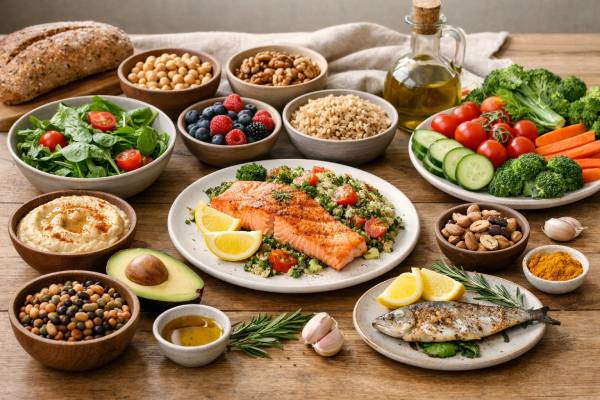
Food patterns are not magic spells, but they can change the day-to-day conditions your brain runs on: blood sugar stability, inflammation signals, gut bacteria byproducts, sleep quality, and the nutrients your neurons use to build and repair. The Mediterranean diet, the MIND diet, and “anti-inflammatory” eating overlap so much that people often treat them as interchangeable—then feel confused when one approach helps a friend’s mood or focus but does little for them.
This guide helps you compare the three in a practical, evidence-aware way. You will learn what each pattern emphasizes, what the research is strongest (and weakest) for in mood and memory, and how to choose a version you can follow consistently. The goal is not perfection—it is a plan that fits your brain, your body, and your real schedule.
Core Points
- A consistent, plant-forward eating pattern is more predictive of mood and memory benefits than any single “superfood.”
- MIND is the most brain-specific framework, but real-world results still depend on long-term adherence and overall lifestyle.
- “Anti-inflammatory” is a useful principle, yet it varies widely; define it with concrete food swaps rather than vague rules.
- If sleep is fragile or anxiety is high, caffeine, meal timing, and blood sugar stability can matter as much as the food list.
- Start with two weekly upgrades and track one outcome (sleep, energy dips, rumination, or recall) for 14 days.
Table of Contents
- Mediterranean and MIND and anti-inflammatory basics
- How each pattern supports memory
- How each pattern affects mood
- Why food changes brain chemistry
- Choosing the best fit for you
- Starting plan and real-world strategies
Mediterranean and MIND and anti-inflammatory basics
All three approaches aim to improve brain function by shifting your diet away from highly processed, high-sugar, high-saturated-fat patterns and toward nutrient-dense foods. The differences show up in how specific they are and what they prioritize.
Mediterranean diet in plain terms
The Mediterranean diet is a flexible pattern inspired by traditional eating styles in parts of the Mediterranean region. It emphasizes vegetables, fruit, beans and lentils, whole grains, nuts, seeds, and olive oil; includes fish and seafood regularly; and keeps red and processed meats, refined grains, sweets, and ultra-processed foods as occasional choices. It is not one fixed menu—it is a set of defaults that make it easier to eat nutrient-dense food most days.
A practical Mediterranean “plate” looks like:
- Half the plate: non-starchy vegetables (cooked or raw)
- One quarter: protein (beans, fish, yogurt, eggs, poultry)
- One quarter: whole grains or starchy vegetables (brown rice, oats, potatoes)
- Added fat: olive oil, nuts, seeds, or olives
MIND diet as a brain-focused variant
MIND (Mediterranean-DASH Intervention for Neurodegenerative Delay) combines Mediterranean and DASH ideas, then adds brain-specific targets—most notably leafy greens and berries—while placing clearer limits on fried foods, pastries, butter, and certain animal fats. Many people like MIND because it reduces decision fatigue: it tells you what to aim for each week.
Common MIND targets used in practice include:
- Leafy greens: several times per week (often framed as near-daily)
- Other vegetables: daily
- Berries: a few times per week
- Nuts: most days or several times per week
- Beans and lentils: multiple times per week
- Whole grains: daily
- Fish: about weekly
- Olive oil: primary cooking fat
- Limited: butter, cheese, fried foods, sweets, and red or processed meats
Anti-inflammatory eating as a principle not a single diet
“Anti-inflammatory diet” is an umbrella label. Sometimes it means “Mediterranean-style.” Sometimes it means a plan built around lowering the inflammatory potential of the overall diet: more fiber and polyphenols, more omega-3 fats, fewer ultra-processed foods, and fewer refined carbs and trans fats. The challenge is that it can become vague and moralizing (“good” vs “bad” foods) unless you define it with measurable swaps.
A useful definition is: an eating pattern that improves inflammatory markers and metabolic stability by increasing plant variety and reducing ultra-processed foods. In real life, it looks very similar to Mediterranean—plus a stronger push toward:
- Fatty fish (salmon, sardines), ground flax, chia, walnuts
- Spices and herbs (turmeric, ginger, garlic, mixed herbs)
- Fermented foods if tolerated (yogurt, kefir, kimchi, sauerkraut)
- Less sugar-sweetened beverages, refined snacks, and processed meats
Quick comparison
| Feature | Mediterranean | MIND | Anti-inflammatory |
|---|---|---|---|
| Structure | Flexible pattern | More prescriptive targets | Varies widely |
| Brain specificity | Moderate | High | Depends on definition |
| Best for | Overall health foundation | People who like clear goals | People targeting inflammation triggers |
| Common pitfall | “Mediterranean” junk food versions | Treating it as perfection | Vague rules and restriction spirals |
No matter which you choose, the “active ingredient” is consistency. A good plan is the one you can repeat on busy weeks without feeling like you failed.
How each pattern supports memory
When people ask about “memory benefits,” they usually mean one of three things: sharper day-to-day recall and attention, slower age-related cognitive decline, or lower long-term risk of mild cognitive impairment and dementia. Diet can influence all three—but through slow, cumulative effects that are easy to underestimate in the short term.
What Mediterranean patterns tend to do well
Mediterranean-style eating has strong plausibility for brain health because it improves cardiovascular and metabolic risk factors that also harm the brain over time: high blood pressure, insulin resistance, high triglycerides, and chronic inflammation. The brain is highly vascular; small changes in blood vessel health can change how well brain networks receive oxygen and nutrients. Over years, that matters.
For memory-focused readers, Mediterranean patterns are also “nutrient dense by default.” You naturally get more:
- Monounsaturated fats (olive oil) that support lipid balance
- Omega-3 fats (fish, walnuts, flax) linked to neuronal membrane function
- Fiber that supports gut-derived short-chain fatty acids
- Polyphenols (berries, olives, herbs) that reduce oxidative stress signaling
Importantly, Mediterranean eating is usually easier to scale for families and social settings because it is not rigid. That can improve adherence, which is often the deciding factor for long-term cognitive outcomes.
What MIND adds beyond Mediterranean
MIND tries to concentrate the most brain-relevant components of Mediterranean and DASH into a scoring system. The emphasis on leafy greens and berries reflects research interest in folate, vitamin K, carotenoids, and berry polyphenols—nutrients that may support vascular function and reduce neuroinflammation signaling.
However, “more specific” does not automatically mean “more effective for everyone.” In a large multi-year trial in older adults at elevated risk, cognition improved in both the MIND group and the control group, and the difference between groups was not statistically significant. That does not mean MIND is useless—it means the advantage may be modest, depends on baseline diet and risk factors, and can be difficult to detect when both groups improve their overall eating and lose weight.
A practical takeaway: MIND is most promising when it actually changes your habits. If you already eat a Mediterranean-style pattern, MIND may feel like a small tweak. If your current pattern is ultra-processed-heavy, MIND can be a big upgrade.
Where anti-inflammatory approaches can help memory
An anti-inflammatory approach can be valuable for memory when it targets your drivers of brain fog: frequent blood sugar spikes, sleep disruption, chronic stress, or gut symptoms that make it hard to eat enough nutrient-dense food. In other words, it can be a personalization tool.
For example:
- If you have afternoon “crashes,” prioritizing protein and fiber at breakfast and lunch can reduce glucose swings that impair focus.
- If you have frequent reflux, bloating, or constipation, increasing fiber gradually and adjusting fermentable foods can improve comfort, which makes adherence realistic.
- If you have high cardiovascular risk, emphasizing unsaturated fats and reducing processed meats can support vessel health that protects cognition.
What to expect and how to measure
Short-term improvements are usually about attention, energy stability, and sleep, which indirectly improves memory. For a 14-day check-in, track one of these:
- Number of “brain fog” episodes
- Afternoon energy dip severity (0–10 scale)
- Sleep onset time and number of awakenings
- Ability to recall names, tasks, or conversations without checking notes
For long-term goals, think in months and years: consistent patterns compound.
How each pattern affects mood
Mood is not just “in your head.” It is a whole-body state shaped by stress hormones, inflammation signals, gut-brain communication, nutrient sufficiency, sleep, and daily routines. Diet will not replace therapy or medication when those are needed, but it can reduce background friction that keeps mood vulnerable.
The Mediterranean pattern and emotional stability
People often describe Mediterranean-style eating as giving “steadier energy.” That matters for anxiety and low mood because unstable blood sugar can mimic or worsen anxiety symptoms: jitteriness, irritability, and fatigue that feels like emotional burnout. Mediterranean meals tend to be higher in fiber, protein, and healthy fats, which slow digestion and reduce sharp glucose spikes.
Mediterranean patterns also tend to reduce “nutrient gaps” that quietly worsen mood resilience—especially low intake of magnesium-rich foods, omega-3 fats, and folate-rich greens. You do not need to chase perfect micronutrient numbers; you need a pattern that makes adequacy likely.
That said, when researchers isolate depression outcomes in clinical depression samples, results can be mixed. Mood is affected by many confounders (sleep, social support, trauma history, medication, and financial stress), and diet trials are hard to run without “contamination” (control groups improving, too). For readers, the practical stance is: Mediterranean eating is a strong baseline, but it is not a guaranteed antidepressant.
MIND and mood
MIND is not designed primarily as a mood diet, but it includes several mood-supportive elements: more vegetables, fewer ultra-processed foods, and specific polyphenol-rich targets like berries. If someone’s anxiety is driven by over-caffeination, sleep debt, or chaotic meal timing, MIND alone will not solve it—but MIND can make your daily choices simpler, which reduces decision fatigue and supports consistency.
If rumination and low mood spike when you skip meals or rely on sugary snacks, MIND’s structure can indirectly help by steering you toward snacks with protein, fiber, and fat (nuts, yogurt, berries, hummus).
Anti-inflammatory diets and depression risk signals
Anti-inflammatory approaches often tie mood to inflammation biology. That connection is real for some people: inflammatory markers can affect neurotransmitter pathways, sleep depth, and fatigue. Research using dietary inflammatory scoring shows that more pro-inflammatory dietary patterns are associated with higher depression risk.
The practical translation is not “never eat inflammatory foods again.” It is:
- Increase anti-inflammatory inputs (fiber, omega-3 fats, colorful plants)
- Reduce the frequency of high-impact triggers (ultra-processed snacks, processed meats, sugar-sweetened beverages)
- Stabilize the day (regular meals, hydration, adequate protein)
When diet helps anxiety and when it can worsen it
Diet can backfire when it becomes rigid. If “anti-inflammatory” turns into fear-based restriction, you may increase anxiety, social isolation, and guilt—three factors that reliably worsen mental health. A safer mindset is add first, swap second, restrict last:
- Add one serving of plants daily
- Swap one processed snack for a whole-food option
- Only then consider what to reduce, and do it gently
If you notice food rules increasing your distress, that is a signal to simplify and consider professional support.
Why food changes brain chemistry
Diet affects the brain through several overlapping pathways. Understanding them helps you choose the right plan and avoid magical thinking. The goal is not to control every pathway—it is to create conditions where the brain is less reactive and more resilient.
Blood sugar stability and stress hormones
Rapid spikes and crashes in blood glucose can trigger adrenaline and cortisol responses, especially in people prone to anxiety. This does not mean you must fear carbohydrates. It means the context matters:
- Carbs paired with fiber, protein, and fat digest more slowly
- Liquid sugar (soda, sweet coffee drinks) hits faster than solid food
- Skipping meals often leads to a later “panic snack” cycle
A simple mood-supporting rule: include protein and fiber at breakfast and lunch, especially if afternoons are emotionally harder.
Inflammation signaling and neurotransmitter balance
Chronic low-grade inflammation can influence tryptophan metabolism, fatigue, pain sensitivity, and sleep quality, all of which shape mood and cognition. Diet is one lever among many, but it is a consistent daily lever. Patterns rich in vegetables, legumes, fish, olive oil, and nuts tend to reduce inflammatory signaling compared with ultra-processed-heavy patterns.
Anti-inflammatory eating is most effective when it is not only about “avoiding” foods, but also about replacing them with nutrient-dense alternatives that are enjoyable and satisfying.
The gut microbiome and brain messaging
Your gut bacteria ferment fibers into short-chain fatty acids, which influence immune balance and the gut barrier. A healthier barrier reduces immune activation from the gut. You do not need to take expensive probiotics to support this. The most reliable microbiome support is:
- Diverse plant fibers
- Legumes and whole grains if tolerated
- Fermented foods in small amounts if they agree with you
If your digestion is sensitive, build fiber slowly over 2–4 weeks and increase water intake. Sudden jumps can cause bloating that makes people quit.
Nutrients that support neural function
The brain is metabolically hungry. Eating patterns affect whether you consistently get:
- Omega-3 fats (fatty fish, flax, walnuts)
- B vitamins (leafy greens, legumes, eggs, fortified grains)
- Minerals like magnesium and zinc (nuts, seeds, beans, whole grains)
- Antioxidant compounds (berries, herbs, colorful vegetables)
Most people do best with a “pattern mindset” rather than chasing single nutrients. Patterns reduce risk of deficiency while improving overall metabolic health.
Sleep as the multiplier
Sleep is one of the fastest ways diet shows up in mood and memory. Heavy late meals, alcohol, and late-day caffeine can disrupt sleep architecture even if you fall asleep quickly. If your main goal is mood and memory, treat sleep as a core outcome:
- Keep caffeine earlier in the day if you are sensitive
- Avoid large high-fat meals close to bedtime
- Aim for a steady evening routine and adequate daytime calories
Choosing the best fit for you
“Best” depends on your starting point, your main symptoms, and the kind of structure you can maintain. Instead of picking a label first, pick a strategy that matches your friction points.
If your goal is long-term brain protection
Choose Mediterranean if you want a flexible lifelong pattern that supports vascular health, weight stability, and metabolic resilience. It is the easiest to sustain socially and can be adapted across cuisines.
Choose MIND if you want a clearer brain-focused checklist and you are willing to prioritize leafy greens and berries consistently. MIND can be especially helpful if you do well with specific weekly targets.
Either way, remember the long game: benefit is more likely from steady adherence over years than from a perfect month.
If your goal is mood stability and fewer anxious spikes
Start with Mediterranean as the base, then add anti-inflammatory principles that specifically reduce volatility:
- Regular meal timing (especially breakfast and lunch)
- Protein and fiber at each meal
- Fewer ultra-processed snacks that drive cravings and crashes
If you notice anxiety is tied to digestive symptoms, sleep disruption, or caffeine, “anti-inflammatory” should include those lifestyle levers, not only food choices.
If you have inflammation-linked conditions or chronic pain
An anti-inflammatory approach can be helpful when it is defined concretely:
- More fatty fish or omega-3 sources weekly
- More legumes and vegetables for fiber
- Less processed meat and less sugar-sweetened intake
- More herbs and spices as default flavoring
Be cautious with extreme elimination plans unless medically indicated. If a plan removes multiple food groups, it can increase nutrient gaps and trigger disordered eating patterns.
A simple decision path
- How structured do you want it?
- Low structure: Mediterranean
- Medium structure: Mediterranean plus anti-inflammatory swaps
- Higher structure: MIND targets
- What is your biggest barrier?
- Time: choose repeatable meals and frozen options
- Cravings: increase protein, fiber, and planned snacks
- Budget: lean on beans, lentils, eggs, canned fish, frozen vegetables
- What is your most important outcome?
- Memory over years: Mediterranean or MIND
- Mood stability now: Mediterranean plus timing and blood sugar focus
- Pain and fatigue: anti-inflammatory principles with adequacy and consistency
Safety and special situations
- If you take blood thinners or have kidney disease, major diet changes should be discussed with your clinician.
- If you have diabetes or hypoglycemia symptoms, meal timing changes should be individualized.
- If anxiety about food is high, keep goals gentle and avoid rigid “forbidden” lists.
Starting plan and real-world strategies
The best diet for mood and memory is the one you can execute on your most stressful week. That requires systems: a short grocery list, a few repeatable meals, and a method for gradual change.
The two-week starter plan
For 14 days, do only these four actions:
- Add one extra serving of plants daily (fresh or frozen).
- Choose olive oil or nuts as your default fat (within your calorie needs).
- Eat protein at breakfast (eggs, yogurt, tofu, leftovers, or beans).
- Swap one ultra-processed snack per day for a whole-food option.
Track one outcome daily (30 seconds):
- Sleep quality (0–10)
- Afternoon energy dip (0–10)
- Rumination time (minutes)
- Brain fog episodes (count)
Easy meal templates that fit all three patterns
- Breakfast (stable energy): Greek yogurt or soy yogurt + berries + walnuts + oats
- Lunch (fiber and protein): lentil soup + salad with olive oil + whole grain bread
- Dinner (brain-friendly): salmon or beans + roasted vegetables + quinoa or potatoes
- Snack (anxiety-friendly): nuts and fruit, hummus with carrots, or cheese with whole-grain crackers (if cheese fits your plan)
If you prefer MIND, make berries and leafy greens non-negotiable: add spinach to eggs or soups; keep frozen berries for yogurt.
Budget-friendly brain and mood upgrades
You do not need expensive “wellness” foods. High-impact, affordable staples include:
- Beans, lentils, chickpeas (dry or canned)
- Oats and brown rice
- Frozen mixed vegetables and frozen spinach
- Canned sardines or salmon
- Eggs and plain yogurt
- Olive oil (use consistently, not excessively)
- Nuts in bulk (or ground flax if nuts are pricey)
How to handle common sticking points
- Cravings at night: eat enough at lunch, plan a protein-forward snack mid-afternoon, and avoid long gaps without food.
- Digestive discomfort: increase fiber slowly, add water, and start with cooked vegetables and soups before large raw salads.
- “All or nothing” thinking: set a minimum standard (for example, two meals per day follow the pattern) and treat the rest as flexible.
- Social meals: choose the “Mediterranean default” (vegetables, protein, olive oil-based dressings) and avoid turning dinner into a test of willpower.
Caffeine and timing for anxiety-prone readers
If anxiety is a core concern, caffeine timing is often a bigger lever than people expect. A practical approach:
- Keep caffeine earlier in the day if you are sleep-sensitive
- Avoid caffeine on an empty stomach
- Pair it with food, especially protein, to reduce jitters
- If you switch from coffee to tea, watch for “hidden” increases in total caffeine through multiple servings
What success looks like
A realistic outcome is not constant calm or perfect memory. It is:
- Fewer mood swings driven by energy crashes
- Better sleep consistency
- Less frequent brain fog days
- A diet that supports long-term cardiovascular and metabolic health
Once the basics feel normal, you can personalize: increase fish intake, add more plant variety, or tighten limits on sweets and fried foods based on your goals and tolerance.
References
- Trial of the MIND Diet for Prevention of Cognitive Decline in Older Persons 2023 (RCT)
- Association between Mediterranean diet and dementia and Alzheimer disease: a systematic review with meta-analysis 2024 (Systematic Review)
- Nonlinear dose–response relationship between dietary inflammatory index and risk of depression: a systematic review and meta-analysis 2025 (Systematic Review)
- Effect of Different Dietary Patterns on Patients with Depressive Disorders: A Systematic Review and Meta-Analysis of Randomized Controlled Trials 2025 (Systematic Review)
Disclaimer
This article is for educational purposes and does not provide medical advice, diagnosis, or treatment. Dietary changes can affect medications, blood sugar, blood pressure, and certain health conditions. If you have a chronic medical condition, are pregnant, have a history of eating disorders, or take prescription medications, consider discussing major diet changes with a licensed clinician or registered dietitian. If you are experiencing severe anxiety, depression, or thoughts of self-harm, seek urgent help from local emergency services or a qualified mental health professional.
If you found this guide useful, consider sharing it with others on Facebook, X (formerly Twitter), or any platform you prefer.