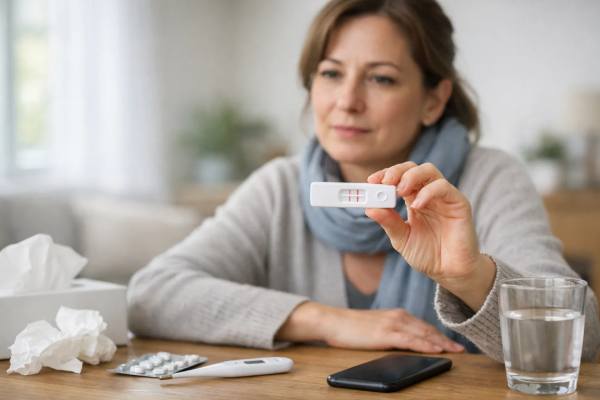
A positive home flu test can feel oddly decisive: one line, one answer, and suddenly you are doing mental math about missed work, contagious days, and whether you should start an antiviral like oseltamivir. The truth is that a home result is only the first step in a time-sensitive decision. The biggest drivers of what to do next are when symptoms started, your risk of complications, and how sick you look and feel right now. Antivirals can shorten illness and may reduce the chance of serious outcomes for people at higher risk, especially when started early. But for many otherwise healthy adults with mild-to-moderate flu, the best care is still excellent symptom support, hydration, and smart monitoring—plus a clear plan for what would warrant urgent evaluation.
Key Insights
- Start the “treatment clock” from your first symptoms, not from when you took the test.
- Antivirals help most when started within 48 hours, and they can still matter later for high-risk or severely ill people.
- A positive home test is useful, but a worsening course (breathing trouble, dehydration, confusion) matters more than the test line.
- If you are high risk, contact a clinician the same day to discuss antivirals; do not wait to “see if it gets worse.”
Table of Contents
- What a positive home flu test means
- How timing changes antiviral benefit
- High-risk groups who should call quickly
- Picking the right antiviral and using it safely
- Supportive care that actually moves the needle
- Red flags, complications, and protecting others
What a positive home flu test means
A positive at-home flu test generally means influenza virus was detected in your nose at the time you swabbed. In real life, that is often enough to make practical decisions: stay home, warn close contacts, and—if you are a good candidate—talk to a clinician about antivirals.
Still, it helps to understand what a home test can and cannot tell you.
Most home flu tests detect proteins, not live virus
Many home tests are rapid antigen tests, similar in concept to common home COVID-19 antigen tests. They detect viral proteins. These tests tend to be:
- More reliable when symptoms are fresh and viral levels are higher (often the first 1–3 days).
- More likely to miss flu later in the illness or if the sample is poor.
Some newer home tests are molecular tests (they detect viral genetic material). Molecular tests are usually more sensitive than antigen tests, but they are still not perfect and can be affected by timing and sample quality.
A positive result is usually more actionable than a negative
In most respiratory testing, positives are “stickier” than negatives. When flu is circulating and you have classic symptoms (fever, chills, body aches, headache, cough, sudden fatigue), a positive home test is often a strong signal that you truly have influenza.
A negative home test, on the other hand, does not reliably rule out flu—especially if:
- Your symptoms started several days ago
- You did not swab well (light sampling is a common issue)
- You tested very early (before viral levels rose) or very late (after they fell)
- Your illness is caused by another virus that looks similar (RSV, COVID-19, adenovirus, and others)
What to do right after a positive test
Think in two tracks:
- Containment: Stay home, mask around others in the household when possible, and improve ventilation.
- Clinical decision: Write down:
- The exact time and date your first symptoms started
- Your highest temperature and whether fever reducers changed it
- Any risk factors (pregnancy, asthma, heart disease, immune suppression, age over 65, etc.)
- Any red flags (shortness of breath, chest pain, confusion, inability to keep fluids down)
Those details make a same-day telehealth visit far more effective, because the clinician can decide quickly whether antivirals are likely to help you.
How timing changes antiviral benefit
With influenza, timing is a treatment ingredient. Antivirals work by slowing viral replication, so they matter most when the virus is multiplying fastest—usually early on.
The “48-hour window” is a helpful rule, not a cliff
For otherwise healthy teens and adults with uncomplicated flu, antivirals tend to offer the most consistent benefit when started within 48 hours of symptom onset. After that, the average benefit typically shrinks because the body has already begun turning the corner from viral growth to immune cleanup.
But 48 hours is not a magic door that slams shut. Two groups can still benefit beyond that window:
- People at high risk of complications (their downside is larger, and they can worsen after the first few days).
- People with severe or progressive illness, including those who need urgent evaluation or hospitalization (viral activity and inflammation can remain high longer).
The practical takeaway: if you are high risk or you are looking sicker than a “standard flu,” it is still worth contacting a clinician even if you are on day 3, 4, or beyond.
Start counting from first symptoms, not the test
A common mistake is starting the clock from the moment you got your positive home test. Clinicians generally think in “hours since symptom onset.”
Example:
- Symptoms began Monday at 8 p.m.
- You tested positive Wednesday at 9 a.m.
That is already ~37 hours into illness, even though the test feels “new.” Waiting until Thursday afternoon might push you beyond 48 hours, which can change how strongly antivirals are recommended for lower-risk patients.
Earlier treatment tends to mean bigger payoff
Even within the first 48 hours, earlier is generally better. If antivirals are going to help you, they help most when:
- Fever and body aches are rising quickly
- You have had symptoms for less than 24 hours
- You are in a high-risk group and could deteriorate
When supportive care is likely enough based on timing
If all of the following are true, supportive care alone is often reasonable:
- You are not in a high-risk group
- Symptoms are mild-to-moderate and not getting worse
- You are past 48 hours since onset
- You can drink fluids, urinate normally, and breathe comfortably at rest
Even then, keep a plan for escalation, because flu can surprise people on day 3–5 with dehydration, wheezing, or secondary bacterial infections.
High-risk groups who should call quickly
If you have a positive home flu test and you fall into a higher-risk group, the goal is simple: do not wait for day 3 or day 4 to “see what happens.” Flu can accelerate quickly, and early antivirals are most valuable for people whose baseline risk is higher.
Guidance from groups like the Centers for Disease Control and Prevention and many pediatric and obstetric organizations generally prioritizes prompt antiviral treatment for people more likely to develop complications.
Common high-risk categories
You are generally considered higher risk for severe flu if you are in any of these categories:
- Age-related risk
- Adults 65 years and older
- Children younger than 5 years, especially under 2 years
- Pregnancy-related
- Pregnant at any stage, or recently postpartum (the weeks after delivery)
- Chronic medical conditions
- Lung disease (asthma, COPD), cystic fibrosis
- Heart disease (excluding isolated high blood pressure)
- Diabetes and other metabolic conditions
- Kidney or liver disease
- Neurologic or neurodevelopmental conditions that affect breathing, swallowing, or muscle strength
- Immune suppression
- Cancer treatment, transplant medications, high-dose steroids, certain immune disorders
- Body weight and living situation
- Severe obesity (often defined clinically as very high BMI)
- Residents of nursing homes or long-term care facilities
Why the bar is lower for treatment
High-risk groups can develop complications such as:
- Pneumonia (viral pneumonia or secondary bacterial pneumonia)
- Exacerbation of asthma or COPD (wheezing, low oxygen)
- Worsening heart failure or cardiac strain
- Severe dehydration
- Hospitalization
Because those outcomes matter more than “one less day of symptoms,” clinicians often recommend antivirals even when the expected symptom-shortening for the average healthy adult is modest.
What “call quickly” really means
If you are high risk and have a positive home test, aim for same-day contact with a clinician or urgent care, ideally within the first 48 hours of symptoms. Telehealth can work well if you can clearly report:
- Your symptom start time
- Breathing status (shortness of breath at rest? wheezing?)
- Temperature pattern
- Medical conditions and medications
- Pregnancy status, if applicable
If you cannot reach care promptly and you have red flags (see the last section), do not “wait it out” at home.
Picking the right antiviral and using it safely
Flu antivirals are prescription medications. The best choice depends on your age, pregnancy status, medical history, and the type of flu you have (A or B). The clinician’s job is to match the drug to the patient—not to the test.
The main options you may hear about
- Oseltamivir (often known by a common brand name)
- Oral medication, typically taken twice daily for 5 days
- Widely used in adults, kids, and pregnancy
- Common side effects: nausea, vomiting (often improved by taking with food)
- Baloxavir
- Oral medication taken as a single dose
- Convenient for people who struggle with multi-day dosing
- Not always preferred in some immunocompromised situations because resistance can emerge in prolonged viral replication
- Can interact with polyvalent cations (for example, certain supplements or antacids taken at the same time)
- Zanamivir
- Inhaled powder taken over several days
- Generally avoided in people with reactive airway disease (like asthma) because it can trigger bronchospasm
- Peramivir
- Intravenous, usually a single dose
- Typically used in selected cases when oral medication is not feasible
What antivirals can realistically do
For uncomplicated flu, antivirals usually aim to:
- Shorten the duration of symptoms (often by about a day when started early)
- Reduce viral shedding and potentially reduce transmission (not guaranteed)
- Lower the risk of complications in higher-risk patients (the strongest rationale for treatment)
For severe flu, antivirals are part of a broader plan that may include oxygen support, fluids, and evaluation for pneumonia or other complications.
Safety and “do not mix and match” pitfalls
A few safety points matter a lot in real households:
- Do not double-dose combination cold products. Many multi-symptom remedies already include fever and pain medicine. Accidentally taking extra acetaminophen is a common cause of liver injury.
- Be honest about kidney function and medications. Some antivirals need dose adjustment in reduced kidney function.
- Report pregnancy and postpartum status. This changes the risk calculation and often increases the urgency of treatment.
- Tell the clinician if you have asthma or COPD. That can steer the choice away from inhaled options.
A practical way to discuss antivirals with a clinician
If you are trying to decide quickly, ask targeted questions:
- “Based on my risk factors and symptom timeline, do you recommend an antiviral today?”
- “Which option fits my medical history and medications best?”
- “What side effects should make me stop the medication and call you?”
- “If I am not better by day 4–5, what changes your plan?”
That approach keeps the conversation anchored to risk and timing rather than to the intensity of the test line.
Supportive care that actually moves the needle
Whether or not you take an antiviral, supportive care is the foundation of recovery. Done well, it reduces suffering, lowers the chance of dehydration, and makes it easier to spot when something is changing for the worse.
Focus on hydration and sleep first
Dehydration is one of the most common reasons people with flu end up needing urgent care. A simple, practical target is: urine should be pale yellow and you should be urinating regularly. If you are barely urinating, feeling dizzy when standing, or cannot keep fluids down, you need medical advice.
Helpful options include:
- Water, broth, oral rehydration solutions
- Warm tea with honey (for adults and children over 1 year)
- Small, frequent sips if nausea is present
Sleep is not laziness during flu—it is the immune system’s work environment. If you can, protect a consistent sleep window and reduce stimulation (screens, bright light) during feverish periods.
Fever and pain control: keep it simple and safe
For most people, fever is not dangerous by itself; it is a sign of immune activation. Treat fever when it is making you miserable, preventing sleep, or limiting hydration.
General safety principles:
- Follow package directions carefully.
- Avoid taking multiple products that contain the same ingredient (especially acetaminophen).
- If you have liver disease, heavy alcohol use, ulcers, kidney disease, or take blood thinners, ask a clinician or pharmacist before using common pain relievers.
Important pediatric note: never give aspirin to children or teens with viral illness due to the risk of a rare but serious condition.
Cough, congestion, and sore throat: smart relief
Target symptoms that block rest and hydration:
- Nasal congestion
- Saline spray or rinse
- Humidified air or a warm shower
- Decongestants may help some adults but can raise blood pressure and worsen anxiety or insomnia in others
- Sore throat
- Warm liquids, honey (over age 1), lozenges for older children and adults
- Cough
- Honey (over age 1) can reduce cough frequency at night
- Avoid suppressing cough so much that you cannot clear mucus; the goal is comfort and sleep, not silence
Nutrition and activity: lower the bar
You do not need to “eat perfectly” during flu. Prioritize calories and protein you can tolerate, even if it is simple foods. Gentle movement (standing, short walks to the bathroom) is helpful, but strenuous exercise can prolong recovery. Many people feel better briefly and then crash; that does not mean the infection is gone.
Red flags, complications, and protecting others
A positive home flu test is valuable information, but your clinical trajectory is the real signal. Flu can be straightforward, or it can tip into pneumonia, dehydration, or dangerous breathing problems—especially in the very young, older adults, pregnant people, and those with chronic disease.
Red flags that should prompt urgent evaluation
Seek urgent care (or emergency evaluation) if you notice:
- Trouble breathing, shortness of breath at rest, bluish lips or face
- Chest pain or pressure
- Confusion, severe weakness, fainting, inability to stay awake
- Signs of dehydration: very little urination, dizziness, inability to keep fluids down
- Fever that improves and then returns with worsening cough or chest symptoms
- In children: fast breathing, rib retractions, poor feeding, unusual sleepiness, or a child who is “not acting right”
If you have underlying lung disease and new wheezing or reduced peak flow, treat that as a higher-risk situation.
Watch for the “second hit” pattern
One classic pattern is feeling a bit better around day 3–4 and then worsening again. That can happen with flu alone, but it can also signal complications such as secondary bacterial pneumonia or sinus infection. Worsening shortness of breath, chest pain, or a persistent high fever after initial improvement should not be ignored.
Protecting others at home
Influenza spreads efficiently in close quarters. Practical steps that help:
- Stay in a separate room if possible during the feverish phase.
- Use a well-fitting mask around household members, especially those at high risk.
- Improve ventilation (open windows when feasible).
- Clean hands often, especially after coughing, blowing your nose, or handling tissues.
- Avoid sharing drinks, utensils, towels, and pillows.
When can you return to work or school?
A commonly used benchmark is:
- You are fever-free for at least 24 hours without fever-reducing medicine, and
- Your symptoms are improving enough that you can function.
Even after that, coughing can linger. Consider masking for a few more days around vulnerable people.
What about antivirals for exposed household members?
In some situations—especially when a household member is at high risk—clinicians may prescribe preventive antivirals after a close exposure. This is not a do-it-yourself decision, but it is worth asking about if:
- A high-risk person lives with you, and
- Exposure was close and recent, and
- That person is not yet sick but is likely to become ill
The goal is to reduce the chance of severe disease in the most vulnerable household members.
References
- Influenza Antiviral Medications: Summary for Clinicians | Influenza (Flu) | CDC 2026 (Guideline)
- Treating Flu with Antiviral Drugs | Influenza (Flu) | CDC 2025 (Guideline)
- Evaluation of Oseltamivir Used to Prevent Hospitalization in Outpatients With Influenza: A Systematic Review and Meta-Analysis – PMC 2023 (Systematic Review)
- Comprehensive evaluation of therapeutic effectiveness and safety profiles of baloxavir marboxil for managing influenza virus infection in pediatric populations: a systematic review with pooled meta-analytic data – PMC 2026 (Systematic Review)
- FDA Authorizes Marketing of First Home Flu and COVID-19 Combination Test Outside of Emergency Use Authorities | FDA 2024 (Government)
Disclaimer
This article provides general educational information about interpreting a positive home flu test and considering antiviral treatment versus supportive care. It is not medical advice and does not replace evaluation by a licensed clinician. Flu can become serious quickly—especially in young children, older adults, pregnant people, and those with chronic medical conditions or weakened immune systems. If you have severe symptoms, worsening breathing, chest pain, confusion, dehydration, or you are worried about your condition for any reason, seek urgent medical care.
If you found this helpful, consider sharing it on Facebook, X (formerly Twitter), or any platform you prefer so others can make faster, better-informed decisions when flu hits.