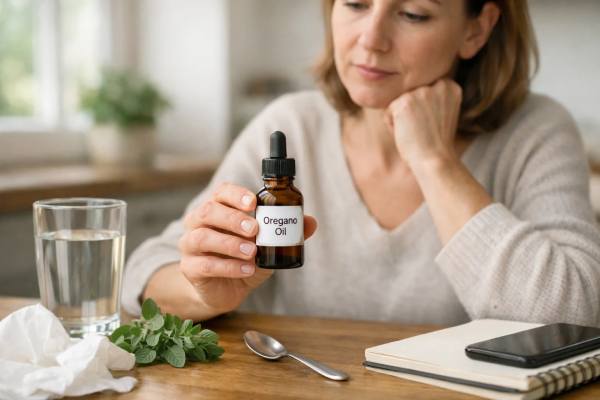
Oil of oregano sits in that crowded space between kitchen herb and “natural antibiotic” hype. The reality is more nuanced—and more useful—than either extreme. True oil of oregano (especially oregano essential oil) is a concentrated blend of plant compounds such as carvacrol and thymol that can irritate microbes in a lab and may also irritate human tissue if used carelessly. For a typical cold, the goal is not to “kill the virus” with a supplement. It’s to support comfort, reduce symptom intensity, and avoid risky shortcuts while your immune system does the main work.
Used thoughtfully, oil of oregano may help a subset of people with early throat irritation or stubborn congestion—but it is not a proven cold cure, and it carries real safety considerations. This guide breaks down what it can and cannot do, and how to use it with a clear, practical margin of safety.
Quick Overview
- Oil of oregano may offer mild, short-term symptom support, especially for throat and nasal irritation
- Strong “natural antibiotic” claims outpace the evidence for routine colds
- Undiluted oregano essential oil can burn and should not be taken straight by mouth
- If you try it, use a properly diluted or encapsulated product for a short window (often 3–7 days) and stop if irritation starts
Table of Contents
- What oil of oregano really is
- What the evidence says for colds
- Forms dosing ranges and timing
- Safe use and common side effects
- Who should avoid it and interactions
- Smarter cold plan with oregano oil
What oil of oregano really is
“Oil of oregano” is a label, not a single product. That matters because safety, strength, and expectations change depending on what’s in the bottle.
Essential oil and infused oil are not the same
- Oregano essential oil is made by distilling oregano leaves and flowering tops. It is highly concentrated. A few drops can contain the plant’s volatile compounds at levels you would never get from cooking oregano.
- Oregano-infused oil is a culinary-style infusion (oregano steeped in olive oil or another carrier). It may taste pleasant and can be gentler on skin, but it usually does not contain the same potency or standardized active compounds.
Most confusion—and most adverse reactions—come from treating essential oil as if it were an herbal tea.
Why carvacrol matters, and why it is not the full story
Carvacrol is one of the primary phenolic compounds associated with oregano essential oil’s antimicrobial activity. Some products advertise “high carvacrol” because it sounds like a measurable marker of strength. That can be helpful for comparing products, but higher potency is not automatically better for a cold. For human use, the best product is often the one that is consistent, clearly labeled, and tolerable, not simply the strongest.
Also, oregano oils can vary widely by:
- plant species and growing conditions
- harvest timing
- extraction methods
- added ingredients (carrier oils, emulsifiers, other essential oils)
How to read a label like a skeptic
A few label cues can reduce surprises:
- Look for “Supplement Facts” (for oral capsules) or clear topical directions (for external use).
- If it’s an essential oil, check whether it says “for aromatherapy” or “not for internal use.” Respect that.
- Be cautious with vague blends and “proprietary immune drops” that don’t list amounts.
- Prefer products that specify the oregano species and list key constituents (often carvacrol), plus lot-based testing or quality verification.
A simple rule: if you can’t tell whether it’s essential oil or a supplement extract, don’t experiment with it during an illness.
What the evidence says for colds
A cold is usually a self-limited viral infection of the upper airways. Symptoms peak early, then fade over days, while cough can linger longer. That timeline shapes what “helpful” realistically means.
Where the hype gets ahead of reality
Oil of oregano is often framed as a virus-killing shortcut. In real-world colds, that claim runs into three practical barriers:
- Lab activity does not equal clinical effect. Many substances can suppress microbes in a dish at concentrations that would irritate human tissue.
- Colds involve inflammation, not just germs. Sore throat, congestion, and cough are driven by immune signaling, mucus changes, and airway sensitivity.
- Dose is constrained by tolerance. You can’t simply “take more” of a harsh essential oil without risking burns, stomach upset, or airway irritation.
So the strongest claim you can make responsibly is not “it cures colds,” but “it might help some symptoms for some people.”
What “helpful” may look like in practice
Oil of oregano may be worth considering when:
- you feel early scratchy throat or mild hoarseness and want a short-term supportive approach
- your cold symptoms include nasal irritation and you’re choosing safer, diluted topical or aromatic methods
- you are using it as a complement to proven comfort strategies (hydration, rest, saline, and symptom-targeted meds when appropriate)
Some people report a “clearing” sensation in the nose or throat. That may reflect a combination of mild local numbing, sensory distraction, and reduced irritation for a short window—not necessarily a shortened infection.
When it is unlikely to help
Oil of oregano is a poor fit when:
- you are already several days in and symptoms are naturally improving
- you have significant chest symptoms (wheezing, shortness of breath)
- your main issue is fever, body aches, or profound fatigue (often not a simple cold)
- you are prone to reflux or stomach irritation (common with strong herbal oils)
A realistic stance: oil of oregano may be symptom support, not a substitute for time, hydration, and appropriate medical care when red flags appear.
Forms dosing ranges and timing
If you decide to try oil of oregano for a cold, the safest path is choosing the right form and using it for a short, defined window.
Common forms and how they differ
- Encapsulated oil of oregano (softgels): Often diluted in a carrier oil. Usually the most tolerable oral option because the dose is measured and easier to take with food.
- Alcohol-based oregano tinctures or drops: These may contain oregano extracts, essential oil, or blends. They can burn the mouth and throat if too concentrated.
- Essential oil (aromatherapy bottles): Highly concentrated and easiest to misuse. Best reserved for non-ingestion uses unless the product is specifically made and labeled for internal use.
- Topical blends: Oregano essential oil pre-diluted in a carrier oil. Useful for external application, but still a common source of skin irritation if too strong.
Timing: treat it like a short experiment
If it helps at all, it tends to be most noticeable early, when throat and nasal irritation are ramping up. A practical approach:
- Try it for 24 hours as a tolerance check.
- If no benefit—or if irritation starts—stop.
- If you do notice modest symptom relief, keep the trial short, commonly 3–7 days, then discontinue.
Extending use “just in case” increases the chance of side effects without clear upside.
Practical dosing principles without overpromising
Because products vary widely, the most responsible guidance is label-led and conservative:
- Start with the lowest labeled dose and take it with food to reduce stomach upset.
- Avoid “mega-dosing” patterns (frequent droppers, repeated high doses) when you do not have a standardized product.
- Do not combine multiple oregano products (for example, capsules plus concentrated drops) unless a clinician has advised it.
Safer ways to apply it, depending on your goal
- For throat comfort, people often do better with measured oral capsules than harsh drops that contact mouth tissue directly.
- For nasal irritation, prioritize saline sprays, humidification, and gentle aromatics over putting oregano oil in the nose. The nasal lining is delicate and easy to inflame.
- For topical use, only use oregano essential oil when it is properly diluted, and keep it away from eyes, lips, nostrils, and broken skin.
Think “minimal effective exposure,” not “strongest possible dose.”
Safe use and common side effects
The biggest safety issue with oil of oregano is not subtle—it’s irritation. Concentrated essential oils can act like chemical irritants on mucous membranes and skin.
Do not take undiluted oregano essential oil by mouth
Undiluted essential oil can cause:
- burning pain in the mouth and throat
- nausea, vomiting, or abdominal pain
- reflux flare-ups and a lingering “raw” sensation
- accidental aspiration (inhaling droplets), which can irritate the airways
If you are using oregano as an oral supplement, choose a measured, labeled product designed for ingestion, and avoid “neat” essential-oil dosing.
Common side effects people should expect and respect
Even with capsules or diluted products, side effects can include:
- stomach upset, heartburn, or diarrhea
- headache or lightheadedness (often from strong aromas or sensitivity)
- mouth or throat irritation (especially with drops)
- skin redness, burning, or a rash (topical use)
Side effects are not a sign the product is “working.” They are a sign your body is irritated.
Topical dilution: a practical safety baseline
If you apply oregano essential oil to skin, dilution matters more than brand:
- A conservative starting point is around 1% dilution (especially for sensitive skin), with even lower being reasonable for first-time use.
- Patch-test a small area and wait a full day before broader use.
- Avoid use on children’s skin unless specifically directed by a clinician; kids are more vulnerable to irritation.
Storage and household safety
Oregano essential oil should be treated like a potent household chemical:
- Store it tightly closed, away from heat and sunlight.
- Keep it out of reach of children and pets.
- If accidental ingestion happens—especially in a child—seek urgent medical advice rather than “waiting it out.”
When to stop immediately
Stop and seek medical guidance if you notice:
- swelling of lips, tongue, or face
- hives, widespread rash, or wheezing
- severe throat burning or trouble swallowing
- persistent vomiting, severe abdominal pain, or signs of dehydration
Safety is not about fear—it’s about respecting concentration.
Who should avoid it and interactions
Oil of oregano is not a good “try it and see” product for everyone. A few groups have higher risk, and certain medication combinations deserve extra caution.
People who should generally avoid oil of oregano
- Pregnant or breastfeeding individuals: Safety data are limited, and concentrated oils can have pharmacologic effects.
- Children: Small bodies, sensitive airways, and higher risk of accidental overdose make essential oils a poor choice without professional guidance.
- People with reflux, gastritis, or ulcers: Oregano products commonly aggravate burning and nausea.
- Those with known herb allergies: Oregano is in the mint family. If you react to related herbs, proceed carefully or avoid it.
- Asthma or reactive airways: Strong aromas can provoke coughing or bronchospasm in some people.
Medication interactions to take seriously
Research on oregano supplements specifically is limited, but cautious practice is still appropriate because plant compounds can influence clotting, blood sugar, and drug metabolism.
Discuss with a clinician or pharmacist before using oil of oregano if you take:
- blood thinners or antiplatelet medications (bleeding risk is a concern with many concentrated botanicals)
- diabetes medications (herbal products can sometimes lower blood sugar unpredictably)
- medications with narrow dosing windows (where small changes in absorption matter)
If you have surgery scheduled, it’s also reasonable to avoid concentrated herbal oils in the days leading up to it unless your care team approves.
Immune conditions and complex health situations
If you are immunocompromised, on chemotherapy, on transplant medications, or have significant chronic lung disease, the bigger issue is not whether oregano oil helps—it’s whether you are missing the window for evaluation and targeted treatment. In these settings, “natural antimicrobial” self-treatment can delay care.
Quality and contamination concerns
Another under-discussed risk is product variability:
- Essential oils can be adulterated or inconsistently concentrated.
- Blends can contain additional essential oils that increase irritation or interaction potential.
- “Wild oregano” marketing does not guarantee standardized content.
If you cannot verify what it is and how it is meant to be used, skip it—especially if you are in a higher-risk group.
Smarter cold plan with oregano oil
A safer way to think about oil of oregano is as an optional add-on within a structured cold plan—one that prioritizes comfort, monitoring, and clear stop rules.
Step 1: Confirm you are treating a typical cold
A straightforward cold often:
- builds over 1–2 days
- causes runny or stuffy nose, sore throat, sneezing, and cough
- improves over about a week, though cough can linger longer
Consider medical evaluation sooner if you have:
- trouble breathing, chest pain, or bluish lips
- fever that is high, persistent, or returns after improving
- dehydration, confusion, or inability to keep fluids down
- symptoms that improve and then sharply worsen
- a baby under 3 months with fever, or anyone at high risk for complications
Step 2: Use the “comfort foundation” first
These basics often outperform supplements:
- steady fluids and warm drinks
- humidified air or a warm shower for congestion
- saline nasal rinses or sprays
- rest and lighter activity as tolerated
- symptom-targeted over-the-counter medicines when appropriate for you
If you add oil of oregano, it should be layered on top of this—not used instead of it.
Step 3: If you try oil of oregano, use tight guardrails
A practical, cautious trial for many adults looks like:
- Choose one form (preferably a measured, labeled oral capsule rather than essential oil drops).
- Start at the lowest labeled dose with food.
- Reassess after 24 hours: keep going only if benefit is clear and irritation is absent.
- Stop after a short window (often 3–7 days), or sooner if side effects show up.
If your throat feels “raw,” your stomach is burning, or you are coughing more from irritation, that is your signal to stop.
Step 4: Know what success looks like
A reasonable goal is:
- slightly less throat irritation
- a small reduction in symptom intensity
- better comfort while sleeping
An unrealistic goal is:
- preventing a cold entirely once symptoms begin
- “killing the virus” quickly
- avoiding rest, hydration, and time
Oil of oregano can fit into a cold routine, but only when it is used briefly, gently, and with respect for its concentration.
References
- Preventing and Managing Common Cold 2024 (Public Health Guidance)
- Overview: Common colds – InformedHealth.org – NCBI Bookshelf 2023 (Evidence Summary)
- Natural Products for the Prevention and Treatment of Common Cold and Viral Respiratory Infections – PMC 2023 (Review)
- Essential oils for clinical aromatherapy: A comprehensive review – PubMed 2024 (Review)
- [Retrospective surveys on intoxications with essential oils] – PubMed 2023 (Safety Study)
Disclaimer
This article is for general education and does not replace personalized medical advice, diagnosis, or treatment. Oil of oregano products vary widely in strength and purity, and concentrated essential oils can cause burns, allergic reactions, breathing irritation, and other adverse effects—especially if used undiluted or taken by mouth inappropriately. If you are pregnant, breastfeeding, treating a child, have chronic medical conditions, or take prescription medications, consult a clinician or pharmacist before using oil of oregano. Seek urgent care if you develop trouble breathing, chest pain, dehydration, severe or worsening symptoms, or signs of an allergic reaction.
If you found this guide useful, consider sharing it on Facebook, X (formerly Twitter), or any platform you prefer so others can use oil of oregano more safely and realistically.