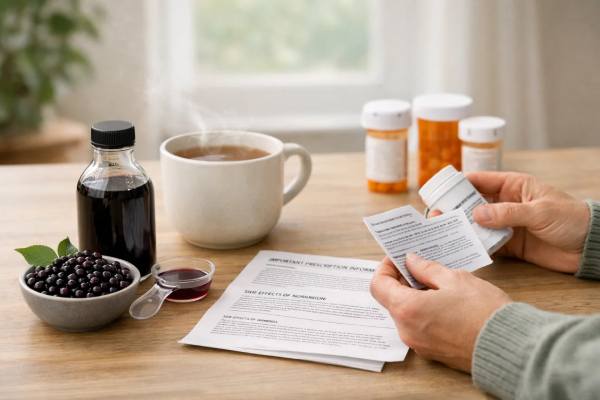
Elderberry is one of the most common “immune season” supplements, and it earns that attention for a few practical reasons: it is widely available, easy to take, and supported by some human studies—especially for flu-like symptom relief when used early. At the same time, elderberry is not a single standardized medicine. Syrups, gummies, capsules, lozenges, and homemade preparations can vary dramatically in berry content, processing, sugar load, and dosing. That variability is a big reason people get mixed results. Safety also matters more than many labels suggest: raw or unripe elderberries can cause significant digestive illness, and certain health conditions and medications raise the stakes. This article explains what elderberry can realistically do for colds and flu, how to use it with a clear plan, and who should avoid it because of allergy risk, immune-related concerns, or drug interactions.
Essential Insights for Safer Use
- Benefits, when they appear, are usually modest and most noticeable when started within the first 24–48 hours of symptoms.
- Commercially prepared products are generally safer than homemade mixtures with uncertain preparation and dosing.
- Raw, unripe, or poorly prepared elderberry can trigger severe nausea, vomiting, and diarrhea.
- Elderberry may be a poor fit with immunosuppressants and some cancer therapies, and it can complicate polypharmacy.
- If you try it, use one clearly labeled product for a short, defined window and stop immediately if allergic symptoms develop.
Table of Contents
- Elderberry basics and what is in it
- What benefits are realistic
- How to use elderberry strategically
- Risks and side effects to know
- Drug interactions and high-risk groups
- When to skip supplements and seek care
Elderberry basics and what is in it
When people say “elderberry,” they usually mean the dark purple berries of black elder (Sambucus nigra). You will also see elderflower products, but berries and flowers are not interchangeable. Most cold and flu discussions focus on berry extracts, commonly sold as syrups, gummies, capsules, and lozenges.
Why product differences matter
Elderberry is a plant-based material with natural variability. Two products can both say “elderberry,” yet deliver different amounts of key compounds. Differences include:
- Plant part and species: Berries versus flowers, and S. nigra versus other Sambucus species.
- Processing: Juice concentrate, standardized extract, dried powder, or blended “immune” formulas.
- Dose clarity: Some labels provide precise amounts; others hide behind proprietary blends.
- Add-ins: Zinc, vitamin C, honey, herbs, or sweeteners can change tolerance and make it hard to know what helped.
If your goal is symptom relief you can evaluate honestly, simpler is better: a single-ingredient product, clearly labeled, used consistently.
What is believed to drive the effects
Elderberries contain polyphenols, including anthocyanins that give the berry its deep purple color. These compounds are often associated with antioxidant activity and may influence inflammatory signaling. In lab settings, some elderberry preparations also show activity against certain respiratory viruses. Lab findings are not the same as proven clinical results, but they explain why elderberry continues to be studied.
The important safety distinction: raw versus prepared
A critical point gets lost in many casual discussions: elderberry is safest when properly prepared. Raw or unripe berries and other parts of the plant can cause significant gastrointestinal symptoms. Commercial products are typically processed to reduce this risk. Homemade syrups can be safe when prepared correctly, but “correctly” is not always obvious, and mistakes are common when recipes are improvised.
If you remember only one thing from this section, make it this: treat elderberry like a real botanical product with real variability—choose a form you can dose consistently, and avoid raw or uncertain preparations.
What benefits are realistic
People often hope elderberry will “stop a cold,” but the most realistic expectation is more modest: symptom relief that may be noticeable for some people, some of the time, especially with flu-like illness and early use. The evidence is not uniform, and some studies have found no meaningful benefit. That mixed picture can still be useful if you know what outcome you are actually aiming for.
Where elderberry may help
When it appears to work, elderberry tends to help in one or more of these ways:
- Shorter symptom duration: You may feel “turned the corner” sooner, even if the illness still runs a course.
- Lower symptom intensity: Congestion, aches, and fatigue may feel less overwhelming.
- A better day-to-day slope: Instead of several days feeling stuck at peak misery, improvement may feel more gradual and earlier.
These are not guaranteed outcomes. They are the types of improvements people report—and the kinds of endpoints researchers typically measure.
Cold versus flu: why the difference matters
“Cold” is not one virus. Flu is also not one experience. Elderberry’s most discussed benefits are tied to influenza-like illness, where systemic symptoms (feverish feeling, aches, marked fatigue) are prominent. For milder colds dominated by runny nose and scratchy throat, benefits—if present—may be harder to detect because the illness is already relatively tolerable.
What elderberry is unlikely to do
Keeping expectations grounded helps you avoid overuse and disappointment. Elderberry is unlikely to:
- Prevent illness reliably in high-exposure settings if sleep, stress, and hygiene are working against you.
- Replace proven medical care for influenza, pneumonia, or asthma flares.
- “Detox” the body or erase a viral infection overnight.
Also note the practical problem: many products combine elderberry with other ingredients, so the perceived benefit may come from improved hydration (syrup), throat soothing (honey), or another active component (zinc).
A good decision rule
Elderberry may be worth a short trial if colds or flu-like illnesses consistently disrupt your life, and you can use a well-labeled product early. If you are generally healthy, rarely ill, and your symptoms are mild, the cost and uncertainty may outweigh the upside. A trial should be intentional and time-limited, not a vague habit.
How to use elderberry strategically
If elderberry helps at all, it is most likely to help when used with two principles in mind: early timing and consistent dosing. Many people take a small amount sporadically, start late, or switch products mid-illness—then understandably cannot tell whether it made a difference.
Start early, not “eventually”
For respiratory viruses, the first 24–48 hours often represent a window where symptoms are rising but not yet entrenched. Consider starting elderberry when you have clear early signs such as:
- A distinct scratchy throat that progresses over hours
- New fatigue with chills or body aches
- A rapidly developing runny nose plus “head fog”
- Known household exposure with the start of mild symptoms
Starting after several days of established illness is less likely to feel different from the normal course.
Choose a form you can actually stick with
Different forms suit different needs:
- Syrup or liquid: Easy to take, often used for short courses; watch added sugar.
- Lozenges: Useful when throat irritation is prominent; check dosing frequency and sweeteners.
- Capsules or tablets: Convenient for travel; quality varies widely.
- Gummies: Most palatable, but often under-dosed and high in sugar.
Pick the form you will take consistently for a few days without effort.
Use a defined “trial window”
A practical way to avoid endless supplement use:
- Use one product as directed for a short course during acute illness, often a few days up to about a week depending on the label.
- Stop when you are clearly improving or when the label’s maximum duration is reached.
- If you develop side effects or allergic symptoms, stop immediately.
This keeps use focused and easier to evaluate.
Pair elderberry with basics that move the needle
Elderberry should sit on top of supportive care that consistently helps people feel better:
- Prioritize sleep and fluids, especially if feverish.
- Use saline nasal spray or rinse for congestion.
- Consider honey for cough (not for infants), and throat lozenges for irritation.
- Use over-the-counter medicines appropriately if needed, following label instructions and personal medical guidance.
The goal is not to “win” with one supplement. It is to make the illness more manageable while your body clears it.
Risks and side effects to know
Elderberry is often marketed as gentle, but “natural” does not mean risk-free. Most concerns fall into three buckets: preparation-related toxicity, digestive side effects, and allergic or sensitivity reactions. Knowing these risks upfront helps you use elderberry more safely—and helps you recognize when to stop.
Preparation-related toxicity: the raw berry problem
Raw or unripe elderberries and other parts of the plant can cause significant gastrointestinal illness. Symptoms can include:
- Nausea and vomiting
- Abdominal cramps
- Severe diarrhea and dehydration
Commercial products are typically processed to reduce this risk, but homemade preparations vary. If you choose homemade syrup, treat it like food safety: use a trusted recipe, avoid shortcuts, and do not assume “a little raw” is harmless.
Digestive side effects from prepared products
Even properly prepared elderberry can cause stomach upset in some people, especially when taken on an empty stomach or at higher doses. Common issues include:
- Nausea or heartburn
- Loose stools
- Bloating
Two simple adjustments often help: take it with a small snack, and avoid stacking multiple products with similar effects (for example, elderberry plus magnesium laxatives plus high-dose vitamin C).
Allergy and sensitivity reactions
Allergic reactions are uncommon but important to take seriously. Stop elderberry and seek urgent help if you develop:
- Hives, facial swelling, or lip or tongue swelling
- Wheezing, chest tightness, or difficulty breathing
- Severe dizziness or faintness
Milder reactions—itching, rash, or new throat irritation—are still a reason to stop and reassess, especially if you have a history of plant allergies or asthma.
Special caution with immune sensitivity
Elderberry is often discussed as an immune-support product. If you have a condition where immune activation can worsen symptoms, caution is reasonable. This does not mean elderberry automatically causes harm, but it does mean you should avoid “more is better” thinking and consider clinician guidance before use.
Quality and labeling risks
Another safety concern is not the berry itself—it is the product:
- Blends can contain multiple botanicals, increasing allergy revealing and interaction risk.
- Sweetened syrups and gummies can deliver high sugar doses that matter for some people.
- Inconsistent labeling makes it difficult to gauge dose and duration.
If you are risk-sensitive, choose products with clear labeling and avoid multi-ingredient immune blends.
Drug interactions and high-risk groups
Drug interaction data for many supplements are incomplete. That does not mean “no interactions exist.” It means you should approach elderberry with a risk-based mindset: the more medically complex your situation, the more conservative you should be.
Situations where you should pause before using elderberry
Consider avoiding elderberry—or using it only with clinician input—if you are in one of these groups:
- Immunosuppressed (organ transplant recipients, biologic therapy, high-dose steroids, or other immunosuppressants)
- Autoimmune disease where immune modulation can trigger flares or complicate symptom control
- Cancer treatment, especially targeted therapies and regimens with liver toxicity risk
- Pregnancy or breastfeeding, where safety data are limited
- Multiple chronic conditions with several daily medications
In these situations, even “small” risks can become meaningful.
Interaction themes to know
The most plausible interaction categories involve immune effects, metabolism pathways, and additive physiological effects:
- Immunosuppressants: If a supplement influences immune signaling, it could theoretically work against medications intended to dampen immune activity.
- Cancer therapies: Some therapies rely on tight dosing and predictable metabolism; adding supplements can complicate side effects and liver monitoring.
- Liver-metabolized drugs: Case reports and lab findings raise the possibility that some elderberry products may affect drug-metabolizing enzymes, which can matter for drugs with narrow safety margins.
- Diuretics and laxatives: Elderberry products may have additive effects in some people, increasing dehydration risk during illness.
- Diabetes medications: If a product influences glucose handling or appetite, it could complicate glycemic control—especially when illness already affects blood sugar.
None of these themes mean elderberry is automatically unsafe. They mean you should be selective and conservative if the downside cost is high.
A practical screening checklist
Before using elderberry, ask yourself:
- Am I on a medication where small changes in levels could be dangerous?
- Do I already struggle with dehydration, low blood pressure, or diarrhea during illness?
- Would a drug interaction be hard to notice until it became serious?
- Is my immune system intentionally suppressed or medically fragile?
If you answer “yes” to any, talk with a clinician or pharmacist before using elderberry. If you cannot do that promptly, it may be wiser to skip it and focus on supportive care.
When to skip supplements and seek care
A supplement can be a reasonable add-on for mild illness, but it should never delay medical evaluation when symptoms suggest influenza complications, pneumonia, dehydration, or another problem that benefits from timely treatment. The decision is less about elderberry and more about recognizing when the situation is no longer “routine.”
Signs you should seek medical care promptly
Get evaluated urgently if you have:
- Shortness of breath, chest pain, or bluish lips
- Severe weakness, confusion, or difficulty staying awake
- Dehydration signs: minimal urination, dizziness on standing, inability to keep fluids down
- Fever that is high or persists beyond about 3 days, or returns after improving
- Rapidly worsening symptoms after initial improvement (a “double-sickening” pattern)
These are not situations to manage with supplements.
Higher-risk people should have a lower threshold
Seek care earlier if you are:
- Over 65, pregnant, or recently postpartum
- Living with chronic lung disease (asthma, COPD), heart disease, kidney disease, or diabetes
- Immunosuppressed or on chemotherapy or biologics
- Caring for an infant or a medically fragile person at home
In these groups, influenza and other respiratory infections can change quickly, and early antiviral treatment may be appropriate for confirmed or suspected flu.
When elderberry is not the priority
Even for a healthy adult, elderberry should move down the list if:
- You cannot reliably take it as directed
- The product is a multi-ingredient blend and you have medication complexity
- You are prone to diarrhea and dehydration during illness
- You have a history of allergic reactions to botanicals or supplements
Sometimes the safest choice is to skip the experiment and focus on rest, hydration, symptom relief, and clear medical thresholds.
A sensible “yes, maybe, no” framework
- Yes, consider a short trial: healthy adult, early symptoms, well-labeled product, low interaction risk.
- Maybe, but get guidance first: autoimmune disease, complex medications, pregnancy, breastfeeding, cancer therapy.
- No, avoid and prioritize medical care: severe symptoms, breathing trouble, significant dehydration, or immunosuppression without clinician input.
This framework keeps elderberry in the role it can realistically play: optional support, not a substitute for diagnosis or treatment.
References
- Elderberry for prevention and treatment of viral respiratory illnesses: a systematic review – PMC 2021 (Systematic Review)
- Elderberry: Usefulness and Safety | NCCIH 2024 (Government Fact Sheet)
- Elderberry interaction with pazopanib in a patient with soft-tissue sarcoma: A case report and literature review – PMC 2024 (Case Report)
- Elderberry Extract Outpatient Influenza Treatment for Emergency Room Patients Ages 5 and Above: a Randomized, Double-Blind, Placebo-Controlled Trial – PubMed 2020 (RCT)
Disclaimer
This article is for general educational purposes and does not provide medical diagnosis or individualized treatment advice. Supplements can cause side effects and may interact with prescription medicines, especially for people who are immunosuppressed, undergoing cancer treatment, living with autoimmune disease, pregnant or breastfeeding, or taking multiple medications. If you have ongoing health conditions or take prescription drugs, consider speaking with a qualified clinician or pharmacist before using elderberry. Seek urgent medical care for breathing difficulty, chest pain, severe dehydration, confusion, or rapidly worsening symptoms.
If you found this article helpful, please consider sharing it on Facebook, X (formerly Twitter), or any platform you prefer.