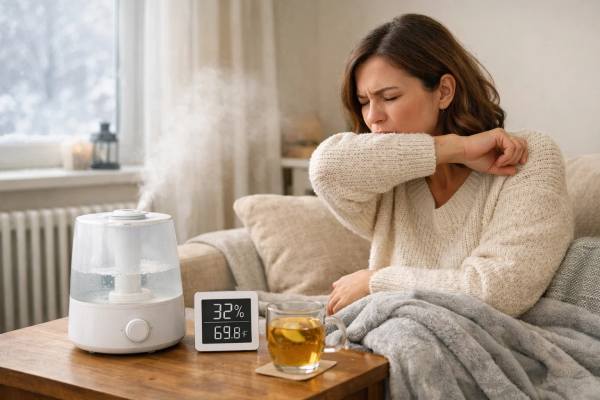
A cough that shows up every winter can feel mysterious—especially when you are not “sick.” Often, the culprit is not an infection at all, but the way heated indoor air changes your nose, throat, and airways. When relative humidity drops, the thin moisture layer that protects your mucous membranes can dry out faster than your body replaces it. That irritation can trigger a tickle, frequent throat-clearing, nighttime coughing, and a hoarse voice. Dry air can also thicken mucus, making postnasal drip feel worse and leaving you with a cough that lingers.
The encouraging news is that a dry-air cough is usually very fixable. With a few targeted adjustments—measuring humidity, choosing the right heating approach, and using simple comfort strategies—you can often reduce coughing within days and make your home feel easier to breathe in all season.
Key Insights
- Raising indoor humidity into a moderate range can reduce throat irritation and nighttime coughing for many people.
- Pairing humidity control with gentle nasal care often works faster than relying on cough syrups alone.
- Over-humidifying can backfire by increasing condensation, mold, and dust mites—more is not always better.
- Use a hygrometer and adjust gradually, aiming for steady comfort rather than chasing a single “perfect” number.
Table of Contents
- Why Winter Air Triggers Cough
- What Humidity Numbers Actually Mean
- Heating Choices and Hidden Dryness
- Simple Fixes That Work Fast
- Humidifier Safety and Mold Prevention
- When Dry Air Is Not The Cause
Why Winter Air Triggers Cough
Winter cough is often less about germs and more about physics and biology working together. Cold outdoor air holds less moisture than warm air. When that air comes inside and is heated, its relative humidity drops unless extra water vapor is added. The result is indoor air that can feel comfortable temperature-wise but behaves like a sponge—pulling moisture from your skin, your nose, and the lining of your throat.
Your upper airway is designed to warm and humidify every breath before it reaches the lungs. It does this by coating the nasal passages and throat with a thin, moist layer of mucus and water. When indoor air is very dry, that surface layer evaporates faster. You may notice:
- A scratchy throat or “tickle” that makes you cough to clear it
- A dry nose, crusting, or minor nosebleeds
- Thick mucus and a sensation of postnasal drip
- Hoarseness, especially after talking for long periods
- More coughing at night (mouth-breathing increases moisture loss)
Dryness can also make cough receptors more reactive. Think of it as having a “sensitive microphone” in your throat—small triggers like a sip of cold water, a laugh, or a deep breath of dry air can set it off. If you already have asthma, allergies, reflux, or chronic sinus issues, dry air can amplify symptoms that are present year-round.
One helpful way to tell if dryness is a major driver: symptoms often improve quickly when you leave the heated environment (for example, after a warm shower, a few hours outside, or time in a more humid building). Another clue is timing: many people cough most in the evening and overnight, when homes are closed up, heat runs steadily, and sleeping leads to more mouth-breathing.
The goal is not to make your home “tropical.” It is to restore a comfortable moisture balance so your airways can do their job without becoming irritated—and to do it safely, without creating mold or dust-mite problems.
What Humidity Numbers Actually Mean
Humidity advice can be confusing because the most common measurement—relative humidity (RH)—changes when temperature changes, even if the actual amount of water in the air stays the same. Relative humidity is the percentage of water vapor in the air compared to the maximum the air could hold at that temperature.
Here is why that matters in winter: imagine outdoor air that is cold and damp. When you bring it inside and heat it, you increase the air’s capacity to hold water vapor. If you do not add moisture, the same air becomes relatively “drier” once it is warmed. That is one reason a home can feel parched even when the weather outside looks foggy.
A practical example:
- Cold outdoor air might feel humid, but after heating to typical indoor temperatures, indoor RH can drop into the teens or 20% range.
- Many people start noticing throat and nasal irritation when RH stays low for long stretches, especially overnight.
A commonly comfortable target for winter is a moderate RH range around 30% to 50%, with many people feeling best closer to 40% to 50%. The safest ceiling depends on your home and climate. In colder regions, windows and exterior walls can be cold enough that higher indoor humidity causes condensation. Condensation is not just a window issue—it can feed hidden mold in frames, walls, and insulation.
Instead of guessing, measure. A basic hygrometer (humidity meter) is inexpensive and can quickly reveal patterns, such as:
- RH dropping sharply overnight when the heat runs longest
- One room (often a bedroom) being far drier than the rest of the home
- Humidity spikes in kitchens and bathrooms that linger too long, hinting at ventilation issues
A smart approach is room-by-room management:
- Bedrooms matter most, because mouth-breathing and long hours of exposure make dryness more noticeable at night.
- Bathrooms and kitchens matter for the opposite reason: they can become too humid, too fast, if moisture is not vented.
Finally, remember that comfort is a combination of humidity and temperature. Overheating a home can lower RH further and dry out airways faster. Many people cough less when they slightly reduce thermostat settings at night and use bedding to stay warm, rather than running hotter air continuously.
If you track RH for a few days, you can make changes with confidence instead of trial-and-error—and you can avoid the common mistake of over-humidifying to the point that it creates new respiratory irritants.
Heating Choices and Hidden Dryness
Not all heating systems affect comfort the same way, even when they reach the same temperature. Heating does not “remove” humidity by itself, but it can create conditions that feel drying and increase evaporation from your airways.
Forced-air heating is a frequent complaint. The moving air can speed evaporation from the nose and throat—similar to how a fan dries wet hair. If you sleep with a vent blowing toward the bed, the effect can be stronger. Simple adjustments often help:
- Redirect or partially close the bedroom vent (without blocking airflow completely if it affects system performance)
- Move the bed so airflow does not blow directly across your face
- Use the fan setting wisely; constant fan circulation can feel drier for some people
Radiators and in-floor heat can feel gentler because there is less direct airflow. However, if the home is well-sealed and the heat runs steadily, indoor RH can still drift low. The “gentle” feel can hide the underlying dryness.
Space heaters can worsen a dry-air cough in two ways:
- They heat a small room quickly, lowering relative humidity unless moisture is added.
- They can create hot, dry micro-zones near the heater or near your bed.
Fireplaces and wood stoves can also contribute to dryness. They exhaust air and can pull replacement air in through small leaks. In many homes, that replacement air is cold and low in moisture. Once heated, it becomes very dry. If a cough is worse on fireplace nights, this is a strong clue.
Heat pumps and electric baseboard heating are not automatically “dry,” but they can still lower RH by warming air without adding moisture. Any system can be paired with humidity control; the question is how quickly it dries you out and how evenly it distributes heat.
Two “hidden” contributors are worth calling out:
- Overheating at night: Warmer air increases evaporation from your airway surfaces. If you wake with a dry mouth and cough, try lowering the nighttime temperature a couple of degrees and focusing on bedding warmth instead.
- Mouth-breathing during sleep: Nasal breathing naturally humidifies and filters air. Congestion from allergies, a cold, or a dry nose itself can push you into mouth-breathing, which dries the throat more.
If you suspect heating is part of your cough, aim for a balanced plan: reduce direct airflow to your face, keep indoor temperature steady (not overly hot), and address humidity and nasal comfort together. That combination often brings better results than changing only one variable.
Simple Fixes That Work Fast
When a dry-air cough is the main problem, you usually get the best relief by treating the airway surface—restoring moisture, reducing irritation, and keeping mucus thin enough to move. The “right” mix is personal, but these strategies are broadly useful and low-risk when used appropriately.
Start with quick comfort (same day)
- Warm, humid breathing breaks: A warm shower or sitting in a steamy bathroom for 10–15 minutes can calm an irritated throat. This is a short-term tool, not a full humidity plan.
- Warm fluids, consistently: Sipping warm water or tea throughout the day helps many people cough less, partly by soothing throat tissues and partly by supporting hydration.
- Honey for throat irritation (adults and children over 1 year): A small spoonful before bed can reduce the “tickle” and nighttime coughing for some people. Avoid honey for infants under 12 months.
- Saline for the nose: Saline spray or gentle nasal rinsing can reduce dryness and help you return to nasal breathing at night, which protects the throat.
Make the bedroom a “recovery zone” (within a few days)
- Measure RH in the bedroom and aim for a moderate range. If it is consistently very low, consider adding humidity safely (see the humidifier section below).
- Raise the head of the bed slightly if postnasal drip or reflux might be contributing. Even a small elevation can reduce throat irritation overnight.
- Address nighttime mouth-breathing: If congestion is the trigger, nasal saline before bed and a comfortable room humidity level can help you breathe through your nose more often.
Reduce irritants that mimic dryness
Dry air is not the only winter trigger. Some common household exposures feel like “dryness” because they inflame airway lining:
- Scented candles and strong fragrances
- Smoke from fireplaces, cooking, or vaping
- Aerosol sprays and harsh cleaning fumes
- Dust disturbed by heating systems starting up
If your cough improves on days you avoid these exposures, keep them low while you work on humidity.
A realistic timeline
- Immediate relief can happen within hours with steam, warm fluids, and nasal saline.
- Sustained improvement often takes 2–7 days once bedroom humidity and sleep conditions are dialed in.
- If coughing is unchanged after a week of consistent humidity and irritant control—or if symptoms are worsening—consider other causes like asthma, infection, or reflux.
The goal is a calm airway surface: moist enough to function, not inflamed by irritants, and supported overnight when coughing tends to spiral.
Humidifier Safety and Mold Prevention
Humidifiers can be extremely helpful for a dry-air cough—but only when used with clear boundaries. The biggest mistake is treating humidity like a “more is better” comfort hack. Too much indoor moisture can increase condensation, mold growth, and dust mites, all of which can trigger coughing and wheezing.
Choose a humidifier style that fits your home
- Evaporative humidifiers (with a wick/filter) tend to self-limit output somewhat because evaporation slows as humidity rises. Many people find them easier to manage.
- Ultrasonic humidifiers can be quiet, but they can disperse fine minerals (“white dust”) if you use mineral-rich water.
- Warm mist or steam units can add noticeable humidity, but they carry burn risk and require careful placement away from children and pets.
No matter the type, the safety foundation is the same: clean water practices, consistent cleaning, and measured humidity targets.
Basic rules that prevent problems
- Use a hygrometer and do not guess.
- Avoid pushing indoor RH above a moderate ceiling, often around 50% in winter. If you see condensation on windows, that is a strong sign to lower humidity or improve ventilation and airflow at the window.
- Change the water daily when the unit is in use. Stagnant water invites microbial growth.
- Clean on a schedule you can truly maintain. Many people do best with a “small clean” every few days and a deeper clean weekly, following the device instructions.
- Use the right water for your device. If an ultrasonic unit leaves dust or scale, switching to distilled or demineralized water often helps.
- Place the humidifier thoughtfully: keep it a few feet from the bed (close enough to help, not blowing mist directly into the face), and avoid placing it against walls where moisture can accumulate.
Preventing mold and dust-mite growth
Mold and dust mites thrive when moisture is high and surfaces stay damp. To keep humidity helpful rather than harmful:
- Vent bathrooms and kitchens during and after moisture-producing activities.
- Do not let damp towels, carpets, or window sills stay wet.
- If a room consistently runs humid, it may need better ventilation or less humidifier output, not more.
Watch for warning signs that humidity is backfiring
- Musty odor, visible condensation, or new spotting on walls or ceilings
- Worsening cough, wheeze, or chest tightness after starting humidifier use
- Increased allergy symptoms (sneezing, itchy eyes) indoors
If any of these appear, reduce humidifier use, re-check your RH readings, and address ventilation and cleaning. Humidity should make breathing easier; if it does not, the safest next step is to reassess rather than powering through.
When Dry Air Is Not The Cause
A winter cough is not always a dry-air cough. In fact, many people have a “layer cake” of triggers—dryness on top of another issue. Knowing when to look deeper can save weeks of frustration.
Clues your cough may be more than dryness
Consider other causes if you notice any of the following:
- Wheezing, tight chest, or shortness of breath: This pattern can point toward asthma or reactive airways that flare in cold months. Dry air and heating can be triggers, but you may also need an asthma-focused plan.
- Fever, body aches, or worsening fatigue: These are more consistent with infection than simple dryness.
- Thick green or yellow mucus with facial pressure: This can occur with sinus infections, though color alone is not a perfect indicator. Persistent sinus congestion can cause postnasal drip and coughing, especially at night.
- Heartburn, sour taste, or cough that is worse after meals or when lying down: Reflux can irritate the throat and voice box and is often mistaken for “dry air.”
- A cough that lasts more than 3 weeks: Dryness can linger, but a cough that persists deserves evaluation for asthma, post-viral cough, medication side effects, or other conditions.
Red flags that should prompt urgent medical attention
Seek urgent care (or emergency care) if you have:
- Trouble breathing, bluish lips, or severe chest pain
- Coughing up blood
- New confusion, fainting, or severe weakness
- In infants and young children: fast breathing, pulling in of the chest or ribs, poor feeding, dehydration signs, or unusual sleepiness
Practical “rule-in” approach
If you suspect dryness, try a focused 7-day experiment:
- Measure bedroom RH and keep it in a moderate range
- Reduce direct vent airflow to the bed
- Use nasal saline and warm fluids consistently
- Avoid smoke, strong scents, and aerosol irritants
If you improve clearly, dryness was likely a major driver. If you do not improve—or if you worsen—shift attention to other causes.
Seasonal reality: viruses and dryness can overlap
It is also common to have a mild viral infection and dry indoor air at the same time. Dryness can make a viral cough feel harsher and last longer because irritated tissues are more sensitive. Even then, humidity and nasal care can be supportive—just do not let “winter air” distract you from warning signs like breathing difficulty, high fever, or a cough that is steadily escalating.
Your cough is a signal. When you respond with the right mix of humidity control, irritant reduction, and medical evaluation when needed, winter breathing can become far more predictable—and far more comfortable.
References
- INDOOR HUMIDITY LEVELS AND ASSOCIATIONS WITH REPORTED SYMPTOMS IN OFFICE BUILDINGS 2021
- Humidification of indoor air for preventing or reducing dryness symptoms or upper respiratory infections in educational settings and at the workplace 2021 (Systematic Review)
- Two Sporadic Cases of Legionellosis Associated with the Use of Domestic Ultrasonic Humidifiers 2024
- Dynamics of respiratory virus spread indoors suggest a holistic approach for exposure risk mitigation 2025
- Indoor Air Facts No. 8 Use and Care of Home Humidifiers 1991 (Guidance)
Disclaimer
This article is for general educational purposes and does not replace personalized medical advice, diagnosis, or treatment. Coughs can have many causes, and individual risks vary based on age, pregnancy status, immune health, and conditions such as asthma or heart and lung disease. If your cough is severe, lasts more than three weeks, is accompanied by fever, chest pain, shortness of breath, wheezing, dehydration, confusion, or coughing up blood, seek medical care promptly. Use humidifiers carefully—over-humidifying or poor cleaning can worsen indoor air quality and respiratory symptoms.
If you found this guide useful, please consider sharing it on Facebook, X (formerly Twitter), or any platform you prefer so others can breathe a little easier this winter.