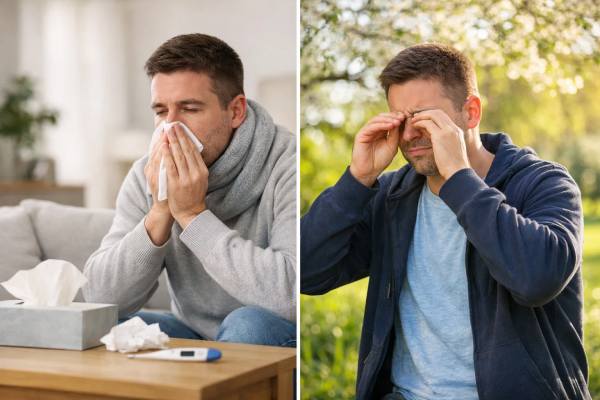
When your nose is running and your throat feels scratchy, it is easy to wonder whether you are dealing with COVID or seasonal allergies. The overlap is real: both can cause congestion, sneezing, cough, fatigue from poor sleep, and that “foggy” feeling that makes normal tasks harder. The difference is that COVID is contagious and can escalate quickly in higher-risk people, while allergies are not infectious but can quietly inflame the airways for weeks and worsen asthma or sinus symptoms.
A few well-chosen clues can usually separate the two—especially the pattern of symptoms over 24–48 hours, the presence of fever or body aches, the kind of nasal drainage, and whether symptoms improve with allergy-targeted steps. This guide breaks down the shared symptoms, the strongest distinguishing signs, and a practical at-home decision plan so you can choose testing, treatment, and precautions with more confidence.
Quick Overview
- Allergy symptoms often fluctuate with exposure and improve noticeably within 24–48 hours of consistent allergy treatment.
- COVID symptoms more often include fever, body aches, or a fast shift from “fine” to “clearly sick” over a day.
- A single negative rapid test early on can miss COVID; repeating a test after 48 hours is a common, practical approach.
- Seek urgent care for trouble breathing, chest pain, confusion, blue-tinged lips, or inability to keep fluids down.
- If you are high-risk, treat new respiratory symptoms as time-sensitive so testing and treatment options are not delayed.
Table of Contents
- Why symptoms overlap so much
- Clues that point to allergies
- Clues that point to COVID
- A practical decision flow at home
- When both can happen together
- Treatment and prevention steps today
Why symptoms overlap so much
If COVID and allergies feel similar, it is because they can irritate the same “shared airway” from the nose down through the throat and bronchi. Both can trigger inflammation, swelling of nasal tissues, extra mucus production, and that reflexive cough that comes from postnasal drip. From the outside, you may see the same results: stuffy nose, runny nose, throat clearing, watery eyes, and fatigue that is partly illness and partly poor sleep.
One airway, two different triggers
Allergies are an immune response to harmless particles such as pollen, mold spores, dust mites, or animal dander. The body releases histamine and other mediators, creating itch, sneezing, and clear watery drainage. COVID is an infection; symptoms come from viral replication plus the immune response to it. That can produce congestion and cough too—but it is more likely to add systemic effects like fever, chills, and body aches.
Why your “usual clues” sometimes fail
Many people try to rely on one telltale sign—like sneezing means allergies or sore throat means COVID. In reality:
- Sneezing can happen with early viral illness, especially when the nose is involved.
- Sore throat can come from allergy-driven postnasal drip or mouth breathing.
- Fatigue can be intense with COVID, but allergies can also exhaust you through fragmented sleep.
- Loss of smell can occur with congestion from either cause, even though sudden loss without major congestion is more concerning for infection.
The most useful differentiator is the pattern
Instead of focusing on one symptom, pay attention to how symptoms behave:
- Allergies often wax and wane—worse outdoors, better indoors, worse after cleaning, better after a shower.
- COVID more often progresses over a day or two, with a clearer sense of being sick all the time, not just “triggered.”
A final reason the distinction matters: your next steps change. COVID may require testing, isolation decisions, and—if you are higher risk—early treatment discussions. Allergies benefit from consistent anti-inflammatory nasal care and reducing exposure, which can prevent a long cascade into sinus symptoms or asthma flares.
Clues that point to allergies
Allergies tend to announce themselves with a particular “signature”: itching, repetition, and predictability. People often describe feeling bothered rather than sick—annoyed by symptoms that disrupt comfort and sleep, but without the heavy malaise that comes with infection.
The itch-sneeze-tear triad
A strong allergy pattern commonly includes two or more of the following:
- Itchy eyes (often with redness or watering)
- Itchy nose or palate (the roof of the mouth can itch)
- Repeated sneezing, especially in bursts
- Clear, watery nasal drainage that seems almost constant
A cough can happen with allergies, but it is often a throat-clearing cough from postnasal drip rather than a deep chest cough. Voice hoarseness can appear too, especially in the morning.
Timing and triggers that favor allergies
Consider allergies more strongly when symptoms:
- Start or worsen during a known allergy season for you
- Flare after outdoor exposure, windy days, yard work, or open windows
- Worsen around dust, pets, moldy areas, or strong odors
- Improve noticeably after changing clothes, washing your face and hair, or showering
- Are similar to past episodes you can recognize as “my usual allergies”
One practical clue is variability. Allergies often give you “good blocks” during the day (for example, you feel better at midday) and then flare again with exposure. COVID tends to feel more consistently unwell.
Symptoms that are uncommon in allergies
Allergies can cause headaches and fatigue, but some features are less typical:
- Fever is not a classic allergy symptom.
- Chills and body aches can happen from poor sleep, but true flu-like aches are less expected.
- Sudden, new shortness of breath is not something to dismiss as allergies, especially if it is worsening.
The 48-hour response test
If you suspect allergies, a helpful approach is a consistent 48-hour allergy routine, not a one-time dose. Many people judge allergy treatment too quickly and conclude it “did nothing.” In reality, some allergy tools work within hours, while others work best when taken daily for several days.
If symptoms clearly improve within 1–2 days of consistent allergy-focused care and exposure reduction, that tilt supports allergies. If symptoms keep building or new systemic symptoms appear, infection becomes more likely.
Clues that point to COVID
COVID often brings a “whole-body” element that allergies usually do not. Even when it starts with a mild scratchy throat or congestion, many people notice a shift from minor irritation to a clear sense of illness over the next day.
Systemic signs that raise suspicion
COVID becomes more likely when you have nasal or throat symptoms plus one or more of these:
- Fever or chills
- Body aches or unusual muscle soreness
- Marked fatigue that feels disproportionate to poor sleep
- New headache that persists
- New nausea, vomiting, or diarrhea
None of these prove COVID, but together they create a pattern allergies rarely match.
Progression is a key clue
Allergies may feel intense, but they often stay in a similar range unless exposure increases. COVID more often changes over time, such as:
- Day 1: scratchy throat and mild congestion
- Day 2: heavier fatigue, deeper cough, feverish feeling
- Day 3: stronger symptoms that affect appetite and activity
That “stepwise worsening” is one of the most useful real-world signals.
Exposure context matters
If you have had recent close contact with someone who is sick, attended a crowded indoor event, traveled, or work in close-contact settings, a new “allergy-like” illness deserves more caution. COVID can start subtly—especially in vaccinated people—then become clearer over 24–48 hours.
Smell changes: nuance matters
Loss or distortion of smell can happen with COVID, but congestion from allergies can also reduce smell. The more concerning pattern is a sudden change in smell or taste that feels out of proportion to nasal blockage. If your nose is wide open yet food tastes strangely muted, infection becomes more likely.
When to treat it as time-sensitive
If you are older, pregnant, immunocompromised, or have significant chronic medical conditions, new respiratory symptoms should move you toward early testing rather than waiting to “see what it becomes.” Timing can matter for treatment options, and it is easier to act early than to catch up later.
A practical decision flow at home
You do not need perfect certainty to make a smart plan. The goal is to reduce risk to others, protect your own health, and avoid missing the window for helpful care.
Step 1: Check for red flags first
Do not try to self-sort allergies vs COVID at home if you have:
- Trouble breathing, persistent chest pain, confusion, fainting, or blue-tinged lips
- Severe weakness, dehydration, or inability to keep fluids down
- Rapidly worsening symptoms, especially shortness of breath
- Severe asthma flare or wheezing that is not responding to your usual plan
Those signs warrant urgent medical evaluation.
Step 2: Identify the “allergy-leaning” cluster
Allergies are more likely when most of your symptoms are above the neck and include:
- Itchiness (eyes, nose, palate)
- Repeated sneezing
- Clear watery discharge
- Symptoms that vary with exposure and improve indoors
- No fever and no new body aches
If this is your pattern, you can start allergy-focused care and exposure reduction while staying alert for changes.
Step 3: Identify the “infection-leaning” cluster
COVID becomes more likely when you have:
- Fever, chills, body aches, or a “hit-by-a-truck” fatigue
- New cough that is persistent or worsening
- Symptoms that progress over 24–48 hours rather than fluctuate
- Known exposure or a recent high-risk event
In this pattern, testing is usually the most efficient next step.
Step 4: Use a common testing rhythm
If you are using rapid at-home tests, a practical approach is:
- Test when symptoms begin or when you first suspect infection.
- If negative but symptoms persist or worsen, repeat a test after 48 hours.
- If you are high-risk or severely ill, consider a more sensitive lab-based test through a clinician.
This approach fits how viral levels change during early illness.
Step 5: Decide how cautious to be while uncertain
If you cannot confidently say “this is my typical allergies,” treat the first day or two as potentially contagious:
- Minimize close contact, especially with high-risk people
- Improve ventilation when sharing space
- Consider masking if you must be around others
A short period of caution can prevent a much larger disruption if it turns out to be COVID.
When both can happen together
It is common for people to get stuck because their symptoms do not fit neatly into one bucket. That is not imagination—COVID and allergies can overlap, and other conditions can mimic both.
COVID can ride on top of allergies
If you have baseline allergic rhinitis, your nose and throat may already be inflamed. That can make early COVID feel like “worse allergies.” Clues that something new is happening include:
- A clear shift from your usual symptom pattern
- New feverishness, chills, or aches
- Fatigue that changes your functioning, not just your comfort
- A cough that becomes more frequent or deeper than your typical throat clearing
In this scenario, it is reasonable to continue allergy control measures while you test for infection.
Allergies can flare during or after a viral illness
After a respiratory infection, nasal tissues can remain sensitive for weeks. People may develop post-viral congestion, postnasal drip, and cough that resemble allergies. If symptoms linger but you otherwise feel well, consider that you may be dealing with residual inflammation, not ongoing infection—especially if fever is gone and energy is returning.
Other common mimics
If neither allergies nor COVID fully fits, consider these patterns:
- Common cold: similar to COVID but often milder and shorter, with less systemic illness.
- Sinus inflammation: facial pressure, thick discharge, and worsening after initial improvement.
- Irritant rhinitis: symptoms triggered by perfumes, smoke, temperature changes, or cleaning agents, often without itch.
- Reflux-related throat symptoms: chronic throat clearing, hoarseness, burning sensation, worse after meals or lying down.
Asthma and reactive airways deserve extra attention
Both allergies and viral infections can trigger wheeze, chest tightness, or shortness of breath. If you have asthma, the safest approach is to treat new breathing symptoms as important, even if you suspect allergies. Use your existing asthma action plan if you have one, and seek care if you are needing rescue medication more often than usual or waking at night due to breathing symptoms.
The key takeaway is not to force a single label too early. It is often smarter to manage what you can (allergy control, hydration, rest) while using testing and time to clarify the picture.
Treatment and prevention steps today
Once you have a working hypothesis, the next step is targeted relief that does not increase risk. You can support your airway and sleep while keeping a plan that adapts if symptoms evolve.
If allergies are most likely
A practical allergy relief strategy focuses on consistent inflammation control and exposure reduction:
- Reduce exposure: close windows on high-exposure days, shower after outdoor time, and change clothes if symptoms flare.
- Support nasal function: saline rinses or sprays can reduce irritants and thin mucus.
- Use allergy medications as directed: many people benefit from regular use rather than “only when miserable,” especially during peak season.
- Protect sleep: elevate your head slightly if postnasal drip is prominent, and keep bedroom air comfortably humidified.
Avoid overusing nasal decongestant sprays; frequent use beyond a short window can worsen rebound congestion for some people.
If COVID is possible or likely
Your priorities shift to protecting others and protecting your own recovery:
- Test early and repeat if needed, especially if symptoms persist.
- Rest aggressively for the first several days; pushing through fatigue can prolong recovery.
- Stay well hydrated and manage fever or pain with appropriate over-the-counter options if you can take them safely.
- If you are high-risk, contact a clinician early so treatment options are not delayed.
Keep the focus on breathable routines: warm fluids, humidified air, and simple meals. Many people worsen their throat and cough by getting dehydrated and sleeping poorly.
When you are unsure
If the pattern is mixed, choose “no regrets” steps that help both:
- Saline nasal care, hydration, and humidified sleep
- Light activity only as tolerated
- Cautious contact with others until you are clearer
When to seek medical advice even without emergencies
Consider clinician guidance if:
- Symptoms worsen after initial improvement
- Fever persists or returns
- Shortness of breath increases
- You have severe sore throat, ear pain, or facial pain
- Symptoms last longer than about 10–14 days without a clear trend toward improvement
A small, timely check-in can prevent a long, frustrating course—whether the issue is uncontrolled allergies, a viral infection, or an overlapping condition.
References
- Symptoms of COVID-19 | COVID-19 | CDC 2025 (Guideline)
- Overview of Testing for SARS-CoV-2 | COVID-19 | CDC 2024 (Guideline)
- International consensus statement on allergy and rhinology: Allergic rhinitis – 2023 – PubMed 2023 (Consensus Statement)
- Allergic Rhinitis – StatPearls – NCBI Bookshelf 2023 (Clinical Summary)
Disclaimer
This article is for general educational purposes and does not replace medical advice, diagnosis, or treatment from a qualified professional. COVID and allergies can share symptoms, and at-home symptom checks cannot reliably confirm the cause. Seek urgent care for trouble breathing, chest pain, confusion, blue-tinged lips, severe dehydration, or rapidly worsening illness. If you are older, pregnant, immunocompromised, or have significant chronic conditions, contact a clinician early when new respiratory symptoms begin so testing and treatment decisions are not delayed.
If you found this helpful, please consider sharing it on Facebook, X (formerly Twitter), or any platform you prefer so others can make safer, more informed choices.