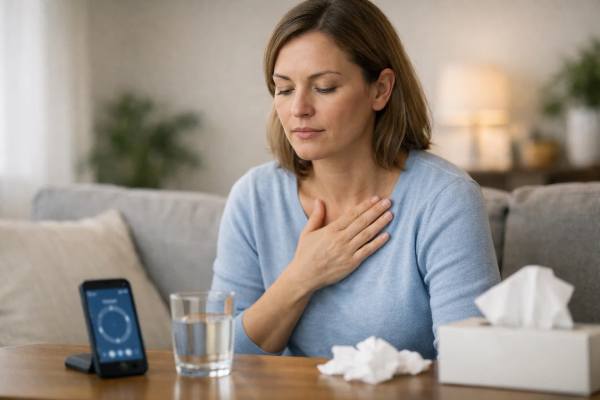
Shortness of breath can be terrifying—especially when your chest feels tight and you cannot take a satisfying breath. Anxiety is a common cause of this sensation, and it can be convincing enough to mimic a serious lung or heart problem. The good news is that anxiety-related breathlessness is usually treatable, and the skills that help often work quickly when practiced the right way. The harder truth is that “usually” is not “always”: anxiety can coexist with asthma, infections, anemia, reflux, and other conditions that also affect breathing. This guide will help you understand why anxiety can create real breathing discomfort, how to spot patterns that point toward anxiety versus a physical cause, and which breathing and calming techniques tend to help most—without accidentally making symptoms worse.
Essential Insights
- Anxiety-related shortness of breath is often driven by “air hunger” and overbreathing, and it can improve within minutes with the right technique.
- Certain patterns—sudden onset, tingling, frequent sighing, and improvement with distraction—often point toward anxiety rather than lung disease.
- Chest pain, bluish lips, fainting, severe wheeze, or worsening breathlessness at rest should be treated as urgent until proven otherwise.
- Use a slower, longer exhale (not deeper breaths) for 2–5 minutes to interrupt the cycle and reduce dizziness and tightness.
Table of Contents
- Why anxiety can feel like air hunger
- Clues it is anxiety and not your lungs
- Red flags and when to seek care
- Breathing techniques that work in the moment
- Resetting the cycle over days and weeks
- Building a plan with your clinician
Why anxiety can feel like air hunger
Anxiety can cause shortness of breath in two overlapping ways: body chemistry and attention. In a threat state, your nervous system prepares you to act. Heart rate rises, muscles tighten, and breathing becomes faster and higher in the chest. That shift is not imaginary—it changes how your lungs and breathing muscles work.
A key piece is overbreathing (often called hyperventilation, though it does not always look dramatic). When you breathe more than your body needs for the moment, you blow off extra carbon dioxide. Carbon dioxide is not just “waste gas”—it helps regulate blood pH and influences how readily oxygen is released to tissues. When carbon dioxide falls quickly, you may feel:
- Lightheadedness or “floaty” dizziness
- Tingling in fingers, around the mouth, or a sense of numbness
- Chest tightness, throat tightness, or frequent yawning and sighing
- A paradoxical feeling that you cannot get enough air, even though you are breathing a lot
That last sensation—often described as air hunger—is especially stressful. People then try to fix it by taking deeper breaths. Unfortunately, bigger breaths can worsen overbreathing, amplifying tightness, dizziness, and panic. The result is a feedback loop: anxiety changes breathing → breathing feels wrong → alarm rises → breathing becomes even more strained.
Attention matters too. Anxiety increases body scanning: you notice every breath, every chest sensation, every throat feeling. Normal variations—like a brief breath catch after climbing stairs—can feel like evidence of danger. This is why anxiety-related shortness of breath can be intense while oxygen levels remain normal.
The goal is not to “force calm.” The goal is to shift breathing mechanics and nervous system tone so your body stops sending emergency signals. Once the cycle breaks, most people can breathe more comfortably again—even if they still feel emotionally unsettled for a while.
Clues it is anxiety and not your lungs
Anxiety can mimic medical breathlessness, so you should never rely on a single clue. Patterns, context, and associated symptoms are what make the picture clearer. These signs often lean toward anxiety-related shortness of breath:
1) The timing is “fast and surge-like.”
Anxiety breathlessness often comes on suddenly—minutes, not days—and may peak quickly. Some people notice it after a stressful thought, an argument, a crowded space, caffeine, or a familiar trigger (driving, meetings, bedtime).
2) You can speak in full sentences, even while uncomfortable.
Feeling breathless is different from being unable to talk. With anxiety, you may feel starved for air, yet still be able to speak normally. With more serious breathing compromise, speech is often broken.
3) The sensation is “cannot get a satisfying breath.”
Many people describe a need to yawn, sigh, or take repeated deep breaths that never feel like they “land.” This is classic for air hunger and dysfunctional breathing patterns.
4) Tingling, dizziness, and a tight jaw or hands.
Pins-and-needles sensations, lightheadedness, trembling, or hands clenching can point to overbreathing and adrenaline effects. These symptoms can also happen with other conditions, but in combination they raise suspicion for anxiety-driven physiology.
5) It improves with distraction or gentle movement.
If symptoms ease when you talk to someone, walk slowly outside, or focus on a simple task, anxiety is more likely. Many lung and heart causes worsen with activity and improve with rest—though exceptions exist.
6) You have a history of panic, health anxiety, or recent chronic stress.
Sleep deprivation, grief, burnout, postpartum changes, and chronic stress can prime the nervous system. If breathlessness appears during these windows, anxiety becomes more plausible.
That said, anxiety can sit on top of real conditions. Asthma, reflux, anemia, and viral illnesses can make breathing feel “off,” which then triggers panic. A helpful mindset is: “Both can be true.” You can work on anxiety-based breathing skills while also checking for medical causes if the pattern, severity, or duration does not fit your usual experience.
Red flags and when to seek care
Because anxiety can look dramatic and serious problems can look subtle, safety comes first. Treat the following as urgent—especially if they are new for you, rapidly worsening, or happening at rest.
Call emergency services or seek urgent care now if you have:
- Blue or gray lips/face, or you cannot stay awake
- Severe shortness of breath at rest that is getting worse
- Chest pain or pressure that lasts more than a few minutes, spreads to jaw/arm/back, or comes with sweating or nausea
- Fainting, near-fainting, or sudden confusion
- A new loud wheeze, gasping, or inability to speak full sentences
- Coughing up blood
- One-sided leg swelling or calf pain with sudden breathlessness
- A severe allergic reaction (hives, swelling of lips/tongue, voice changes)
Seek same-day medical advice if:
- You have persistent breathlessness lasting more than a day or two without a clear explanation
- You are pregnant or recently postpartum and develop new shortness of breath
- You have fever, a deep cough, or chest pain with breathing
- You have known asthma or COPD and your usual reliever inhaler is not helping as expected
- Your breathing issues are waking you from sleep repeatedly (not just difficulty falling asleep)
When it is reasonable to try self-care first:
If you have a familiar anxiety pattern, your symptoms improve with calming strategies, you can speak normally, and there are no red flags, a focused home approach is often appropriate. Still, if this is your first episode or it feels distinctly different from prior anxiety symptoms, consider getting evaluated—partly for safety, and partly because reassurance is more convincing when it is grounded in a real assessment.
A practical rule: if you are debating whether you are “allowed” to seek care, that is often your answer. Getting checked is not overreacting when breathing feels wrong. The aim is to pair safety with skills—so fear does not make every sensation an emergency.
Breathing techniques that work in the moment
When anxiety causes shortness of breath, the most common mistake is trying to inhale more. That usually increases chest breathing and overbreathing. Most effective techniques do the opposite: they slow breathing and lengthen the exhale, which signals safety to the nervous system and helps normalize carbon dioxide levels.
A simple 2–5 minute reset (start here)
- Sit upright with your shoulders relaxed, or stand with your back against a wall.
- Put one hand on your lower ribs or upper belly (not high on the chest).
- Inhale gently through the nose for 3–4 seconds—small breath, not maximal.
- Exhale slowly for 5–7 seconds (pursed lips can help).
- Repeat for 2–5 minutes, aiming for about 6–8 breaths per minute.
What you should feel: less dizziness, less urgency to gasp, and a gradual loosening of chest and throat tightness. You might not feel “calm” immediately—and that is fine. You are changing physiology first.
Pursed-lip breathing (especially useful for chest tightness)
- Inhale through your nose for 2–3 seconds.
- Exhale through lightly pursed lips for 4–6 seconds, like cooling soup.
This creates gentle back-pressure in the airways and encourages a steadier exhale. It can be helpful even if your breathlessness is anxiety-driven, because it reduces the sensation of “air trapped” and slows the pace.
The “soft belly, slow exhale” cue
If counting makes you more anxious, use cues instead:
- Inhale: small and quiet.
- Exhale: longer and smoother.
- Jaw and shoulders: unclench.
Grounding that supports breathing (not separate from it)
Anxiety breathlessness often improves faster when you stop monitoring each breath. Try:
- Name 5 things you see, 4 you feel, 3 you hear, 2 you smell, 1 you taste.
- Or hold something cool (a cold drink, a cool cloth) and focus on the sensation for 30 seconds.
What to avoid in the moment
- Rapid deep breaths (“fill the lungs”)
- Breathing into a paper bag (not recommended because it can be unsafe if a medical issue is present)
- Checking oxygen devices repeatedly unless you have been instructed to use them
- Lying flat if it makes your chest feel tighter (try upright posture first)
If you practice these techniques when you are not panicking—once or twice daily for a week—your body learns them as familiar, and they work better when you need them most.
Resetting the cycle over days and weeks
Shortness of breath driven by anxiety is not just a “moment problem.” Many people develop a habit of protective breathing: frequent sighing, chest breathing, and bracing the ribs. Over time, this can make the respiratory system feel jumpy even on calm days. The fix is usually a blend of breathing practice, nervous system retraining, and reducing the triggers that keep the body on alert.
Practice, but keep it gentle
A reliable routine is 5 minutes, once or twice a day:
- Slow nasal breathing with a longer exhale
- Small, quiet inhales rather than big belly-pushing breaths
- A relaxed posture (unclenched jaw, soft shoulders)
Progress is usually felt as fewer “air hunger” episodes and less need to yawn or sigh.
Interoceptive exposure (teaching your body the sensation is safe)
For many people, the fear is not just anxiety—it is the sensation of breathlessness. A clinician or therapist may guide “interoceptive exposure,” which safely recreates sensations (like a faster heart rate or mild breathlessness) so your brain stops treating them as danger. Examples can include:
- Light stepping in place for 30–60 seconds
- Spinning slowly in a chair for brief dizziness
- Brief breath holds within comfort
This should be individualized—especially if you have asthma, heart disease, or fainting history—but the concept is powerful: the sensation becomes familiar, not catastrophic.
Address common accelerators
Small changes can significantly reduce breath-focused anxiety:
- Caffeine and nicotine: Both can raise heart rate and chest tension. Consider tapering rather than abruptly stopping if you use them daily.
- Dehydration: Dry mouth and throat can mimic “air hunger.” Aim for steady fluids through the day.
- Reflux: Acid irritation can trigger throat tightness and cough, which then triggers panic. Avoid heavy meals close to bedtime and notice whether symptoms track with reflux.
- Sleep debt: Poor sleep increases adrenaline sensitivity. Even improving consistency (same wake time) can reduce symptoms.
Move your body in a non-threatening way
Breathlessness often improves when the body relearns that breathing can rise during activity without danger.
- Start with 10–20 minutes of easy walking most days, if safe for you.
- During walks, practice slow exhale while keeping pace comfortable.
- The goal is confidence, not performance.
If anxiety breathlessness is frequent, persistent, or limiting your life, that is a strong signal to add structured treatment—because you deserve more than coping.
Building a plan with your clinician
If shortness of breath keeps returning—or if you are not sure it is anxiety—getting evaluated can remove guesswork and guide targeted care. Clinicians typically start by ruling out common contributors, then building a plan that treats anxiety as a real, physiologic condition rather than a vague label.
What an evaluation may include
Depending on your age, history, and symptoms, you may be asked about:
- Onset, triggers, and duration (minutes vs days)
- Whether you can lie flat, exercise, or sleep through the night
- Cough, fever, wheeze, chest pain, swelling, reflux, or anemia symptoms
Testing varies, but may include basic vitals and oxygen saturation, a lung exam, and sometimes an ECG. If there are asthma features, clinicians may consider spirometry or peak-flow monitoring. If symptoms are chronic or unexplained, further evaluation might be appropriate.
Treatment options that often help most
Cognitive behavioral therapy (CBT):
CBT for panic and health anxiety is one of the most effective approaches because it targets both thoughts (“I am suffocating”) and behaviors (checking, avoiding, overbreathing). It often includes skill practice and gradual exposure, which builds lasting confidence.
Breathing-focused therapy (when done correctly):
Breathing retraining is most helpful when it emphasizes slower, smaller breaths and longer exhales, not forceful deep breathing. Some people benefit from guided programs that address dysfunctional breathing patterns and body tension.
Medication (when appropriate):
For some, medication can reduce baseline anxiety enough to make skills “stick.” Decisions depend on symptom severity, personal preferences, pregnancy or breastfeeding status, other medications, and health history. If you are considering medication, ask about expected timelines, common side effects, and how success will be measured.
A practical plan you can request
If you want a clear next step, ask your clinician for:
- A short list of conditions being ruled out and why
- A home plan for flare-ups (what to do for 5 minutes, what to track, when to seek care)
- A referral pathway (therapy options, breathing-focused physiotherapy if available)
- Guidance for coexisting issues (asthma control, reflux management, sleep support)
The most reassuring outcome is not “it is just anxiety.” It is: “We checked the important things, and here is a concrete plan that reduces episodes and restores trust in your body.”
References
- CBT treatment delivery formats for panic disorder: a systematic review and network meta-analysis of randomised controlled trials 2022 (Systematic Review)
- Breathwork Interventions for Adults with Clinically Diagnosed Anxiety Disorders: A Scoping Review 2023 (Scoping Review)
- Breathing Practices for Stress and Anxiety Reduction: Conceptual Framework of Implementation Guidelines Based on a Systematic Review of the Published Literature 2023 (Systematic Review)
- Assessment and diagnosis of chronic dyspnoea: a literature review 2022 (Clinical Review)
- Acute dyspnea in the emergency department: a clinical review 2023 (Clinical Review)
Disclaimer
This article is for general education and is not a substitute for personal medical advice, diagnosis, or treatment. Shortness of breath can have many causes, including conditions that require urgent care. If you have severe symptoms, worsening breathlessness at rest, chest pain, fainting, blue or gray lips, confusion, or any symptom that feels like an emergency, seek immediate medical help. If you have ongoing or recurrent symptoms, a clinician can help rule out medical causes and tailor a safe plan—especially if you are pregnant, postpartum, or living with asthma, heart disease, or other chronic conditions.
If you found this guide helpful, please consider sharing it on Facebook, X (formerly Twitter), or any platform you prefer so others can recognize the signs and find practical relief.