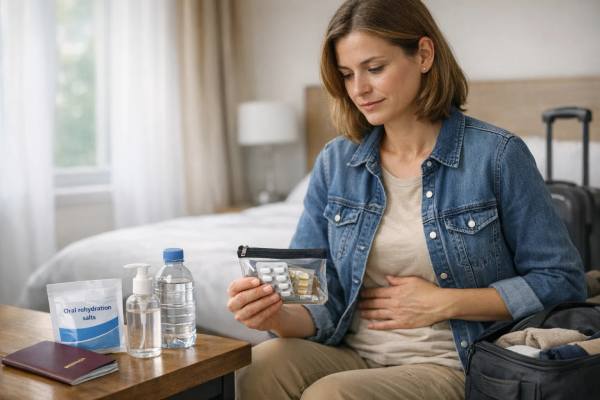
Traveler’s diarrhea can derail a trip faster than almost any other health problem. It often starts suddenly—cramps, urgent watery stools, fatigue—and the uncertainty can feel as stressful as the symptoms. The encouraging reality is that most cases are short-lived, and you can lower your risk meaningfully with a few targeted habits. Even when prevention fails, a calm plan for hydration and symptom control can shorten the worst window and reduce the chance of complications.
This guide focuses on practical, evidence-informed steps you can use before you depart and once symptoms begin: how to avoid the most common exposures, how to rehydrate effectively, how to choose over-the-counter options wisely, and when prescription treatment is worth considering. The goal is not to “travel perfectly,” but to recover quickly and safely.
Essential Insights
- Consistent hand hygiene and smart drink choices reduce risk more reliably than trying to follow every food rule perfectly.
- Early oral rehydration prevents most complications and often improves energy and nausea within hours.
- Loperamide can be helpful for watery diarrhea but should be avoided with fever or bloody stools.
- Antibiotics are not necessary for most mild cases and can carry side effects and resistance risks.
- Pack a simple gut kit and follow a step-up plan by day and symptom severity, not guesswork.
Table of Contents
- What traveler’s diarrhea usually is and is not
- Prevention that holds up in real life
- A smart travel gut kit to pack
- Best first steps when symptoms start
- Medications that help and when to skip them
- Red flags special groups and recovery
What traveler’s diarrhea usually is and is not
Traveler’s diarrhea is a clinical pattern: new diarrhea during or soon after travel, most often triggered by microbes your gut has not adapted to. In many regions, bacteria are the leading cause, but viruses and parasites also occur. Symptoms typically begin within hours to a few days after exposure and commonly include watery stools, cramping, urgency, nausea, and fatigue. Fever can occur, but high fever or blood in stool shifts the concern toward invasive infection and changes what “safe self-treatment” looks like.
A useful way to think about severity is not only stool count, but impact on function:
- Mild: annoying but you can still do planned activities.
- Moderate: distressing enough that you would rather stay near a bathroom; plans are disrupted.
- Severe: you are stuck in bed, very weak, or you have dysentery (blood in stool).
This functional view matters because treatments that are reasonable for mild watery diarrhea can be inappropriate if you have signs of invasive disease.
It also helps to recognize what traveler’s diarrhea is not. Sudden loose stools can come from:
- Diet change: unfamiliar fats, higher alcohol intake, sugar alcohols, large dairy portions, or spicy foods.
- Altitude and anxiety effects: stress hormones can speed or disrupt bowel patterns.
- Medication effects: magnesium supplements, some antibiotics, and some antacids can loosen stool.
These triggers may overlap with infection, but they tend to cause less fever and less systemic illness. If symptoms are mild and you feel otherwise well, supportive care is often all you need.
Most uncomplicated cases improve within a few days. The biggest risk during travel is not the diarrhea itself—it is dehydration, especially if you are sweating, not eating much, or avoiding fluids because you are on the move. Treat hydration as the priority from the first day, even if you plan to use medications later.
Prevention that holds up in real life
Prevention works best when it is realistic. Many travelers try to obey strict food rules and still get sick because exposure can come from hands, ice, sauces, and shared surfaces—not only from “obvious” risky foods. A stronger strategy is to focus on the few habits that reduce exposure repeatedly.
Hand hygiene is the quiet hero
Your hands are the bridge between contaminated surfaces and your mouth. Aim for two high-impact moments:
- Before eating or touching your lips (including snacks and gum).
- After the bathroom and after handling cash, transit rails, or shared kiosks.
Soap and water is best when available. When it is not, alcohol-based sanitizer is useful—especially if you use enough to keep hands wet for about 20 seconds and cover fingertips and under nails.
Drink choices that cut risk without obsessing
In higher-risk settings, prioritize beverages that are reliably safe:
- Factory-sealed water, sparkling water, or canned drinks.
- Hot drinks made with boiling water when served piping hot.
- Be cautious with ice, fountain drinks, and “refilled” bottles.
A detail many people miss: brushing teeth with tap water and rinsing a toothbrush under tap water can be enough exposure in some settings. Using safe water for oral hygiene is a small change with outsized benefit.
Food habits that matter most
Instead of trying to follow every travel-food rule perfectly, focus on the highest-risk categories:
- Raw produce you did not wash or peel yourself (salads, garnishes, cut fruit).
- Foods served lukewarm (buffets where food sits out).
- Unpasteurized dairy and soft cheeses of uncertain origin.
- Sauces and salsas that may be made with untreated water and stored at room temperature.
- Undercooked seafood and meats.
“Freshly cooked and served hot” is often safer than “looks clean.” Street food can be low-risk if it is cooked thoroughly in front of you and served hot; a quiet, empty stall with food sitting out can be riskier than a busy vendor with constant turnover.
Prevention options beyond hygiene
Some travelers consider preventive products. The key is matching the tool to your risk:
- Bismuth subsalicylate can reduce risk for some travelers when taken regularly, but it is not appropriate for everyone (salicylate allergy, certain medications, some medical conditions, pregnancy, and children are common reasons to avoid it).
- Probiotics may help some people, but effects vary by strain, dose, and destination risk. If you choose one, start before travel so you know how your gut reacts.
- Preventive antibiotics are rarely the right choice because they can cause side effects and promote resistant bacteria. They are sometimes considered for specific high-risk travelers under medical guidance.
Vaccines can be important for travel health, but most do not directly prevent typical traveler’s diarrhea. They may still be worth discussing for broader protection depending on destination and itinerary.
A smart travel gut kit to pack
A travel gut kit is not about packing your entire medicine cabinet. It is about avoiding “pharmacy panic” when you are dehydrated, exhausted, and trying to interpret labels in a different language. A small kit can also prevent over-treating mild illness or using the wrong medication for the wrong symptom pattern.
Core items that cover most scenarios
Consider packing:
- Oral rehydration solution packets: These are the most useful item in the kit. They replace water and salts in the right proportions and are often better tolerated than plain water when your stomach feels unsettled.
- A thermometer: Fever changes the risk profile and influences medication decisions.
- Hand sanitizer: Prevention continues even after illness begins.
- A short list of your medications and allergies: Helpful if you need care abroad.
If you use over-the-counter symptom relief, pack what you tolerate well at home rather than experimenting for the first time on a trip.
Optional items based on your risk
Depending on your health status and destination, you might also consider:
- Bismuth subsalicylate: Useful for mild diarrhea and nausea in some people, and sometimes used short-term for prevention.
- Loperamide: Helpful for reducing stool frequency and urgency in watery diarrhea when you do not have red-flag signs.
- A clinician-prescribed standby antibiotic: Sometimes recommended for travelers who will be remote, have a time-critical itinerary, or are at higher risk of complications. If you carry one, you also need clear instructions for when not to use it.
Avoid packing multiple overlapping products without a plan. When people feel unwell, they often stack medications impulsively and end up with side effects, constipation rebound, or missed warning signs.
A simple decision plan to write down
Before you depart, decide how you will respond by severity:
- Mild watery diarrhea: prioritize fluids, food as tolerated, and rest; consider a short course of symptom relief if needed.
- Moderate watery diarrhea: add oral rehydration solution early and consider targeted medication if you need to function.
- Severe diarrhea or dysentery: avoid antimotility-only treatment and prioritize medical evaluation and appropriate therapy.
Also decide your “hydration trigger.” A practical one is: if you are urinating much less than usual, feel dizzy when standing, or cannot keep fluids down, hydration becomes urgent.
Mixing and using oral rehydration solution correctly
Follow packet instructions exactly—too concentrated can worsen diarrhea, too dilute reduces effectiveness. Use safe water. Sip steadily rather than chugging; frequent small sips are often easier to tolerate than large gulps, especially if you feel nauseated.
A small kit plus a clear plan turns traveler’s diarrhea from a crisis into an inconvenience.
Best first steps when symptoms start
When symptoms hit, the first few hours matter more than most people realize. If you stabilize hydration early, you often reduce weakness, headache, and nausea—and you make every other treatment easier. Think of the first response as “protect the body,” not “stop every stool immediately.”
Step one is hydration triage
Start by checking for dehydration signs:
- Thirst with dry mouth, very dark urine, or minimal urination
- Dizziness, rapid heartbeat, unusual fatigue, or confusion
- In children: fewer wet diapers, no tears, unusual sleepiness, or sunken eyes
If dehydration signs are present, use oral rehydration solution right away. If they are not, you can still use it proactively, especially in heat, at altitude, or if you are sweating.
A practical adult approach is to sip steadily and add extra fluid after each loose stool. The exact amount varies by body size and losses, but the idea is consistent replacement rather than intermittent “catch-up” drinking.
Food: aim for early, gentle refeeding
Older advice pushed strict bland diets. A more useful approach is to eat as tolerated, focusing on foods that are easy to digest and help you keep up energy:
- Rice, noodles, potatoes, toast, crackers
- Bananas, applesauce, soups
- Yogurt if you tolerate dairy well
- Lean proteins in small portions
Avoid large fatty meals and heavy alcohol while symptoms are active. If dairy suddenly worsens cramps or stool urgency during or after the illness, take a short break from lactose and reintroduce slowly later; temporary lactose intolerance is common after gut infections.
Rest and temperature management
Dehydration and poor sleep amplify gut sensitivity. If possible, rest more than you think you need during the first day. If you have fever, focus on fluids and cooling measures and monitor for worsening symptoms rather than pushing through an aggressive sightseeing schedule.
Do not miss the “pattern shift” that changes everything
Supportive care is reasonable for watery diarrhea without alarm features. But your plan should change if you develop:
- Blood in stool
- High fever
- Severe abdominal pain that is worsening
- Persistent vomiting that blocks hydration
- Symptoms that keep escalating after 24 to 48 hours
These features suggest either invasive infection or a complication, and they are the most common reasons self-treatment goes wrong. When in doubt, prioritize hydration and medical evaluation rather than stacking medications.
Medications that help and when to skip them
Medications can be helpful, but the best choice depends on the symptom pattern. A common mistake is treating all diarrhea the same way. Watery diarrhea without fever is different from dysentery, and the safest options differ.
Loperamide for control of urgency
Loperamide can reduce stool frequency and urgency and can be useful when you need to travel, sleep, or leave the hotel. It is best suited for watery diarrhea without fever or blood.
Avoid loperamide if you have:
- Blood in stool
- Moderate to high fever
- Severe, worsening abdominal pain or a very distended abdomen
In these situations, slowing the gut can be risky because the body may be trying to clear an invasive infection. If you do use loperamide, follow label directions and avoid exceeding the recommended maximum daily dose.
Bismuth subsalicylate for mild diarrhea and nausea
Bismuth subsalicylate can help some people with mild diarrhea and nausea. It may darken the tongue or stool, which can be alarming if you are not expecting it. It is not appropriate for everyone. Avoid it if you have a salicylate allergy, are on certain blood-thinning medications, have significant kidney disease, are pregnant, or if it is intended for children unless a clinician specifically advises it.
Some travelers use bismuth subsalicylate short-term for prevention in higher-risk destinations. If you consider that approach, make sure it is compatible with your health conditions and other medications, and avoid prolonged use beyond typical short travel windows.
Antibiotics: powerful, but not for most mild cases
Antibiotics can shorten moderate to severe bacterial traveler’s diarrhea, but they are not a routine fix for every episode. Reasons to be cautious include side effects, the possibility that the cause is viral or toxin-related, and the risk of promoting resistant bacteria.
Antibiotics are more likely to be considered when:
- Diarrhea is moderate to severe and clearly disruptive
- You have significant travel obligations and cannot rest
- You have risk factors for complications (certain chronic illnesses or immunocompromise)
- You are in a region where resistant bacteria are common and you have clinician guidance on the best standby option
Choice of antibiotic depends on region, likely pathogens, and whether symptoms suggest invasion (fever, blood). Some antibiotics are not appropriate for dysentery-like illness. For that reason, carrying a standby antibiotic should come with clear written instructions from a clinician.
Probiotics and other add-ons
Probiotics may reduce the risk of traveler’s diarrhea for some people and may help recovery for some, but results are inconsistent. If you want to try probiotics, consider using them as a prevention experiment before travel rather than introducing them mid-illness when your gut is already reactive.
Most importantly: medications should sit on top of a foundation of hydration. If you cannot keep fluids down or you are becoming dehydrated, no antidiarrheal plan is sufficient on its own.
Red flags special groups and recovery
Traveler’s diarrhea is usually self-limited, but a small percentage of cases require evaluation, testing, or prescription treatment. Knowing the red flags protects you from both under-reacting to serious illness and over-treating mild disease.
Red flags that warrant medical evaluation
Seek prompt care if you have:
- Signs of significant dehydration (dizziness, confusion, fainting, minimal urination)
- Inability to keep fluids down for more than several hours
- High fever, severe weakness, or rapidly worsening symptoms
- Blood in stool or black stools not explained by bismuth use
- Severe abdominal pain, a rigid abdomen, or persistent vomiting
- Diarrhea lasting more than a week with no clear improvement
- Diarrhea lasting two weeks or more, which raises suspicion for parasitic causes
If you develop new symptoms after you return—especially persistent diarrhea, weight loss, or ongoing abdominal pain—evaluation is still worthwhile. Some infections present later, and some post-infectious changes can linger even after the pathogen is gone.
Special considerations for children
Children dehydrate faster than adults, and the threshold for oral rehydration solution should be lower. Watch for reduced urination, lethargy, and inability to drink. Avoid giving adult medications to children without pediatric guidance. If a child has blood in stool, persistent vomiting, or signs of dehydration, seek care quickly.
Pregnancy, older adults, and chronic illness
Pregnancy and older age raise the stakes of dehydration. Certain over-the-counter products and antibiotics may be inappropriate depending on trimester, medical conditions, and medications. If you are pregnant, older, immunocompromised, or managing kidney or heart disease, it is wise to plan ahead with a clinician about what is safe to carry and what should trigger evaluation.
Recovery: protect your gut after the acute phase
Even after stools normalize, the gut can be sensitive for days to weeks. Helpful recovery habits include:
- Gradually returning to your usual diet rather than jumping straight into heavy, high-fat meals
- Reintroducing lactose cautiously if it suddenly worsened symptoms
- Prioritizing sleep and hydration for a few days after the episode
- Being aware of lingering symptoms such as bloating or urgency that may reflect temporary gut sensitivity
Some people develop a post-infectious irritable bowel pattern after travel illness. If symptoms persist beyond several weeks, or if they are severe, a clinician can help differentiate ongoing infection, inflammation, and post-infectious gut changes.
References
- Travelers’ Diarrhea | Yellow Book | CDC 2025 (Guideline)
- Probiotics and rifaximin for the prevention of travelers’ diarrhea: A systematic review and network meta-analysis – PMC 2022 (Systematic Review)
- GeoSentinel Analysis of Travelers’ Diarrhea Antimicrobial Resistance Patterns – PMC 2025 (Observational Study)
- Gut microbiome and antibiotic resistance effects during travelers’ diarrhea treatment and prevention – PMC 2024 (Research Article)
- Acute Diarrhea in Adults | AAFP 2022 (Clinical Review)
Disclaimer
This article is for educational purposes and does not substitute for personal medical advice, diagnosis, or treatment. Traveler’s diarrhea is often mild and self-limited, but dehydration and invasive infection can be serious. Seek urgent medical care if you have severe dehydration, fainting, confusion, inability to keep fluids down, high fever, severe or worsening abdominal pain, blood in stool, black stools not explained by bismuth use, or symptoms that persist or worsen over time. If you are pregnant, immunocompromised, older, or taking prescription medications, consult a qualified clinician or pharmacist before using antidiarrheals, bismuth products, supplements, or antibiotics.
If this guide helped you plan or recover more confidently, consider sharing it on Facebook, X (formerly Twitter), or any platform you prefer.