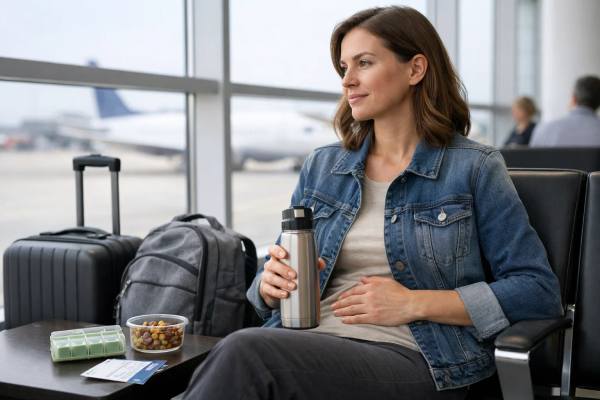
Travel constipation is one of those problems that feels minor—until you’re dealing with it in an unfamiliar place, on a tight schedule, or after a long flight. The good news is that it’s rarely random. Most travel-related constipation comes from predictable shifts: disrupted sleep and meal timing, less movement, altered hydration, different foods, and the habit of “holding it” when bathrooms feel inconvenient or uncomfortable. Your digestive tract is highly routine-driven, and travel is essentially a routine demolition.
With a little planning, you can keep bowel movements regular without turning your trip into a medical project. The goal is not perfection; it’s preventing the hard-stool spiral and having a calm, practical backup plan if things slow down.
Quick Overview
- Maintaining a consistent morning bathroom routine often prevents constipation while traveling.
- Small, frequent movement breaks can support gut motility during long flights or drives.
- Rapidly increasing fiber without enough fluid can worsen bloating and stool hardness.
- New, severe constipation with intense pain, vomiting, fever, or blood in stool needs prompt medical evaluation.
- A simple travel “toolkit” (hydration plan, fiber strategy, and an appropriate backup laxative) works better than last-minute fixes.
Table of Contents
- Why travel triggers constipation
- Common triggers and who is more likely to get stuck
- Hydrate and eat to keep stools soft
- Use timing posture and movement to help emptying
- Choose a travel-safe relief plan when prevention is not enough
- Adapt your plan for flights road trips and different ages
Why travel triggers constipation
Constipation on vacation is often less about “something you ate” and more about how travel reshapes your digestive rhythms. The colon relies on coordinated muscular contractions that respond to sleep, meals, movement, stress signals, and your usual bathroom habits. When those cues change abruptly, motility often slows and stool spends more time in the colon—where extra water gets absorbed and the stool becomes drier, harder, and more difficult to pass.
Your gut runs on routine
Many people underestimate how strongly the bowel responds to timing. Regular wake times and meals help create a predictable pattern of movement through the digestive tract. Travel commonly disrupts that pattern in several ways:
- Jet lag and sleep disruption: Crossing time zones can scramble the body’s internal clock. The colon tends to be more active in the morning for many people; when mornings become “late nights,” the usual urge may not show up.
- Irregular meals: Skipping breakfast to catch a flight or eating late, heavy dinners changes the signals that normally stimulate bowel activity.
- Bathroom avoidance: It’s easy to delay going because the airport restroom is crowded, the hotel bathroom feels unfamiliar, or you’re worried about privacy. Ignoring urges trains the rectum to become less sensitive over time—at least temporarily—so the urge fades and stool dries out.
Dehydration and low movement stack the odds
Travel days often include long periods of sitting. Movement helps stimulate gut motility, and long immobile stretches can slow things down. At the same time, people often drink less to avoid needing the restroom. Air travel adds another layer: the dry cabin environment, caffeine, alcohol, and salty convenience foods can all contribute to dehydration. Dehydration does not always “cause” constipation by itself, but it makes stool harder and more difficult to pass once motility slows.
Food changes are real, but the pattern matters most
Vacation meals often shift toward lower-fiber, higher-fat foods—cheese, pastries, fried items, and “treat” snacks—while fruits, vegetables, and whole grains drop off. Fat is not inherently bad for the gut, but sudden changes can slow gastric emptying in some people and reduce stool bulk. The combination of less fiber, less fluid, and less movement is the classic travel constipation recipe.
If you tend to get constipated while traveling, it often starts within 24 to 72 hours of the routine change. The earlier you respond, the easier it is to prevent a multi-day backlog.
Common triggers and who is more likely to get stuck
Not everyone gets travel constipation, and that’s helpful information: it suggests you can identify your personal pattern and target the specific drivers. Some travelers mainly struggle with hydration; others are highly sensitive to time-zone shifts or bathroom avoidance. Knowing your risk factors also helps you decide how proactive to be.
Who is more likely to struggle
You’re more prone to constipation while traveling if any of the following are true:
- You already lean constipated at home (infrequent stools, hard stools, or regular straining).
- You have irritable bowel syndrome with constipation or mixed symptoms, or a history of bloating with slow transit.
- You have pelvic floor coordination issues (difficulty relaxing during bowel movements, a sense of blockage, or frequent incomplete emptying).
- You’re pregnant, recently postpartum, or dealing with hemorrhoids or anal fissures (pain can make you subconsciously “hold back”).
- You’re older, less mobile, or tend to drink less fluid.
- You have a history of constipation in childhood—kids often relapse during travel because routines change and bathroom access feels unpredictable.
Common travel-specific triggers
These are the patterns that most often lead to constipation on vacation:
- Long-haul flights and layovers: prolonged sitting, dehydration, changed meal timing, and bathroom avoidance
- Road trips: sitting plus fewer fresh-food options and fewer convenient restrooms
- Busy itineraries: early wake times, skipped meals, and stress hormones that alter gut motility
- Hotel or shared bathrooms: privacy concerns, noise concerns, and waiting for “the right time”
- Overcorrecting with fiber: adding large amounts of fiber suddenly (especially without extra fluid) can increase gas and discomfort and may worsen stool hardness
Medication and supplement contributors
If you start or increase these around travel, constipation becomes more likely:
- Opioid pain medicines
- Iron supplements (especially higher-dose forms)
- Antihistamines and motion-sickness medications (often drying and “slowing”)
- Some antidepressants and antispasmodics
- Calcium supplements in certain people
If you need any of these, you can still travel comfortably—just plan a more structured prevention strategy.
When constipation is not “just travel”
Travel constipation should not come with severe systemic symptoms. Seek urgent care if you have:
- Severe or worsening abdominal pain, especially with a rigid or distended abdomen
- Persistent vomiting, inability to keep fluids down, or inability to pass gas
- Fever, fainting, or significant weakness
- Black, tarry stool or significant red blood in stool
- New constipation that is sudden and intense, especially if you are older or it is very different from your baseline
Most cases are benign, but these features change the risk calculation.
Hydrate and eat to keep stools soft
If you want the highest-impact prevention plan with the least complexity, focus on two things: stool softness and predictable eating cues. Soft stools pass more easily even when motility is a bit sluggish, and meal timing helps “wake up” the colon.
A hydration strategy that works in real life
Instead of chasing a perfect number of ounces, use practical signals and a simple structure:
- Start the day with fluid: aim for about 350 to 500 mL of water within the first hour after waking, especially on travel days.
- Sip steadily, not all at once: a helpful rule of thumb is 200 to 250 mL every 1 to 2 hours while awake, adjusting for heat, altitude, and activity.
- Use urine color as feedback: pale yellow usually suggests you’re in a reasonable range. Very dark urine is a sign to increase fluids.
- Be careful with alcohol: it can disrupt sleep and appetite cues and may worsen dehydration risk in some people. If you drink, pair it with water.
If you’re sweating heavily, walking long distances, or traveling in a hot climate, consider electrolyte-containing fluids so you retain what you drink. Overdoing plain water without electrolytes is rarely an issue for typical travelers, but if you are drinking large volumes, balanced fluids are often more comfortable.
Fiber, but with the right timing and type
Fiber prevents constipation best when it is consistent, gradual, and paired with fluid. The biggest mistake during travel is adding a huge dose all at once (like a very high-fiber bar plus supplements) and then not drinking enough.
Practical travel-friendly fiber choices:
- Breakfast anchors: oatmeal, chia pudding, whole-grain cereal, or a banana plus nuts
- Fruit options: kiwi, oranges, berries, or dried fruit in modest portions
- Snack upgrades: roasted chickpeas, trail mix with dried fruit, or popcorn
- Simple side swaps: add a salad, beans, or a vegetable side once daily if available
If you use a fiber supplement, choose a gentle one and start low. Many travelers do well with a small daily dose begun a few days before departure, then continued during the trip.
Meal timing to trigger a bowel movement
The colon often responds to the first substantial meal of the day through a reflex that increases motility. To take advantage of that:
- Try not to skip breakfast entirely.
- Eat at roughly the same time each day when possible.
- If you’re crossing time zones, begin shifting meal timing toward the destination schedule as soon as it’s feasible.
One more key point: extremely low food intake (common on stressful travel days) can reduce stool volume and reduce the body’s natural prompts to empty.
Use timing posture and movement to help emptying
Preventing travel constipation is not only about what you eat and drink. The act of emptying depends on coordination: the colon pushes, the rectum senses fullness, and the pelvic floor relaxes at the right time. Travel disrupts this coordination mainly through stress, awkward timing, and too much sitting.
Use the morning window on purpose
Many people have their best chance of a bowel movement in the morning, especially after breakfast. You can turn this into a travel routine:
- Wake, hydrate, and eat something (even if small).
- Wait 15 to 30 minutes after breakfast, then sit on the toilet for up to 10 minutes—without straining.
- If nothing happens, get up and move on. Repeated long “toilet sessions” can backfire by increasing pressure and frustration.
This approach works because it is consistent and low-pressure. It also reduces the odds that you’ll ignore urges later when you’re on a tour, in transit, or in meetings.
Improve posture to reduce straining
A small change in posture can make a big difference, especially when stools are slightly dry:
- Place feet on a small stool or a stable object to raise the knees above hip level.
- Lean forward with elbows on knees, keeping the belly soft.
- Breathe out slowly as you bear down gently—think of “exhaling into the pelvis” rather than holding your breath.
- Avoid aggressive straining, which can worsen hemorrhoids and pelvic floor tension.
If you tend to feel blocked or incomplete, focus on relaxation. Stress often causes the pelvic floor to tighten, which can mimic constipation even when stool is present.
Movement snacks beat occasional big workouts
You do not need a gym session to support motility. What matters is breaking up long sitting stretches:
- During flights, try to stand and walk briefly every 60 to 120 minutes when safe and practical.
- On road trips, plan short movement breaks at least every 2 hours.
- After meals, a 10 to 15 minute walk can be surprisingly effective.
Gentle twisting stretches, hip openers, or a few minutes of brisk walking can stimulate the gut without exhausting you.
Do not train yourself to hold it
One of the most overlooked travel triggers is repeatedly delaying the urge. If you feel the urge and it is safe and practical, go. Even one or two “missed opportunities” can lead to harder stool later in the day, which then becomes harder to pass—especially if you’re also under-hydrated.
Choose a travel-safe relief plan when prevention is not enough
Sometimes you do everything “right” and still get constipated. That does not mean you failed—it means your gut is sensitive to change. A relief plan works best when it is simple, safe, and matched to your situation. The main goals are to soften stool, restore movement, and avoid painful straining.
Start with the least disruptive option
If you are mildly constipated (harder stools or a missed day), these steps often work within 12 to 24 hours:
- Increase fluids and include a warm beverage in the morning.
- Add a moderate fiber boost from food (not a huge supplement jump).
- Prioritize a morning toilet window plus a post-meal walk.
This is especially useful early in a trip, before you have a multi-day buildup.
Fiber supplements: good for prevention, mixed for rescue
A gentle fiber supplement can help maintain regularity during travel, but it is not always the best “emergency fix.” If stool is already very dry and compacted, adding fiber without enough fluid can increase bulk and discomfort.
If you use fiber while traveling:
- Start with a small dose and increase gradually.
- Separate fiber from medications by about 2 hours when possible, because fiber can interfere with absorption for some medicines.
- Pair fiber with extra fluid.
Common over-the-counter options and how to think about them
Different products work in different ways. A practical framework:
- Osmotic laxatives draw water into the stool. These are often a good first-line choice for travel constipation because they soften stool and are less “crampy” for many people.
- Stimulant laxatives stimulate bowel contractions. They can be effective for short-term rescue, but they are more likely to cause cramping and urgency.
- Suppositories can help if stool is sitting low in the rectum and you feel the urge but can’t pass it.
If you have kidney disease, are pregnant, are older and frail, or take medicines that affect fluid and electrolytes, it’s wise to check with a clinician or pharmacist before using certain laxatives—especially magnesium-containing products.
A simple escalation plan for adults
Many travelers find it helpful to decide in advance what they will do on day 2 or day 3, rather than waiting until they feel miserable. A reasonable structure is:
- If stools harden or you miss one day: prioritize hydration, morning routine, and movement.
- If you miss two days or stools are painful: consider an osmotic option and keep hydration steady.
- If you have significant pain, vomiting, fever, or inability to pass gas: seek medical evaluation rather than escalating laxatives.
Also consider the context. If you are about to board a long bus tour, you may want a gentler approach than something that could cause sudden urgency.
Avoid the “laxative whiplash” cycle
Overcorrecting can backfire: strong laxatives can trigger diarrhea, dehydration, and irritation, followed by rebound constipation—especially if you then restrict fluids or food. The goal is controlled, comfortable emptying, not dramatic results.
Adapt your plan for flights road trips and different ages
A prevention plan is most effective when it fits the trip. The barriers on a long-haul flight are different from a road trip, and the best approach for a healthy adult is not the same as for a child, a pregnant traveler, or an older adult.
Long flights and jet lag
For flights, the biggest levers are hydration, movement, and preserving a morning routine at the destination.
- Hydrate before you fly: start the day well-hydrated rather than trying to “catch up” mid-flight.
- Plan movement: aim for short walks and gentle stretching when safe.
- Eat for predictability: choose simpler meals and add a fruit or fiber-forward snack rather than relying on heavy, low-fiber options.
- Anchor the first morning: after arrival, prioritize a normal breakfast and a toilet window, even if your sleep was messy.
If you’re crossing many time zones, begin shifting toward destination timing with light exposure, meals, and bedtime as soon as practical. The gut often follows the sleep-wake schedule.
Road trips
Road trips fail people because they feel like they can’t stop. Build regular stops into the plan:
- Schedule bathroom and movement breaks at least every 2 hours.
- Pack fluids and fiber-friendly snacks so you’re not reliant on convenience stores.
- If you tend to “hold it” due to uncertain restrooms, identify reliable stop points (larger service stations or major rest areas) where bathrooms are more predictable.
Even small changes—like a 5-minute brisk walk at each stop—can keep the gut moving.
Cruises and resort travel
Cruises and all-inclusive trips often mean richer food, less routine, and more alcohol. A few guardrails help:
- Choose one consistent “fiber anchor” daily (oatmeal, fruit, vegetables, beans, or a fiber supplement).
- Walk after meals—on a ship, a deck walk is a low-effort habit that adds up.
- Keep hydration steady, especially if you’re drinking alcohol or spending time in the sun.
Kids, pregnancy, and older adults
These groups need extra caution and earlier prevention.
- Kids: protect routine. Encourage fluids, fruit, and scheduled bathroom time after breakfast. Avoid using adult laxative strategies without pediatric guidance.
- Pregnancy: prioritize fiber, fluids, and gentle movement. Straining can worsen hemorrhoids, so stool softness matters. Always check with an obstetric clinician before using medications for constipation.
- Older adults: dehydration and reduced mobility can make constipation more severe and harder to reverse. Focus on steady fluid intake, short walks, and a consistent morning routine. If there is kidney impairment or multiple medications, consult a clinician or pharmacist before choosing a laxative.
What to pack when you are prone to travel constipation
A small kit prevents frantic pharmacy runs:
- A refillable water bottle
- A few fiber-forward snacks you tolerate well
- A gentle fiber supplement if you use one
- An over-the-counter option you know you tolerate (chosen with appropriate medical guidance)
- A plan for morning time and privacy, especially for shared lodging
The most effective travel constipation strategy is not a single product—it’s a set of small, repeatable cues that tell your gut, “We still do this every day.”
References
- American Gastroenterological Association-American College of Gastroenterology Clinical Practice Guideline: Pharmacological Management of Chronic Idiopathic Constipation 2023 (Guideline)
- The Effect of Fiber Supplementation on Chronic Constipation in Adults: An Updated Systematic Review and Meta-Analysis of Randomized Controlled Trials 2022 (Systematic Review)
- Polyethylene Glycol 3350 in the Treatment of Chronic Idiopathic Constipation: Post hoc Analysis Using FDA Endpoints 2022 (RCT)
- 2022 Seoul Consensus on Clinical Practice Guidelines for Functional Constipation 2023 (Guideline)
- British Dietetic Association Guidelines for the Dietary Management of Chronic Constipation in Adults 2025 (Guideline)
Disclaimer
This article is for general educational purposes and does not replace personalized medical advice, diagnosis, or treatment. Constipation during travel is usually temporary, but symptoms such as severe or worsening abdominal pain, persistent vomiting, fever, inability to pass gas, significant rectal bleeding, black stools, or sudden new constipation that is unusual for you warrant prompt medical evaluation. If you are pregnant, managing kidney disease, living with a chronic digestive condition, or taking medications that affect bowel function, consult a qualified clinician or pharmacist before using laxatives or supplements.
If you found this helpful, consider sharing it with a friend or posting it on Facebook, X (formerly Twitter), or any platform you prefer.