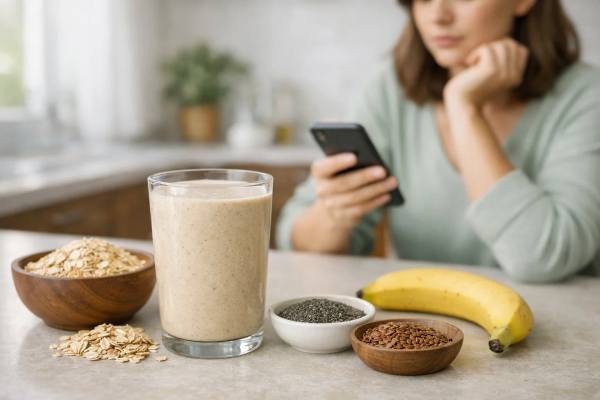
“Oatzempic” is a catchy name for a simple idea: use oats and water (often blended into a thick drink) to feel fuller and eat less. In that narrow sense, the trend points to something real—oats contain soluble fiber that can support regularity, ease cholesterol goals, and help some people manage appetite. But the name also creates confusion. A high-fiber breakfast can be a helpful habit; it is not an interchangeable stand-in for a prescription medication that changes hormone signaling, appetite regulation, and blood-sugar physiology.
This article breaks down why oats can influence fullness, what that means for the gut, and why “Oatzempic” sometimes causes gas or diarrhea. You will also learn who should be cautious, what symptoms should prompt medical advice, and how to use oats in a more gut-friendly, sustainable way.
Key Insights
- Oats can increase fullness by forming a gel-like texture in the gut and slowing how quickly a meal moves through the stomach.
- Regular oat intake may support bowel regularity and a healthier gut environment, especially when paired with enough fluid.
- Rapidly increasing fiber or drinking a thick oat blend too quickly can trigger bloating, cramping, and diarrhea.
- “Oatzempic” is a food trend, not a medication substitute—do not replace prescribed treatment with an oat drink.
- Start with smaller portions and add protein (for example, yogurt or milk) to improve satiety and reduce stomach upset.
Table of Contents
- What “Oatzempic” actually is
- How oats create fullness signals
- Why it is not Ozempic
- Gas, bloating, and diarrhea basics
- Who should be cautious and when to worry
- A gut-friendly way to use oats
What “Oatzempic” actually is
Most “Oatzempic” versions are a blended oat drink—typically dry rolled oats plus water, sometimes with lime juice and cinnamon. In practice, it functions like a minimalist breakfast smoothie: high in volume, moderate in calories, and higher in fiber than many grab-and-go breakfasts. That combination can help some people feel satisfied for longer than they would after a low-fiber breakfast (or no breakfast at all).
Why the trend feels effective to some people
A few practical dynamics explain the hype:
- It is a structured “default” meal. When breakfast becomes automatic, you remove decision fatigue and reduce the chance of pairing hunger with impulse choices.
- It can displace a higher-calorie meal. A half-cup of dry oats is not “free,” but it may replace a pastry, sweetened coffee drink, or fast-food breakfast that delivers more calories and less fiber.
- It is thick, bland, and repetitive. Foods that are less stimulating tend to be easier to stop eating. That is not a virtue by itself, but it helps explain why some people report reduced appetite.
- It increases morning fiber. Many people under-consume fiber. Adding oats can change bowel patterns and appetite signals within days.
What it is not
“Oatzempic” is not a targeted therapy. It does not reliably treat obesity, diabetes, binge eating, or hormonal drivers of appetite. It is also not a gut-healing protocol on its own. Oats can be part of a gut-supportive pattern, but gut health depends on the overall diet (fiber diversity, hydration, protein adequacy), sleep, stress, medication use, and underlying conditions.
If you remember one thing from this section, let it be this: the name is marketing. The useful part is simply “oats can be a helpful, fiber-rich food,” and the risky part is believing that a viral drink can replace medical care or produce medication-level outcomes.
How oats create fullness signals
Oats influence fullness through both physics and biology. The star component is soluble fiber, especially a type called beta-glucan. When mixed with fluid, soluble fiber becomes viscous—think “gentle gel.” That viscosity changes how food behaves inside your digestive tract.
The “gel effect” and stomach pacing
A thicker mixture tends to slow the rate at which the stomach empties into the small intestine. When stomach emptying is slower, you often experience:
- Less sharp hunger swings
- A steadier stream of nutrients entering the bloodstream
- A longer stretch signal from the stomach wall
This is one reason some people feel surprisingly satisfied after oats compared with a low-fiber breakfast.
Gut hormones and fermentation
As fiber travels through the intestines, gut microbes break down some of it. That fermentation produces short-chain fatty acids, which can influence the intestinal environment and may support signaling related to appetite and metabolism. The effect is real but modest and depends on your baseline diet, your microbiome, and the fiber dose you can tolerate.
Why drinking oats is different than eating oats
A key nuance: liquids and semi-liquids are often less satiating than solid food because they are consumed quickly and require little chewing. Chewing matters—it slows eating, increases sensory exposure, and can improve meal satisfaction. A thick oat blend may still help fullness, but many people do better with a bowl of oatmeal (or overnight oats) than a fast-drunk smoothie.
If you prefer a drink, consider the behavioral details:
- Sip, do not chug. Rapid intake can trigger bloating and nausea.
- Add protein. Protein improves satiety and reduces the “I’m hungry again in an hour” rebound.
- Add enough fluid. Fiber without fluid is a common constipation recipe.
- Keep expectations realistic. Fiber supports appetite management; it does not force appetite shutdown.
Used thoughtfully, oats can be a solid tool for fullness and regularity. Used aggressively, they can be a fast track to gas and diarrhea—especially if your gut is not accustomed to a sudden fiber jump.
Why it is not Ozempic
The viral comparison works because both “Oatzempic” and Ozempic are associated with reduced appetite. But the similarity ends there. One is a food choice; the other is a prescription drug that changes hormone-receptor signaling.
Food-based fullness vs medication-driven appetite regulation
Oats mainly work by adding volume and soluble fiber, which can slow digestion and smooth hunger patterns. Ozempic (and related medications) work by activating GLP-1 receptors, affecting the brain-gut axis, insulin release, blood-sugar regulation, and appetite circuitry in ways no single food can replicate.
A practical way to think about it:
- Oats: nudges fullness and meal structure
- GLP-1 medications: reshape appetite signaling and metabolic control at a systemic level
That difference matters because medication effects can be large, consistent, and medically supervised—along with meaningful side effects and contraindications.
Why “substitute” is the dangerous word
Calling an oat drink a substitute can lead people to do risky things, such as:
- Delaying evaluation for obesity-related conditions (sleep apnea, fatty liver disease, insulin resistance)
- Stopping prescribed diabetes or weight-management medication without a clinician plan
- Pursuing rapid restriction that backfires into binge eating, constipation, or nutrient inadequacy
Ozempic and Wegovy are prescription medicines made by Novo Nordisk and cleared for specific indications by the U.S. Food and Drug Administration. That oversight exists because benefits must be weighed against risks (including gastrointestinal side effects and other warnings), and because dosing and monitoring are not optional details.
What “Oatzempic” can reasonably do
A more accurate claim would be: “A fiber-forward breakfast may help some people reduce snacking and improve bowel regularity.” That is a worthwhile benefit. It just does not justify the medication comparison. If the trend motivates you to eat more whole foods and fiber, keep that part—and drop the idea that it can replace medical treatment.
Gas, bloating, and diarrhea basics
If “Oatzempic” causes stomach drama, it is usually not because oats are harmful. It is because the gut responds predictably to rapid changes in fiber, fluid, and meal timing.
Why fiber can cause gas
When you increase fermentable carbohydrates (including certain fibers), gut microbes have more fuel. Fermentation produces gases. That can show up as:
- Bloating or visible distention
- Increased flatulence
- Cramping that improves after passing gas or having a bowel movement
These symptoms are more common if you jump from a low-fiber diet to a high-fiber breakfast overnight.
Why diarrhea can happen
Diarrhea after a thick oat drink often comes from one of these patterns:
- Too much fiber too fast. The gut moves water into the bowel and speeds transit.
- High-volume liquid on an empty stomach. Some people get an exaggerated “gastrocolic reflex,” meaning the colon contracts after intake.
- Add-ins that irritate. Acidic ingredients (like citrus) can aggravate reflux or a sensitive stomach in some people.
- Underlying IBS tendencies. If you are IBS-prone, even generally well-tolerated foods can become symptomatic at larger portions.
Why constipation can also happen
This surprises people: fiber can cause constipation if fluid intake is inadequate or if the drink is used to replace meals in a way that reduces overall intake. Thick soluble fiber needs water to stay soft and move smoothly.
Simple ways to make it gentler
- Start with 2 to 3 tablespoons of oats, not a full half-cup.
- Soak oats (or use cooked oats) to improve texture and tolerance.
- Drink it slowly and follow with water.
- Add protein (milk, yogurt, or a protein source you tolerate).
- If reflux is an issue, skip citrus and avoid taking it right before lying down.
- If you need gluten-free, choose oats labeled gluten-free to reduce cross-contact risk.
Your gut is trainable. When people build up gradually and keep portions reasonable, the same oats that caused gas in week one often become supportive by week three.
Who should be cautious and when to worry
For most healthy adults, oats are a low-risk food. The caution zone comes from context: medical conditions, medication use, and red-flag symptoms that should not be dismissed as “just the fiber.”
People who should use extra care
Consider talking with a clinician or dietitian before making “Oatzempic” a daily ritual if you have:
- Diabetes or reactive hypoglycemia, especially if you use insulin or medications that can cause low blood sugar
- Known gastroparesis or significant nausea and early fullness
- Inflammatory bowel disease, especially during a flare
- Celiac disease or strong gluten sensitivity (oats may be tolerated, but cross-contact is common)
- Kidney disease with fluid restrictions (fiber strategies need to fit your hydration plan)
- A history of bariatric surgery where volume and texture can provoke dumping-like symptoms
- Swallowing difficulties (thick blends can increase choking risk)
- A current or past eating disorder, where “viral restriction routines” can reinforce harmful patterns
Symptoms that deserve medical advice
Seek medical guidance promptly if you have any of the following, especially if they are new or escalating:
- Severe abdominal pain or pain that localizes and persists
- Persistent vomiting, inability to keep fluids down, or signs of dehydration
- Bloody stools, black stools, or significant rectal bleeding
- Fever with ongoing diarrhea, or diarrhea lasting more than several days
- Unexplained weight loss, fatigue, or waking at night with symptoms
- New difficulty swallowing or a sensation of food “getting stuck”
A note about “stomach bugs” and timing
If you already have a viral gastroenteritis or foodborne illness, a high-fiber oat drink can worsen cramping and urgency. During acute stomach illness, many people do better with bland, low-fat, lower-fiber foods and steady fluids until symptoms settle.
“Oatzempic” is optional. Your health is not. If something feels off—especially beyond typical gas—treat that signal with respect.
A gut-friendly way to use oats
If you like the simplicity of the trend, keep the structure but improve the physiology. The most gut-friendly approach is not an empty-stomach oat slurry; it is a balanced, chewable, fiber-forward meal you can repeat without side effects.
Build a better “fullness breakfast” formula
Aim for these elements:
- A reasonable oat portion. Start small (a few tablespoons dry) and work up if tolerated.
- Protein for staying power. Many people do best when breakfast includes a meaningful protein source.
- Fluid in the right place. Include fluid with the meal and across the morning, not only inside the blender.
- A second fiber source when tolerated. Fruit, chia, flax, or nuts can broaden fiber types and improve satisfaction.
- A pace you can digest. Chewing and slowing down often reduces bloating and improves appetite control.
Three practical options
- Cooked oatmeal bowl: Oats cooked with milk or fortified milk alternative, topped with yogurt and berries.
- Overnight oats: Soaked oats (soft texture), mixed with yogurt, cinnamon, and fruit—often easier on sensitive stomachs than raw blended oats.
- Savory oats: Oats cooked in broth, topped with eggs or tofu and a small amount of olive oil—high satiety, less sugar-triggered rebound hunger for some people.
If you strongly prefer a drink
Make it more gut-friendly:
- Use soaked oats for a smoother texture.
- Blend with protein (yogurt, milk, or a tolerated protein source).
- Keep it thinner and sip slowly.
- Skip acidic add-ins if you have reflux.
- Treat it as breakfast, not as a “pre-breakfast” that leads to double eating.
The real “not a substitute” takeaway
If you are pursuing weight loss or blood-sugar control, the most powerful move is not chasing a viral hack. It is building a repeatable pattern you can tolerate: adequate protein, diverse fiber, sleep, movement, and medical support when needed. Oats can be part of that pattern—quietly effective, not magically transformative.
References
- Once-Weekly Semaglutide in Adults with Overweight or Obesity 2021 (RCT)
- Gastrointestinal adverse events associated with GLP-1 RA in non-diabetic patients with overweight or obesity: a systematic review and network meta-analysis 2025 (Systematic Review)
- Prolonged Isolated Soluble Dietary Fibre Supplementation in Overweight and Obese Patients: A Systematic Review with Meta-Analysis of Randomised Controlled Trials 2022 (Systematic Review)
- The importance of molecular weight in determining the minimum dose of oat β-glucan required to reduce the glycaemic response in healthy subjects without diabetes: a systematic review and meta-regression analysis 2022 (Systematic Review)
- Cereal Fibers and Satiety: A Systematic Review 2025 (Systematic Review)
Disclaimer
This article is for general educational purposes and does not provide medical advice, diagnosis, or treatment. Nutrition and supplement strategies—including higher-fiber diets—can affect gastrointestinal symptoms and may interact with medical conditions or medications. If you have diabetes, significant digestive symptoms, unexplained weight loss, dehydration, or persistent vomiting or diarrhea, seek personalized guidance from a licensed clinician.
If you found this helpful, consider sharing it on Facebook, X (formerly Twitter), or any platform you prefer so others can make safer, better-informed choices about trends and gut health.