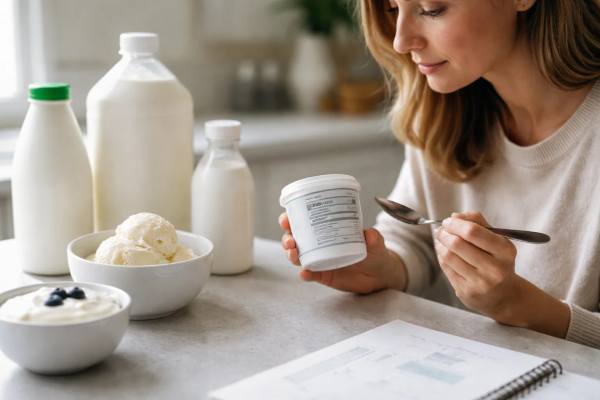
Ice cream has always been an emotional food—cold comfort, celebration, nostalgia. Now it is also being positioned as a health-adjacent product, with “probiotic,” “kefir,” and “live cultures” appearing on tubs next to familiar flavors. This new wave of “functional dairy” promises that a dessert can do more than satisfy a craving: it can support the microbiome, digestion, and immune balance.
The reality is more nuanced. Probiotics can be beneficial, but they are strain-specific, dose-dependent, and sensitive to how a food is processed and stored. Ice cream can be a surprisingly protective carrier in some ways, yet it is also easy for marketing language to outrun meaningful evidence. The key is learning what to look for—and what not to assume—so you can enjoy these products with clearer expectations and smarter trade-offs.
Essential Insights
- Probiotic ice cream can deliver live microbes, but benefits depend on the specific strain, dose, and survival through storage and digestion.
- Frozen dairy can be a workable “carrier,” yet many products do not clearly state the amount of live cultures you are actually getting at the end of shelf life.
- “Functional dairy” claims can be vague; look for strain names and meaningful amounts rather than feel-good buzzwords.
- If you are immunocompromised, pregnant with high-risk medical conditions, or have a central line, treat probiotic products as something to discuss with your clinician first.
- Use probiotic ice cream as an occasional, planned dessert—not a primary gut-health strategy—while prioritizing fiber-rich whole foods day to day.
Table of Contents
- Functional dairy and probiotic ice cream explained
- What has to happen to help
- How freezing and storage change probiotics
- Microbiome benefits and evidence so far
- Marketing claims that deserve skepticism
- Safety, sugar, and real-world downsides
- How to use functional dairy effectively
Functional dairy and probiotic ice cream explained
“Functional dairy” is a broad umbrella term for dairy foods positioned as doing something beyond basic nutrition. Sometimes that “function” is familiar and reasonable—higher protein for satiety, added calcium and vitamin D for bone support, or lactose-free formulations for comfort. Other times it is more aspirational: added probiotics for gut health, added prebiotic fibers for “microbiome support,” or culture-derived compounds described as supporting immunity and inflammation balance.
Probiotic ice cream sits inside that second group. It is usually made in one of a few ways:
- Ice cream with added probiotic strains: Cultures are added after heat treatment, so they are not killed by pasteurization.
- Frozen yogurt or cultured frozen desserts: The base is fermented first (like yogurt), then frozen, sometimes with additional strains added.
- Kefir-based frozen desserts: Kefir cultures (a mix of bacteria and yeast, depending on the product) are used to create a tangy base, then frozen.
Because ice cream is not typically “alive” the way yogurt is, probiotic versions rely on intentional formulation. That matters, because “contains cultures” can mean very different things. Some cultures are used mainly for taste or texture. Others are chosen because they have research behind them as probiotics—meaning they have demonstrated health effects when taken in adequate amounts.
Ice cream also carries a psychological advantage: it is easy to remember and pleasant to consume. That can improve consistency, which is often the missing piece with supplements. But it also creates a temptation for brands to imply that a treat is now a wellness tool. A more grounded way to think about it is this: probiotic ice cream is still a dessert first, and a potential probiotic delivery vehicle second. Whether it truly acts as a “functional” food depends on what is in it, how it is stored, and what you expect it to accomplish.
What has to happen to help
For probiotic ice cream (or any probiotic food) to meaningfully help, several things must line up. If even one step breaks, the product may still be tasty, but the “microbiome benefit” becomes more hypothetical than real.
1) The product must contain a probiotic strain, not just “cultures.”
A true probiotic is typically identified at least to the genus, species, and strain level (for example, a named strain of Lactobacillus or Bifidobacterium). Strain matters because two microbes with similar names can behave differently in the gut.
2) The dose must be adequate at the time you eat it.
Probiotics are usually discussed in CFU (colony-forming units). Many studied probiotic interventions use daily amounts in the billions, but the effective dose varies by strain and goal. A label that lists CFU “at time of manufacture” can look impressive while delivering far less by the end of storage.
3) The microbes must survive storage and the trip through your digestive tract.
Freezing, oxygen exposure, time, and temperature changes can reduce viability. Then the stomach’s acidity and bile salts add another filter. Some strains handle these stresses better than others.
4) Your gut has to respond in a useful way.
Even when a probiotic survives, it may not permanently colonize. Many probiotics are “transient”—they pass through and may influence the ecosystem while they are present. That can still be beneficial, but it changes how you should think about expectations. You are often aiming for functional effects (like metabolite production or barrier support) rather than “permanent implantation.”
5) The rest of your diet has to support the goal.
This is the part marketing rarely emphasizes. A probiotic food is not a substitute for the basics that shape your microbiome most strongly: fiber variety, plant diversity, adequate protein, and a pattern that limits ultra-processed foods. Probiotics tend to work best when they are part of a supportive environment. If your daily pattern is low in fiber and high in added sugars, a probiotic strain may have less room to make a difference.
A practical takeaway: if you want probiotic ice cream to be more than a novelty, you should evaluate it like any other intervention—strain, dose, consistency, and context—rather than assuming the word “probiotic” guarantees a meaningful effect.
How freezing and storage change probiotics
Freezing sounds harsh, but it is not automatically a deal-breaker for probiotics. In fact, frozen matrices can preserve microbes well—if the product is designed for it. The challenge is that ice cream is a complex environment: cold, sugary, sometimes oxygen-exposed, and often stored for weeks to months.
Here is what most influences whether probiotics remain viable in frozen dairy:
- Strain resilience: Some strains tolerate cold and freeze-thaw stress better than others. Even within the same species, survival can differ.
- When cultures are added: If the probiotic is added before a heat step, viability can drop sharply. Better products add probiotics after pasteurization, closer to the end of processing.
- Water and ice crystal dynamics: As ice forms, cells can be damaged by crystal growth and dehydration. Stabilizers and proper freezing methods can reduce this damage.
- Fat and sugar as “buffers”: Ice cream’s fat and sugar can sometimes act as protective factors, cushioning microbes against stress and helping them survive the early digestive tract. The upside is better survival; the downside is the calorie and sugar load.
- Oxygen exposure: Many beneficial strains are sensitive to oxygen. Packaging, headspace, and repeated opening can matter, especially for products stored over time.
- Temperature swings: The biggest threat in real kitchens is not the freezer itself, but fluctuation—softening during transport, melting at the counter, and re-freezing. Repeated temperature shifts are harder on live cultures than steady cold.
You will also see technologies designed to improve survival:
- Microencapsulation: Probiotics are coated in protective materials that help them withstand freezing and digestion.
- Synbiotic formulation: A prebiotic fiber (like inulin) may be included to support probiotic survival and activity.
- Higher initial dosing: Some products start with more CFU so that even after natural losses, a meaningful amount remains.
A subtle but important point: viability is not the only possible “functional” pathway. Some products lean on fermentation-derived compounds or heat-treated microbes (often called postbiotics or paraprobiotics). These do not require live microbes, but they also should not be marketed as if they are identical to live probiotics. If a product uses this approach, the label should be clear about what you are actually getting.
Bottom line: probiotic ice cream can work as a delivery format, but it is unusually dependent on good formulation and good handling. A carefully made product kept consistently frozen is not the same as a “probiotic” pint that melts in a grocery bag twice a week.
Microbiome benefits and evidence so far
People buy probiotic ice cream for a simple hope: better digestion, a calmer gut, fewer bloating episodes, and maybe an immune boost. Those goals are understandable, but evidence in probiotic science rarely supports broad, guaranteed outcomes. What it supports is more specific: certain strains, in certain doses, for certain situations.
What benefits are most plausible?
- Short-term support during stress: Travel, irregular sleep, intense training, or dietary disruption can shift symptoms. Some studies on synbiotic frozen desserts suggest potential effects on well-being measures and selected gut microbiota signals, though outcomes can be mixed and not always dramatic.
- Gentle digestive support for some people: Certain strains are associated with modest improvements in stool consistency, gas, or discomfort in specific groups. The effect sizes tend to be moderate, and not everyone responds.
- Functional effects without permanent colonization: Probiotics may support barrier function, compete with opportunistic microbes, or influence immune signaling while they are consumed regularly.
What is less proven in the “ice cream” format specifically?
The biggest gap is not whether probiotics can survive in ice cream—it is whether probiotic ice cream reliably improves health outcomes beyond what you would see from other probiotic foods or from broader dietary change. Human trials of probiotic ice cream exist, but the total body of evidence is still relatively small compared with yogurt, kefir, and supplements. It is also hard to generalize because products differ widely in strains and doses.
Where functional dairy has stronger footing
Fermented dairy foods like yogurt and kefir have a longer research history. They contain live cultures and also fermentation-derived compounds that can influence the gut environment. These foods are not magic, but they are easier to standardize and often lower in added sugar than ice cream.
A practical interpretation for readers
If probiotic ice cream helps you replace a high-sugar dessert with a version that has lower sugar, more protein, and a clearly stated probiotic dose, that can be a meaningful upgrade. But the microbiome benefit should be framed as a “possible added value,” not the primary reason to eat ice cream.
If your goal is symptom relief (like constipation, diarrhea after antibiotics, or irritable bowel patterns), the most effective plan is usually more targeted: a strain with evidence for that problem, taken consistently, alongside dietary changes that support stool form and microbial diversity. Probiotic ice cream may fit into that plan, but it should not be the whole plan.
Marketing claims that deserve skepticism
The functional food space is crowded, and probiotic dairy is one of the easiest places for language to become “health-shaped” without being truly informative. A few simple label habits can protect you from buying marketing rather than substance.
Claims that often mean little on their own
- “Supports gut health”: This is typically a general structure-function claim. It does not tell you which strain, how much, or what outcome was observed.
- “With live cultures”: Many dairy products contain cultures used for fermentation. That does not automatically mean probiotic strains at effective doses.
- “Microbiome-friendly”: This is not a scientific standard. It is often used as a wellness signal rather than a measurable promise.
- “Clinically studied”: Sometimes this refers to a strain studied in another product or a related setting, not the specific ice cream you are holding.
What stronger labels tend to include
- Strain identification: Look for genus, species, and strain (not only “Lactobacillus” as a group).
- CFU amount per serving: Even better if it specifies the amount at the end of shelf life, not only at manufacture.
- Clear serving guidance: If a product needs one full pint to reach the stated dose, that is not realistic for most people.
- Storage and handling instructions: Surprisingly important for live cultures in frozen products.
Red flags that are easy to miss
- No strain names, no CFU: You are essentially guessing.
- CFU at manufacture only: This can be meaningful if the product is well-formulated, but it is less reliable without end-of-shelf-life numbers.
- Heavy “wellness” language paired with high sugar: If the nutrition panel looks like standard ice cream (high added sugar, low protein, minimal fiber), the functional claim is likely a thin layer on top of a dessert.
- Too many “functional” additions: Adding probiotics, prebiotics, collagen, omega oils, and herbal extracts can sound impressive, but compatibility is not guaranteed. Some additions can affect texture, stability, or digestion.
A helpful mindset is to treat probiotic ice cream like you would treat sunscreen: the front label is not the proof. The proof is in the specifics—what is in it, in what amount, and how stable it is likely to be in real life. If you cannot confirm those basics, the product might still be enjoyable, but you should assume the microbiome benefit is uncertain.
Safety, sugar, and real-world downsides
Even when probiotic ice cream is well-designed, it carries trade-offs that matter for gut health and overall metabolic health. These downsides do not mean you should avoid it. They mean you should use it intentionally.
1) Sugar and portion reality
Many probiotic ice creams are still ice cream. Added sugar can aggravate symptoms in some people, especially those prone to bloating, diarrhea, or reactive appetite. If you need a large portion to reach the probiotic dose, the nutritional cost may outweigh the potential benefit. When you compare products, check:
- Added sugar per serving
- Serving size (and whether you actually eat that amount)
- Protein and fiber (which can blunt glucose spikes and improve fullness)
2) Ingredients that can bother sensitive guts
Some functional frozen desserts use sugar alcohols, large doses of certain fibers, or “diet” sweeteners to reduce sugar. For some people, that is helpful; for others it can increase gas, urgency, or cramping. If you know you are sensitive to inulin, certain gums, or sugar alcohols, start with a small portion and assess.
3) Lactose and dairy tolerance
Not all probiotic ice cream is lactose-free. Fermented dairy often contains less lactose than milk, but ice cream can vary. If lactose triggers symptoms for you, choose lactose-free versions or use lactase enzyme as appropriate.
4) Probiotics are not risk-free for everyone
For most healthy people, probiotics in foods are low risk. However, caution is reasonable if you:
- Are severely immunocompromised (for example, chemotherapy-related neutropenia, advanced immune suppression, or transplant medications)
- Have a central venous catheter
- Have severe pancreatitis or critical illness
- Have a history of recurrent bloodstream infections
- Are pregnant with complex medical risk where your clinician has advised caution with supplements
This does not automatically mean “never,” but it does mean you should treat probiotics as a medical-adjacent choice rather than a harmless add-on.
5) The “health halo” problem
A functional label can subtly encourage overconsumption. The risk is not that probiotics are harmful; it is that the product becomes justified as “good for me,” leading to more sugar and calories than intended. A functional dessert works best when it is replacing something less aligned with your goals, not adding a new daily habit on top of your normal intake.
A reasonable, evidence-aligned stance is this: probiotic ice cream may be a better dessert choice than standard ice cream for some people, but it is rarely the best way to build a microbiome-supportive diet. It should complement the foundations, not compete with them.
How to use functional dairy effectively
If you decide to use probiotic ice cream or other functional dairy products, the goal is to make the choice both realistic and useful. That means thinking in terms of frequency, context, and outcomes you can actually notice.
Start with a clear purpose
Pick one reason you are trying it. Examples that make sense:
- You want a dessert option that is easier on your digestion than your usual choice.
- You want a consistent probiotic food you will actually remember.
- You are experimenting with a synbiotic food (probiotic plus fiber) to support stool regularity.
If your purpose is vague (“better microbiome”), you will have a harder time knowing whether it is helping.
Use a “small, steady” approach
A practical pattern for many people is:
- Choose a product with strain identification and a reasonable serving size.
- Eat a modest portion (often half a standard serving at first) 3–5 times per week.
- Keep the rest of your routine stable for two to three weeks.
- Track one or two simple outcomes (bloating score, stool consistency, comfort after meals).
If you notice improvement, you can continue. If you notice worse symptoms, reduce portion size or choose a different formulation.
Pair it with microbiome-friendly context
You do not need to turn dessert into a science experiment, but pairing can help:
- Add berries, chopped nuts, or seeds for polyphenols and fiber.
- Eat it after a balanced meal rather than on an empty stomach if you are glucose sensitive.
- Keep your daily fiber intake steady, because fiber is still one of the strongest levers for gut microbial diversity.
Handle it like a live product
To protect viability and quality:
- Keep it frozen consistently.
- Avoid long countertop softening.
- Do not repeatedly thaw and re-freeze.
- Use an insulated bag if you have a long trip home from the store.
Know when a different option is smarter
If your goal is very specific (for example, preventing antibiotic-associated diarrhea, managing a diagnosed digestive condition, or addressing recurrent symptoms), you may benefit more from a targeted probiotic supplement or a fermented food with more predictable dosing, like yogurt or kefir. Functional dairy can still be part of the pattern, but it is not always the most efficient tool.
The most balanced way to use probiotic ice cream is as a conscious upgrade—an enjoyable dessert that may offer additional upside—while keeping the core of your gut health strategy anchored in fiber-rich foods, regular meals, sleep, and stress support.
References
- Immune status, well-being and gut microbiota in military supplemented with synbiotic ice cream and submitted to field training: a randomised clinical trial 2021 (RCT)
- Probiotic ice cream influences gut and vaginal microbiota in women at high risk of preterm birth: a randomized controlled study 2025 (RCT)
- Overview of Dairy-based Products with Probiotics: Fermented or Non-fermented Milk Drink 2024 (Review)
- Fermented Dairy Products as Precision Modulators of Gut Microbiota and Host Health: Mechanistic Insights, Clinical Evidence, and Future Directions 2025 (Review)
- Application of Probiotics in Foods: A Comprehensive Review of Benefits, Challenges, and Future Perspectives 2025 (Review)
Disclaimer
This article is for educational purposes only and does not provide medical advice. Probiotic foods and supplements can affect people differently and are not appropriate for every health situation. If you are pregnant, immunocompromised, managing a chronic condition, taking immune-modifying medications, or have persistent digestive symptoms (such as blood in stool, unexplained weight loss, fever, or severe abdominal pain), seek guidance from a qualified healthcare professional before making significant dietary changes or starting probiotic products.
If you found this article useful, consider sharing it on Facebook, X (formerly Twitter), or any platform you prefer so others can make more informed choices about functional dairy and probiotic ice cream.