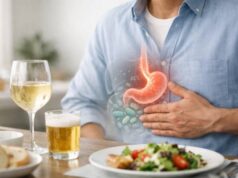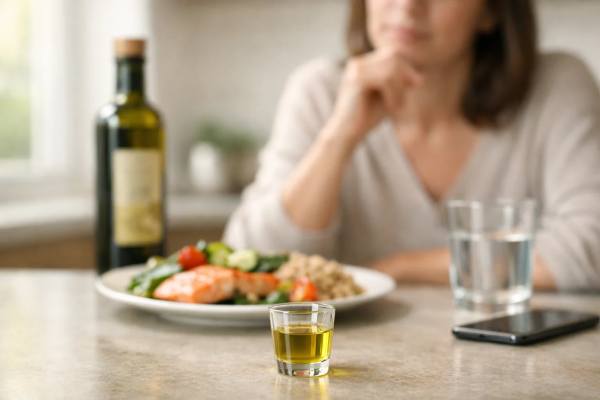
Olive oil shots are having a moment: a quick swallow of extra virgin olive oil (often 1 tablespoon) taken first thing in the morning or before bed, promoted as a simple way to “heal the gut.” The appeal is understandable. Extra virgin olive oil is rich in monounsaturated fat and contains bioactive compounds that can support a healthier inflammatory balance. It can also make meals more satisfying and, for some people, help stools pass more comfortably.
But a “shot” format changes the experience. A concentrated fat dose on an empty stomach can trigger nausea, reflux, cramping, or urgent diarrhea—especially in people with irritable bowel syndrome. The most reliable benefits come from consistent, food-based use rather than a single daily gulp. If you are curious, you can test it thoughtfully and decide whether it helps your body or simply irritates it.
Essential Insights
- Regular extra virgin olive oil use can support a healthier inflammatory balance when it replaces less healthy fats.
- Some people notice easier bowel movements when olive oil is paired with fiber-rich meals rather than taken as a shot.
- A concentrated dose can worsen reflux, nausea, cramps, or diarrhea, especially on an empty stomach.
- If you try it, start with 1 teaspoon with food for 3 to 7 days before increasing, and keep total daily intake within your calorie needs.
Table of Contents
- What an olive oil shot is
- Why people do it for the gut
- Anti-inflammatory claims: what is plausible
- Gut benefits: microbiome and barrier effects
- Side effects and downsides to expect
- Who should skip shots or get advice
- How to try it and better alternatives
What an olive oil shot is
An “olive oil shot” usually means swallowing a small, measured amount of olive oil—most often 1 tablespoon (15 mL)—separately from a meal. Some people chase it with lemon juice, warm water, or coffee, while others take it straight. The promised outcomes vary: “lubricate the gut,” “reduce inflammation,” “flush toxins,” “improve the microbiome,” “relieve constipation,” or “calm IBS.”
It helps to be clear about what the shot actually delivers:
- Calories: about 120 calories per tablespoon.
- Fat dose: almost entirely fat, with a high proportion of monounsaturated fat.
- Compounds that vary by oil: extra virgin olive oil can contain polyphenols (including compounds linked to peppery or bitter notes), but the amount depends on harvest, processing, storage, and age.
A key detail: a shot is not a different ingredient than olive oil used in food; it is a different delivery method. The gut responds differently to fat taken alone versus fat spread across a meal. A tablespoon of oil mixed into salad, beans, or vegetables arrives with fiber and volume, which tends to slow stomach emptying and reduce the “sudden hit” to the small intestine and gallbladder.
Also, “more” is not automatically “better.” If your usual diet contains little added fat, a sudden daily shot can be a shock. If you already cook with olive oil, the shot may simply add calories without adding meaningful benefit.
The most useful way to view olive oil shots is as a self-experiment with a single variable: a concentrated fat dose at a specific time. That framing makes it easier to notice whether it genuinely improves stool comfort, bloating, or reflux—or whether it creates new symptoms.
Why people do it for the gut
Most gut-related reasons fall into three buckets: bowel regularity, symptom control, and “gut health” as a broad wellness idea.
1) Bowel regularity and stool comfort
Fat can stimulate digestive hormones and bile release, which can increase intestinal movement. For some people—especially those prone to hard, dry stools—a modest fat increase supports easier passage. Olive oil is also slippery and can make meals feel less “binding” when a diet is very low in fat.
But the effect is not guaranteed. Constipation often responds better to a combination of fiber, fluid, and consistent meal timing than to a single fat bolus. If constipation is driven by pelvic floor dysfunction, thyroid issues, iron supplements, or certain medications, an olive oil shot may not move the needle.
2) Calming bloating or IBS symptoms
This is where expectations often clash with physiology. Many people with IBS have strong reactions to meal triggers—and fat can be one of them. A shot can provoke cramping or urgency in a way that olive oil drizzled on food may not. If someone reports “it helped my IBS,” it may be because they replaced a trigger breakfast with something simpler, changed caffeine timing, or unintentionally reduced other irritants.
3) Anti-inflammatory and microbiome buzzwords
The strongest evidence around olive oil’s health value comes from patterns of eating—especially replacing saturated fats with unsaturated fats and consuming plant-rich meals. A shot can feel like a shortcut, but inflammation is rarely influenced by a single daily act in isolation. It is influenced by overall dietary pattern, sleep, stress load, alcohol intake, and activity, along with underlying disease.
A practical way to interpret the trend is this: olive oil is a genuinely beneficial food for many people, and the shot is a convenient ritual. Rituals can help with consistency—but the ritual is not the mechanism. The mechanism is regular intake, quality of the oil, and what it replaces.
Anti-inflammatory claims: what is plausible
Inflammation is not automatically “bad.” You need it for healing and immune defense. The goal is a healthier balance—less chronic, smoldering inflammation that can contribute to symptoms and long-term disease risk.
Olive oil can plausibly support that balance through two main pathways:
Replacing less favorable fats
If olive oil replaces butter, fatty processed meats, or frequent deep-fried foods, many people see benefits in markers linked to cardiometabolic health. This substitution effect is often the unglamorous truth behind impressive “superfood” claims.
Bioactive compounds in extra virgin olive oil
Extra virgin olive oil (not refined “light” olive oil) contains phenolic compounds that are being studied for antioxidant and anti-inflammatory actions. The amount varies widely between bottles. Oils that taste noticeably peppery or bitter often contain more of these compounds, though taste is not a perfect test.
What a shot can and cannot do:
- Can: increase your daily exposure to olive oil’s fats and, if you use a high-quality extra virgin oil, some phenolic compounds.
- Cannot: reliably “turn off” inflammation by itself, especially if the rest of the diet is low in plants and high in ultra-processed foods.
- May: cause short-term GI stress in sensitive people, which can feel like inflammation (burning, cramping, nausea) even though it is an irritation response.
If your main goal is anti-inflammatory support for the gut, the “shot” format is not essential. Consistent intake spread across meals is usually easier on digestion and more likely to be maintained. Think in terms of tablespoons per day across food, not one dramatic swallow.
A helpful mental model is “dose and context.” The dose (how much) matters, but so does the context: taken with fiber-rich foods, the same oil may feel soothing; taken alone on an empty stomach, it may feel harsh.
Gut benefits: microbiome and barrier effects
When people say “gut health,” they often mean a combination of: comfortable digestion, steady bowel movements, low bloating, and a resilient intestinal lining. Olive oil may support these goals, but the best effects usually show up as part of a broader pattern.
Microbiome support tends to be indirect
The gut microbiome thrives on fermentable carbohydrates (fiber, resistant starches) more than on fat. Olive oil does not “feed” microbes the way oats or beans do. Instead, it may influence the microbiome by:
- encouraging a healthier dietary pattern (more vegetables become enjoyable when dressed well),
- providing polyphenols that interact with gut bacteria,
- reducing reliance on fried foods and certain processed fats.
Barrier and immune signaling
Your intestinal lining is a selective barrier. Stress, sleep disruption, heavy alcohol intake, and certain infections can disrupt that barrier. Olive oil’s compounds are being studied for potential roles in oxidative balance and immune modulation at the mucosal surface. The most believable scenario is not “olive oil repairs the gut overnight,” but rather “regular extra virgin olive oil use supports a calmer, more resilient intestinal environment over time.”
Bile, motility, and stool consistency
Fat intake triggers bile release. Bile helps digest fats, and it also influences motility. This can be useful if you struggle with sluggish digestion. But the same mechanism can backfire: too much fat at once can increase urgency, loosen stools, and aggravate bile-sensitive IBS patterns.
If your goal is tangible day-to-day gut comfort, the most predictable approach is to pair olive oil with foods that give it a purpose:
- drizzle on roasted vegetables or soups,
- use as the fat in a vinaigrette over a bean or grain bowl,
- sauté aromatics and add leafy greens,
- combine with yogurt-based sauces or tahini for a balanced meal.
In other words: olive oil is often helpful for the gut when it helps you eat more of the foods your gut microbes actually want.
Side effects and downsides to expect
Olive oil is a food, not a medication, and most people tolerate it well in normal culinary amounts. The “shot” approach changes the tolerance equation because it is concentrated and often taken on an empty stomach.
Common downsides include:
- Nausea or queasiness: especially first thing in the morning, or if you are prone to motion sickness, migraines, pregnancy-related nausea, or anxiety-related stomach symptoms.
- Reflux and heartburn: fat can relax the lower esophageal sphincter in some people and slow stomach emptying, which may worsen reflux—particularly if taken close to bedtime.
- Cramping or urgent diarrhea: a sudden fat bolus can speed intestinal transit. People with IBS-D (diarrhea-predominant IBS) or bile sensitivity are more likely to notice this.
- Greasy stools or stool changes: if fat digestion is impaired (for example, with certain gallbladder, pancreatic, or liver issues), higher-fat intake can cause floating stools, oiliness, or increased urgency.
- Calorie creep: one tablespoon daily adds up to roughly 840 calories per week. If nothing else changes, weight gain is a realistic outcome for some people.
There are also practical downsides that are easy to overlook:
- Quality variability: many bottles on the shelf are old, heat-exposed, or poorly stored. A “shot” from a degraded oil can taste unpleasant and may not provide the same bioactive profile as a fresher oil.
- False reassurance: a daily shot can feel like an insurance policy, leading some people to ignore more impactful gut supports (fiber intake, meal timing, alcohol reduction, consistent sleep).
- Symptom confusion: if you take a shot alongside lemon juice, vinegar, cayenne, or coffee, it becomes hard to know which ingredient is helping or hurting.
A simple rule: if a gut practice makes your symptoms more reactive, it is not a gut-healing practice for you—no matter how popular it is online.
Who should skip shots or get advice
Some people can experiment safely with small amounts. Others are better served by skipping shots and using olive oil in food—or by getting medical guidance first.
Consider avoiding olive oil shots (or pausing the experiment) if you have:
- Frequent heartburn, GERD, or nighttime reflux: a concentrated fat dose can worsen symptoms, especially if taken late.
- Gallbladder disease history (gallstones, biliary colic, or gallbladder removal): fat triggers bile release, and symptoms can flare depending on the individual pattern.
- Pancreatitis history or pancreatic insufficiency: fat digestion may be impaired, and concentrated fat can aggravate symptoms.
- Chronic diarrhea, IBS-D, or bile acid diarrhea: fat-triggered motility and bile effects can increase urgency.
- Active inflammatory bowel disease flare: some people tolerate olive oil well, but a “shot” during active symptoms can be unpredictable.
- Unexplained weight loss, blood in stool, anemia, persistent nocturnal symptoms, or fever: these are not “tweak your diet” situations; they deserve evaluation.
Also be cautious if you take medications where digestive changes matter. The main issue is not a dramatic “interaction,” but the practical reality that diarrhea, vomiting, or significant dietary changes can affect hydration, electrolyte balance, and medication tolerance.
Red flags that should shift you away from self-experiments:
- Symptoms that wake you from sleep repeatedly.
- Progressive worsening over weeks.
- Black stools, vomiting blood, or severe abdominal pain.
- New symptoms after age 50 that persist.
- Signs of dehydration (dizziness, very dark urine, rapid heart rate) during a stomach bug or flare.
For these situations, the “best alternative” is not a different oil ritual. It is a clearer diagnosis and a plan that matches the cause.
How to try it and better alternatives
If you still want to try olive oil shots, treat it like a structured test—not a daily dare.
A gentler, more informative protocol
- Start small: 1 teaspoon (5 mL) with breakfast for 3 to 7 days.
- Watch the timing: avoid taking it right before lying down; keep at least a few hours between oil and bedtime if reflux is a concern.
- Increase only if you are symptom-stable: move to 2 teaspoons, then up to 1 tablespoon if tolerated.
- Track outcomes that matter: stool form, urgency, heartburn, bloating, and nausea. If any worsen, the experiment is giving you useful data.
- Cap your daily total: many people do well with 1 to 2 tablespoons per day, spread across meals, adjusted to calorie needs.
Ways to get the benefits without the downside
- Use olive oil as a fiber delivery system: drizzle 1 to 2 teaspoons on lentils, chickpeas, roasted vegetables, or whole grains. This supports regularity far more reliably than oil alone.
- Build a digestion-friendly dressing: olive oil plus herbs and a small amount of acid can make vegetables easier to eat consistently. If acid triggers reflux, skip it and use herbs, mustard powder in small amounts, or yogurt-based sauces.
- Try “split dosing”: instead of one shot, use 1 teaspoon at lunch and 1 teaspoon at dinner. Many sensitive guts tolerate smaller doses better.
- For constipation, prioritize the basics first: aim for gradual fiber increases, consistent hydration, and a regular meal schedule. If olive oil helps, it should be a supporting actor, not the main fix.
Choosing an olive oil worth using
Look for extra virgin olive oil with a harvest date (or at least a clear best-by), choose smaller bottles if you use it slowly, store it away from heat and light, and keep the cap tightly closed. If it tastes rancid, waxy, or strangely flat, it is not the bottle to “shoot.”
The bottom line is simple: if olive oil makes your gut feel calmer and your stools easier, keep it—but consider moving from “shots” to “food-based consistency,” which is where olive oil tends to shine.
References
- Unraveling the Extra Virgin Olive Oil Effect on Inflammation and on Gut and Saliva Microbiota – PMC 2025 (RCT) ([PMC][1])
- Dietary EVOO Polyphenols and Gut Microbiota Interaction: Are There Any Sex/Gender Influences? – PMC 2022 (Review) ([PMC][2])
- Effects of Olive Oil and Its Components on Intestinal Inflammation and Inflammatory Bowel Disease – PMC 2022 (Review) ([PMC][3])
- Extra-virgin olive oil and the gut-brain axis: influence on gut microbiota, mucosal immunity, and cardiometabolic and cognitive health – PMC 2021 (Review) ([PMC][4])
Disclaimer
This article is for general educational purposes and does not provide medical advice, diagnosis, or treatment. Digestive symptoms can have many causes, and what helps one person may worsen another—especially with conditions such as GERD, gallbladder disease, inflammatory bowel disease, and irritable bowel syndrome. If you have severe or persistent abdominal pain, blood in stool, black stools, repeated vomiting, dehydration, unexplained weight loss, or symptoms that wake you from sleep, seek urgent medical care. For personalized guidance, discuss symptoms and dietary changes with a qualified clinician.
If you found this helpful, consider sharing it on Facebook, X (formerly Twitter), or any platform you prefer so others can make more informed choices about gut health trends.