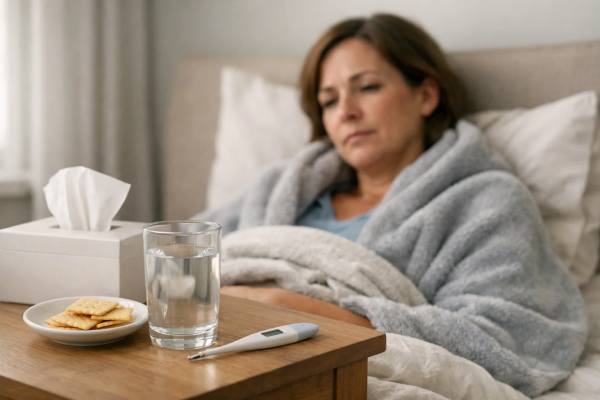
Norovirus is one of the fastest-moving causes of vomiting and diarrhea, and it often arrives with surprising force—fine at dinner, miserable by midnight. Although many people call it the “stomach flu,” it is not influenza. It is an acute gastrointestinal infection that spreads efficiently in households, schools, cruise ships, and care facilities because only a tiny amount of virus can make someone sick and the virus can persist on hands and surfaces. The benefit of understanding norovirus is practical: you can shorten the chaos. Knowing the typical symptom timeline helps you plan hydration and rest, recognizing the contagious window helps protect family and coworkers, and using the right cleaning approach reduces reinfection and household spread. This guide focuses on what matters most—how norovirus feels, when you are contagious, what recovery actually looks like, and when symptoms deserve medical attention.
Quick Overview
- Most people improve within 1–3 days, but hydration strategy often determines how rough the illness feels.
- You can be contagious before symptoms start and for at least 2 days after they stop.
- Home cleaning and handwashing with soap matter more than “quick sanitizing” routines.
- If vomiting prevents fluids for 8–12 hours or dehydration signs appear, seek medical care promptly.
Table of Contents
- What norovirus is and why it spreads
- Symptoms and typical timeline
- Contagious period and return rules
- How norovirus spreads and how to stop it
- Recovery care and safe symptom relief
- When to seek care and who is at risk
- After effects and preventing reinfection
What norovirus is and why it spreads
Norovirus is a group of viruses that infect the stomach and intestines, causing acute gastroenteritis—typically sudden vomiting, watery diarrhea, cramps, and nausea. People often call it the “stomach flu,” but that nickname is misleading. Influenza is a respiratory illness; norovirus primarily targets the gut. That distinction matters because prevention relies less on “cold season” habits and more on strict hand and surface hygiene.
Several features make norovirus unusually contagious.
A tiny amount can cause illness
Norovirus does not need a large exposure to take hold. A small number of viral particles can be enough, which is why brief contact—sharing a bathroom, cleaning vomit, preparing food while sick—can rapidly infect others.
It spreads before you realize you are sick
Many infections begin with a short incubation period and a dramatic symptom onset. People often go from normal to vomiting within hours. That speed is why outbreaks move through families and shared living spaces so effectively.
The virus is tough in the environment
Norovirus can persist on high-touch surfaces (bathroom fixtures, door handles, phones) and can survive routine cleaning methods that work well for other germs. It is also not reliably neutralized by every hand sanitizer or general-purpose cleaner, which can create a false sense of safety.
Multiple strains mean repeat infections
Immunity after infection is not reliably long-lasting and may be strain-specific. This is why someone can get norovirus more than once, even within the same year, especially during high-exposure seasons or in outbreak settings.
Where outbreaks tend to occur
Outbreaks cluster anywhere people share bathrooms, food, or close quarters:
- Childcare centers and schools
- Long-term care facilities
- Dormitories and camps
- Cruise ships and group travel
- Restaurants and catered events
Understanding these “why it spreads” factors is not just trivia. It explains why prevention requires more than staying home: you have to interrupt the specific routes the virus uses—hands, surfaces, and food handling.
Symptoms and typical timeline
Norovirus symptoms often feel abrupt and intense, but the illness is usually short. Knowing the typical timeline helps you decide whether you are likely dealing with norovirus and how aggressively to focus on hydration.
Incubation period
Symptoms commonly begin about 12 to 48 hours after exposure. Many people notice a “flip” from feeling normal to suddenly nauseated, chilled, and weak. Because the incubation is short, thinking back to what happened 1–2 days earlier (shared meals, sick contacts, group gatherings) can be more informative than reviewing the entire week.
Common symptoms
Norovirus most often causes:
- Sudden nausea and vomiting
- Watery diarrhea
- Abdominal cramps
- Low appetite and marked fatigue
Some people also have low-grade fever, headache, or body aches. Those symptoms can make the illness feel flu-like, but they are usually secondary to dehydration and the body’s inflammatory response.
How long it lasts
For many otherwise healthy adults, the worst symptoms peak in the first 24 hours and gradually improve over the next 1–2 days. A common pattern is:
- Rapid onset of nausea and vomiting
- Diarrhea that becomes more prominent as vomiting eases
- Gradual return of appetite and energy over several days
Even after the stomach settles, you may feel washed out for a week. That “post-viral” fatigue is common and does not necessarily mean the infection is still active.
How it can look different in children and older adults
- Young children may vomit more frequently and dehydrate faster because their fluid reserves are smaller.
- Older adults may have less obvious thirst signals and can become dehydrated without dramatic vomiting.
- People with chronic conditions may feel weaker sooner because illness stress reduces their margin for error.
When symptoms suggest something else
Norovirus is typically non-bloody. Seek medical guidance if you have:
- Blood in stool, black stools, or persistent severe abdominal pain
- High fever that does not improve
- Diarrhea lasting longer than a week without improvement
- Signs of dehydration that progress despite oral fluids
Norovirus can be miserable, but it is usually self-limited. The primary danger is dehydration, which is why the symptom timeline should immediately shift your focus to fluid replacement and monitoring.
Contagious period and return rules
A core challenge with norovirus is that your contagious window does not perfectly match how you feel. People often assume they stop spreading the virus when vomiting stops, but norovirus can still be shed after symptoms improve. That is why return-to-work and return-to-school decisions need a clear rule rather than a gut feeling.
When you are most contagious
You are typically most contagious from the moment symptoms start through the first couple of days. During active vomiting and diarrhea, viral particles are abundant, and spread happens easily through hands, surfaces, and accidental contamination.
Can you spread it before symptoms appear?
Yes, transmission can occur before you feel fully sick. Even mild early nausea or “just one loose stool” can be enough to contaminate hands or surfaces if hygiene is not meticulous.
How long are you contagious after you feel better?
Many people remain capable of spreading norovirus for at least 48 hours after symptoms stop. Some people shed viral material longer, especially young children, older adults, and immunocompromised individuals. The practical takeaway is not to isolate for weeks, but to treat the first several days after recovery as a “high hygiene” period.
When to return to work, school, and public activities
A widely used minimum standard is:
- Stay home until at least 48 hours after vomiting and diarrhea have fully stopped.
That rule reduces the highest-risk window for passing the virus to others. If you work in higher-risk environments, stricter policies are common.
Special situations where you should be stricter
Consider extra caution if you are:
- A food handler or cook
- A healthcare worker with direct patient contact
- Caring for infants, older adults, or medically fragile people
- Returning to a communal setting where outbreaks spread quickly
In these situations, even mild symptoms or a “nearly recovered” status can still pose a meaningful risk.
The most overlooked contagious behavior
The biggest mistake is preparing food for others too soon. If you live with other people, avoid cooking, assembling salads, or handling ready-to-eat foods until you have been symptom-free for at least 48 hours, and keep hand hygiene unusually strict for several additional days.
The point of return rules is not punishment—it is prevention. Norovirus spreads so efficiently that small choices during the recovery window can determine whether an illness remains one case or becomes a household chain reaction.
How norovirus spreads and how to stop it
Norovirus spreads primarily through a fecal–oral route: virus from an infected person’s stool or vomit ends up on hands, food, surfaces, or shared objects, and then reaches another person’s mouth. Because vomiting can disperse tiny droplets, a single episode can contaminate a surprisingly wide area. Prevention works best when you block multiple routes at the same time.
Handwashing is the main defense
For norovirus, soap-and-water handwashing is especially important. Wash hands:
- After using the bathroom or helping someone use it
- After cleaning vomit or diarrhea
- Before eating or preparing food
- After changing diapers or assisting a sick child
A practical standard is washing thoroughly for about 20 seconds, including fingertips and under nails. Hand sanitizers can be helpful as an add-on, but they should not replace soap and water when norovirus is suspected.
Bathroom and household containment
If possible:
- Assign one bathroom to the sick person.
- Keep personal items separate: towels, toothbrushes, cups, utensils.
- Remind everyone in the home to avoid touching their face and to wash hands before meals.
If only one bathroom is available, treat the bathroom as a high-risk zone for several days: wipe frequently touched surfaces often and wash hands immediately after leaving.
Cleaning after vomiting or diarrhea accidents
Use a careful, consistent approach:
- Put on disposable gloves if available.
- Remove visible material with disposable paper towels.
- Clean the area with detergent and water first.
- Disinfect using an appropriate disinfectant that is effective against norovirus (many households rely on properly diluted bleach solutions or registered products labeled for norovirus).
- Wash hands thoroughly after glove removal.
Because norovirus can persist on surfaces, quick wiping with a general cleaner may not be enough after active illness.
Laundry and soft surfaces
Wash contaminated clothing, bedding, and towels promptly:
- Handle carefully to avoid shaking contaminated fabric into the air.
- Use the warmest water appropriate for the fabric and dry thoroughly.
- Clean and disinfect laundry baskets or surfaces that held soiled items.
Food safety during and after illness
Norovirus outbreaks commonly involve food handling. To reduce risk:
- Do not prepare food for others while symptomatic.
- Avoid preparing food for others for at least 48 hours after symptoms stop.
- Focus on handwashing before any cooking or eating.
Stopping norovirus spread is not about one perfect trick. It is about repeating a few high-impact behaviors—soap-and-water handwashing, careful cleanup, and avoiding food prep during the contagious window—until the household is safely past the highest-risk days.
Recovery care and safe symptom relief
There is no specific antiviral cure for norovirus for most people. Recovery depends on hydration, rest, and symptom management that does not create new problems. The main goal is to prevent dehydration while your body clears the infection.
Hydration: the most important treatment
Dehydration risk rises when vomiting is frequent or diarrhea is watery and repeated. Effective hydration is usually small, steady, and electrolyte-aware.
Helpful strategies include:
- Take small sips every few minutes rather than drinking large amounts at once.
- Use oral rehydration solutions if diarrhea is ongoing, especially for children and older adults.
- If you cannot tolerate sweet solutions, try chilled fluids or small amounts more frequently.
- Use urine as feedback: very dark urine or minimal urination suggests you are falling behind.
For children who vomit easily, very small volumes can still work. A teaspoon-sized amount every 1–2 minutes can be more successful than offering a full cup.
What to eat while recovering
You do not need to “starve it out,” but you do need to reduce gut strain:
- Start with bland, low-fat foods: rice, toast, crackers, bananas, potatoes, oatmeal, broths, and lean proteins.
- Avoid heavy, greasy meals until stools normalize.
- If dairy worsens symptoms, pause it temporarily; some people have short-lived lactose sensitivity after gastroenteritis.
If you are breastfeeding, continuing breastfeeding is generally supportive for hydration and nutrition.
Medications: what can help and what to avoid
- Anti-nausea medicines can be very helpful when vomiting prevents hydration, but they are usually best discussed with a clinician, especially for children, pregnancy, and older adults.
- Anti-diarrheal medicines may reduce stool frequency in some adults with non-bloody diarrhea and no fever, but they should be avoided if you suspect a serious infection, have blood in stool, or have significant abdominal tenderness.
- Antibiotics do not treat viral gastroenteritis and are not routinely helpful for norovirus.
Rest and pacing
Even after vomiting and diarrhea stop, your body may need several days to rebuild energy. It is common to feel weak, lightheaded, or exercise-intolerant for a short period. Avoid jumping back into intense workouts or alcohol “to celebrate recovery” because both can worsen dehydration and gut irritation.
If you can keep fluids down, monitor your urine, and slowly reintroduce food, most norovirus infections resolve without complications. When symptoms persist or hydration fails, however, the next step should be medical care—not stronger home remedies.
When to seek care and who is at risk
Most healthy adults recover from norovirus at home, but some people dehydrate quickly or develop complications. The safest approach is to know which situations warrant early medical guidance and which symptoms demand urgent evaluation.
Higher-risk groups
People at greater risk of dehydration or severe illness include:
- Infants and young children
- Adults over 65
- Pregnant people
- People with kidney disease, heart failure, or diabetes
- Immunocompromised individuals (including some cancer therapies and transplant recipients)
- Anyone who is already frail, underweight, or nutritionally depleted
Risk is not just about age. It is also about “reserve.” Someone who starts slightly dehydrated, cannot access fluids easily, or lives alone may need help sooner.
Signs that dehydration is developing
Seek medical advice promptly if you notice:
- Dizziness on standing, faintness, or weakness that worsens
- Very dry mouth, cracked lips, or inability to produce tears (in children)
- Little or no urination, or very dark urine
- Confusion, unusual sleepiness, or significant irritability
- Rapid heartbeat or breathing that feels strained
In children, dehydration can be subtle. Fewer wet diapers, lethargy, and refusal to drink are especially important warning signs.
Symptoms that deserve urgent evaluation
Do not “wait it out” if any of the following occur:
- Blood in vomit or stool, or black stools
- Severe or worsening abdominal pain with tenderness
- Persistent high fever
- Signs of severe dehydration or inability to keep fluids down for 8–12 hours
- Severe headache with stiff neck, confusion, or fainting
- Chest pain, severe shortness of breath, or concerning weakness
When symptoms last longer than expected
Norovirus typically improves within a few days. If diarrhea persists beyond a week, if vomiting returns after improvement, or if weight loss begins, it is reasonable to reassess. Sometimes a different infection is involved, a medication is contributing, or post-infectious bowel changes are prolonging symptoms. Testing may be appropriate, especially if multiple household members remain ill or symptoms keep recurring.
A practical way to think about care is this: dehydration is the main threat. If hydration is not working at home, that is enough reason to seek medical help—regardless of whether you are confident it is “just norovirus.”
After effects and preventing reinfection
Many people expect to feel normal the moment vomiting stops. In reality, norovirus can leave behind a short “recovery tail” that affects digestion and energy, and it does not always provide strong long-term protection against future infections.
Common after effects
After acute gastroenteritis, it is common to experience:
- Temporary reduced appetite
- Mild nausea after larger meals
- A few days of loose stools before full normalization
- Fatigue and lower exercise tolerance
- Short-term food sensitivities, especially to fatty meals or dairy
These effects are usually temporary. A gradual return to normal meals—rather than a sudden “back to everything”—often improves comfort.
Post-infectious bowel changes
In some people, a gut infection can trigger lingering symptoms for weeks to months, such as abdominal discomfort, urgency, or changes in stool form. This is sometimes described as post-infectious irritable bowel syndrome. It does not mean the virus is still active; it often reflects altered gut sensitivity and motility during recovery. If you notice ongoing symptoms beyond several weeks, a clinician can help rule out other causes and guide supportive strategies.
Why reinfection can happen
Norovirus has multiple types, and immunity can be incomplete or short-lived. You may have partial protection against the exact strain you had, but you can still become ill from another strain later. This is why outbreaks can repeat in a community and why prevention remains important even after a recent illness.
Preventing reinfection in the same household
The highest-risk period for household spread and reinfection is the first several days after symptoms end. Helpful steps include:
- Maintain strict handwashing after bathroom use for at least a week.
- Continue high-touch surface cleaning during the recovery window.
- Avoid preparing food for others until at least 48 hours symptom-free.
- Wash towels, bedding, and clothing that may have been contaminated.
A realistic recovery mindset
The goal is not to disinfect your entire home indefinitely. It is to concentrate your efforts where norovirus actually spreads: hands, bathrooms, and food preparation. When you combine high-yield cleaning with hydration and pacing, most people recover fully and reduce the odds of passing the virus forward.
If symptoms keep recurring, last longer than expected, or involve blood, severe pain, or ongoing weight loss, treat that as a reason for evaluation rather than assuming it is “just another stomach bug.”
References
- About Norovirus | Norovirus | CDC 2024
- Norovirus | Yellow Book | CDC 2025
- Systematic review and meta-analysis of enteric virus shedding in human excretions – PMC 2025 (Systematic Review)
- Norovirus: An Overview of Virology and Preventative Measures – PMC 2022 (Review)
- The Efficacy of Commercial Surface Sanitizers against Norovirus on Formica Surfaces with and without Inclusion of a Wiping Step – PMC 2022
Disclaimer
This article is for educational purposes only and does not replace medical advice, diagnosis, or treatment. Norovirus can cause severe dehydration, especially in infants, older adults, pregnant people, and those with chronic medical conditions or weakened immune systems. Seek urgent medical care for signs of dehydration, inability to keep fluids down, blood in vomit or stool, black stools, severe or worsening abdominal pain, confusion, fainting, or chest pain. If symptoms persist longer than expected or recur, consult a qualified clinician for evaluation and personalized guidance.
If you found this article helpful, please consider sharing it on Facebook, X (formerly Twitter), or any platform you prefer.