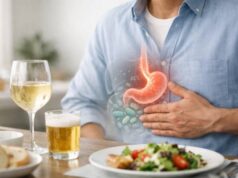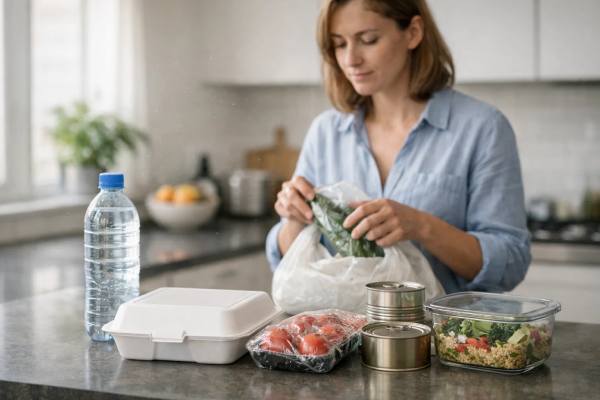
Microplastics have moved from an environmental headline to something many people worry about at the dinner table. Because the digestive tract is a primary route of exposure, it is reasonable to ask whether tiny plastic particles in food, water, and packaging can affect the gut lining, the microbiome, and symptoms like bloating or irregular stools. At the same time, the science is still catching up: researchers can detect microplastics in foods and in human stool, but it is much harder to translate that into clear cause-and-effect answers about long-term health.
This article breaks down what is known, what is plausible, and what is still uncertain. You will learn where food packaging fits into everyday exposure, what happens to particles after you swallow them, which gut-related findings are strongest in animal and lab studies, and which practical steps can reduce exposure without turning eating into a stress test.
Essential Insights on Microplastics and Digestion
- Most swallowed microplastics appear to pass through the gut, but smaller particles may interact more intensely with the gut lining.
- Heat, abrasion, and time are key drivers of particle shedding from many plastic food-contact materials.
- Human evidence linking microplastics to gut disease is limited and does not yet prove causation.
- A high-yield approach is to avoid heating food in plastic and switch hot liquids and leftovers to glass or stainless steel.
Table of Contents
- Microplastics and nanoplastics in plain terms
- How food packaging can add to exposure
- What happens after you ingest plastic particles
- Gut microbiome and barrier effects
- What human studies suggest and why it is hard
- Practical ways to reduce exposure without obsessing
Microplastics and nanoplastics in plain terms
Microplastics are small plastic particles typically defined as less than 5 millimeters—anything from a visible fragment to something closer to a grain of sand. Nanoplastics are smaller still, often discussed as particles under 1 micrometer (and sometimes under 100 nanometers, depending on the field). That definition problem matters because the smaller the particle, the harder it is to measure—and the more likely it is to behave differently in the body.
Where these particles come from
Microplastics enter the food chain in two broad ways:
- Primary microplastics: manufactured small particles (for example, certain industrial abrasives).
- Secondary microplastics: fragments and fibers created as larger plastics break down through sunlight, heat, and physical wear.
For everyday eating, secondary sources dominate. Common examples include fibers shed from synthetic textiles, fragments from plastic litter in waterways, and particles released during manufacturing and transport.
Microplastics are not the same as “chemicals in plastic”
A useful distinction: plastic particles are different from chemical migrants (such as plasticizers, stabilizers, or residues) that can move from packaging into food. They can overlap—particles can carry additives, and additives can migrate even when particles are not present—but the health questions are not identical. Microplastics research often focuses on particle size, shape (fiber vs fragment), and polymer type, while chemical migration research focuses on dose, metabolism, and hormone or organ effects.
Why exposure numbers vary so much
You may see wildly different estimates of how many particles people ingest. That variation is not just media hype; it reflects real scientific challenges:
- Different labs use different detection thresholds (a method that “sees” smaller particles will count more).
- Fibers are common contaminants in sampling equipment and air, so contamination control matters.
- Many studies report particle counts, but health effects may relate more to mass, surface area, and chemistry than counts alone.
A grounded takeaway is this: microplastics are detectable across many foods and beverages, but precise personal “daily intake” numbers remain uncertain—and that uncertainty should shape how strongly we interpret health claims.
How food packaging can add to exposure
Food packaging is designed to be lightweight, durable, and inert enough for food contact, but “inert” does not mean “no shedding.” Packaging can contribute to microplastic exposure through physical wear and, separately, through chemical migration. The situations that matter most tend to involve heat, friction, and time.
The three big drivers: heat, abrasion, and storage time
Think of microplastic shedding from packaging as a mechanical process:
- Heat softens polymers and speeds breakdown. Hot soup in a plastic container or microwaving in plastic are higher-shedding scenarios than cold storage.
- Abrasion creates particles. Scratching a plastic container with utensils, shaking a bottle repeatedly, or repeated washing and reuse can increase wear.
- Time increases contact. The longer food sits in contact with a plastic surface—especially if it is warm, acidic, salty, or fatty—the more opportunity there is for particles and additives to move.
Common real-world scenarios
Not all packaging is equal, and not all use cases carry the same risk. High-interest scenarios include:
- Bottled beverages: Bottles, caps, and liners can contribute particles, especially with frequent opening, squeezing, or temperature changes.
- Takeout containers and delivery meals: Hot, oily foods and long holding times can be a stress test for food-contact materials.
- Single-use cups and lids: Hot drinks increase polymer stress; lids and sip openings add friction.
- Flexible packaging and pouches: Repeated bending and crinkling can increase surface wear, and some multilayer materials are hard to study because they are complex.
Why “microwave-safe” does not mean “shedding-free”
Microwave-safe labeling generally refers to not melting, sparking, or releasing known hazards under certain conditions. It does not necessarily guarantee minimal particle shedding across all temperatures, heating durations, and food types. From a gut-health perspective, the practical question is not whether a container survives the microwave—it is whether repeated heating changes what contacts your food.
What about non-plastic packaging
Switching away from plastic can be helpful, but it is not a perfect fix. Paper-based packaging can include coatings, and even glass and metal can have lids, seals, or linings. The goal is not “zero exposure,” which is unrealistic. The goal is reducing the highest-yield sources you can control, especially those tied to heat and repeated wear.
What happens after you ingest plastic particles
After you swallow microplastics, most evidence suggests a large fraction is excreted. That makes intuitive sense: the gut is built to move non-digestible material through. The unsettled questions are about what happens during transit—how particles interact with mucus, gut bacteria, and the intestinal barrier—and whether very small particles can cross into tissues.
Transit through the gut is not biologically “neutral”
Even if particles leave the body, they can still influence the gut environment while present. Potential interactions include:
- Mucus layer contact: The gut’s mucus layer is a protective barrier and habitat for microbes. Particles may bind to mucus differently depending on size and surface chemistry.
- Mechanical irritation and oxidative stress: In cell and animal models, some particles can trigger stress responses in intestinal cells, especially at high concentrations or with very small particles.
- Immune sampling sites: Specialized regions (such as Peyer’s patches) are designed to sample gut contents. This creates a plausible pathway for tiny particles to interact with immune cells.
Particle size and shape likely matter more than people expect
A large fragment behaves like inert debris. A small particle has much more surface area relative to its mass, which can increase reactivity. Fibers and irregular fragments may also behave differently than smooth spheres. One challenge in the literature is that many lab studies use uniform, perfectly shaped particles that do not resemble real-world mixtures.
Potential for crossing the gut barrier
The idea that microplastics can “enter the body” is both important and easy to misunderstand. Current evidence suggests:
- Large particles are unlikely to cross an intact intestinal barrier in meaningful amounts.
- Smaller particles (including nanoplastics) may cross more readily in lab models, but dose and experimental conditions often differ from daily life.
- Barrier integrity matters: inflammation, infection, alcohol excess, and certain medications can temporarily increase intestinal permeability, which could change uptake dynamics.
Co-exposures: additives and hitchhikers
Microplastics can carry plastic additives and environmental contaminants on their surfaces. They can also serve as a surface for microbes to attach. Whether these “hitchhiking” effects matter inside the human gut is still uncertain, but it helps explain why researchers look beyond the particle itself. In real life, the gut is exposed to mixtures—food residues, bile acids, and microbes—so the most realistic questions are about combined effects, not one isolated plastic type.
A balanced summary is that most ingested microplastics likely exit the body, but the gut remains the most plausible place for near-term biological effects, especially related to barrier function and microbial ecology.
Gut microbiome and barrier effects
When people worry about microplastics and gut health, they are often thinking about the microbiome: the community of bacteria and other microbes that help regulate digestion, immune balance, and inflammation. The strongest signals so far come from animal studies and lab models, where researchers can control exposure and look directly at gut tissue.
What animal and lab studies commonly report
Across many experimental designs, recurring findings include:
- Shifts in microbial composition and diversity: Some studies report reduced diversity or changes in the balance between bacteria associated with anti-inflammatory metabolites and those linked to inflammation.
- Changes in short-chain fatty acids: These microbial metabolites (often associated with fiber fermentation) are a common endpoint because they relate to gut barrier maintenance and immune signaling.
- Barrier and mucus disruption: Some studies show reduced tight junction proteins, thinner mucus layers, or increased markers of permeability.
- Low-grade inflammation and oxidative stress: Increased inflammatory signaling in gut tissue is a frequent outcome in higher-exposure models.
These findings are biologically plausible, but they do not automatically translate to typical human exposure. Dose, particle type, and exposure duration can differ dramatically between experiments and daily life.
The biggest limitations to keep in mind
Three issues can make results look more certain than they are:
- Unrealistic dosing: Some studies use concentrations far higher than most people would encounter through diet.
- Simplified particles: Smooth polystyrene spheres are common in experiments but are not the dominant form in food.
- Short exposure windows: Gut changes can look dramatic in short studies, but long-term adaptation and compensation are rarely captured.
Why the microbiome question still matters for humans
Even with limitations, microbiome research helps identify mechanisms to watch. The gut environment is sensitive to surfaces, bile acids, and dietary patterns. If microplastics subtly alter fermentation patterns or barrier integrity, the effects might show up first in people who already have a vulnerable gut—those with inflammatory bowel disease, chronic stress, frequent antibiotic exposure, or very low fiber intake.
A practical resilience lens
While it is too early to claim a specific “anti-microplastic diet,” supporting gut resilience is a reasonable strategy that helps regardless of microplastic exposure:
- Aim for consistent, diverse plant fiber (vegetables, legumes, whole grains, nuts, seeds).
- Include naturally fermented foods if tolerated.
- Avoid extreme restriction that reduces diet diversity, because diversity is one of the most reliable predictors of a robust microbiome.
In other words, reducing exposure is sensible, but strengthening the gut’s baseline defenses may matter just as much—especially while the evidence base is still developing.
What human studies suggest and why it is hard
Human research is where people want definitive answers, and it is where the evidence is currently thinnest. Studies have detected microplastics in human stool, and some observational work explores links with symptoms or disease. The problem is not lack of interest—it is that measuring microplastics accurately in humans is difficult, and gut outcomes have many confounders.
What we can say with more confidence
- Microplastics can be detected in human stool samples, which supports the idea that ingestion is common and that the gut is a major exposure route.
- Food and beverage exposure is real, and packaging is one plausible contributor, especially in high-heat, high-contact scenarios.
- The gut is a biologically plausible target organ because it is where particles concentrate during transit.
What remains uncertain
Key unknowns include:
- Dose and threshold: We do not know what level of exposure, over what duration, would be expected to cause measurable gut harm in humans.
- Particle profile: Different polymers, sizes, and shapes may have different effects, but human studies rarely characterize exposures in enough detail.
- Direction of causality: If people with gut inflammation have higher microplastics in stool, it could mean microplastics contribute to inflammation—or that inflammation changes gut permeability and retention, increasing measured particles.
- Symptom specificity: Diarrhea, bloating, and abdominal pain have many causes. Without careful control, it is easy to over-attribute symptoms to microplastics.
Why it is so hard to study properly
High-quality human evidence requires standardized measurement, reliable exposure tracking, and meaningful health endpoints. Microplastics research is still building those tools. Two labs can analyze the same sample and report different counts because of differences in filtering, contamination control, and detection limits. Until methods converge, comparing studies remains challenging.
What “we don’t know” should change about your decisions
Uncertainty cuts both ways. It means we cannot responsibly claim that everyday microplastic exposure is harmless, but it also means we should be cautious about alarming claims that imply severe gut damage is inevitable. A reasonable stance is:
- Reduce exposure from obvious, controllable sources (especially heat and worn plastics).
- Keep perspective: overall dietary quality, fiber intake, sleep, and stress management have stronger evidence for gut outcomes than any microplastic avoidance strategy.
Human research is accelerating, but for now, the best approach is careful, practical risk reduction paired with habits that support gut health in well-established ways.
Practical ways to reduce exposure without obsessing
If you want to lower microplastic exposure, the most effective strategy is not to overhaul your life. It is to target the scenarios most likely to increase shedding: heat, friction, and repeated wear. These steps are designed to be realistic and high-yield.
High-impact changes for most households
Consider adopting a short list of defaults:
- Do not heat food in plastic. Transfer leftovers to glass or ceramic before microwaving, and avoid pouring very hot foods into plastic containers.
- Use glass or stainless steel for hot drinks and soups. Heat is a common amplifier of both particle shedding and chemical migration.
- Replace worn plastic containers. If a container is cloudy, scratched, or smells like old food, it has likely experienced surface wear.
- Avoid aggressive scraping and scouring. Use softer cleaning tools and avoid cutting or stirring vigorously inside plastic storage containers.
Smart food and beverage habits
These are not “purity rules.” They are targeted adjustments:
- Reduce reliance on single-use bottled beverages when feasible. If you frequently drink bottled water, switching to filtered tap water (where safe) can meaningfully cut packaging contact.
- For takeout, minimize hot holding time. If a meal arrives in plastic, transfer it to a plate soon rather than keeping it in the container.
- Be mindful with oily, acidic, and salty foods. These foods can increase chemical migration, and they often come hot, which also increases shedding risk.
Special considerations for infants and children
Early life is a period of rapid growth and higher intake per body weight, so many people prefer extra caution:
- Let boiling liquids cool slightly before contacting plastic.
- Consider glass bottles or silicone components if practical and safe for your household.
- Avoid reheating formula or milk in plastic containers.
What not to do
Some strategies can backfire:
- Over-restricting foods with known nutritional benefits (like fruits, vegetables, and seafood) because of microplastic fears.
- Chasing detox protocols. There is no proven microplastic “cleanse,” and aggressive supplements can irritate the gut.
- Assuming “plastic-free” always means safer. Non-plastic packaging can still have coatings or adhesives, and the bigger goal is reducing high-heat, high-wear contact.
The best plan is a calm one: reduce the most controllable exposures, then focus on gut-supporting basics—fiber, hydration, regular meals, and stress buffering. That combination improves digestive health now while the science continues to clarify long-term risks.
References
- Effects of Microplastic Exposure on Human Digestive, Reproductive, and Respiratory Health: A Rapid Systematic Review 2024 (Systematic Review)
- Impact of microplastics on the human gut microbiome: a systematic review of microbial composition, diversity, and metabolic disruptions 2025 (Systematic Review)
- Effect of microplastics and nanoplastics in gastrointestinal tract on gut health: A systematic review 2025 (Systematic Review)
- Nano- and Microplastics Migration from Plastic Food Packaging into Dairy Products: Impact on Nutrient Digestion, Absorption, and Metabolism 2023 (Review)
Disclaimer
This article is for educational purposes and is not a substitute for medical advice, diagnosis, or treatment. Research on microplastics and human gut health is evolving, and many findings come from animal studies or laboratory models that may not reflect typical real-world exposure. If you have persistent digestive symptoms (such as ongoing diarrhea, constipation, blood in stool, severe abdominal pain, unexplained weight loss, or dehydration), or if you have a chronic gastrointestinal condition, consult a qualified healthcare professional for personalized evaluation and care.
If you found this article helpful, please consider sharing it on Facebook, X (formerly Twitter), or any platform you prefer.