
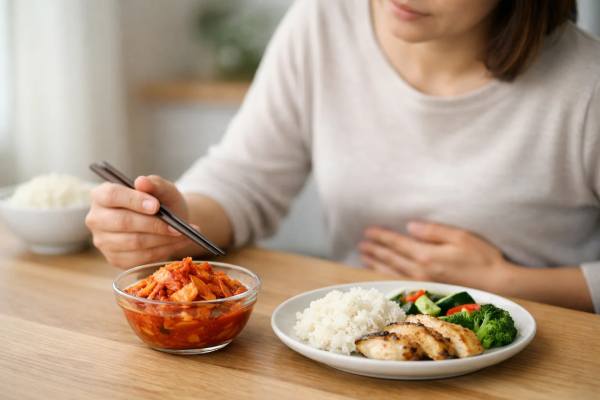
Bloating can feel deceptively simple—just “too much gas”—yet it often reflects a complex mix of gut motility, microbial fermentation, food tolerance, and nervous-system sensitivity. Kimchi sits right in the middle of that complexity. As a fermented vegetable food, it can offer live microbes, organic acids, and small amounts of fiber that may support digestive comfort for some people. At the same time, many kimchi recipes include common IBS triggers such as garlic, onion, spice, and high salt—ingredients that can amplify symptoms when the gut is already reactive.
This article walks you through a practical, evidence-informed way to decide whether kimchi is worth trying for bloating, how to start without “overdoing it,” and how to recognize when fermented foods are more likely to backfire. The goal is not perfection—it is predictability.
Essential Insights
- Small servings can support gut regularity and tolerance more reliably than large portions.
- Some people feel less bloated when kimchi replaces harder-to-digest sides, not because kimchi “cures” gas.
- Garlic, onion, and spicy pepper can trigger IBS symptoms even when the kimchi is fermented.
- If symptoms spike within hours of eating kimchi, reduce the dose or pause and reassess your triggers for two weeks.
- Choose milder varieties and increase by teaspoons, not by “bowls,” especially if you have IBS.
Table of Contents
- What Kimchi Really Is
- How Kimchi Can Reduce Bloating
- Why Kimchi Triggers IBS Symptoms
- Choosing a Kimchi Your Gut Tolerates
- How to Start and Titrate Safely
- Safer Alternatives and When to Get Help
What Kimchi Really Is
Kimchi is not a single food—it is a category. Most people picture the classic napa cabbage version (baechu kimchi), but there are many styles made with radish, cucumber, mustard greens, or watery brines. What they share is lactic acid fermentation, a process where naturally occurring microbes (often lactic acid bacteria) convert sugars into organic acids. That acid is why kimchi tastes tangy and why it can keep for weeks in the refrigerator.
From a digestion perspective, three features matter most:
- Fermentation changes the “starting material.” Some carbohydrates are partially broken down, and the final food tends to be more acidic. This can make the vegetables easier to tolerate for certain people, but it does not automatically make them IBS-safe.
- Microbes vary widely. The exact strains and counts depend on ingredients, salt concentration, fermentation time, and whether the product is pasteurized. Two jars can taste similar and still behave differently in your gut.
- Kimchi is usually a condiment portion food. In traditional eating patterns, it is often a few bites alongside rice and protein, not a full salad bowl. That portion reality matters because many side effects are dose-related.
A common misunderstanding is that fermented foods are interchangeable with probiotic supplements. They are not. Supplements provide defined strains and doses; kimchi provides a variable mix plus fiber, spice, salt, and acids. That mix can be beneficial, neutral, or irritating depending on your baseline gut sensitivity, constipation pattern, and trigger foods.
For bloating, the most useful way to think about kimchi is as a tolerance test in small doses. If your gut handles it, kimchi can be a convenient tool. If your gut does not, the same features that make kimchi “active” can make it feel like gasoline on a fire.
How Kimchi Can Reduce Bloating
When kimchi helps bloating, it usually happens through practical mechanisms rather than magic. Here are the most common “why it worked” patterns people describe—and what may be happening underneath.
It improves regularity, so gas has less time to build
For many, bloating is tied to constipation or slow transit. When stool moves slowly, microbes have more time to ferment leftovers, producing gas and distension. A small daily serving of kimchi can support regularity in a few ways: it adds a bit of fiber, it may stimulate digestive secretions through acidity and spice, and it can make meals feel more “complete,” nudging a more consistent eating rhythm. Even mild improvements in stool frequency can reduce day-long pressure.
It “replaces” a higher-bloat side dish
Sometimes the benefit is substitution. If kimchi replaces a large raw salad, a creamy sauce, or a high-sugar snack, bloating can improve simply because the overall meal becomes easier to digest. This is especially true when kimchi is used as a small flavor accent rather than a main volume food.
Fermentation may reduce some hard-to-digest components
Fermentation can lower certain compounds that contribute to gas in some foods. In real life, this varies by recipe and fermentation time, and it is not a guarantee. Still, for some people, fermented vegetables feel gentler than the same vegetables in a raw, unfermented form.
It supports microbial diversity for some people
Emerging research suggests fermented foods can influence the gut ecosystem. That does not mean everyone should eat kimchi; it means that, for the right person, fermented foods may be one helpful input among many. Importantly, studies on fermented foods and IBS show mixed results: improvements may show up in global symptoms for some participants, while bloating itself may not consistently drop in every analysis. In other words, kimchi can be part of a bigger plan, but it is rarely the whole plan.
A realistic “success story” with kimchi is modest: less day-to-day heaviness, fewer nights of tightness after dinner, or more predictable bowel movements. If you are chasing a dramatic overnight change, you are more likely to overshoot the dose and trigger symptoms.
Why Kimchi Triggers IBS Symptoms
IBS is not only about what is in the gut—it is also about how the gut senses and responds. Many people with IBS have heightened visceral sensitivity, meaning normal stretching from gas or food can feel painful. Kimchi can trigger symptoms in IBS for several overlapping reasons.
Garlic and onion are common hidden drivers
Many kimchi recipes contain garlic, onion, scallion, or garlic chives. These are frequent IBS triggers because they contain fermentable carbohydrates that can pull water into the intestine and create more gas when bacteria break them down. Fermentation does not reliably remove that trigger effect. If garlic and onion are already known problems for you, kimchi is automatically a higher-risk choice unless you find a variety made without them.
Spice can amplify gut sensitivity
Chili pepper (often as gochugaru) can increase burning, urgency, or cramping in sensitive people. This is not an allergy; it is an irritation and nerve-response pattern. Some people tolerate spice in small amounts but not when they are already flaring.
Cabbage is a gas-prone vegetable for some
Even without garlic and onion, cabbage and other cruciferous vegetables can produce gas during digestion. Fermentation may help some people tolerate cabbage, but others still react—especially if the serving size is large.
Histamine and “fermented food intolerance” patterns
Some people report headaches, flushing, hives, or a sudden worsening of gut symptoms after fermented foods. This can overlap with histamine intolerance patterns or sensitivity to biogenic amines. Kimchi is not the only culprit—aged cheeses, cured meats, and kombucha can do similar things. If you notice a multi-system reaction (not just gas), treat that as a different category than typical IBS bloating.
Salt and acidity can worsen upper-gut symptoms
Kimchi is often salty and acidic. That combination can aggravate reflux, nausea, or stomach burning in susceptible people. Upper-gut discomfort can be misread as “bloating,” even when the issue is irritation rather than gas.
The timing of symptoms can help you troubleshoot. Bloating that peaks 6–24 hours later may point toward fermentation of carbohydrates in the lower gut. Symptoms within 30–120 minutes—burning, urgency, cramping—often suggest spice, acidity, or a strong gut-nerve response. Either way, the solution is usually the same: reduce the dose, simplify the recipe, or pause entirely.
Choosing a Kimchi Your Gut Tolerates
If you want to try kimchi for bloating, the jar you choose matters as much as the amount you eat. The best approach is to lower the irritant load while keeping the potential benefits.
Start with milder styles when possible
- White kimchi (baek kimchi): Typically no chili pepper, often gentler for people who react to heat.
- Watery radish styles (such as dongchimi): Can be milder, but still may contain garlic or scallion.
- “Less spicy” cabbage kimchi: Useful if spice is your main trigger, but check the ingredient list carefully.
Scan the ingredient list like a detective
If you have IBS, look for obvious and not-so-obvious triggers:
- Garlic, onion, scallion, leek, chive, garlic powder
- Apple, pear, or added fruit purees (sometimes used to feed fermentation)
- Sweeteners (some people do fine; others do not)
- Very spicy pepper blends
Also consider fish sauce or shrimp paste if you are sensitive to certain proteins or if you follow dietary restrictions.
Pay attention to processing and storage
Refrigerated kimchi is more likely to contain live microbes than shelf-stable versions, which may be heat-treated. That said, “live” does not automatically mean “better for your IBS.” Some sensitive people do better with less microbial activity. If you tend to react to kombucha or other fermented foods, a milder, less “active” kimchi—or a completely different strategy—may suit you better.
Choose “portion-friendly” packaging
A large jar can tempt large servings. If you are trying kimchi as a digestive experiment, smaller containers can help you stay in the “condiment range” instead of sliding into “meal-sized” portions.
Home ferments require extra care
Homemade kimchi lets you control garlic, onion, spice, and salt, which can be a major advantage. It also requires careful hygiene, correct salting, and proper refrigeration. If you are immunocompromised or medically fragile, discuss fermented foods with your clinician before making them a daily habit.
The goal is not the “healthiest kimchi on paper.” The goal is the kimchi you can tolerate consistently—because consistency is what lets you learn whether it truly affects your bloating.
How to Start and Titrate Safely
The most common mistake with kimchi is starting with a full serving. For bloating and IBS, your best tool is dose control.
A gentle two-week titration plan
Use this plan if you are stable (not in a severe flare) and you want a structured trial:
- Days 1–3: 1 teaspoon (about 5 g) once daily with a meal.
- Days 4–7: If tolerated, increase to 2 teaspoons daily (or 1 teaspoon twice daily).
- Week 2: Increase to 1 tablespoon (about 15 g) once daily if symptoms are still stable.
For many people with IBS, 1–2 teaspoons is enough to test tolerance. You do not need large doses to get information.
How to make the trial “clean”
- Keep the rest of your diet steady for these two weeks. If you change five things at once, you will not know what helped or hurt.
- Eat kimchi with a balanced meal rather than on an empty stomach. This reduces the chance of acid or spice irritation.
- Track only a few outcomes: abdominal pressure, pain, stool frequency, and urgency. A simple 0–10 rating works.
What mild symptoms are normal
A small increase in gas for a few days can be normal when you add fermented foods or fiber. If the symptoms are mild and improving, you can hold the dose steady rather than escalating.
When to scale back or stop
Pause or reduce the dose if you get:
- New or clearly worse cramping
- Diarrhea or urgency that disrupts your day
- Significant reflux, burning, or nausea
- System-wide symptoms (flushing, hives, headaches) that cluster after fermented foods
If symptoms worsen, do not force adaptation by “pushing through.” Instead, drop back to the last tolerated dose for 3–5 days. If symptoms remain problematic even at 1 teaspoon, kimchi is not a good match right now.
Small tweaks that improve tolerance
- Choose a milder variety or a version without chili.
- Reduce frequency: every other day can be more tolerable than daily.
- Keep servings small but consistent; big swings are harder on sensitive guts.
A successful kimchi routine is boring on purpose. Predictable inputs create predictable outcomes—and that is how you learn what your body actually does with fermented foods.
Safer Alternatives and When to Get Help
If kimchi triggers bloating or IBS symptoms, you still have options—both fermented and non-fermented. The key is to match the tool to the pattern behind your symptoms.
If constipation is the main driver
Bloating that worsens over the day and improves after a bowel movement often responds best to constipation-focused strategies:
- Add soluble fiber gradually (many people tolerate this better than large amounts of raw vegetables).
- Prioritize consistent hydration and meal timing.
- Consider a structured, clinician-guided plan if stools are hard, infrequent, or incomplete.
In this situation, kimchi may help as a small condiment, but it is rarely the central fix.
If you suspect food-trigger bloating
If you can predict bloating after certain meals, a short-term elimination-and-reintroduction approach can be more informative than adding fermented foods. Many IBS plans use a temporary reduction in fermentable carbohydrates, followed by careful reintroduction to identify personal triggers. This helps you avoid needlessly restricting foods long-term.
If fermented foods seem to be the problem
If multiple fermented foods trigger symptoms—kimchi, kombucha, sauerkraut, kefir, aged cheeses—consider stepping away from fermented foods for two weeks, then retrying a single item in a tiny dose. That pattern can reveal whether fermentation itself is a driver, or whether the issue is a specific ingredient such as garlic, onion, or spice.
When to evaluate bloating and belly pain
Bloating is common, but certain features deserve medical evaluation, especially if they are new or worsening:
- Unintentional weight loss
- Blood in stool or black stools
- Persistent fever, vomiting, or dehydration
- Anemia, severe fatigue, or night symptoms that wake you
- New onset of significant symptoms after age 50
- A family history of inflammatory bowel disease, celiac disease, or colorectal cancer
Also consider evaluation if you have constipation that does not respond to basic steps, or if pain is frequent enough to limit school, work, sleep, or eating.
Kimchi can be a useful experiment, but it should not become a distraction from bigger levers: stool pattern, trigger identification, stress physiology, and appropriate medical screening when red flags appear.
References
- World Gastroenterology Organisation Global Guidelines: Probiotics and Prebiotics 2024 (Guideline)
- British Society of Gastroenterology guidelines on the management of irritable bowel syndrome 2021 (Guideline)
- Efficacy of fermented foods in irritable bowel syndrome: a systematic review and meta-analysis of randomized controlled trials 2025 (Systematic Review and Meta-Analysis)
- Does kimchi deserve the status of a probiotic food? 2024 (Review)
- An umbrella review of meta-analyses on the low-FODMAP diet in IBS 2026 (Umbrella Review)
Disclaimer
This article is for educational purposes and is not a substitute for personal medical advice, diagnosis, or treatment. Digestive symptoms such as bloating and IBS can have multiple causes, and what helps one person may worsen symptoms in another. If you are pregnant, immunocompromised, have inflammatory bowel disease, take medications that interact with high-amine foods, or you have alarm symptoms (such as bleeding, unintentional weight loss, persistent vomiting, anemia, fever, or severe pain), seek guidance from a qualified clinician promptly. For ongoing IBS symptoms, consider working with a gastroenterology clinician and a registered dietitian for safe, individualized nutrition planning.
If you found this helpful, please share it on Facebook, X (formerly Twitter), or any platform you prefer so others can use it to make more confident, gut-friendly choices.





