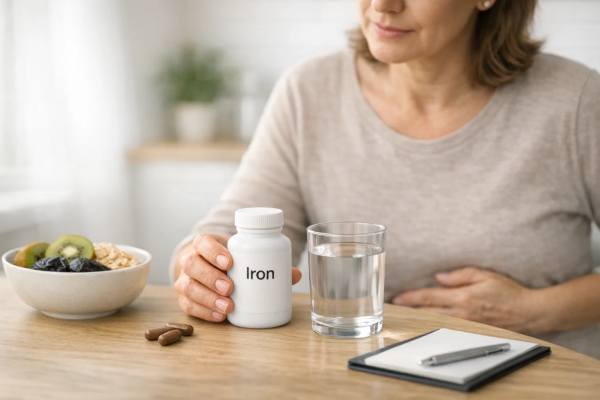
Iron supplements can be life-changing when iron deficiency causes fatigue, shortness of breath, hair shedding, restless legs, or low exercise tolerance. The downside is familiar: nausea, stomach discomfort, and constipation that can make people quit before their iron stores recover. The good news is that constipation is not an unavoidable price of treatment. In many cases, the problem is the dose (too high), the schedule (too frequent), or the formulation (harder to tolerate), not iron itself. Newer guidance and practical experience increasingly favor smaller doses, smarter timing, and early constipation support rather than pushing through misery. This article explains why iron slows the gut, which forms tend to be easiest on digestion, how to choose a dose that still works, and what to do if you feel blocked, bloated, or backed up—without sacrificing your progress.
Top Highlights for Taking Iron Without Getting Stuck
- Lower-dose, once-daily or every-other-day iron often improves tolerance while still raising hemoglobin and ferritin over time.
- Some “gentler” forms may reduce nausea and constipation for certain people, but label-reading for elemental iron matters more than brand claims.
- Constipation prevention works best when started early: fluids, a consistent bowel routine, and an osmotic option if stools harden.
- If oral iron repeatedly fails or absorption is unlikely, intravenous iron can restore stores without ongoing gut side effects.
Table of Contents
- Why iron supplements cause constipation
- Best iron forms for sensitive guts
- Dosing strategies that reduce side effects
- Absorption tips without stomach upset
- Constipation fixes that work while on iron
- When to switch approaches and get checked
Why iron supplements cause constipation
Iron-related constipation is not “in your head,” and it is not a character flaw. It is a predictable gut response to a mineral that is both essential and irritating at higher doses.
One major reason is unabsorbed iron. Only a portion of an oral dose is absorbed in the upper small intestine; the rest travels onward. In the gut, iron can:
- Bind and dry out stool, making it firmer and harder to pass.
- Change the gut environment, altering which microbes thrive and how gases are produced.
- Increase oxidative stress in the gut lining at high local concentrations, which can trigger discomfort and slow motility in susceptible people.
Constipation is more likely when any of these overlap with baseline constipation drivers such as dehydration, low fiber intake, low activity, travel, thyroid issues, or medications that slow the bowel (opioids, certain antidepressants, anticholinergic agents, calcium supplements).
The pattern often looks like this: the first few days on iron are tolerable, then stools gradually become drier, urges become less frequent, and bloating increases because stool is sitting longer. People frequently respond by adding more fiber suddenly, which can backfire if stool is already hard and movement is already slow.
It also helps to separate normal, expected changes from true constipation problems:
- Black or dark green stools are common with oral iron and do not automatically mean constipation or bleeding.
- Mild nausea is common early and often improves with dose adjustments.
- Painful straining, pellet-like stool, and skipped days are red flags that you need a constipation plan, not just patience.
Two practical insights improve outcomes:
- The dose that feels “strong” is often stronger than necessary. Many people start with high elemental iron amounts because the tablet looks standard, not because their body needs that much per day.
- Constipation prevention works best before constipation becomes severe. The bowel is easier to keep moving than to restart once stool is retained.
If you remember nothing else: iron constipation is usually a dosing and stool-management problem that can be solved while still treating the deficiency.
Best iron forms for sensitive guts
When people say “iron makes me constipated,” they often mean a specific formulation at a specific dose. The goal is to match the form and elemental iron amount to your tolerance and your deficiency severity.
First, understand elemental iron
Iron labels can be confusing because the pill weight is not the iron amount. What matters for correcting deficiency is elemental iron, not total compound weight. Common examples (check your own label because products vary):
- Ferrous sulfate 325 mg often provides about 65 mg elemental iron
- Ferrous gluconate 325 mg often provides about 35 mg elemental iron
- Ferrous fumarate 325 mg often provides about 106 mg elemental iron
A person who “switches brands” without checking elemental iron may accidentally increase the dose and worsen constipation.
Traditional iron salts
- Ferrous sulfate is widely used and inexpensive, but it is also the form most people associate with nausea and constipation, especially at higher elemental doses.
- Ferrous gluconate often feels gentler mainly because it typically delivers less elemental iron per tablet.
- Ferrous fumarate is more concentrated, which can be helpful for dosing flexibility but may be harsher if you take the same “one tablet” habit.
These salts can work well when the dose is right, but many people tolerate them better with a lower dose and smarter timing.
“Gentler” and alternative formulations
Some people do better with forms designed to reduce gut irritation or improve absorption:
- Ferrous bisglycinate (chelated iron): often marketed as easier on the stomach. Some evidence suggests fewer gastrointestinal complaints for certain groups at comparable iron goals.
- Polysaccharide iron complex: sometimes better tolerated, but response varies.
- Carbonyl iron: a slower-release style of elemental iron; may reduce peak irritation, but constipation can still occur at higher doses.
- Heme iron polypeptide or heme-based supplements: may be absorbed differently and can be tolerated by some who cannot handle non-heme salts. They are often more expensive and not always necessary.
A key reality: there is no universally “non-constipating” iron. The most reliable way to reduce constipation is usually to reduce the effective elemental dose per day, change the schedule, and support stool softness.
A practical selection approach
- If cost is a priority and your gut is moderately tolerant, start with ferrous sulfate or gluconate using a low-dose strategy.
- If you have failed multiple salts due to constipation or nausea, consider a trial of bisglycinate or another alternative form while keeping the elemental dose modest.
- If you have inflammatory bowel disease, bariatric surgery, or known absorption issues, the “best form” may be intravenous iron, not another oral brand.
Think of form choice as a comfort tool, not a guarantee. Dose and schedule still do most of the heavy lifting.
Dosing strategies that reduce side effects
The classic prescription—high-dose iron two or three times daily—has fallen out of favor for many people because side effects often cause poor adherence. Modern strategies aim for enough iron to replenish stores without overwhelming the gut.
Once daily or every other day often works better
For many adults with iron deficiency, a common starting approach is one dose per day at most, and for some, every other day is better tolerated. The reasoning is practical: smaller, less frequent doses reduce the amount of unabsorbed iron reaching the colon, which can reduce constipation and nausea. It also makes the routine easier to stick with for weeks to months—long enough to rebuild ferritin.
Reasonable elemental iron ranges
Exact dosing should be individualized, but many people do well starting with 40–65 mg elemental iron per dose, then adjusting based on labs and tolerance. If constipation is a major issue, starting lower (for example, 20–30 mg elemental) can be a smart way to build tolerance and avoid quitting.
If you are pregnant, have kidney disease, inflammatory bowel disease, ongoing blood loss, or more severe anemia, dosing needs are different and should be clinician-guided.
How long you usually need to take iron
Hemoglobin may improve within a few weeks, but iron stores recover more slowly. A common plan is:
- Recheck labs after 4–8 weeks to confirm response
- Continue iron for at least several months after hemoglobin normalizes to rebuild stores, depending on ferritin goals and ongoing losses
Stopping as soon as you “feel better” is a common reason iron deficiency returns.
A symptom-guided adjustment ladder
If constipation or nausea starts, you can often salvage the plan without abandoning iron:
- Reduce the dose or change to every-other-day dosing.
- Take iron with a small meal if nausea is the main issue (absorption may drop slightly, but adherence often improves).
- Switch to a different form while keeping elemental iron similar.
- Add a constipation plan immediately (stool-softening strategy and bowel routine).
- If you still cannot tolerate it, discuss intravenous iron rather than cycling through misery.
Do not “make up” missed doses by doubling
Doubling a dose after missing days is a common trigger for GI side effects. If you miss doses, restart at the last tolerated dose and focus on consistency.
A dosing strategy that you can follow for 8–12 weeks usually beats an aggressive plan you abandon in 10 days.
Absorption tips without stomach upset
You can improve iron absorption without turning your stomach into a battleground. The trick is to prioritize the “big levers” and avoid perfectionism that makes adherence harder.
Timing: empty stomach vs with food
Iron is often absorbed best on an empty stomach, but many people feel nauseated that way. If you tolerate empty-stomach dosing, that is fine. If you do not, taking iron with a small meal is often a better trade because you will actually keep taking it.
A middle-ground option: take iron with a small snack that is low in calcium and not very high in fiber, then avoid large meals for a short window afterward.
Vitamin C: helpful but optional
Vitamin C can improve absorption of non-heme iron. You do not need megadoses. For many people, a modest vitamin C source (food or supplement) taken with iron is enough. If vitamin C increases reflux or stomach burning, skip it and focus on dose and schedule instead.
Separate iron from common blockers
Several common items reduce iron absorption when taken close together:
- Calcium supplements and high-calcium foods (including many dairy products)
- Antacids and some acid-suppressing medications
- Tea and coffee
- High-dose zinc or magnesium supplements
A practical approach is to keep iron 1–2 hours away from these when possible. You do not need to restructure your entire day; you just need a consistent window.
Consider the constipation-absorption loop
Constipation itself can worsen how you feel on iron. When stool is retained, bloating increases, appetite may fall, and nausea can worsen. This can make you think iron is “not tolerable” when the real problem is stool retention.
If you notice this pattern—iron dose feels fine on days you have a bowel movement but awful on days you do not—treat constipation as part of your absorption strategy. A moving gut is often a more comfortable gut.
Lab markers that matter
Many people focus on hemoglobin alone, but ferritin and transferrin saturation often guide whether you are actually replenishing stores. Ask your clinician what target is appropriate for you and when you should recheck. If numbers are not moving despite good adherence, it may signal:
- Ongoing blood loss
- Poor absorption (for example, due to gut inflammation or surgery)
- An incorrect diagnosis (iron deficiency vs other anemia causes)
- A need for intravenous iron
Better absorption is helpful, but tolerability comes first. An iron plan that is “slightly less efficient” but consistently taken is often the plan that succeeds.
Constipation fixes that work while on iron
If iron makes your stools hard, you need a constipation plan that is predictable, gentle, and easy to repeat. The goal is not diarrhea; it is soft, formed stools that pass without straining, usually near a Bristol stool type 3–4 for many people.
Start with stool-softening basics
These steps matter more than most people want to admit:
- Fluid consistency: aim for steady intake through the day rather than chugging at night.
- Movement: even a daily walk after meals can stimulate colonic motility.
- Morning routine: a consistent breakfast and a 5–10 minute bathroom window often trains the gastrocolic reflex.
Fiber: use it strategically
Fiber can help if constipation is driven by dry stool, but it can backfire if you are already backed up.
- If stools are hard and small, a gentle gel-forming fiber can help—introduced slowly and paired with water.
- If you feel incomplete emptying, sit for long periods, or have soft stool that is hard to pass, more fiber may worsen bloating. In that case, focus on evacuation mechanics and consider pelvic floor evaluation.
Avoid sudden large increases in bran, raw vegetables, or multiple new fiber supplements while starting iron. Slow changes are safer.
Over-the-counter options that are often effective
Many people need more than lifestyle steps, especially early in iron therapy:
- Osmotic options (that draw water into stool) are often effective and predictable for iron constipation.
- Stool softeners can help some people with hard stools, but they are not always enough alone.
- Stimulant laxatives can be useful as short-term rescue if you are truly stuck, but they should be used with clear limits and ideally clinician guidance.
If you are pregnant, have kidney disease, are on multiple medications, or have a history of bowel obstruction, ask a clinician before starting laxatives or magnesium-based products.
A simple “iron constipation” action plan
You can prevent the spiral by acting early:
- If stools harden for two days, increase fluids and add a gentle osmotic approach rather than waiting a week.
- If you go 48–72 hours without a bowel movement and feel bloated or uncomfortable, treat it as a signal to adjust the iron dose schedule and intensify constipation support.
- If you develop significant pain, vomiting, inability to pass gas, or fever, do not self-treat—seek urgent evaluation.
Fix the toileting mechanics
Small changes reduce straining:
- Feet supported on a low stool, leaning forward
- Slow belly breathing, relaxed jaw and shoulders
- No prolonged sitting and scrolling for 30 minutes (this can worsen hemorrhoids and pelvic floor tension)
The most effective constipation fix is the one you will actually use repeatedly. Build a routine you can keep for the full course of iron therapy.
When to switch approaches and get checked
Sometimes the problem is not “finding the perfect oral iron.” Sometimes oral iron is simply the wrong tool for your situation—or constipation is signaling a bigger issue that should not be managed at home.
When oral iron is unlikely to work well
Discuss alternatives if you have:
- Ongoing heavy blood loss that outpaces oral replacement
- Poor absorption risk (for example, after certain bariatric surgeries or with active intestinal inflammation)
- Severe intolerance despite low-dose and every-other-day strategies
- Lab markers that do not improve after a reasonable trial with good adherence
In these cases, intravenous iron can replenish iron stores quickly without the repeated gastrointestinal irritation that drives constipation. Many modern IV formulations can correct deficits in one or a few sessions, depending on the product and the size of the deficit.
Constipation red flags you should not ignore
Seek prompt evaluation if constipation is new or paired with:
- Significant rectal bleeding, black tarry stools, or unexplained anemia changes
- Unintentional weight loss, persistent fever, or night sweats
- Severe abdominal pain, vomiting, or inability to pass gas
- A major bowel habit change lasting more than 2–3 weeks
- New constipation after age 50 (especially if screening is not up to date)
It is also important to evaluate the cause of iron deficiency. Iron supplements treat the deficit, but they do not explain why it happened. Common contributors include menstrual blood loss, low dietary intake, frequent blood donation, pregnancy, gastrointestinal bleeding, and malabsorption conditions. If the cause is not addressed, deficiency can recur.
How to talk to your clinician effectively
Bring three things:
- Your iron product label (elemental iron amount and form)
- A brief constipation log (stool frequency, stool form, straining, and bloating over two weeks)
- Any side effect triggers you have noticed (empty stomach, higher doses, certain foods)
Ask clear questions:
- “What elemental iron dose should I target based on my labs?”
- “Should I take it daily or every other day?”
- “What is our backup plan if constipation persists?”
- “When should we recheck ferritin and hemoglobin?”
A successful plan is not the one that looks strongest on paper. It is the one you can follow long enough to rebuild iron stores without turning daily life into a constipation battle.
References
- AGA Clinical Practice Update on Management of Iron Deficiency Anemia: Expert Review – PubMed 2024 (Guideline)
- British Society of Gastroenterology guidelines for the management of iron deficiency anaemia in adults – PubMed 2021 (Guideline)
- Efficacy of daily versus alternate day oral iron supplementation for management of anaemia among general population: a systematic review and meta-analysis – PMC 2025 (Systematic Review and Meta-Analysis)
- The effects of oral ferrous bisglycinate supplementation on hemoglobin and ferritin concentrations in adults and children: a systematic review and meta-analysis of randomized controlled trials – PMC 2023 (Systematic Review and Meta-Analysis)
- Low-Dose Prophylactic Oral Iron Supplementation (Ferrous Fumarate, Ferrous Bisglycinate, and Ferrous Sulphate) in Pregnancy Is Not Associated With Clinically Significant Gastrointestinal Complaints: Results From Two Randomized Studies – PubMed 2024 (RCT)
Disclaimer
This article is for educational purposes and does not provide medical advice, diagnosis, or treatment. Iron deficiency and constipation can have multiple causes, and the safest dosing approach depends on your medical history, lab results, pregnancy status, medications, and risk factors for bleeding or malabsorption. Seek urgent medical care for severe abdominal pain, vomiting, inability to pass gas, fainting, significant rectal bleeding, black tarry stools, high fever, or signs of dehydration. Always consult a qualified clinician before changing prescribed iron dosing, combining iron with other supplements, or using laxatives regularly.
If you found this article helpful, please consider sharing it on Facebook, X (formerly Twitter), or any platform you prefer.