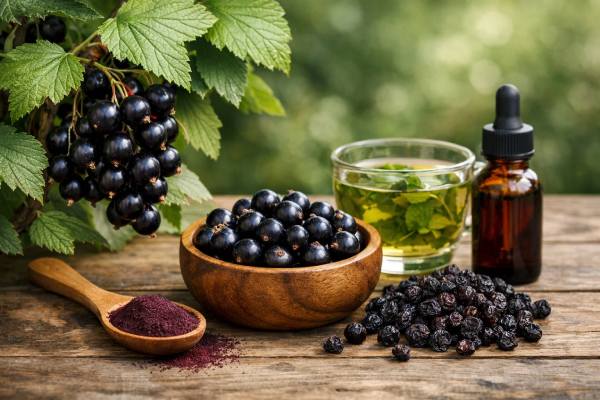
Blackcurrant (Ribes nigrum) is a deep-purple berry best known for its bold flavor and unusually dense nutrient profile. In traditional European herbalism, both the fruit and leaves were used to support resilience during seasonal illness, ease inflammatory discomfort, and promote healthy circulation. Modern interest focuses on blackcurrant’s anthocyanins—pigments that give the berry its near-black color—and how they may influence blood vessel function, oxidative stress, and recovery after physical strain. The berry also brings meaningful vitamin C, fiber, and a spectrum of polyphenols that work in complementary ways rather than as a single “magic” compound.
Because blackcurrant is widely consumed as food, it is generally easy to incorporate as juice, frozen berries, powders, or standardized extracts. The key is matching the form to your goal—everyday nutrition, targeted support, or short-term performance—and using doses that are realistic and safe for your health profile.
Quick Overview for Blackcurrant
- Regular intake may modestly support circulation and vascular function when paired with a heart-healthy routine.
- Anthocyanin-rich extracts may help exercise performance and recovery for some people, especially with short loading periods.
- Concentrated products can interact with blood thinners and antiplatelet medicines; use medical guidance if you take these.
- Typical supplement range: 100–600 mg/day blackcurrant extract (often standardized), or 1–3 g/day berry powder.
- Avoid high-dose supplements if you are pregnant, have a bleeding disorder, or are preparing for surgery unless your clinician approves.
Table of Contents
- What is blackcurrant
- Key compounds in blackcurrant
- Blackcurrant benefits and uses
- Circulation and heart support
- Eyes, brain, and healthy aging
- Best ways to use blackcurrant
- Dosage, safety, and evidence
What is blackcurrant
Blackcurrant is the fruit of a woody shrub in the Ribes genus, native to parts of Europe and northern Asia and now cultivated widely in temperate regions. You may also see it called “black currant” or “cassis” (especially in culinary contexts). The berries are small, glossy, and intensely pigmented, with a tart, aromatic flavor that concentrates well in jams, syrups, and juices.
From a practical health perspective, it helps to distinguish the fruit from the leaf:
- Fruit (berries and juice): primarily valued for anthocyanins, vitamin C, fiber, and diverse polyphenols. This is the form most people use for general wellness, cardiovascular support, and antioxidant intake.
- Leaves (tea or extracts): traditionally used for mild diuretic effects and to support inflammatory balance. Leaf products can be useful, but they behave more like an herb than a food.
Blackcurrant also comes in multiple commercial formats, each with different strengths:
- Whole food: fresh or frozen berries, juices, concentrates, and culinary products.
- Powders: freeze-dried berry powder (more “food-like” than an extract).
- Standardized extracts: often labeled by anthocyanin content or as “New Zealand blackcurrant extract.”
- Seed oil: pressed from seeds and used as a source of gamma-linolenic acid (GLA), a fatty acid associated with skin barrier and inflammatory pathways.
If you want a simple baseline, think of blackcurrant as a “high-signal berry”: a small serving can deliver an outsized amount of pigmented polyphenols compared with many fruits. For readers comparing similar berries, the discussion of anthocyanin-rich fruits in bilberry benefits and practical use can help you understand what these pigments tend to do across different plants.
Key compounds in blackcurrant
Blackcurrant’s health reputation is built on polyphenols—especially anthocyanins—plus supportive nutrients that influence the same systems from different angles. Understanding the “what” makes the “why” much clearer.
Anthocyanins and vascular signaling
Anthocyanins are water-soluble pigments that give blackcurrant its deep purple-black color. Blackcurrant is particularly rich in delphinidin– and cyanidin-based anthocyanins (often present as glycosides such as rutinosides and glucosides). In the body, these compounds are metabolized into smaller phenolic acids that may be more biologically active than the original pigment.
Mechanistically, anthocyanins and their metabolites are often discussed for effects on:
- Endothelial function: supporting the lining of blood vessels and healthy dilation.
- Oxidative balance: buffering reactive species generated during stress, infection, pollution exposure, or strenuous exercise.
- Inflammatory signaling: nudging cytokine activity and cellular “alarm pathways” toward a less reactive baseline.
Vitamin C, fiber, and micronutrient support
Blackcurrants are naturally high in vitamin C compared with most fruits. Vitamin C matters here for two reasons: it supports immune cell function and collagen integrity, and it also helps recycle other antioxidants back to active form. If you are using blackcurrant partly for immune support, it is worth understanding how vitamin C dosing works across foods and supplements; see vitamin C dosage and safety guidance for a deeper primer.
Fiber is the quieter contributor. Whole berries provide soluble and insoluble fibers that support gut microbial diversity and help smooth post-meal glucose response. If you use juice only, you lose most of this benefit—one reason powders and whole berries are often a better “daily” strategy than sweet concentrates.
Seed oil and gamma-linolenic acid
Blackcurrant seed oil is a different product with a different purpose. It contains GLA, an omega-6 fatty acid that can be converted into signaling molecules involved in skin barrier function and inflammatory tone. GLA is also found in other plant oils; if you are comparing options, evening primrose oil dosage and safety is a useful reference point because it is another common GLA source with similar use cases.
The key takeaway: blackcurrant fruit products are “polyphenol-forward,” while seed oil is “fatty-acid-forward.” Treat them as separate tools.
Blackcurrant benefits and uses
Blackcurrant is often marketed as a cure-all, but its most realistic benefits cluster into a few areas where the biology makes sense and the human evidence is most plausible. Think of blackcurrant as supportive, not substitutive: it works best when it amplifies good fundamentals (sleep, nutrition, training structure, and medical care when needed).
Immune resilience and seasonal support
Blackcurrant’s vitamin C and polyphenols can support immune readiness in a steady, background way. That does not mean it “prevents colds,” but it may help you maintain nutritional adequacy during high-exposure seasons. A practical approach is simple: use blackcurrant as part of a broader routine that includes sufficient protein, hydration, and sleep consistency.
A useful pattern is food-first most days (berries or powder), and extracts only when you have a specific goal (travel, intense training blocks, or short-term support). This helps avoid the common trap of chasing high doses without a clear reason.
Inflammatory balance and recovery comfort
Anthocyanins are frequently discussed for their influence on inflammatory signaling. In real life, this tends to show up as subtle changes: less “heavy legs” after demanding exercise, slightly improved subjective recovery, or a smoother response to high-stress weeks. These effects are not guaranteed, and they depend heavily on baseline health, training load, and diet quality.
Skin and connective tissue support
Blackcurrant contributes nutrients relevant to skin and connective tissue—especially vitamin C, which is required for normal collagen formation. If your baseline intake of fruits and vegetables is low, correcting that gap can make skin feel more resilient over time. Seed oil products (GLA) are more directly associated with skin barrier discussions, while the fruit is more of a whole-body antioxidant and micronutrient contributor.
What blackcurrant is not
To stay grounded, it helps to name what blackcurrant is unlikely to do on its own:
- It is not a replacement for blood pressure medication, lipid management, or diabetes care.
- It is not a detox agent.
- It is not a guaranteed performance enhancer—response varies.
Used well, blackcurrant is a high-quality “adjunct” that can fit into either a nutrition-first or supplement-assisted strategy.
Circulation and heart support
One of the most compelling reasons people try blackcurrant extract is the idea of improved blood flow. This is also where you should be most careful with expectations: the effect, when present, is typically modest, and it can be influenced by dose, timing, and baseline vascular health.
How blackcurrant may influence blood vessels
The inner lining of your blood vessels (the endothelium) helps regulate dilation and constriction. Polyphenol metabolites may support healthier endothelial signaling, especially after stressors such as high-fat meals, poor sleep, or intense exercise. In practice, that can translate to small improvements in measures tied to vascular function.
Blackcurrant also appears to have potential effects on platelet activity in some settings. That can be a positive signal for cardiovascular support, but it is also why anticoagulant and antiplatelet medications require caution (more on that in the safety section).
Blood pressure and real-world outcomes
When people ask, “Will blackcurrant lower my blood pressure?” the most accurate answer is: it may help some people a little, but results are inconsistent. Reasons include:
- Different products (juice vs extract vs powder) deliver different polyphenol profiles.
- Doses vary widely.
- Short trials may not reflect long-term response.
- Baseline blood pressure and diet quality change the signal you can detect.
If you are trying to support cardiovascular health, treat blackcurrant as one piece of a broader pattern: regular movement, adequate potassium-rich foods, fiber intake, and reduced ultra-processed foods. For readers who want another plant-focused angle on circulation, grape seed benefits and vascular properties offers a helpful comparison because it is also commonly used for vascular support, though through a different polyphenol profile.
Who may notice benefits most
People who sometimes report the most noticeable effects are those who:
- Do endurance training and care about perceived “ease” during efforts.
- Have a low baseline intake of colorful fruits and vegetables.
- Are midlife or older and want gentle vascular support without stimulants.
If you have diagnosed cardiovascular disease, the stakes are higher. Blackcurrant can be part of a clinician-approved plan, but it should not be used as a substitute for evidence-based treatment.
Eyes, brain, and healthy aging
Blackcurrant’s anthocyanins have long been associated—sometimes overenthusiastically—with eye health. The more reasonable framing is that anthocyanins may support microcirculation and oxidative balance, which can matter for visually demanding lifestyles and healthy aging.
Eye comfort and screen-heavy days
Many people today are dealing with digital eye strain: dry sensation, visual fatigue, and focus discomfort after prolonged screen time. Blackcurrant supplements are sometimes used in this context because anthocyanins are thought to support circulation in small vessels and help buffer oxidative stress triggered by prolonged visual concentration.
Practical guidance matters here more than hype:
- If your discomfort is driven by dry eye, hydration, blink habits, screen breaks, and adequate omega-3 intake may matter more than any berry supplement.
- If your discomfort is driven by focusing fatigue, sleep debt and lighting ergonomics are often the hidden drivers.
Blackcurrant can be a reasonable “try,” but give it a fair test window (for example, several weeks) and track symptoms rather than relying on day-to-day impressions.
Cognition and stress resilience
Anthocyanin-rich diets are often studied for associations with cognitive aging. For blackcurrant specifically, the most plausible benefits are indirect: better vascular function and reduced inflammatory signaling may support a brain-friendly environment over time.
If your main goal is cognition and circulation support, it can also help to compare with other botanical approaches. For example, ginkgo benefits for cognition and circulation is a different category of intervention with a longer history as a brain-and-blood-flow supplement. Some people prefer blackcurrant because it is food-like and generally gentler; others prefer botanicals designed specifically for cognition.
Healthy aging mindset
The strongest “healthy aging” strategy is not a single supplement—it is consistency. Blackcurrant fits well when it replaces less supportive choices (sweet snacks, sugary drinks) rather than being added on top of them. A realistic goal is improving the overall antioxidant density of your diet, not chasing a dramatic before-and-after change.
Best ways to use blackcurrant
The best form of blackcurrant depends on whether you want a food habit or a targeted effect. Many people get better results by using two tiers: whole-food forms for daily life, and standardized extracts for short-term goals.
Everyday options
- Fresh or frozen berries: a simple serving in yogurt, oatmeal, or smoothies. Frozen berries tend to be the most practical year-round.
- Freeze-dried powder: easy to mix into kefir, smoothies, or even water. It retains much of the berry’s polyphenol profile and is closer to “food” than an extract.
- Unsweetened juice (in moderation): convenient, but it can deliver a lot of sugar with less fiber. If you use juice, treat it as a small functional portion rather than a large beverage.
A practical “daily” approach is: berries or powder most days, and juice only occasionally or in small amounts.
Supplement formats for targeted goals
- Standardized anthocyanin-rich extract: often used for circulation support or athletic performance. Labels may list total extract weight and sometimes anthocyanin content.
- Capsules vs tablets: capsules are often easier on the stomach for polyphenol extracts.
- Seed oil softgels: used when the goal is skin barrier support or a GLA-focused strategy, not anthocyanin effects.
Timing and “stacking” tips
For performance-oriented use, blackcurrant extracts are often taken:
- Daily for 5–7 days before an event (a short “loading” window), or
- 1–2 hours before training, depending on personal tolerance and the product’s guidance.
Avoid stacking multiple polyphenol products at high dose without a reason. More is not always better, and concentrated blends can increase the chance of stomach upset or unexpected interactions.
Quality cues when buying
Look for:
- Clear labeling (species, part used, extract ratio or standardization).
- Batch testing or third-party quality claims when available.
- Minimal added sugars for powders and juices.
If a product promises pharmaceutical-level outcomes, treat that as a red flag. Blackcurrant is useful, but it is not a shortcut around fundamentals.
Dosage, safety, and evidence
This is where most people want clarity: how much to take, how long to try it, and who should be cautious. The safest approach is to start with food-like forms and only move to concentrated extracts if you have a specific reason.
Typical dosage ranges by form
These ranges reflect common real-world use and the way many clinical studies are structured (short trials for vascular effects, longer trials for metabolic markers). Product potency varies, so use labels as your final guide.
- Whole berries: 50–150 g/day (roughly 1/3 to 1 cup), fresh or frozen.
- Freeze-dried berry powder: 1–3 g/day (often about 1–2 teaspoons), up to 5 g/day if well tolerated.
- Standardized extract (capsules): 100–600 mg/day total extract is common. Some people use a split dose (morning and afternoon) to reduce stomach sensitivity.
- Athletic “loading” approach: a consistent daily dose for 5–7 days is a common pattern; some people also take a dose 1–2 hours pre-workout.
- Blackcurrant seed oil: 1–3 g/day is a typical supplement range, usually divided with meals.
Side effects
Blackcurrant as food is usually well tolerated. Supplements can cause:
- Mild stomach upset, especially on an empty stomach.
- Headache or “wired” feeling in a small subset (often from product blends or sensitivity rather than blackcurrant itself).
- Loose stools at higher doses (more common with powders and sweetened concentrates).
If you are prone to kidney stones and you use multiple high–vitamin C products, avoid “megadose thinking.” Blackcurrant foods are unlikely to be an issue, but stacking concentrated vitamin C and berry extracts is unnecessary for most people.
Interactions and who should avoid
Use extra caution (and get clinician guidance) if you:
- Take anticoagulants or antiplatelet medications (blood thinners), or have a bleeding disorder.
- Use blood pressure medications, especially if you already run low.
- Use diabetes medications and are adding a concentrated polyphenol supplement (monitor glucose response).
- Are pregnant or breastfeeding and considering high-dose extracts (food use is typically fine; supplements are a different category).
- Are preparing for surgery (a conservative rule is to stop non-essential supplements 1–2 weeks before, unless your surgeon advises otherwise).
What the evidence actually supports
The most consistent “signal” for blackcurrant extracts is in vascular function and recovery/performance contexts, but results are not uniform. Blood pressure findings are mixed, and lipid/inflammation outcomes appear more likely with longer, consistent use and in populations where there is room for improvement. The evidence base is growing, but many trials are still relatively small and vary in product composition—one reason personal response can differ.
A useful way to decide is to match the commitment to the goal: if you want general health support, use berries or powder. If you want a targeted effect (training block, circulation goal), trial a standardized extract for a defined window, track outcomes, and keep doses conservative.
References
- The Effects of Blackcurrant and Raspberry Consumption on Blood Pressure: A Systematic Review and Meta-Analysis of Randomized Controlled Trials 2023 (Systematic Review)
- Blackcurrant Anthocyanins Improve Blood Lipids and Biomarkers of Inflammation and Oxidative Stress in Healthy Women in Menopause Transition without Changing Body Composition 2023 (RCT)
- Anthocyanin-Rich Blackcurrant Supplementation as a Nutraceutical Ergogenic Aid for Exercise Performance and Recovery: A Narrative Review 2024 (Review)
- Acute Effects of an Anthocyanin-Rich Blackcurrant Beverage on Markers of Cardiovascular Disease Risk in Healthy Adults: A Randomized, Double-Blind, Placebo-Controlled, Crossover Trial 2025 (RCT)
Disclaimer
This article is for educational purposes only and does not replace personalized medical advice. Herbs and supplements can affect blood pressure, blood sugar, bleeding risk, and medication metabolism. If you are pregnant, breastfeeding, have a chronic medical condition, are preparing for surgery, or take prescription medicines (especially anticoagulants, antiplatelets, or antihypertensives), consult a qualified clinician before using blackcurrant extracts or seed oil. In urgent or severe symptoms—such as chest pain, shortness of breath, sudden vision changes, or signs of allergic reaction—seek emergency care.
If you found this guide useful, consider sharing it on Facebook, X (formerly Twitter), or your favorite platform so others can read it too.