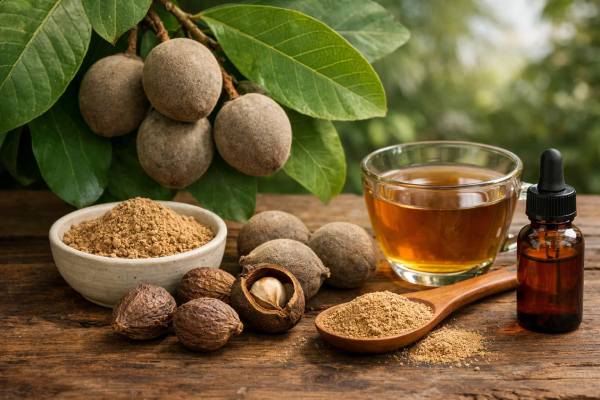
Belleric myrobalan (Terminalia bellirica) is the dried fruit of a large tree native to South and Southeast Asia. In Ayurveda it is commonly known as bibhitaki or baheda, and it is best known as one of the three fruits in Triphala, a classic formula used for digestive comfort and gentle cleansing. On its own, belleric myrobalan is traditionally used to support regular bowels, soothe an irritated throat, and promote a balanced response to everyday inflammation and oxidative stress.
Modern testing shows that the fruit is rich in tannins and other polyphenols, along with plant acids and supportive phytochemicals that may influence gut microbes, metabolic pathways, and tissue resilience. These effects are often subtle and most noticeable when the herb is used consistently, paired with foundational habits like fiber intake, hydration, and movement.
Because belleric myrobalan is highly astringent, it is not ideal for everyone. It may worsen constipation in some people, can interfere with iron absorption if taken too close to meals, and is generally avoided during pregnancy unless a qualified clinician advises otherwise. This article walks through practical, evidence-minded use.
Fast Facts for Belleric Myrobalan
- May support bowel regularity and digestive comfort when used consistently for 4–8 weeks.
- May soothe throat irritation when used as a warm infusion or in traditional blends.
- Typical adult range: 1–3 g/day dried fruit powder, or follow standardized extract labels.
- Avoid if you are pregnant or breastfeeding unless your clinician approves.
- Separate from iron supplements by at least 2 hours due to tannin-related absorption effects.
Table of Contents
- What is belleric myrobalan?
- Key compounds and medicinal actions
- Belleric myrobalan health benefits
- How to use belleric myrobalan
- How much belleric myrobalan per day?
- Side effects, interactions, and who should avoid
- What the evidence actually says
What is belleric myrobalan?
Belleric myrobalan comes from the fruit of Terminalia bellirica, a tree in the Combretaceae family. The fruit is harvested, dried, and used as a powder, decoction, or extract. In Ayurveda it is most often called bibhitaki (also spelled vibhitaki) and is frequently paired with two other fruits—amalaki and haritaki—in the formula Triphala. That trio is widely used for digestive and bowel support because it combines different plant “actions”: gentle toning, mild stimulation, and antioxidant support.
A helpful way to understand belleric myrobalan is to think in terms of direction. Many herbs either “moisten” and soften, or “dry” and tighten. Belleric myrobalan leans strongly toward astringency, meaning it has compounds that can temporarily tighten tissue surfaces and influence secretions. That does not automatically mean “constipating,” but it does mean the herb is best matched to a person’s pattern and goal. Someone with loose stools, excessive mucus, or a “heavy” digestive feeling may find astringent herbs supportive. Someone who is already dry, constipated, or prone to low iron may need a different approach.
In traditional use, belleric myrobalan is also discussed for throat and respiratory comfort, especially when there is irritation and excess mucus. You will often see it used as part of a broader plan rather than as a single-ingredient solution.
If you are exploring it because you already use Triphala, it can be useful to learn how the fruits differ. For example, amalaki’s antioxidant and digestive support profile is often described as cooling and nourishing, while belleric myrobalan is typically more astringent and toning.
It is also important to separate tradition from diagnosis. Belleric myrobalan should not be used to self-treat unexplained bleeding, ongoing severe diarrhea, chronic cough with weight loss, or persistent abdominal pain. Those situations require medical evaluation first. As a practical herb, it is best used for mild, stable concerns where you can track response over a few weeks and stop if it is not helping.
Key compounds and medicinal actions
Belleric myrobalan’s effects are shaped by its dense concentration of polyphenols, especially tannins. Tannins are a broad family of plant compounds that can bind to proteins, which is why tannin-rich plants often taste dry and puckering. In the body, this binding can create a temporary “tightening” effect on superficial tissue layers, including mucous membranes. That action helps explain why belleric myrobalan is traditionally used for digestive tone and for situations where mucus or excessive secretion is part of the discomfort.
Tannins and tissue toning
Tannin-rich herbs are often described as:
- Supporting a more “firm” bowel movement when stools are too loose
- Helping calm irritated surfaces by reducing weeping or excess secretions
- Creating a short-lived protective layer that can reduce that raw, inflamed feeling
This does not mean the herb is always appropriate. In someone already prone to constipation, strong astringency can make stools harder to pass. Dose and timing matter.
Ellagic and gallic acid derivatives
Terminalia species are known for complex tannin structures that can break down into smaller phenolic components. These smaller compounds are often studied for antioxidant and inflammation-modulating effects. In practical terms, this category is less about “one magic molecule” and more about a network of phytochemicals that can influence oxidative balance, gut microbe behavior, and signaling pathways involved in tissue repair and immune activity.
Plant acids and supportive phytochemicals
Beyond tannins, belleric myrobalan contains plant acids and other compounds that may influence digestion and metabolism. Depending on how the fruit is prepared (powder, hot water extraction, alcohol extraction), the chemical profile can shift. Hot water preparations tend to pull more tannins, while some extracts are designed to concentrate specific fractions.
Why preparation changes the experience
- Powder is the most traditional and often the easiest way to match dose to tolerance.
- Decoctions (simmered preparations) can feel stronger and more astringent.
- Capsules and standardized extracts are convenient but vary widely by concentration and quality.
When you compare products, be cautious about assuming “more is better.” With tannin-rich herbs, the best dose is often the smallest dose that reliably supports your goal without pushing you into dryness, constipation, or stomach discomfort. This is also why the same herb can be used in different ways in different people: a small dose can tone and soothe; a large dose can feel heavy or binding.
Belleric myrobalan health benefits
People most often search for belleric myrobalan for three practical goals: digestive comfort, bowel regularity, and metabolic support. Traditional systems also mention throat and respiratory comfort, especially when mucus and irritation are present. The most useful way to think about benefits is to match the herb to a scenario, then set realistic expectations about time course and magnitude.
Digestive comfort and bowel regularity
Because the fruit is astringent, it is often chosen when digestion feels “too wet” or overly loose. Some people use it when stools are frequent or poorly formed, or when there is a sense of heaviness after meals. Others use it in small doses as part of Triphala for gentler, more balanced bowel regularity.
A practical expectation is not an overnight change, but a gradual shift in comfort and stool quality over 2–6 weeks, especially when the herb is paired with consistent meal timing, hydration, and fiber.
Throat and respiratory comfort
Traditional use often frames belleric myrobalan as supportive when there is throat irritation plus excess mucus. It is sometimes taken as a warm infusion or as part of multi-herb formulas used for cough support. In real-world terms, it may be most relevant when the throat feels coated or irritated and you want a gentle, toning herbal approach.
Because throat symptoms can have many causes, treat this as supportive care only. Persistent cough, wheezing, fever, or unexplained weight loss should always be assessed clinically.
Metabolic markers and liver-related pathways
Early research on Terminalia bellirica explores effects on lipid metabolism, oxidative stress, and gut microbiota patterns associated with metabolic strain. This does not mean it replaces medical management for cholesterol, diabetes, or fatty liver disease. It suggests that the herb’s polyphenols may influence the biological “background” that supports healthier metabolic function.
If you are specifically focused on cholesterol or glucose markers, it can be helpful to compare botanical strategies rather than treating one herb as the only option. For example, berberine’s evidence base for metabolic markers is often stronger and more direct than most single fruits in traditional formulas. That comparison can help you set expectations and choose a plan that fits your risk profile.
Antioxidant and immune-support context
Many of belleric myrobalan’s proposed benefits fall under antioxidant and inflammation-modulating umbrellas. Those terms can sound vague, so anchor them in lived outcomes: calmer digestion, less irritation, and more stable day-to-day comfort. If you notice no change after a structured trial, that is useful information—this may simply not be the right tool for your body.
How to use belleric myrobalan
Belleric myrobalan can be used in several forms, and the right choice depends on your goal, your tolerance for astringency, and how easy you want dosing to be. Most people do best when they choose one form, use it consistently, and track outcomes over several weeks instead of switching products frequently.
Common forms
- Powder (churna): Traditional and flexible. You can start low and adjust slowly.
- Capsules: Convenient and often easier for travel or routine use.
- Decoction or strong tea: More traditional “tonic” style, often more astringent.
- Formulas (especially Triphala): Often used for a more balanced effect than belleric alone.
If you are using Triphala, belleric myrobalan is only one part of the overall effect. Learning the other fruit profiles can help you fine-tune the plan. For example, haritaki’s role in bowel regularity and digestive tone is often described as more “moving,” which can balance belleric’s more astringent character.
Practical ways to take it
For digestion or stool support:
- Start with a low dose of powder in warm water after dinner, or split between morning and evening.
- Keep hydration steady and avoid large late-night meals for a cleaner trial.
- Track stool form, frequency, and comfort for at least 2 weeks.
For throat comfort:
- Use a warm infusion or a small amount of powder mixed into warm water.
- Consider pairing with soothing strategies such as warm fluids and humidified air.
How to build a “clean” trial
A supplement trial works best when you reduce variables:
- Do not change your fiber intake dramatically in the same week you start the herb.
- Keep caffeine and alcohol stable if possible.
- Aim for similar sleep timing, since sleep changes can alter gut motility.
If your main goal is regularity, fiber basics often matter as much as herbs. Some people find they need more bulk and water-holding fiber before any herbal strategy feels helpful. In that context, psyllium husk for digestive regularity is a common foundational tool to consider alongside, or even before, herbal powders.
Duration and “when to stop”
Belleric myrobalan is often used in cycles. A typical pattern is 4–8 weeks, then reassess. Stop sooner if you develop constipation, worsening bloating, or new abdominal pain. If your symptoms are unchanged after 6–8 weeks of consistent use, it is reasonable to move on to a different strategy.
How much belleric myrobalan per day?
Dosing depends on whether you are using powder, a standardized extract, or a combination formula. Because belleric myrobalan is tannin-rich, it is smart to start lower than you think you need, then adjust gradually over 1–2 weeks. The right dose is the smallest dose that supports your goal without pushing you toward constipation or stomach heaviness.
Typical adult ranges
These ranges reflect common practical use, not a universal prescription:
- Dried fruit powder: about 1–3 g per day, often divided once or twice daily.
- Capsules: follow label dosing; many products deliver total daily amounts similar to 1–3 g of powder, but potency varies.
- Standardized extracts: label-dependent; some clinical-style studies have used higher extract doses, but extract strength is not comparable across brands.
- Triphala formulas: commonly 500–1,000 mg per day in capsule form, sometimes higher depending on product and goal.
If you are using belleric myrobalan for digestive comfort, many people find that an evening dose is easiest to evaluate because it influences the next morning’s bowel movement. If you are using it for daytime stool stability, splitting the dose morning and evening may feel smoother.
Timing tips
- Take with warm water if you feel it “sits heavy.”
- If stomach upset occurs, take with a small amount of food.
- Separate from sensitive medications by about 2 hours as a cautious default.
How long to use it
A fair trial is usually:
- 2 weeks to check tolerability and early response
- 4–8 weeks to judge meaningful change
If you see benefit, many people shift to “maintenance” use (lower dose, fewer days per week) rather than continuous high dosing.
When dose is too high
Reduce dose or pause if you notice:
- Constipation, hard stools, or straining
- Dry mouth or a “tight” feeling in the gut
- Nausea, loss of appetite, or abdominal heaviness
If your primary concern is low iron or you take iron regularly, spacing becomes even more important. Tannins can interfere with absorption, so review timing strategies like those described in iron dosing and absorption considerations and keep belleric myrobalan well separated from iron supplements and iron-rich meals.
Side effects, interactions, and who should avoid
Belleric myrobalan is widely used in traditional systems and in modern supplements, but “natural” does not mean risk-free. The fruit’s strong astringency is both its main feature and its main limitation. Most side effects are dose-related and improve when the dose is reduced or the herb is stopped.
Common side effects
- Constipation or harder stools, especially at higher doses
- Stomach heaviness, nausea, or reduced appetite
- Bloating if the herb slows motility too much for your body
- Dry mouth or a noticeably “drying” sensation
If your goal is bowel regularity and you become more constipated, that is usually a sign belleric myrobalan is not well matched to your current pattern, or the dose is too high.
Who should avoid it
Avoid or use only with qualified guidance if you are:
- Pregnant or breastfeeding
- Managing chronic constipation, bowel obstruction risk, or severe motility disorders
- Living with significant liver or kidney disease unless your clinician approves
- Using the herb to self-treat unexplained bleeding, persistent diarrhea, or chronic cough
Children should not use belleric myrobalan without professional supervision. The margin for dehydration and nutrient imbalance is smaller, and dosing is more sensitive.
Medication and supplement interactions
The most practical interaction concerns involve absorption and metabolic effects:
- Iron supplements: tannins can reduce absorption if taken together.
- Diabetes medications: if you use glucose-lowering drugs, monitor for unexpected changes, especially if you change diet at the same time.
- Blood thinners or antiplatelet drugs: because Terminalia fruits are rich in bioactive polyphenols, discuss use with your prescriber if you have clotting disorders or are on anticoagulants.
As a general safety rule, avoid stacking multiple strong “metabolic” supplements at once. If you introduce belleric myrobalan, keep other new supplements stable so you can interpret effects and side effects.
When to get medical care
Do not try to manage these situations with an herb:
- Blood in stool, black stools, or severe abdominal pain
- Diarrhea lasting more than 3 days with dehydration symptoms
- Persistent cough with fever, chest pain, shortness of breath, or weight loss
- Swelling of the face or throat, hives, or breathing difficulty after taking any supplement
Belleric myrobalan is best treated as a supportive tool for mild, stable concerns, used in conservative doses with clear stop rules.
What the evidence actually says
The research picture for Terminalia bellirica is mixed in a predictable way: strong interest in chemistry and mechanisms, growing animal and lab studies, and fewer high-quality human trials focused on belleric myrobalan alone. This does not mean the herb is ineffective. It means the most responsible claims are supportive and conditional, not absolute.
What we know with higher confidence
- The fruit is rich in polyphenols (including tannins), which plausibly supports astringent actions and antioxidant capacity.
- Terminalia bellirica is widely used in multi-herb frameworks (especially Triphala), and some human studies evaluate these formulas with measurable outcomes.
- Several modern studies explore relationships between Terminalia bellirica extracts, gut microbiota patterns, and inflammatory signaling in animal models. This lines up with the digestive and “systemic balance” themes seen in traditional practice.
Where evidence is weaker or indirect
- Many “metabolic” claims (cholesterol, fatty liver, glucose) rely heavily on animal studies, in vitro work, or broader Terminalia-family research rather than large human trials of belleric myrobalan alone.
- Respiratory and throat claims are mostly traditional and mechanism-based rather than proven by modern clinical trials.
How to interpret formula studies
Because belleric myrobalan is often used as part of Triphala, a portion of the evidence base is formula-based. That can still be useful if your real-life use is also formula-based. It is less useful if you want to isolate the effect of belleric alone.
If you are using belleric myrobalan as part of Triphala, the most practical takeaway is: you may see modest improvements in markers of oxidative stress or inflammation over weeks, but you should not treat it as a replacement for medical therapy or lifestyle fundamentals.
A realistic evidence-minded conclusion
Belleric myrobalan appears most defensible as a traditional astringent and toning fruit used for digestive regularity and supportive wellness goals, especially when combined with consistent habits. The best way to apply the evidence is to use a structured trial: conservative dose, stable routine, clear outcomes, and a defined stop date. If it helps, continue thoughtfully. If it does not, do not force it—choose a strategy with a better match for your symptoms and risk profile.
References
- Ameliorative Effects of Triphala Supplementation on Oxidative Stress and Inflammation in Individuals with Post-COVID-19 Condition: A Preliminary Randomized Controlled Trial – PMC 2025 (RCT)
- Terminalia bellirica Fruit Extract Alleviates DSS-Induced Ulcerative Colitis by Regulating Gut Microbiota, Inflammatory Mediators, and Cytokines – PMC 2023
- Terminalia bellirica ethanol extract ameliorates nonalcoholic fatty liver disease in mice by amending the intestinal microbiota and faecal metabolites – PubMed 2023
- Terminalia bellirica (Gaertn.) roxb. (Bahera) in health and disease: A systematic and comprehensive review – PubMed 2020 (Systematic Review)
- A randomized, double-blind, placebo-, and positive-controlled clinical pilot study to evaluate the efficacy and tolerability of standardized aqueous extracts of Terminalia chebula and Terminalia bellerica in subjects with hyperuricemia – PMC 2016 (RCT)
Disclaimer
This article is for educational purposes only and does not provide medical advice, diagnosis, or treatment. Herbs and supplements can cause side effects and may interact with medications or medical conditions. Do not use belleric myrobalan to self-treat persistent diarrhea, unexplained bleeding, chronic cough, severe abdominal pain, or any rapidly worsening symptoms. If you are pregnant or breastfeeding, have liver or kidney disease, take prescription medications (especially blood thinners or glucose-lowering drugs), or have ongoing digestive symptoms, consult a qualified clinician before using belleric myrobalan or Triphala.
If this article helped you, consider sharing it on Facebook, X (formerly Twitter), or your preferred platform so others can make informed, safety-first choices.