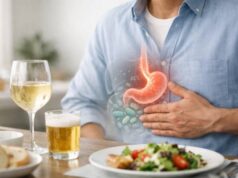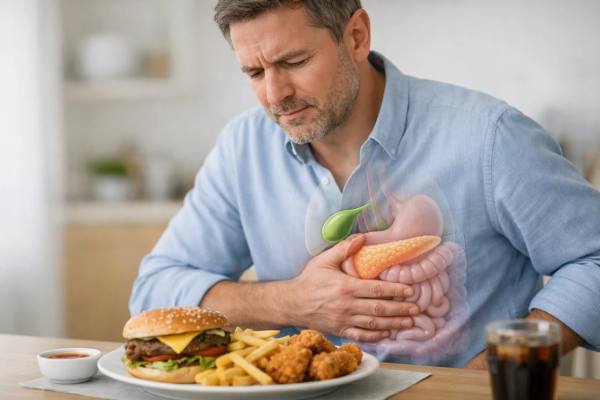
“Fatty food intolerance” is a common way people describe nausea, cramping, diarrhea, or a heavy, unsettled feeling after meals like fried foods, pizza, creamy sauces, or rich desserts. Sometimes the issue is simply portion size or speed of eating. Other times, fat is acting like a spotlight—revealing that bile flow, pancreatic enzymes, or gut motility is not keeping pace. The advantage of recognizing the pattern early is that it can guide more precise testing, prevent unnecessary diet restriction, and reduce the risk of unintended weight loss or vitamin deficiencies.
This article helps you sort the most likely sources: gallbladder and bile duct problems, pancreatic causes such as enzyme insufficiency, and gut conditions that mimic “fat intolerance.” You’ll learn the symptom clues that matter, which tests are most informative, and practical steps that can help you feel better while you seek a clear diagnosis.
Key Insights
- Noticing timing and location of symptoms after fatty meals can help distinguish gallbladder pain from stomach or intestinal triggers.
- Many people improve by changing meal structure first—smaller portions and spreading fat across the day—while evaluation is underway.
- Greasy, floating, hard-to-flush stools and weight loss raise concern for fat malabsorption and should be assessed promptly.
- Severe abdominal pain, fever, jaundice, or persistent vomiting after a fatty meal needs urgent medical evaluation.
- Keep a 7-day log of meal fat level, symptom onset time, and stool appearance to make testing and treatment more targeted.
Table of Contents
- What fatty food intolerance means
- Gallbladder clues after fatty meals
- Pancreas patterns that point to trouble
- Gut causes that mimic fat intolerance
- Tests that sort gallbladder pancreas and gut
- What helps while you seek answers
What fatty food intolerance means
Fat is the slowest macronutrient to leave the stomach and the most dependent on coordination between organs. When you eat a fatty meal, your stomach holds onto it longer, your small intestine signals for bile and pancreatic enzymes, and your gallbladder squeezes bile into the intestine to help emulsify fat. If any part of that chain is strained, fat becomes the “trigger” that makes symptoms obvious.
What symptoms count as intolerance
People use the phrase broadly. Common patterns include:
- Nausea or queasiness within 15–60 minutes of a rich meal
- Upper abdominal heaviness, fullness, or bloating that lingers for hours
- Cramping and urgent diarrhea after fried or creamy foods
- Burping, reflux, or a sour taste that worsens after high-fat meals
- Right-sided upper abdominal pain that comes in waves after fatty foods
Importantly, “fatty food intolerance” does not automatically mean you cannot absorb fat. Some people react because fat slows stomach emptying or stimulates reflux. Others react because fat is not digested well (enzyme problems) or because bile acids spill into the colon and drive diarrhea. The same meal can provoke different symptoms depending on the underlying mechanism.
Three core mechanisms
- Biliary pain or impaired bile flow: Fat triggers gallbladder contraction. If gallstones block flow or the gallbladder does not empty well, pain and nausea can appear.
- Pancreatic enzyme shortfall: If lipase and other enzymes are insufficient, fat digestion fails, leading to greasy stools, gas, and weight loss over time.
- Gut handling issues: Fat can worsen reflux, functional dyspepsia, gastroparesis, bile acid diarrhea, and some small-intestinal disorders, producing nausea, bloating, diarrhea, or cramping without classic gallbladder or pancreatic symptoms.
A helpful first question
Ask whether your main symptom is pain, nausea/fullness, or diarrhea, and how quickly it starts:
- Pain that peaks in the right upper abdomen 30–120 minutes after a fatty meal points more toward gallbladder and bile duct causes.
- Nausea and early fullness that worsen with richer meals can point to stomach motility or reflux patterns.
- Urgent watery diarrhea, especially soon after eating, can point to bile acid diarrhea or rapid transit.
- Greasy, floating stools and progressive weight loss point toward fat malabsorption and deserve prompt evaluation.
Gallbladder clues after fatty meals
Gallbladder-related symptoms often have a recognizable “signature.” The gallbladder stores and concentrates bile. When fat enters the small intestine, hormones signal the gallbladder to contract. If bile flow is blocked or the gallbladder does not empty properly, symptoms can follow quickly and can feel intense.
Classic biliary colic pattern
Many people with gallstones describe:
- Pain in the right upper abdomen (sometimes central upper abdomen)
- Pain that can radiate to the right shoulder or back
- Onset typically 30 minutes to 2 hours after eating, often after a high-fat meal
- Pain that is steady or builds in waves and lasts 30 minutes to several hours
- Nausea and sometimes vomiting during the episode
Between attacks, you may feel completely normal. That “episodic but severe” pattern is one reason gallbladder issues can be missed early.
When it is more than a simple attack
Some symptoms suggest complications and should be treated as urgent:
- Fever, chills, and persistent pain (possible acute inflammation)
- Yellowing of the eyes or skin, dark urine, or very pale stools (possible bile duct obstruction)
- Confusion, faintness, or low blood pressure (possible systemic infection)
- Severe ongoing vomiting or inability to keep fluids down
These are not typical “food intolerance” symptoms and deserve prompt medical evaluation.
Gallbladder dysfunction without visible stones
Not everyone with biliary-type symptoms has gallstones on ultrasound. Some people have reduced gallbladder emptying (often called functional gallbladder disorder or biliary dyskinesia), and symptoms can still be strongly meal-linked. In those cases, the history becomes even more important: the pain quality, the timing after meals, and whether symptoms repeat predictably.
Practical steps while waiting for evaluation
If gallbladder symptoms are suspected, the goal is to reduce the stimulus that provokes forceful gallbladder contraction:
- Choose smaller portions and avoid very high-fat meals until you are assessed.
- Keep fat present but moderate rather than eliminating it completely, unless a clinician advises otherwise.
- Avoid large late-night meals, which can worsen nausea and reflux and blur the symptom picture.
- Seek same-day care for red-flag symptoms, especially fever or jaundice.
A key point is that gallbladder pain is not just “indigestion.” If you recognize the classic pattern, it is worth testing rather than continuing to avoid foods indefinitely.
Pancreas patterns that point to trouble
The pancreas contributes the enzymes that break down fat, protein, and carbohydrates. When pancreatic function is impaired, fatty meals can trigger symptoms because digestion is incomplete. The most relevant pancreatic patterns fall into two groups: inflammation (pancreatitis) and enzyme insufficiency (exocrine pancreatic insufficiency).
Clues that suggest pancreatitis
Acute pancreatitis typically causes:
- Severe, persistent upper abdominal pain (often central)
- Pain that may radiate to the back
- Nausea and vomiting
- Symptoms that feel “systemic,” sometimes with fever or marked weakness
This pattern is different from brief, episodic biliary colic. It is also not something to manage at home if the pain is severe or persistent.
Chronic pancreatitis can produce a slower-moving picture: recurrent upper abdominal pain, unpredictable flares, reduced appetite, and later, signs of maldigestion.
Clues that suggest exocrine pancreatic insufficiency
Enzyme insufficiency is a common reason people feel they “cannot handle fat.” Typical clues include:
- Greasy or oily stools that float, look pale, smell unusually strong, or are hard to flush
- Chronic bloating and gas after meals
- Loose stools that persist for weeks
- Unintended weight loss or difficulty regaining weight
- Fat-soluble vitamin issues over time (especially vitamin D)
Symptoms often worsen as meals become richer, but people also notice a broader pattern: “My digestion is off no matter what I do.”
Risk factors raise suspicion significantly:
- Chronic pancreatitis history
- Pancreatic surgery
- Cystic fibrosis
- Severe acute pancreatitis in the past
- New diabetes alongside weight loss and digestive symptoms
Why timing and stool details matter
Gallbladder problems often cause a discrete attack of pain and nausea soon after a fatty meal. Pancreatic enzyme insufficiency is more likely to produce ongoing stool and nutrition changes, not just one episode of nausea. If your “fat intolerance” is mainly diarrhea and greasy stool rather than pain, the pancreas moves higher on the list.
When to seek urgent evaluation
Get urgent medical attention if fatty meals are followed by severe persistent abdominal pain, repeated vomiting, faintness, fever, jaundice, or rapid weight loss. Pancreatic and bile duct conditions can overlap, and delays can increase risk.
Gut causes that mimic fat intolerance
Many people assume “fat intolerance” must be a gallbladder issue, but gut and stomach conditions can create an equally strong fat-related pattern. Fat can slow stomach emptying, increase reflux events, and change how the intestine moves fluid. These effects can amplify symptoms even when bile flow and pancreatic enzymes are normal.
Stomach motility and meal retention
If fat triggers nausea, early fullness, and prolonged bloating, the stomach may be part of the story. Fat slows gastric emptying naturally, and when gastric emptying is already delayed, a rich meal can lead to hours of heaviness, queasiness, and sometimes vomiting. People often notice they do better with smaller meals, lower-fat textures, and less bulky food.
Reflux and functional dyspepsia patterns
High-fat meals can worsen reflux symptoms in some people and can also intensify functional dyspepsia symptoms such as burning discomfort, fullness, and nausea. This can feel like “I cannot tolerate rich foods,” even though the issue is sensitivity and motility rather than malabsorption.
Bile acid diarrhea and post gallbladder removal diarrhea
Bile acids are meant to be reabsorbed in the lower small intestine. When they spill into the colon in excess, they can pull water into the bowel and speed transit, leading to watery diarrhea and urgency. This can happen after gallbladder removal, with certain small-intestinal disorders, or without an obvious trigger. The symptom pattern often includes:
- Urgency and watery stools, sometimes soon after meals
- Symptoms that may worsen after higher-fat foods
- Bloating and cramping that improve after bowel movements
Small intestine disorders and malabsorption
Celiac disease and inflammatory small-bowel disease can impair absorption and create broad digestive symptoms. In these cases, fat intolerance may be part of a larger picture: chronic diarrhea, anemia, unexplained fatigue, mouth ulcers, nutrient deficiencies, or weight loss.
Overlapping contributors
It is common to have more than one factor. For example, reflux can coexist with gallstones, or bile acid diarrhea can coexist with enzyme insufficiency after pancreatic disease. That is why a symptom diary and targeted testing often outperform broad elimination diets. If you remove multiple foods at once, you may feel temporarily better while the underlying condition remains untreated.
Tests that sort gallbladder pancreas and gut
The most efficient evaluation starts with pattern recognition: pain versus nausea/fullness versus diarrhea and stool changes, plus a focused risk review. Testing is then chosen to answer the next most important question, not to “test everything.”
First-line triage questions
Clinicians often start with:
- Where is the main discomfort (right upper abdomen, central upper abdomen, diffuse)?
- How soon after eating does it begin, and how long does it last?
- Is there greasy stool, weight loss, fever, or jaundice?
- Is there a history of pancreatitis, gallstones, surgery, diabetes, or small-bowel disease?
- What medications or supplements are being used, including weight-loss products?
Common tests for gallbladder and bile duct causes
Typical first steps include:
- Abdominal ultrasound to look for gallstones, gallbladder wall changes, and bile duct dilation
- Blood tests that assess inflammation and bile flow patterns (often including liver enzymes and bilirubin)
- Additional imaging or functional testing when needed, especially if symptoms are classic but ultrasound is unrevealing
Because bile duct blockage and infection can become dangerous quickly, symptoms like fever and jaundice change the urgency of imaging.
Common tests for pancreatic causes
Testing may include:
- Blood tests used in acute settings to evaluate pancreatic inflammation
- Stool testing for pancreatic enzyme output, especially when greasy stools and weight loss are present
- Imaging when risk factors or red flags exist, or when symptoms suggest structural pancreatic disease
If steatorrhea is prominent, tests that evaluate fat digestion and absorption can help clarify whether the issue is enzyme-related or intestinal.
Common tests for gut and stomach causes
Depending on symptoms, clinicians may consider:
- Blood tests for celiac disease screening in chronic diarrhea, weight loss, anemia, or nutrient deficiency patterns
- Breath testing in selected cases where bacterial overgrowth or carbohydrate malabsorption is suspected
- Upper endoscopy when alarm symptoms exist (difficulty swallowing, bleeding, persistent vomiting, unexplained weight loss)
- Tests for bile acid diarrhea when watery urgency is persistent and other causes are not clear
What to bring to your appointment
A simple 7-day log can dramatically improve diagnostic accuracy:
- Meal type and approximate richness (fried, creamy, moderate-fat, low-fat)
- Symptom start time after eating (minutes versus hours)
- Pain location and whether it radiates to the back or shoulder
- Stool changes (greasy, floating, watery, pale)
- Any fever, jaundice, or vomiting episodes
That information often determines whether the next best step is ultrasound, stool testing, celiac screening, or motility-focused evaluation.
What helps while you seek answers
While you work toward a diagnosis, the goal is symptom relief without creating nutritional problems. The most effective short-term strategies usually change how you eat rather than banning fat entirely.
Use meal structure to reduce triggering
A practical two-week approach:
- Eat 4–6 smaller eating times per day instead of 1–2 large meals.
- Spread fat across meals rather than concentrating it in one rich meal.
- Choose cooking methods that reduce grease load (baked, grilled, steamed, braised).
- Slow down eating and stop at “comfortably satisfied,” not stuffed.
This approach reduces gallbladder stimulation, lowers reflux pressure, and can lessen urgency in bile-related diarrhea patterns.
Match strategies to your dominant symptom
If your main issue is right upper abdominal pain after fatty meals, keep meals lower in fat until you are evaluated, and seek urgent care for fever or jaundice.
If your main issue is nausea, early fullness, and prolonged bloating, try lower-fat meals with softer textures and smaller portions, and avoid large late meals that worsen stomach retention and reflux.
If your main issue is watery urgency, especially after meals, focus on smaller meals, hydration, and discuss bile acid diarrhea evaluation with a clinician. Self-treating with aggressive fat restriction can lead to weight loss and does not address the underlying mechanism.
If your main issue is greasy stool and weight loss, prioritize evaluation for fat malabsorption. Do not rely on long-term very low-fat eating without medical guidance, because the risk of vitamin deficiencies rises quickly.
Support hydration and nutrition
Frequent diarrhea can quietly dehydrate you. Aim for steady fluids and consider oral rehydration solutions during flares. If weight is dropping, include tolerable protein at each meal and consider nutrition support with a clinician or dietitian so you do not unintentionally under-eat.
Know the emergency signals
Seek urgent evaluation for severe or persistent abdominal pain, repeated vomiting, fever, jaundice, confusion, fainting, blood in stool, or rapid unintended weight loss. Fatty food intolerance should not be used to explain away dangerous symptoms.
Finally, avoid the trap of “ever tighter restriction.” The best outcome usually comes from a clear diagnosis and targeted treatment, not from eliminating more foods month after month.
References
- Evidence-based clinical practice guidelines for cholelithiasis 2021 2023 (Guideline)
- AGA Clinical Practice Update on the Epidemiology, Evaluation, and Management of Exocrine Pancreatic Insufficiency: Expert Review 2023 (Expert Review)
- ACG Clinical Guideline: Gastroparesis 2022 (Guideline)
- American College of Gastroenterology Guidelines Update: Diagnosis and Management of Celiac Disease 2023 (Guideline)
- Pathophysiology and Clinical Management of Bile Acid Diarrhea 2022 (Review)
Disclaimer
This article is for educational purposes only and does not provide medical advice, diagnosis, or treatment. Symptoms after fatty foods can arise from multiple conditions, including gallbladder disease, bile duct obstruction, pancreatitis, malabsorption disorders, and stomach motility problems. Seek urgent medical care for severe or persistent abdominal pain, fever, repeated vomiting, yellowing of the eyes or skin, confusion, fainting, blood in stool, or rapid unintended weight loss. Always work with a licensed clinician for diagnosis and for decisions about testing, medications, and nutrition plans.
If you found this article helpful, consider sharing it on Facebook, X (formerly Twitter), or any platform you prefer.