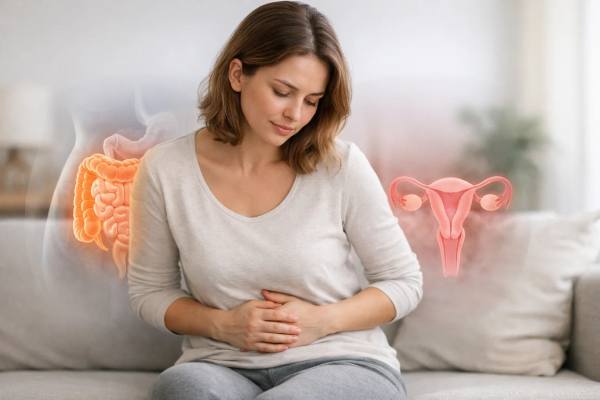
Pelvic pain and persistent bloating can feel like a daily puzzle—especially when symptoms overlap between gynecologic and digestive conditions. Endometriosis and irritable bowel syndrome (IBS) often share the same “headline” complaints: cramping, bowel changes, nausea, and a swollen-feeling abdomen that seems to appear without warning. The difference is that they usually follow different patterns and respond to different treatments. Learning to spot those patterns can shorten the path to effective care, reduce unnecessary diet restriction or testing, and help you communicate clearly with clinicians. This article explains why the confusion happens, which clues lean more toward endometriosis versus IBS, what a sensible evaluation commonly includes, and how to manage symptoms safely when both conditions are in the picture.
Core Points to Remember
- Tracking symptoms across at least two menstrual cycles often reveals timing clues that routine checklists miss.
- Endometriosis is more likely when pain is cyclical, deep, and tied to periods, sex, or pelvic pressure.
- IBS is more likely when abdominal pain is closely linked to bowel movements and stool changes over time.
- Red-flag symptoms (heavy bleeding, fever, persistent vomiting, black stools, fainting, unexplained weight loss) need prompt medical attention.
- A combined plan—gynecologic care plus gut-directed strategies—often works best when symptoms overlap.
Table of Contents
- Why endometriosis and IBS overlap
- Signs your symptoms lean endometriosis
- Signs your symptoms lean IBS
- What a thoughtful workup looks like
- Managing symptoms when both are possible
- When to seek care and advocate
Why endometriosis and IBS overlap
Endometriosis is a condition where tissue similar to the uterine lining grows outside the uterus. IBS is a disorder of gut–brain interaction that causes recurrent abdominal pain with changes in bowel habits. On paper, they are different. In real life, they can look remarkably alike—especially when symptoms center on cramping, diarrhea or constipation, and bloating.
One reason is anatomy. The pelvis is a crowded neighborhood: uterus, ovaries, bladder, bowel, nerves, and muscles share space and share pain pathways. Endometriosis lesions can irritate the lining of the pelvis, tug on tissues, and contribute to scarring (adhesions). Even without bowel involvement, pelvic inflammation and muscle guarding can change how the bowel moves and how sensations are interpreted. That can create IBS-like symptoms such as urgency, constipation, or alternating stool patterns.
Another reason is “cross-talk” in the nervous system. Pain signals from pelvic organs can sensitize nearby nerves, making normal digestion feel painful. Over time, the threshold for discomfort drops—meaning smaller triggers (a regular meal, mild gas) can feel intense. This sensitization is also a key concept in IBS, where visceral hypersensitivity makes the gut feel louder and more reactive.
Hormones add a third layer. Many people notice that bowel symptoms flare around the menstrual cycle. Shifts in estrogen and progesterone can influence motility (how fast the gut moves), water balance, and pain sensitivity. If symptoms reliably worsen premenstrually or during bleeding, endometriosis becomes more likely—but IBS can also worsen during that window, which is why timing alone is not the whole story.
Finally, overlap is common. Some people truly have both conditions, and the combined burden can amplify bloating, fatigue, and pain. The goal is not to “pick one label,” but to identify which drivers are present so treatment targets the right system—pelvic, bowel, or both.
Signs your symptoms lean endometriosis
Endometriosis tends to leave a distinct signature: symptoms that are cyclical, deep, and linked to pelvic events—periods, sex, urination, or bowel movements—rather than only to food or stress.
Patterns that raise suspicion
Consider endometriosis more strongly when you notice several of these:
- Cycle-linked pain: Pelvic or lower abdominal pain that predictably worsens in the days before bleeding, during the first days of a period, or around ovulation.
- Progressive dysmenorrhea: Period pain that has intensified over time, requires stronger medication, or causes missed work or school.
- Deep pain with sex: Pain that feels internal or deep (rather than surface irritation), especially during penetration or afterward.
- Pain with bowel movements during your period: Cramping, sharp rectal pain, or a “pressure” sensation that is clearly worse while bleeding.
- Urinary symptoms around your period: Bladder pressure, urgency, or pain with urination that clusters around the cycle.
- Fertility concerns: Difficulty conceiving can coexist with minimal symptoms—or with severe pain.
The bloating clue people overlook
Bloating occurs in IBS, but endometriosis-related bloating often has a “pelvic fullness” quality: your lower abdomen feels tight, heavy, or swollen, sometimes late in the day, and sometimes in a cycle-related rhythm. Clothing may fit differently by evening. You may also notice that bloating does not reliably improve after a bowel movement, which is a helpful contrast with IBS for some people.
Why symptoms can mimic a gut disorder
Endometriosis can irritate pelvic nerves and muscles, triggering pelvic floor tension. Tight pelvic floor muscles can make bowel movements painful, incomplete, or difficult to pass—creating constipation, straining, and a sense of blockage. That pattern can be mistaken for IBS with constipation, even when the main problem is pelvic muscle dysfunction rather than slow gut transit.
If you recognize these patterns, a gynecologic evaluation is worth prioritizing—even if you have been told “it is just IBS.” You can still pursue a gut evaluation at the same time, but the cycle-linked pattern should not be ignored.
Signs your symptoms lean IBS
IBS has its own recognizable fingerprint: abdominal pain that tracks closely with bowel activity and changes in stool form or frequency over time. Many people also experience bloating, gas, and a sensitive gut that reacts to meals.
The IBS pattern in plain language
IBS becomes more likely when:
- Pain is tied to bowel movements. It may improve after a bowel movement, worsen right before one, or fluctuate with constipation or diarrhea.
- Stool changes are central. You notice ongoing changes in frequency (more or fewer trips) and form (looser, harder, or alternating).
- Symptoms persist for months. IBS is chronic or relapsing rather than a short-lived episode.
- Triggers feel “gut-based.” Large meals, certain fermentable carbohydrates, caffeine, alcohol, stress, poor sleep, or travel are common culprits.
- You have a subtype pattern. Some people lean constipation (IBS-C), diarrhea (IBS-D), mixed (IBS-M), or an alternating pattern across months.
Bloating and gas: what they can mean in IBS
Bloating in IBS often relates to gut sensitivity rather than “too much gas” alone. The intestine may stretch normally after meals, but the nervous system interprets that stretching as discomfort or visible distension. Some people also have altered fermentation patterns (how gut microbes break down carbohydrates), which can increase gas and pressure. In IBS, bloating may feel more meal-related, and some people notice partial relief after passing stool or gas.
Symptoms that make IBS less likely
IBS does not typically cause persistent fever, blood mixed into stool, unexplained weight loss, anemia, nighttime diarrhea that wakes you repeatedly, or steadily worsening symptoms without fluctuation. Those features do not automatically mean something dangerous, but they do mean IBS should not be the only explanation until other causes are checked.
It is also possible to have IBS plus endometriosis. If bowel symptoms clearly follow both patterns—bowel-linked pain most of the month and a cycle-related flare that changes the intensity—coexistence is plausible and worth discussing directly with your clinician rather than forcing one label.
What a thoughtful workup looks like
A useful evaluation does two things at once: it looks for evidence of endometriosis and it makes a positive, confident IBS diagnosis while screening for common “look-alikes.” This does not mean endless testing. It means targeted testing based on your pattern and your risk factors.
Start with a two-cycle symptom map
Before appointments, track symptoms for at least two cycles (or eight weeks if cycles are irregular). A simple daily log is enough:
- Day of cycle (or “bleeding day 1, 2, 3…”)
- Pain location and severity (0–10)
- Bowel pattern (constipation, diarrhea, mixed)
- Bloating (mild/moderate/severe)
- Sex-related pain (yes/no)
- Urinary symptoms (yes/no)
- What helped (heat, bowel movement, medication, rest)
This turns vague memories into patterns clinicians can act on.
What gynecologic assessment may include
Depending on symptoms and exam findings, clinicians may consider:
- A detailed pelvic history and pelvic exam
- Pelvic ultrasound, often transvaginal, to look for ovarian endometriomas and other findings
- MRI in selected cases, especially when deep endometriosis is suspected
- Empiric treatment (for example, hormonal suppression) when appropriate
- Laparoscopy in selected cases when imaging is negative but suspicion remains high, or when symptoms persist despite treatment
A key point: normal imaging does not always rule out endometriosis. Imaging is excellent for some forms and less sensitive for others.
What digestive assessment may include
When IBS is suspected, clinicians often use a focused approach:
- Review of alarm features and family history (colon cancer, inflammatory bowel disease, celiac disease)
- Basic labs in many cases (for example, blood count)
- Celiac screening in people with diarrhea-predominant symptoms
- Inflammatory markers (such as stool or blood markers) when inflammatory bowel disease needs exclusion
- Colonoscopy based on age, alarm features, or persistent unexplained symptoms—not automatically for everyone
The goal is a “positive diagnosis” of IBS rather than a long, anxious search for every rare condition.
If you feel stuck between specialties, it can help to name the overlap directly: “My bowel symptoms look like IBS, but the cyclic pelvic pain and painful periods make me worry about endometriosis too. I want a plan that evaluates both.”
Managing symptoms when both are possible
When symptoms overlap, the safest path is usually a layered plan: reduce pain amplification, support bowel regularity, and avoid extreme restriction that backfires nutritionally or emotionally. You do not need to “wait for a perfect diagnosis” to start symptom relief, but you do want to avoid self-treatment that hides red flags.
Foundational steps that help both conditions
These strategies often improve quality of life regardless of the final label:
- Regular meals and hydration: Long gaps between meals can worsen nausea and cramping for some people.
- Gentle bowel regularity: Aim for soft, easy-to-pass stools. Constipation can intensify pelvic pain and bloating.
- Heat and movement: Heat packs, gentle walking, and hip-opening stretches can reduce muscle guarding.
- Sleep and stress buffering: IBS symptoms and pelvic pain both worsen when the nervous system is depleted.
Diet changes: targeted, time-limited, and nutritionally complete
If IBS is likely, a structured dietary trial may help, but it should be done carefully:
- Start simple for 2 weeks: identify obvious triggers (very large meals, high-fat meals, excess caffeine, sugar alcohols).
- Consider a short low-FODMAP trial if appropriate: typically time-limited, with a planned reintroduction phase so the diet does not become unnecessarily restrictive.
- Protect nutrients during restriction: prioritize protein, calcium-rich foods (or alternatives), iron-rich foods, and fiber sources you tolerate.
If endometriosis is prominent, overly restrictive dieting can become a trap—especially if pain is driving food fear. The goal is symptom clarity and adequate nourishment, not perfection.
Medical and pelvic-focused care
Endometriosis care may involve anti-inflammatory pain strategies, hormonal therapies that suppress cyclic flares, and in some cases surgery. IBS care may involve gut-directed medications, fiber strategies, antispasmodics, or other targeted treatments based on subtype. When both are possible, it can be helpful to add:
- Pelvic floor physical therapy: especially with pain on bowel movements, urinary urgency, painful intercourse, or a sense of incomplete evacuation
- Gut–brain approaches: cognitive behavioral therapy for pain and gut-focused stress reactivity, relaxation training, and paced breathing
- A coordinated medication review: some pain medicines and supplements worsen constipation or nausea; a clinician can help streamline choices
If you are trying multiple approaches at once, change one variable at a time for two weeks. Otherwise, you will not know what actually helped.
When to seek care and advocate
Both endometriosis and IBS can be chronic, exhausting, and validating only after a long detour. Advocacy is not about demanding a specific test—it is about communicating your pattern clearly and asking for a plan that matches risk, symptoms, and goals (including fertility, pain control, and daily functioning).
Seek urgent evaluation for red flags
Do not wait at home if you have:
- Severe, escalating abdominal or pelvic pain (especially sudden one-sided pain)
- Fainting, chest pain, shortness of breath, or signs of dehydration
- Heavy vaginal bleeding (soaking through pads hourly, passing large clots, or feeling lightheaded)
- Fever, chills, or persistent vomiting
- Black stools or significant rectal bleeding
- Unexplained weight loss or persistent nighttime symptoms that wake you repeatedly
These issues can have many causes, and they deserve timely assessment.
How to describe your symptoms in a way that helps clinicians
Try a short, structured summary:
- “My top symptoms are: pelvic pain, bloating, and bowel changes.”
- “They started in: [month/year], and the pattern is: [cycle-linked flare, bowel-linked pain, both].”
- “During my period, I notice: [pain with bowel movements, urinary symptoms, deep pain, etc.].”
- “Between periods, I notice: [pain linked to stool changes, meal triggers, stress, etc.].”
- “What I have tried: [medications, diets, therapies] and what happened.”
Bring your two-cycle symptom map. It often shifts the conversation from “maybe” to “here is the pattern.”
When to ask for a combined approach
Ask explicitly for coordination if:
- You have strong menstrual-cycle flares plus classic IBS stool changes
- You have pelvic floor symptoms (painful sex, urinary urgency, incomplete evacuation)
- You have been cycling through restrictive diets without lasting relief
- Pain is affecting school, work, or mental health
It is reasonable to say: “I would like a plan that addresses both pelvic pain drivers and bowel symptoms, even while we clarify the diagnosis.”
Clarity and compassion can coexist: you can take symptoms seriously without catastrophizing, and you can pursue answers without letting your life shrink around the search.
References
- ESHRE guideline: endometriosis 2022 (Guideline)
- Endometriosis: diagnosis and management 2024 (Guideline)
- ACG Clinical Guideline: Management of Irritable Bowel Syndrome 2021 (Guideline)
- Endometriosis and irritable bowel syndrome: A systematic review and meta-analyses 2022 (Systematic Review)
- AGA Clinical Practice Guideline on the Pharmacological Management of Irritable Bowel Syndrome With Diarrhea 2022 (Guideline)
Disclaimer
This article is for educational purposes and is not a substitute for medical advice, diagnosis, or treatment. Pelvic pain, bowel changes, and bloating have many possible causes, and it is important to work with a qualified clinician—especially if symptoms are severe, new, worsening, or associated with red-flag signs such as heavy bleeding, fever, fainting, persistent vomiting, rectal bleeding, or unexplained weight loss. Do not start, stop, or change medications or restrictive diets without professional guidance, particularly if you are pregnant, trying to conceive, managing anemia, or have a history of eating disorders.
If you found this helpful, consider sharing it with a friend or community on Facebook, X (formerly Twitter), or any platform you prefer.