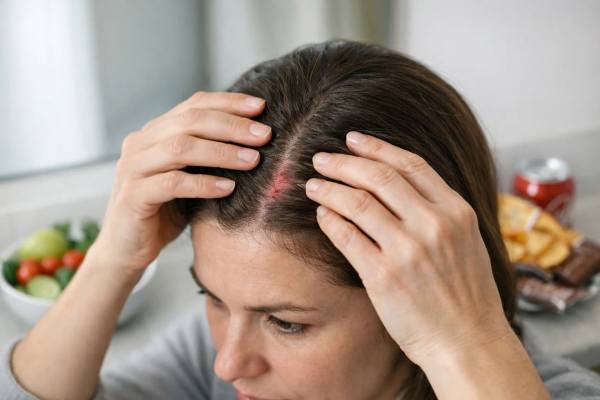
A sore, itchy, flaky scalp often gets treated like a shampoo problem alone. Sometimes it is. But the scalp is skin, and skin does not live apart from the rest of the body. Blood sugar swings, overall dietary pattern, body weight, gut health, and the balance between highly processed foods and nutrient-dense meals can all shape inflammatory tone. That does not mean sugar directly “causes” every flare, or that a perfect diet can replace proper treatment. It means your plate may quietly influence how reactive your scalp feels, how often it flares, and how well it calms down.
The strongest evidence does not support extreme food rules. It supports a more grounded idea: some inflammatory scalp conditions seem more likely to worsen alongside a Western-style pattern high in sugar, refined carbohydrates, and ultra-processed foods, while a more whole-food, lower-glycemic pattern may help some people. The useful work is not chasing one villain ingredient. It is finding the few changes that reduce friction in real life and give the scalp a better environment.
Quick Overview
- A lower-sugar, lower-ultra-processed eating pattern may help reduce inflammatory load in some scalp conditions, especially when dandruff or seborrheic dermatitis keeps recurring.
- Diet is more likely to help as a support strategy than as a stand-alone cure for severe itching, thick scale, or scalp pain.
- Sugary drinks, packaged sweets, and frequent fast-food meals are often better targets than naturally sweet foods such as whole fruit.
- Crash dieting can worsen shedding and stress the scalp even if the food list looks “clean.”
- Start with a two- to four-week shift toward more whole meals, fiber, protein, and healthy fats before judging whether diet is helping.
Table of Contents
- What Scalp Inflammation Means and Where Diet Fits
- Sugar and High-Glycemic Eating: What It May Worsen
- Why Ultra-Processed Foods Get So Much Attention
- What to Change First Without Overhauling Your Life
- Who Is Most Likely to Notice a Difference
- When Food Is Not the Main Problem
What Scalp Inflammation Means and Where Diet Fits
Scalp inflammation is not a single diagnosis. It is a pattern of irritation that can show up as itching, burning, tenderness, redness, greasy or dry flaking, pustules, soreness around follicles, or a scalp that seems to flare easily after products, stress, or weather shifts. The most common drivers include seborrheic dermatitis, psoriasis, eczema, contact reactions, folliculitis, and sometimes simple barrier disruption from over-washing or harsh products. In some people, inflammation stays mostly on the scalp. In others, it overlaps with facial flaking, eyebrow scale, or even increased shedding.
Diet matters here in a supporting role, not an all-powerful one. Food can influence inflammatory signaling, insulin response, body weight, gut microbial balance, and nutrient status. Those systems can affect how reactive the skin is overall. But diet does not replace diagnosis. If the scalp is inflamed because of yeast overgrowth linked to seborrheic dermatitis, allergic contact dermatitis, or psoriasis, changing breakfast alone will not solve it. The more useful view is that diet may lower or raise the background “noise” that makes a scalp flare more often or recover more slowly.
This is why oversimplified advice tends to disappoint. A person may cut out dessert for one week, see no change, and decide food has nothing to do with the scalp. Another may remove ten foods at once, feel briefly better, and assume they found the cure, when they may simply have reduced alcohol, late-night snacking, and fast food at the same time. The scalp is a poor place for food superstition. It responds better to pattern recognition.
What does a diet-linked pattern usually look like? It is often less about one meal and more about the whole week. Frequent sugary drinks, pastries, refined snacks, takeout, heavy alcohol use, and low intake of fiber-rich whole foods tend to cluster together. That pattern can travel with more metabolic stress, less micronutrient density, and more weight gain over time. In contrast, a steadier pattern built around protein, vegetables, legumes, fruit, olive oil, nuts, and minimally processed staples gives the skin a different physiologic context.
The clearest overlap is with inflammatory scalp conditions such as dandruff and seborrheic dermatitis, where diet may not be the main cause but can shape severity and recurrence. Readers who need a refresher on that condition specifically may find it useful to review seborrheic dermatitis triggers and shampoos alongside the diet discussion, because shampoo and diet are often most effective when they work together rather than in opposition.
A good rule is to think of diet as a volume knob, not an on-off switch. It may turn inflammation down a little in the right person. It rarely explains everything on its own.
Sugar and High-Glycemic Eating: What It May Worsen
When people say sugar is “inflammatory,” they often mean too many different things at once. Whole fruit, a dessert after dinner, sweetened coffee, sports drinks, and a daily pattern built around refined carbohydrates do not behave identically. The more useful target is not all sweetness. It is frequent high-glycemic, low-fiber eating, especially when it comes from sugary drinks, candy, pastries, sweet breakfast foods, and refined snack cycles that cause repeated spikes and crashes.
Why might this matter for the scalp? Rapid glucose absorption can raise insulin and related signaling pathways that influence inflammation, sebum behavior, and broader metabolic stress. On skin that is already prone to oiliness, flaking, or inflammatory disease, that may help explain why some people notice worse symptoms when their diet becomes more sugar-heavy. This link is stronger in some dermatologic conditions than others. The best-established skin evidence for high-glycemic eating is not from scalp-only studies, but from broader inflammatory and sebaceous disorders. That is important, because it keeps expectations honest.
Sugar also tends to travel with other issues. A person drinking two sodas a day may also be eating fewer whole foods, less protein, less fiber, and more ultra-processed meals overall. In real life, sugar is rarely acting alone. That makes “just quit sugar” advice less useful than addressing the whole pattern around it.
A practical way to think about high-glycemic eating is to look for stacked exposures in a normal day:
- sweet coffee or energy drink in the morning
- refined breakfast with little protein
- sweet snack or pastry mid-morning
- fast-food or highly refined lunch
- dessert or sweet drink again at night
That kind of pattern creates repeated metabolic friction. It is also one of the easiest places to intervene because the biggest benefit often comes from only one or two changes. Replacing liquid sugar is usually more impactful than obsessing over berries in yogurt. Adding protein and fiber to breakfast can matter more than banning every carbohydrate. Eating sweets after a balanced meal is often easier on blood sugar than having them alone.
It also helps to remember what sugar does not prove. A flare after a birthday weekend does not mean one slice of cake caused your dandruff. It may mean several triggers lined up at once: more alcohol, less sleep, restaurant food, and more stress. That is why tracking the broader pattern is more useful than blaming one ingredient.
One subtle but important point is that overly aggressive sugar cutting can backfire if it turns into under-eating. Skipping meals, chronic restriction, and “clean eating” that leaves you hungry all day can add stress and worsen hair concerns even if the scalp becomes less oily. That is one reason hair professionals warn against over-restrictive dieting and hair thinning when people try to fix inflammation too quickly.
The goal is not fear. It is better glucose stability and less dietary chaos.
Why Ultra-Processed Foods Get So Much Attention
Ultra-processed foods get a lot of blame, sometimes too much, but they deserve attention for a reason. These foods are usually industrial formulations built from refined starches, added sugars, fats, flavorings, and additives, designed to be highly palatable and easy to overeat. That category includes many packaged sweets, chips, sugary cereals, fast-food meals, sweetened yogurt desserts, processed meat snacks, frozen fried foods, and many ready-to-eat convenience items. It does not mean every packaged food is a problem. Plain canned beans, frozen vegetables, oats, yogurt, and whole-grain bread can still fit into a solid diet.
The scalp connection is indirect but meaningful. Diets high in ultra-processed foods are more often associated with systemic inflammatory biomarkers, poorer metabolic health, lower fiber intake, and a lower intake of protective nutrients and whole-food compounds. That matters because inflammatory skin conditions do not operate in isolation from the rest of the body. When the background diet is high in refined foods and low in fiber, omega-3 fats, polyphenol-rich produce, and minimally processed staples, the broader physiologic environment becomes less favorable.
Another reason ultra-processed foods matter is what they displace. A dinner built from fried convenience food and sweetened drinks does not just add salt, sugar, and refined fat. It often removes legumes, fish, fruit, vegetables, whole grains, and nuts from the plate. Over time, that can mean less dietary support for the gut microbiome, poorer satiety, and more cravings that keep the cycle going. For scalp health, this is often the deeper issue. It is not simply the presence of a packaged snack. It is a pattern that crowds out the foods most likely to help.
There is also a realism problem. Many people think reducing ultra-processed foods means cooking every meal from scratch, which is not necessary. The goal is to downgrade the processing level where it matters most. A rotisserie chicken with microwaved frozen vegetables and rice is often a big improvement over a drive-through combo, even though it is not a perfect whole-food meal. A sandwich with canned tuna, olive oil, and fruit is still a useful shift. Better is good enough.
For the scalp, the biggest nutrition wins often come from moving the overall pattern in a more anti-inflammatory direction, not from hunting for exotic “healing” ingredients. That is why ultra-processed foods get more attention than one-off foods such as white rice or a piece of chocolate. They tend to represent the entire pattern.
This also overlaps with the gut-skin conversation. A diet low in fiber and high in ultra-processed foods may not support the same microbial environment as one built around beans, oats, fruit, vegetables, and fermented foods. That does not mean one probiotic yogurt will fix a flare. It means the weekly pattern matters. Readers interested in that broader link may also want to explore gut health and hair-related nutrient links, because the same daily habits that strain the scalp can also work against nutrient status and barrier health more broadly.
Ultra-processed foods are not evil. They are simply easy to overuse and hard to build a calm, well-fed scalp around.
What to Change First Without Overhauling Your Life
Most people do not need a dramatic elimination diet to test whether food is affecting their scalp. They need a more stable, less inflammatory default. In practice, the most effective changes are often the least glamorous: fewer sugar peaks, fewer ultra-processed meals, more fiber, more protein, and more whole-food fats.
A sensible starting point is to focus on four priorities for two to four weeks:
- Remove the easiest inflammatory excess. Start with sugary drinks, energy drinks, and dessert-style snacks you eat almost automatically. These are often the lowest-value calories and the biggest source of repeated glucose spikes.
- Build three steadier meals. Each meal should have protein, fiber, and some fat. That may look like eggs and fruit, yogurt with seeds, beans and rice, chicken with vegetables, tofu and noodles, or salmon with potatoes and greens.
- Upgrade the fats. Shift more of your routine toward olive oil, nuts, seeds, avocado, and fish, while reducing the steady drip of fried foods and heavily processed snack fats.
- Increase color and plant variety. More fruit, vegetables, legumes, herbs, and whole grains means more fiber and more polyphenols, which is useful for both metabolic health and inflammatory tone.
That does not require perfection. It requires repetition. Here are practical swaps that often work better than vague goals:
- swap soda for sparkling water, unsweetened tea, or diluted juice
- swap sweet breakfast pastries for eggs, Greek yogurt, or oats with nuts
- swap chips and candy as a default snack for fruit, nuts, edamame, or hummus
- swap two fast-food lunches per week for leftovers, soups, grain bowls, or sandwiches with real protein
- swap “nothing until dinner” for a steady lunch that prevents late-night overeating
Many readers want to know what to add, not just what to remove. The most useful additions are often:
- oily fish once or twice a week
- beans or lentils several times a week
- extra virgin olive oil as a default cooking fat
- berries, leafy greens, and brightly colored vegetables
- fermented foods if tolerated
- adequate protein so the diet does not become unintentionally restrictive
It is also smart to avoid turning a scalp-focused diet change into a punishment plan. The scalp usually does not improve because you ate perfectly for five days. It improves when the background pattern becomes more stable and less inflammatory over time. Severe restriction, long fasting windows, and “detox” plans often make adherence worse and can leave you under-fueled.
If dandruff or seborrheic dermatitis is part of your picture, diet changes tend to work best alongside appropriate cleansing, not instead of it. That is where treatments such as ketoconazole, selenium sulfide, or ciclopirox shampoos may still be part of the answer while the diet side catches up.
The best first changes are the ones you can repeat next month, not just next Monday.
Who Is Most Likely to Notice a Difference
Not everyone with an itchy or flaky scalp will notice a clear response to diet. The people most likely to do so tend to have a broader inflammatory or metabolic picture around the scalp problem, not just an isolated local issue. In other words, diet matters most when the scalp is reflecting a bigger pattern.
The first group is people with seborrheic dermatitis or stubborn dandruff, especially when flares seem tied to long stretches of takeout, sweets, alcohol, or irregular eating. This does not mean food is the root cause. Seborrheic dermatitis is still a complex inflammatory condition linked to yeast, sebum, barrier function, and individual susceptibility. But some people notice fewer flares or less greasiness when their diet becomes steadier and less sugar-heavy.
The second group is people with psoriasis, including scalp psoriasis. Dietary changes appear most helpful here as an adjunct, especially when weight, insulin resistance, or cardiometabolic risk are part of the picture. A Mediterranean-style pattern, weight reduction where appropriate, and lower intake of ultra-processed foods may be worth discussing because psoriasis is a systemic inflammatory disease, not just a scalp rash.
The third group is people with a high Western-diet load to begin with. If your baseline includes multiple sugary drinks, frequent packaged snacks, low fiber, and several ultra-processed meals per week, there is simply more room for improvement. Someone already eating a fairly balanced diet may see little scalp change from further fine-tuning.
A fourth group includes those with metabolic stress: weight gain, prediabetes, insulin resistance, irregular meals, poor sleep, and frequent cravings. These factors often travel together and may shape inflammatory tone well beyond the scalp. Improving one of them can help the others.
You may be more likely to notice a difference if you have several of these at once:
- recurrent oily flaking rather than a one-time dry scalp episode
- scalp symptoms that rise during periods of poor diet and poor sleep
- psoriasis, dandruff, or seborrheic dermatitis with central weight gain
- heavy intake of sugary drinks or convenience foods
- a clear improvement in skin elsewhere when your diet is better
On the other hand, some scalp problems respond very little to food changes. Contact allergy to hair dye, harsh shampoos, braiding tension, infections, and many scarring conditions will not reliably improve because you replaced cookies with oats. A useful clue is whether the scalp issue travels with other inflammatory skin symptoms or with general lifestyle drift. If it does, diet may matter more.
For people whose flaking is severe enough to affect density or worsen shedding, it also helps to understand how seborrheic dermatitis can contribute to hair loss. That can make the motivation to address both scalp care and diet much more concrete.
Diet works best where the scalp is part of a bigger pattern, not an isolated accident.
When Food Is Not the Main Problem
It is tempting to frame every scalp flare as something you can fix at the grocery store. Sometimes that mindset delays the right treatment. Food can shape inflammatory tone, but it does not explain everything, and it certainly does not replace diagnosis when the scalp is painful, intensely itchy, patchy, or rapidly worsening.
Diet is less likely to be the main problem when symptoms are strongly tied to products or procedures. Hair dye reactions, fragranced leave-ins, harsh exfoliants, essential oils, and medicated products themselves can all inflame the scalp. So can tight hairstyles, extensions, frequent bleaching, and aggressive scratching. If the scalp burns after a new product or flares around the hairline after styling, diet may be a background factor at most.
Food is also less likely to be the main lever when the underlying condition is primarily autoimmune, infectious, or scarring. Psoriasis may benefit from diet support, but it still often needs topical or systemic treatment. Tinea capitis, bacterial folliculitis, and scarring alopecias need proper medical care. Severe seborrheic dermatitis still often needs antifungal shampoos or anti-inflammatory treatment. A nutrient-dense meal plan is helpful, but it is not an antifungal agent.
Warning signs that the scalp needs more than diet change include:
- thick or adherent scale
- severe tenderness or burning
- pustules, crusting, or oozing
- smooth patches of loss or patchy bald spots
- eyebrow loss or lash loss
- scalp pain that is out of proportion to what you see
- worsening shedding with obvious scalp redness
- failure to improve despite better hair care and several weeks of diet cleanup
There is also a psychological trap here. When diet advice becomes vague or all-consuming, people keep changing foods instead of checking the more obvious explanations. They remove dairy, then gluten, then nightshades, then fruit, while continuing to use an irritating hair oil or ignoring a scalp condition that needs treatment. That is why elimination diets should be used cautiously and only with a clear reason.
The healthier approach is to use food as one sensible lever while staying alert to non-diet triggers. Improve the dietary pattern, simplify products, use evidence-based scalp treatments when needed, and track what actually changes. If the scalp remains inflamed, it is time to move beyond self-experimentation. A clear guide on when to see a dermatologist can prevent months of chasing the wrong answer.
The best outcome is not proving that sugar was the villain. It is getting the scalp calmer, with the least confusion and the fewest unnecessary restrictions.
References
- Nutrition, Obesity, and Seborrheic Dermatitis: Systematic Review 2024 (Systematic Review)
- Association Between Diet and Seborrheic Dermatitis: A Case-Control Study 2023 (Case-Control Study)
- Ultra-Processed Food Consumption and Systemic Inflammatory Biomarkers: A Scoping Review 2025 (Scoping Review)
- Nutrition and Psoriasis: The Latest Evidence and How to Approach Nutrition in Clinical Practice 2026 (Review)
- Mediterranean Diet and Patients With Psoriasis: The MEDIPSO Randomized Clinical Trial 2025 (RCT)
Disclaimer
This article is for educational purposes only and is not medical advice, a diagnosis, or a substitute for professional care. Scalp inflammation can result from seborrheic dermatitis, psoriasis, eczema, contact allergy, fungal infection, folliculitis, autoimmune disease, and other causes that may need treatment beyond diet change. Dietary adjustments may support scalp health for some people, but they should not delay evaluation of severe itching, pain, crusting, patchy hair loss, or persistent symptoms.
If this article helped you, please share it on Facebook, X, or another platform you prefer so others dealing with scalp inflammation can find practical, evidence-aware guidance.