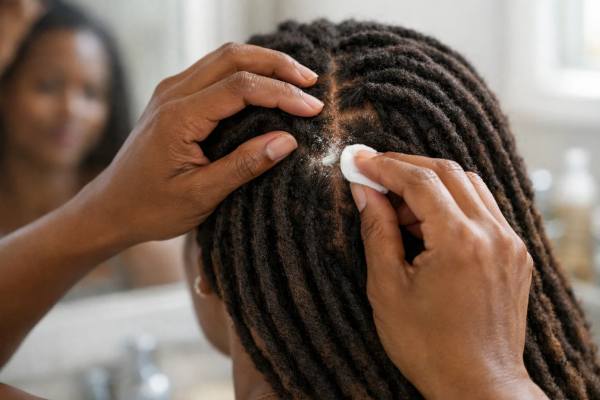
Locs can be low-manipulation, elegant, and deeply practical, but they are not low-maintenance at the scalp. The strands may be set and stable, yet the scalp underneath still produces oil, sweat, shed skin, and inflammation just like any other scalp. That is where many problems begin. What gets called “loc itch” is not always one thing. It can be product residue sitting at the root, dandruff or seborrheic dermatitis, tight retwisting, fragrance irritation, trapped lint, or simply a wash schedule that no longer matches your scalp.
Good loc care starts by separating the hair from the scalp in your mind. Mature locs do not need constant manipulation, but the scalp still needs regular cleansing, observation, and a routine that does not bury it under waxes, heavy oils, or chronic tension. Once you understand what buildup really looks like, how often your scalp actually wants washing, and which warning signs deserve more than a home fix, loc maintenance becomes clearer and much less frustrating.
Quick Overview
- Locs can thrive with regular washing when the scalp is cleansed well and the roots are dried thoroughly.
- The most common gains from better scalp care are less itch, less visible buildup, and fewer flakes trapped at the root.
- Persistent burning, oozing, soreness, or thinning is not routine “loc adjustment” and should not be ignored.
- A practical starting point is washing every 7 to 14 days, then adjusting based on sweat, oiliness, visible flakes, and how your scalp feels between wash days.
Table of Contents
- Why Locs Get Itchy and Coated
- Buildup Versus Dandruff and Lint
- How Often to Wash Locs
- How to Wash Locs with Less Residue
- Products, Retwists, and Drying Mistakes
- When the Scalp Needs Medical Help
Why Locs Get Itchy and Coated
Locs do not create scalp problems by themselves, but they can make ordinary scalp issues easier to trap and harder to ignore. The scalp beneath locs still sheds skin cells every day. It still produces sebum. It still reacts to sweat, friction, fragrance, pollen, dust, hard water, and styling products. The difference is that locs change how all of that is distributed, rinsed, and noticed.
Itch often starts with a simple imbalance. The scalp may be going too long between washes for its oil level, workout routine, climate, or product load. Or the opposite may be true: a person may be washing often but layering on oils, edge products, gels, butters, and sprays that never fully leave the roots. In both cases, the scalp becomes congested. What follows can look similar from the outside: itch, flakes, residue at the base, and an urge to scratch.
Common causes of loc-related scalp itch include:
- sweat and sebum sitting too long at the root
- dandruff or seborrheic dermatitis
- fragrance or preservative irritation from scalp products
- retwists that are too tight
- dry shampoo, oil, gel, or wax buildup
- incomplete rinsing after shampoo
- prolonged dampness after washing
This is why itch should never be treated as a single diagnosis. A dry-feeling scalp is not always dehydrated. An oily-looking scalp is not always dirty. A flaky scalp is not always dandruff. One of the biggest mistakes in loc care is assuming every itch calls for more oil. Sometimes that does the opposite of what you want. It can trap residue against the scalp, hold onto lint, and make yeast-driven flaking more stubborn.
The structure of locs also changes the feedback loop. Loose hair may show product coating quickly through limp roots or visible residue on the strands. Locs can hide that longer. By the time the scalp feels truly uncomfortable, there may already be a layer of mixed scale, sweat salts, and product sitting around the root.
Another overlooked factor is lifestyle. Exercise, helmets, scarves, hard hats, dusty environments, and hot climates all increase what the scalp has to manage. A wash schedule that works during a cool month may fail completely during a humid one. Loc care works best when the routine responds to the scalp’s behavior rather than following a fixed myth about how rarely locs should be washed. For a broader foundation, this guide to seborrheic dermatitis and scalp triggers is useful when flakes and itch keep returning.
The most helpful mindset is this: your locs may be stable, but your scalp is dynamic. A good routine watches the roots, not just the style.
Buildup Versus Dandruff and Lint
One of the hardest parts of loc care is figuring out what you are actually seeing. White or gray material in locs is often labeled “buildup,” but that word gets used for several different things. Sometimes it really is product residue. Sometimes it is dandruff scale from the scalp. Sometimes it is lint caught in the fiber. Sometimes it is a mix of all three.
True product buildup usually looks dull, filmy, or cloudy rather than flaky. It often collects where products are most heavily used: near the roots, around the retwist, or inside the upper shaft where creams, gels, butters, and waxes have been layered repeatedly. It may feel tacky when wet or leave the loc looking coated after it dries. Buildup often gets worse when products are rich, sticky, or difficult to rinse.
Dandruff and seborrheic scale behave differently. They begin at the scalp, not in the middle of the loc. You may notice loose flakes on the scalp surface, greasy scale clinging around follicles, or itching that temporarily improves after washing and then returns. If the flakes are mostly sitting on the scalp and along the partings, think scalp condition first.
Lint has its own pattern. It tends to lodge in the body of the loc, especially in older, more textured locs that rub against towels, blankets, collars, sweaters, and fleece. It does not dissolve when shampoo hits it. It looks fibrous or fuzzy rather than waxy. It also tends to be worse in lighter-colored locs or locs with frequent contact against shedding fabrics.
A few clues can help separate them:
- Buildup: cloudy film, sticky feel, dull root area, worse after heavy products
- Dandruff or seborrheic scale: itch plus flakes starting at the scalp, sometimes oily or yellowish
- Lint: fibers embedded in the loc shaft, often dry and thread-like
- Hair casts or debris: cylinder-like material around the shaft near the root, sometimes linked with traction or scalp scale
This matters because the fix changes with the cause. Product buildup calls for simpler formulas, more complete rinsing, and sometimes a clarifying step. Dandruff needs scalp-focused treatment, not just a cleaner loc. Lint needs prevention through fabric habits and product restraint more than aggressive washing alone.
There is also a timing clue. If the scalp feels better right after washing but the locs still look dull or cloudy when dry, residue in the hair shaft may be part of the issue. If the locs look mostly fine but the scalp starts itching again within days, a scalp condition may be doing more of the work.
The most useful shift is to stop treating every white speck as a moral failure in your routine. It is information. The better you identify the source, the less likely you are to overcorrect. If you suspect product residue is a major part of the picture, this guide to fixing product buildup gently can help you reset without turning every wash into a harsh strip-down.
A clearer scalp starts with clearer pattern recognition. Once you know what the debris is, care gets much more precise.
How Often to Wash Locs
“How often should I wash my locs?” sounds like a single question, but it is really four questions at once: How oily is your scalp? How much do you sweat? How many products are you using? And what stage are your locs in? The answer is rarely the same for every person with locs.
A useful starting range for many people is every 7 to 14 days. That schedule is often frequent enough to control itch, flakes, sweat, and odor without pushing the hair into unnecessary handling. But a starting range is not a rule. Some scalps need weekly washing. Some can stretch a bit longer in cooler weather or with lighter product use. The scalp decides.
You may need more frequent washing if you:
- exercise several times a week
- sweat heavily at the scalp
- have dandruff or seborrheic dermatitis
- use scalp oils, gels, or sprays often
- work in heat, dust, or under head coverings
- notice itch or flakes before your next wash day arrives
You may tolerate a longer gap if you:
- have a calmer scalp with minimal oiliness
- use very few products
- are not sweating much
- do not develop odor, flakes, or residue between washes
Starter locs often make people nervous about cleansing. That fear is understandable, but avoiding washing for too long can create a different set of problems: scale, itch, odor, and residue that become harder to remove later. Starter locs may need a gentler technique, lighter handling, and realistic expectations about a little frizz, but the scalp still benefits from cleansing.
The better question is not “How rarely can I wash?” It is “How long does my scalp stay comfortable and clear?” Once you notice that itch, visible scale, or heaviness consistently starts by day 8, day 10, or day 14, you have real information. Build your routine around that pattern instead of around folklore.
There is also a seasonal layer. A winter schedule may be too infrequent in summer. A sedentary month may not resemble a month of workouts, travel, or protective headwear. Loc care tends to work best when washing frequency flexes with life rather than staying fixed all year.
If you are unsure where to start, try this approach:
- Wash every 10 to 14 days for a month.
- Track itch, flakes, odor, and root feel.
- Move to weekly if symptoms return before the next wash.
- Stay there if the scalp becomes calmer and cleaner.
That kind of adjustment is more reliable than copying someone else’s routine. For a broader framework, this guide on how often to wash based on scalp type can help you think through oiliness, sweat, and sensitivity more systematically.
Locs do not need neglect to mature well. They need a wash rhythm that respects the scalp as much as the style.
How to Wash Locs with Less Residue
Washing locs well is less about scrubbing harder and more about moving water, cleanser, and rinse time where they matter most. The scalp needs the most attention. The locs need thorough saturation and thorough rinsing. Residue problems often come from using too much product, not enough water, or not enough rinse-out time.
A cleaner wash day usually starts before shampoo touches the hair. Fully saturate the locs with warm water first. This helps loosen surface debris and gives the cleanser a better chance of spreading evenly at the scalp. Shampoo that is dropped onto half-wet locs often sits where it lands and becomes part of the residue problem.
A practical loc wash routine often looks like this:
- Saturate the scalp and locs completely with water.
- Apply shampoo mainly to the scalp and root area.
- Use fingertips, not nails, to massage along the parts and base of the locs.
- Allow the lather to move down the locs rather than packing product into the shaft.
- Rinse longer than you think you need to.
- Repeat only if the first wash barely cuts through sweat or product.
For starter locs, gentleness matters more than avoidance. Some people prefer a mesh cap or lighter pressure early on. The goal is still to cleanse the scalp, even if the technique is more controlled. Mature locs usually tolerate a more straightforward wash, but they also take longer to rinse and dry.
Clarifying can help when residue is obvious, but it should not become every wash by default. A clarifying shampoo is a tool, not a lifestyle. Used occasionally, it can lift stubborn film. Used too often, it can leave both scalp and strands feeling stripped. If you already suspect stubborn residue, this guide to clarifying shampoo frequency and timing can help you decide when a reset wash makes sense.
Drying matters almost as much as washing. Locs hold water. If the roots stay damp for hours and the loc body stays wet deep inside, odor and discomfort can creep in. After washing, press out water with a clean towel rather than rough rubbing. Then give the locs enough airflow and time to dry fully. Some people air-dry well in warm conditions. Others do better finishing with a dryer on a moderate setting. The key is not the method itself. It is making sure the roots and inner locs do not remain damp all day.
The cleanest loc routines are usually the simplest. Enough water. Enough rinse time. Enough drying time. Most buildup problems do not come from a lack of effort. They come from excess product and incomplete removal. When washing gets simpler, the scalp often gets quieter.
Products, Retwists, and Drying Mistakes
Many scalp problems blamed on locs are really routine problems created around locs. The biggest offenders are usually heavy products, frequent retwist tension, and poor drying habits. None of these mistakes look dramatic on day one. They accumulate.
The product issue is especially common. Locs are often given waxes, creams, edge controls, butters, pomades, thick oils, and sheen sprays in the name of neatness or moisture. The trouble is that a scalp does not read those products as “care” just because they smell good or look glossy. It reads them as material that has to be tolerated, mixed with sebum, and eventually removed. If removal never fully happens, the result is a root area that feels coated and increasingly itchy.
A lighter product philosophy usually works better:
- use fewer products, not more categories
- favor scalp-only application when the scalp actually needs something
- avoid repeated layers of wax and sticky retwist products
- be careful with heavy oils if itch or dandruff is already present
- stop adding product to “fix” visible residue without first washing it out
Retwisting deserves equal attention. A fresh retwist can look clean and organized, but if it is too tight, the scalp often tells you immediately. Soreness, bumps, tenderness, and a pulling sensation are not normal signs of a neat style. Chronic tension around the front, temples, and nape can slowly turn maintenance into breakage or traction-related thinning. For a practical framework, these hairline-saving tension habits are helpful when styling starts to feel like stress.
Drying habits are another weak point. A loc routine can be careful and still go wrong if the hair stays damp too long. Sleeping on wet locs, tying up wet locs tightly, or keeping them covered before they are dry can leave the scalp uncomfortable and the locs musty. Persistent dampness also makes it harder to judge what is true buildup versus residue that has been reactivated and redistributed.
Three quiet mistakes tend to repeat in loc routines:
- reapplying oil to an itchy scalp instead of washing
- retwisting too often just to keep the roots looking “fresh”
- hiding damp locs under wraps, hats, or scarves before they are dry
There is also the issue of sensitivity. Some people do not have a dirty scalp problem at all. They have a reactive one. Fragrance, essential oils, preservatives, or even surfactants in a “natural” mist can cause itch and flaking that look like buildup at first glance. If every new scalp product seems to make things worse, consider whether the problem is irritation rather than dryness. This guide to product allergy versus irritation can help you sort that out.
The best loc routines are not the ones with the most steps. They are the ones with the fewest obstacles between a calm scalp and a complete rinse.
When the Scalp Needs Medical Help
Some scalp problems in locs are routine care issues. Others are medical problems that happen to be showing up under locs. Knowing the difference matters because the longer true inflammation or traction goes untreated, the harder it can be to reverse.
It is time to look beyond home care if you have itch that keeps returning despite a cleaner routine, thick flakes that cling to the scalp, oozing, pustules, odor that persists right after washing, or visible thinning around the hairline or crown. Locs can sometimes delay recognition because the style itself draws the eye. Meanwhile, the scalp beneath may already be showing signs of seborrheic dermatitis, psoriasis, contact dermatitis, folliculitis, or traction alopecia.
Warning signs worth taking seriously include:
- scalp pain or burning
- red or thickened patches
- pus-filled bumps or crusting
- bleeding from scratching
- a receding hairline or thinning edges
- widened parts between locs
- patchy loss that seems unrelated to retwist pattern
- itch that does not improve with routine changes
Shedding and breakage also deserve context. Not every loose hair means disease, but ongoing scalp inflammation can contribute to more shedding and weaker retention over time. The same is true for chronic tension from retwisting, interlocking done too tightly, or styles that repeatedly pull locs upward or backward.
A dermatologist is especially helpful when the diagnosis is unclear. What looks like dry scalp may really be seborrheic dermatitis. What looks like buildup may partly be psoriasis scale. What feels like “tender roots after maintenance” may actually be early traction. Getting the diagnosis right saves time, money, and frustration.
A useful threshold is this: if the problem is persistent for several weeks, worsening, or visibly affecting density, stop trying to out-product it. Seek evaluation. That does not mean locs are the problem. It means the scalp needs a more precise answer than trial and error.
You may also need help if your routine has become a cycle of short-term relief followed by fast relapse. That pattern often signals that cleansing is helping symptoms without addressing the real driver. If your scalp keeps rebounding into itch, flakes, or tenderness, this guide on when to see a dermatologist for scalp or hair loss issues can help you judge urgency.
Locs should not require a suffering mindset. A healthy scalp under locs usually feels quiet most of the time. When it stops feeling quiet, believe the signal. Early attention is almost always easier than repair later.
References
- Weekly hair washing: The recommended solution for women with afro-textured hair to alleviate dandruff and scalp discomfort 2024
- Afro-textured hair care: a narrative review and recommendations for dermatologists 2026 (Review)
- Child and Adult Seborrheic Dermatitis: A Narrative Review of the Current Treatment Landscape 2025 (Review)
- Hair Product Allergy: A Review of Epidemiology and Management 2024 (Review)
- The art of prevention: It’s too tight—Loosen up and let your hair down 2021 (Review)
Disclaimer
This article is for educational purposes only and is not a substitute for medical advice, diagnosis, or treatment. Scalp itch, flakes, buildup, tenderness, and thinning can result from routine care issues, but they can also reflect seborrheic dermatitis, psoriasis, allergic contact dermatitis, folliculitis, traction alopecia, and other scalp disorders. If symptoms are persistent, painful, oozing, or associated with hair loss, professional evaluation is the safest next step.
If this article helped, please share it on Facebook, X, or your preferred platform so more people with locs can care for their scalp with less guesswork and more confidence.