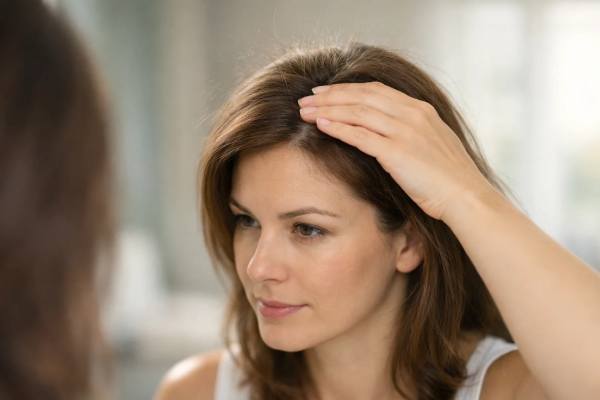
Halo frizz is the fuzzy, lifted layer that sits over otherwise normal-looking hair, often most visible at the crown, part line, and outer surface. It is easy to mistake for “baby hairs,” humidity, or a styling problem, but many cases are really a sign of surface-level breakage and weathering of the top layer. That outer layer takes the most daily stress: brushing, heat, UV exposure, friction from pillows and scarves, repeated washing, and the constant rubbing that comes from living in your hair. Once the cuticle lifts and roughens, strands stop lying neatly together, light reflects unevenly, and the top layer starts to look fluffy even when the rest of the hair seems smooth. The good news is that halo frizz usually improves when you treat it as a fiber-care problem rather than a mystery. The right routine can reduce breakage, improve alignment of the hair surface, and make the top layer look calmer without making the roots greasy or flat. The real key is learning whether you are dealing with new growth, breakage, dryness, or a mix of all three.
Essential Insights
- Halo frizz is often caused by cuticle roughness and breakage in the top layer, not just by humidity alone.
- Smoother detangling, lower heat, and less friction can improve shine and reduce the fuzzy surface over time.
- Heavy oils and aggressive brushing can make the top layer look worse if the hair is already fragile.
- Apply leave-in or serum lightly to the outer layer and ends, then use the lowest heat and tension needed for styling.
Table of Contents
- What halo frizz really is
- Why the top layer breaks first
- Breakage vs baby hairs vs humidity
- The routine changes that help most
- How to style without making it worse
- When halo frizz needs a closer look
What halo frizz really is
Halo frizz is the soft-looking but stubborn fuzz that forms on the outermost surface of the hair. It usually appears across the top of the head, around the crown, and along the upper lengths where hair is most exposed to light, air, brushing, and touch. The reason it looks different from ordinary frizz is that it does not always affect the whole hairstyle. You can have smooth lower lengths and still see a cloudy ring of short, lifted strands on top. That pattern points to uneven wear of the hair shaft rather than a general problem with texture.
The top layer is more vulnerable because it acts like the hair’s first shield. It meets the sun, wind, heat tools, hats, pillow friction, and the brush before the inner layers do. Over time, the cuticle on that surface becomes rougher. When cuticle scales lift and the protective lipid layer is worn down, the strands stop gliding neatly past one another. Hair reflects less light, feels drier, tangles more easily, and starts to separate into a faint, fuzzy veil. That is why halo frizz often shows up with dullness and roughness before obvious split ends appear.
It also helps to understand that halo frizz is not a single diagnosis. It can come from several overlapping causes:
- Short broken strands from heat, rough detangling, tension, or chemical processing.
- Naturally shorter new growth growing in along the hairline and top layer.
- High humidity making a damaged cuticle swell and lift.
- Dryness and surface weathering from repeated washing, sun exposure, or friction.
That overlap is what makes halo frizz frustrating. A person may assume they simply need more moisture, then use heavy oils that flatten the roots while the fuzzy top layer stays lifted. Another person may keep straightening the surface to “seal” it, only to increase breakage from repeated heat. The visible symptom is the same, but the fix depends on what the top layer is reacting to.
A good first question is whether the frizz feels soft and springy, or rough and fragile. Soft, tapered strands near the hairline often behave more like regrowth. Rough strands with blunt or split ends usually point to breakage. When the texture feels crunchy, tangly, or uneven from the crown downward, the problem is usually not a lack of styling skill. It is hair weathering showing itself on the part of the head that takes the most daily damage.
If you want a broader framework for telling true loss from snapped strands, a guide to hair breakage versus hair loss can help you sort the pattern before you change your entire routine.
Why the top layer breaks first
The top layer breaks first because it lives the hardest life. It is the section that absorbs the most UV exposure, takes the most brushing pressure, and experiences the most contact with hot air, hot tools, clothing, headrests, and pillows. Hair is strongest when its cuticle remains smooth and intact, but everyday wear gradually strips away that protection. The outer lipid layer thins, the surface becomes more hydrophilic, and friction between strands increases. Once that process starts, the top layer begins to snag more easily and to fracture sooner than the better-protected hair underneath.
Heat is a major contributor. Blow-dryers, flat irons, and curling tools all place stress on the outermost hair first, especially if the tool is held close to the crown or repeatedly passed over the same visible sections. Even when heat does not create instant breakage, it can roughen the surface enough that the next few rounds of combing, washing, or weather exposure finish the job. This is one reason halo frizz is common in people who style just the top layer for “polish” while leaving the rest of the hair alone.
Mechanical stress matters just as much. The top layer is often pulled tight into ponytails, clipped back, tucked behind the ears, brushed down to hide flyaways, or rubbed against collars and scarves. Wet hair is especially vulnerable because it is weaker and easier to stretch beyond its comfort zone. If you detangle aggressively after washing, the outer layer usually takes the first hit because it is where the brush meets resistance.
Chemical processing can make that surface even more fragile. Bleach, permanent color, relaxing, straightening, and repeated glossing can all increase porosity and reduce the hair’s tolerance for routine friction. The breakage may not appear the same week as the treatment. It often shows up later as a halo of short, uneven strands that refuse to lie flat no matter how much product you add.
Humidity then makes the problem more visible. Damaged hair takes in water more easily, swells faster, and loses smooth alignment more readily. That is why the top layer can look calm indoors and suddenly expand outdoors. The weather did not create the damage from nothing. It exposed a surface that was already more porous and less protected.
Several everyday habits quietly speed up the cycle:
- Repeated touch-ups with hot tools on the outer layer.
- Brushing from roots to ends in one forceful pass.
- Drying the crown too aggressively.
- Sleeping on rough fabric with loose hair.
- Wearing tight styles in the same direction every day.
For many people, halo frizz is not caused by one dramatic mistake. It is the visible result of small, repeated forms of wear. If heat is part of the pattern, comparing your routine with air-drying and blow-drying damage can help you reduce stress without abandoning every styling habit you enjoy.
Breakage vs baby hairs vs humidity
One of the hardest parts of halo frizz is figuring out what you are actually seeing. Not every short strand is broken, and not every fuzzy top layer means the hair is damaged beyond repair. In practice, halo frizz usually comes from a mix of three things: new growth, breakage, and moisture response. The goal is to estimate which one is leading the picture.
Baby hairs and new growth are usually softer, finer, and more tapered at the ends. They often cluster near the hairline, temples, and part. They may rise a little, but they do not usually feel rough or catch on neighboring strands. They also tend to look more uniform. When you see many fine hairs of a similar short length along the hairline, especially after a period of shedding or postpartum regrowth, that usually points to new growth rather than widespread breakage.
Breakage looks different. Broken strands often appear at irregular lengths, not just near the front but across the top surface and outer canopy. The ends may look blunt, frayed, or bent. The hair can feel dry, rough, or weak when you smooth it between your fingers. Breakage also tends to show up with other clues: more tiny pieces in the sink, tangling near the crown, loss of shine, and a top layer that never seems to blend with the rest of the style.
Humidity-related frizz is often the amplifier rather than the whole cause. Healthy hair can puff in humid weather, especially curls and waves, but damaged top-layer hair reacts more dramatically. It absorbs moisture unevenly, the cuticle lifts, and the already rough surface becomes more obvious. This is why a person may think humidity is the enemy when the deeper issue is porosity and weathering.
A quick mirror test can help:
- Look at the ends of the short hairs if you can.
- Check whether the short strands are concentrated at the hairline or scattered all over the crown.
- Notice whether they feel silky and flexible, or rough and stubborn.
- Compare a humid day with a dry indoor day. If the halo doubles in size outdoors, moisture response is likely part of the picture.
Another detail matters: breakage does not always mean the entire strand has split from the tip. Some hair simply fractures higher up the shaft after repeated friction, heat, or tension. That creates the floating cloud effect, because the broken pieces are too short and light to stay aligned with the longer lengths around them.
Detangling technique is often the hidden divider between regrowth and breakage. If your top layer worsens after wash day, look closely at how you brush wet hair, how much tension you use, and whether you start at the roots. A careful review of wet versus dry detangling can reveal why the canopy gets fuzzy even when the ends seem fine.
The routine changes that help most
Halo frizz improves fastest when the routine becomes gentler in the places that matter most: cleansing, detangling, conditioning, drying, and nighttime friction. The aim is not to make hair perfectly flat at all times. It is to reduce new breakage while giving the top layer enough slip and protection to lie smoother.
Start with wash day. Hair that is already fragile does not benefit from rough scrubbing, tight towel wrapping, or piling the lengths into a knot on top of the head. Cleanse the scalp well, but handle the canopy and lengths with a lighter touch. When you condition, focus on the upper lengths as well as the ends. Many people apply conditioner only from the ears down, then wonder why the top layer stays rough. The canopy often needs a light coating too, especially if it is color-treated or frequently exposed to heat.
Detangling should be slower than most people think. Use fingers, a wide-tooth comb, or a flexible detangling brush, and work from the ends upward in sections. That one change can reduce a surprising amount of stress on the top layer. If the hair snags every wash day, it is often a sign that the surface needs more lubrication or more patient sectioning, not more force.
Leave-in products also help, but placement matters. Halo frizz responds best to a small amount spread over the outer layer and mid-lengths, not a heavy coat pressed onto the roots. Lightweight creams, leave-ins, or smoothing serums can reduce friction and help the cuticle lie flatter. Too much product, however, makes the crown greasy while the broken pieces still stick up.
Night care is often overlooked. The top layer spends hours rubbing against pillow fabric, especially if you sleep with loose hair and move frequently. Gathering hair into a loose protective style and reducing fabric friction can make the canopy look calmer by morning. If that is a weak point in your routine, comparing silk pillowcases and satin bonnets may help you pick the easier solution for your sleep habits.
The routine shifts that tend to help most are simple:
- Lower the tension and speed of detangling.
- Condition the canopy lightly instead of ignoring it.
- Use a leave-in or serum in tiny amounts on the outer layer.
- Reduce repeated heat passes on the visible top section.
- Protect the hair overnight from rubbing and tangling.
What usually does not help is chasing the frizz with more and more product. Halo frizz is often a structure problem before it is a moisture problem. Once the surface is damaged, the hair needs less force, less friction, and more consistent protection. When those basics improve, the canopy usually becomes smoother within weeks, even before all the shorter broken strands grow out.
How to style without making it worse
Styling halo frizz is a balancing act. You want the outer layer to look smoother today, but you do not want to create more breakage for next month. The safest approach is to aim for less tension, less heat, and better surface slip rather than a rigid, pressed-flat finish.
When blow-drying, start by removing excess water gently instead of rubbing the hair hard with a towel. Use a leave-in or smoothing product first, then dry in sections with steady airflow rather than blasting the crown from very close range. Keeping the dryer moving matters. Repeatedly overheating the same top section is one of the fastest ways to keep the halo cycle going. For many people, the best cosmetic result comes from drying the hair until mostly dry, then spending only a short time refining the outer surface.
Brush choice matters too. Dense bristles and high tension can make the canopy look polished for an hour and more fragile over time. A gentler brush or a lower-tension finishing pass is often enough. The goal is to encourage alignment of the cuticle, not force the hair into submission. If you use hot tools, reserve them for occasional refinement rather than daily rescue work on the same few inches of top-layer hair.
Product layering should stay light and strategic:
- Apply a leave-in or lightweight cream to damp hair.
- Add heat protectant if you will blow-dry or use hot tools.
- Finish with a tiny amount of serum only where the halo is most visible.
- Stop before the roots look shiny or separated.
This order works because each product has a different job. Leave-ins add softness and slip. Heat protectants reduce thermal stress. Serums help the surface reflect light more evenly and resist humidity. Confusing those roles often leads to overuse of one product and underuse of the one that actually matters. If hot tools are part of your routine, it helps to understand how heat protectant works so you are not relying on shine serum alone.
One styling myth deserves caution: trying to “repair” halo frizz by sealing the top layer with very high heat. Hair can look sleek immediately after that kind of styling, but the improvement is cosmetic and short-lived if the fiber underneath keeps accumulating stress. Another common mistake is aggressively brushing down the halo after it dries. That often creates more static and more fracture, especially in already weathered hair.
If you want a smoother top layer, think in terms of persuasion rather than force. Gentle sectioning, moderate airflow, low repeated heat, and a light finishing film usually outperform intense tension and repeated passes. The hair may not look lacquered flat, but it will generally look healthier, shinier, and more consistent over time.
When halo frizz needs a closer look
Most halo frizz is a cosmetic hair-shaft issue, but there are times when it deserves a closer look. The first is when the top-layer fuzz is accompanied by obvious thinning, scalp symptoms, or shedding that seems out of proportion. Breakage and hair loss can coexist, and sometimes what looks like a fuzzy halo is really regrowth after a shed or diffuse thinning that has changed the overall density of the top layer.
Another reason to look more closely is when the texture changes suddenly. If the canopy becomes dramatically rougher after coloring, straightening, bleaching, or a new styling routine, you may be seeing acute chemical or heat damage rather than ordinary weathering. That is especially likely when the top layer feels gummy when wet, brittle when dry, or impossible to detangle without snapping. In those cases, the right response is often to stop the most aggressive process, reduce heat, and focus on damage control rather than simply trying new frizz products.
Scalp discomfort also changes the picture. Itch, burning, scaling, tenderness, or inflamed follicles point away from a simple styling issue and toward scalp disease, product reaction, or inflammation that may be affecting the surface hair. Halo frizz itself does not cause scalp symptoms. If the scalp is talking, it deserves its own assessment.
It is also worth paying attention to the distribution. Halo frizz that is isolated to the crown and outer canopy often fits weathering. Short, broken patches concentrated along the hairline or temples can point more strongly to tension from styling habits, clips, or repeated brushing in the same area. If you wear tight updos often, a related guide to preventing hairline thinning from tight hairstyles may help you catch a tension pattern early.
Consider professional advice when:
- The breakage is getting worse despite gentler care.
- The scalp burns, itches, flakes, or feels sore.
- The hair has been recently bleached or chemically straightened and now feels unusually weak.
- There are patchy areas, sudden shedding, or obvious thinning along with the frizz.
- The hair snaps easily even with minimal handling.
A stylist can sometimes spot surface damage patterns quickly, but a dermatologist is the better choice when scalp symptoms, hair loss, or a medical trigger may be involved. The main point is that halo frizz is common, but it is not meaningless. It is the hair fiber’s way of showing stress. Once you read that signal correctly, the solution is usually calmer and more precise than the usual frizz battle.
References
- On Hair Care Physicochemistry: From Structure and Degradation to Novel Biobased Conditioning Agents 2023 (Review)
- The exposome impact on hair health: etiology, pathogenesis and clinical features ‒ Part I 2024 (Review)
- With or without Silicones? A Comprehensive Review of Their Role in Hair Care 2025 (Review)
- Cosmetic Trichology: Hair Cosmetics, Styling, and their Effect on the Hair Fiber! 2020 (Review)
- Hair Shaft Damage from Heat and Drying Time of Hair Dryer 2011 (Study)
Disclaimer
This article is for educational purposes only and is not medical advice, diagnosis, or treatment. Halo frizz is often related to hair-shaft damage, friction, humidity response, or routine stress, but similar changes can sometimes overlap with scalp disorders, shedding, or other causes of hair fragility. Seek advice from a qualified clinician or dermatologist if you have sudden hair thinning, scalp pain, itching, scaling, patchy loss, or breakage that worsens despite gentler care.
Share this article on Facebook, X, or your preferred platform if it helped you understand why the top layer breaks first and how to smooth halo frizz without creating more damage.