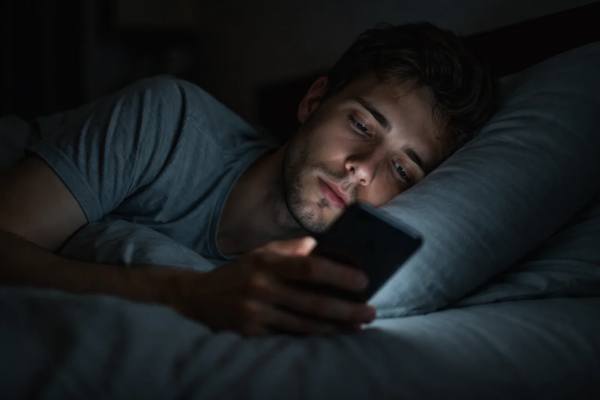
Phone addiction rarely begins with a dramatic turning point. It grows quietly through small habits that feel ordinary: checking a notification at a stoplight, reaching for the phone before getting out of bed, scrolling to ease stress, filling every pause with a screen. For many people, smartphones are useful tools and social lifelines. For some, though, the device slowly shifts from convenience to compulsion. The problem is not simply “using a phone a lot.” It is losing the ability to stop, tolerate disconnection, or direct attention where it matters most. When that happens, the phone can start shaping mood, sleep, concentration, relationships, and self-control in ways that feel far bigger than the device itself. Understanding smartphone addiction means looking past screen-time totals and asking a harder question: has the phone become something you rely on so heavily that daily life feels harder without it?
Table of Contents
- What phone addiction usually means
- How smartphones turn checking into compulsion
- Signs, symptoms, and daily patterns
- Cravings, withdrawal, and phantom urgency
- Why smartphone addiction develops
- Sleep, attention, and real-life costs
- How the problem is recognized
What phone addiction usually means
Phone addiction is a widely used term for a pattern of compulsive smartphone use that becomes difficult to control and begins to interfere with daily life. In research settings, the issue is often described as problematic smartphone use or smartphone overdependence rather than a formal standalone diagnosis. That distinction matters. It means the problem is real and measurable, but not every heavy user fits a clinical disorder model, and high screen time alone is not enough to define addiction.
The clearest marker is loss of control. A person may intend to check one message and remain on the phone for forty minutes. They may pick it up automatically without any clear need. They may feel mentally pulled back to it even when trying to focus elsewhere. Over time, the phone becomes less a tool and more a reflexive answer to discomfort, boredom, uncertainty, or silence.
A useful way to think about it is to ask whether the device is still serving the person, or whether the person has started serving the device. Healthy use tends to remain flexible. The phone is put away during conversations, work blocks, meals, classes, driving, and sleep. Problematic use becomes sticky. The person feels compelled to check, scroll, refresh, respond, or “just look for a second,” even when they know it is disrupting something more important.
This pattern often includes several addiction-like features:
- preoccupation with the phone
- repeated failed efforts to cut back
- irritation or restlessness when unable to check it
- continued use despite harm
- needing more frequent engagement to feel satisfied or reassured
Phone addiction is also broader than any one app. For one person, the hook is messaging. For another, it is social media, news, shopping, games, videos, work email, or a mix of all of them. What they share is not content alone, but the role the phone begins to play in emotional regulation and attention management. The device becomes a quick route to stimulation, distraction, reassurance, or escape.
That is why the condition should not be reduced to “bad habits” or “weak discipline.” Smartphones combine social connection, novelty, entertainment, work demands, alerts, and endless personalization in one object that is rarely more than an arm’s length away. When use becomes compulsive, it can overlap with broader patterns of problematic digital dependence, but the phone itself remains the central delivery system. It is the constant portal, always available, always ready to answer the next urge to check.
At that point, the problem is no longer simply modern convenience. It is a dependence pattern that can reshape how a person pays attention, tolerates discomfort, and moves through everyday life.
How smartphones turn checking into compulsion
Smartphones are unusually effective at turning brief, useful actions into repeated, automatic behavior. They combine several powerful drivers in one device: social reward, novelty, uncertainty, convenience, and endless availability. That mix does not guarantee addiction, but it creates ideal conditions for compulsive use.
A smartphone is not one activity. It is many different rewards layered together:
- messages from people who matter
- feeds that refresh with new content
- short videos and games that fill idle time
- news that creates urgency
- alerts that suggest something important may be waiting
Each of these cues teaches the brain to stay on alert. The person does not always know what the next check will bring, and that uncertainty is part of the pull. Sometimes the phone offers something rewarding, sometimes something stressful, and often something trivial. But because the next check might matter, the mind keeps returning to it. Over time, checking stops being a deliberate decision and becomes a loop.
Design features amplify this pattern. Notifications interrupt thought and create a feeling of unfinished business. Infinite scroll removes natural stopping points. Personalized feeds deliver content tuned to the user’s interests and vulnerabilities. Read receipts, typing bubbles, streaks, and algorithmic recommendations all increase the sense that the phone is not passive. It is waiting, updating, calling the person back.
Another reason phones become addictive is that they collapse many different needs into one object. A person can seek relief from boredom, loneliness, social anxiety, uncertainty, procrastination, or low mood through the same small device. That makes the phone highly efficient as a coping tool. Instead of sitting with discomfort, the person can instantly switch state. A pause in conversation becomes scrolling. A hard email leads to checking messages. A dull moment becomes stimulation.
This constant switching also weakens natural recovery from urges. When every moment of boredom is filled, tolerance for boredom drops. When every moment of uncertainty is soothed by checking, tolerance for uncertainty drops too. The phone then feels more necessary, not less.
This process overlaps closely with broader patterns described in work on fragmented attention. A person may notice that they are no longer simply “distracted by the phone.” Instead, their attention begins to reorganize around the expectation of interruption. Deep work feels harder. Quiet feels restless. Waiting feels unbearable without a screen.
So smartphones turn checking into compulsion by making engagement frictionless and emotionally useful. The person does not just use the phone because it is fun. They use it because it is immediate, reliable, and woven into every transition. When that pattern repeats enough times, checking begins to feel less like a choice and more like the default setting of the day.
Signs, symptoms, and daily patterns
Phone addiction often shows itself in small, repetitive behaviors long before the person sees it as a serious problem. Because smartphone use is socially normal, the warning signs can be easy to minimize. The issue becomes clearer when the behavior starts to feel automatic, intrusive, and difficult to stop even when the person wants to focus elsewhere.
Common signs include:
- checking the phone immediately after waking
- picking it up repeatedly without a clear reason
- unlocking it reflexively during pauses, transitions, or moments of stress
- staying on the device much longer than intended
- struggling to finish tasks without checking notifications or apps
- feeling tense when the phone is not nearby or charged
Many people also develop “background preoccupation.” Even when the phone is not in use, part of attention remains tied to it. The person may wonder whether they missed something, mentally rehearse what might be waiting, or feel an urge to check during any lull. This makes concentration more brittle. Work, reading, conversation, driving, and rest all compete with the possibility of phone-based reward or reassurance.
Emotional symptoms are often just as important as behavioral ones. These may include irritability, restlessness, low frustration tolerance, unease during silence, and a feeling that ordinary life moves too slowly without phone stimulation. Some people notice that their mood becomes heavily dependent on what happens on the device. A message lifts them. Being ignored deflates them. A quiet period feels strangely unsettling.
There are also physical and practical signs:
- later bedtimes because of scrolling
- eyestrain or tension headaches
- neck, hand, or wrist discomfort
- missed deadlines and procrastination
- distracted walking or driving
- reduced engagement with people sitting right in front of them
A common pattern is “micro-use.” The person is not spending all day in obvious long sessions. Instead, they are using the phone in dozens or hundreds of tiny bursts. Those bursts keep the brain in a state of partial interruption and can be even more disruptive than one longer block because they train constant reorientation.
Another warning sign is concealment. The person may lower screen brightness around others, angle the phone away, minimize app use in conversation, or understate how much time they spend on it. This does not always reflect shame. Sometimes it reflects a growing awareness that the phone has more control than they want to admit.
These patterns can overlap with concerns like notification-driven attention hijacking, especially when the person is no longer responding to genuine needs but to a stream of prompts and urges. At that point, the question is not whether the phone is useful. It is whether its usefulness has turned into a habit that now competes with sleep, focus, presence, and self-direction.
When the device keeps pulling attention back despite repeated efforts to resist, addiction has likely become the more accurate frame.
Cravings, withdrawal, and phantom urgency
Phone addiction can produce craving and withdrawal-like experiences even though no chemical substance is being ingested. These reactions are usually psychological and behavioral, but they can still feel intense. The person may become agitated, distracted, or oddly empty when separated from the phone, even for a short time.
Cravings often show up as a powerful urge to check. The feeling may be triggered by boredom, anxiety, waiting, awkwardness, loneliness, or a passing sound that resembles a notification. Some people describe a sudden internal pressure to “just look quickly,” even when nothing urgent is happening. Others feel drawn to the phone whenever a task becomes difficult or emotionally uncomfortable.
Common craving patterns include:
- the urge to check during any moment of uncertainty
- repeated thought loops about what might be on the phone
- mental bargaining, such as “only one minute”
- difficulty staying present in offline activities
Withdrawal-like reactions can appear when the phone is left behind, powered off, taken away, or intentionally avoided. These may include irritability, restlessness, anxiety, reduced concentration, boredom intolerance, and a hollow feeling that something is missing. For some people, the discomfort is strongest in the first hour or two. For others, it grows during quiet evening periods when they are used to relying on the phone for stimulation and mood management.
A related phenomenon is phantom urgency. The person feels as though something important might be happening at any moment, even without evidence. They may sense phantom vibrations, imagine they heard a ping, or feel pulled to check simply because the possibility of missing out becomes intolerable. This can create the illusion that the phone is always needed “just in case,” even when repeated checking rarely reveals anything truly urgent.
The relief after checking is part of what keeps the loop alive. The person opens the phone, discomfort drops, and the brain learns again that checking works. But the relief is usually brief. Soon another urge appears, often triggered by the same emotional state or by the phone itself offering a new cue.
This cycle is especially strong when phone use overlaps with compulsive scrolling patterns. In those cases, the craving is not only for social contact or updates. It is also for the state of absorption that comes from continuously refreshing, scrolling, and consuming novelty. The person may no longer even enjoy the content much. They continue because stopping feels harder than continuing.
Withdrawal in phone addiction is not medically dangerous in the way alcohol or benzodiazepine withdrawal can be. Still, that does not make it trivial. If separation produces strong distress, interferes with work or social functioning, or repeatedly drives the person back to the device despite clear intentions, it points to a real dependence process. The urge is not imagined. It is a learned response pattern that has become deeply embedded in how the person handles discomfort and attention.
Why smartphone addiction develops
Phone addiction usually develops through a combination of personal vulnerability, environmental design, and repeated emotional learning. It is rarely just one thing. Some people are more exposed to constant digital demands. Some are more sensitive to novelty or reassurance. Some use the phone heavily because it is the easiest available way to manage stress, loneliness, or procrastination. In many cases, all of these forces combine.
Several common risk factors can contribute:
- high stress and chronic overwhelm
- loneliness or unmet social needs
- anxiety, especially reassurance-seeking and uncertainty intolerance
- impulsivity and difficulty delaying reward
- poor sleep routines and frequent nighttime use
- heavy reliance on digital communication for work, school, or belonging
The emotional function of the phone is especially important. Many people do not become addicted because the device is uniquely pleasurable every time. They become addicted because it is reliable. It can distract from sadness, fill silence, soften awkwardness, postpone a difficult task, provide social proof, or create the feeling of being connected even when alone. Over time, the phone becomes less a communication tool and more a self-regulation device.
This is one reason phone addiction can overlap with mental health struggles. A person with anxiety may repeatedly check for reassurance. A person with low mood may turn to short bursts of stimulation to escape emotional flatness. A person who feels isolated may become dependent on the constant possibility of contact. The phone does not cause all of these states, but it can become tightly bound to how they are managed.
Habit strength also matters. When phone use is linked to waking up, commuting, breaks, meals, bedtime, and emotional stress, the behavior becomes cued from many angles. The person no longer needs a strong conscious urge each time. The body and mind begin to reach automatically. This can be even more powerful in environments where the phone is always visible, always charged, and always socially accepted.
Another contributor is the erosion of alternatives. If hobbies, exercise, face-to-face contact, rest, and reflective time slowly give way to screen time, the phone becomes the dominant source of stimulation and relief. At that point, even short periods without it can feel unusually dull or uncomfortable. This does not necessarily mean the person lacks willpower. It often means their reward landscape has narrowed.
The pattern can also reflect broader habits discussed in work on avoidance and procrastination. The phone offers a quick escape from tasks that feel uncertain, boring, or emotionally loaded. That short-term escape trains the person to reach for the device the next time discomfort appears.
So smartphone addiction develops when the phone repeatedly solves small immediate problems. It gives relief, stimulation, reassurance, and escape with almost no effort. The more often it plays that role, the more central it becomes. Eventually, the person may not know whether they are using the phone because they want to or because it has become the default answer to almost everything.
Sleep, attention, and real-life costs
The most damaging effects of phone addiction are often gradual rather than dramatic. A person may still function well enough on the surface while their sleep, attention, relationships, and sense of control steadily erode. Because the phone is woven into so many ordinary activities, these losses can be hard to see until they become persistent.
Sleep is often one of the first areas affected. Many people use the phone late at night when decision-making is already weaker and the mind is looking for reward or escape. A quick check turns into a scroll, a video, a message thread, or a search spiral. Bedtime shifts later, sleep becomes lighter or shorter, and the next day begins with fatigue. Fatigue then makes the person more likely to seek easy stimulation and distraction, which strengthens the same cycle again that evening.
Attention also suffers. Repeated phone checking trains rapid task-switching and weakens tolerance for sustained effort. The person may find it harder to read, study, work deeply, or stay mentally present in conversation. Even when the phone is face down, the possibility of a new alert can occupy part of attention. Over time, this can contribute to the feeling that focus is getting worse, a pattern closely related to difficulty concentrating in everyday life.
Other common harms include:
- lower productivity and more unfinished tasks
- poorer memory for conversations or reading
- less patience during slow or unstimulating moments
- more conflict with partners, family, or coworkers
- increased distracted walking or distracted driving risk
- reduced enjoyment of offline leisure and rest
Mood can be affected as well. Constant comparison, fragmented attention, and low-grade overstimulation can leave people feeling edgy, mentally tired, or emotionally thinner. Some people notice more anxiety when separated from the phone and more emptiness when using it heavily. Others feel socially saturated but personally disconnected, surrounded by contact yet lacking real presence.
Physical effects may also accumulate. Neck and shoulder tension, hand discomfort, headaches, eyestrain, and sedentary time can all increase with heavy use. These problems may seem minor one by one, but they become more significant when they are daily and tied to a behavior the person feels unable to control.
The biggest real-life cost is often narrowing. The phone begins taking over micro-moments, then evenings, then attention during work, meals, and relationships. The person is rarely fully absent, but they are less fully present. Their day becomes more reactive and less chosen.
This is why phone addiction should not be measured only by screen-time totals. The deeper question is what the phone is replacing: sleep, focus, stillness, boredom tolerance, intimacy, reflection, and uninterrupted life. When those losses become routine, the condition has moved well beyond harmless overuse.
How the problem is recognized
Phone addiction is recognized by pattern, impairment, and loss of control rather than by one single medical test. Because it is not a universally established formal diagnosis, clinicians often assess it using the broader framework of problematic smartphone use. The goal is not simply to label high phone use. It is to understand whether smartphone behavior has become compulsive enough to disrupt functioning and well-being.
A careful assessment usually asks:
- How often does the person check the phone each day?
- Do they repeatedly use it longer than intended?
- What happens emotionally when access is limited?
- Is the phone interfering with sleep, work, study, relationships, or safety?
- Are there repeated failed attempts to cut back?
- Is use driven mainly by need, by habit, or by distress relief?
A key distinction is between heavy engagement and problematic dependence. Someone may use a phone often because of work, parenting, logistics, or legitimate communication needs without showing compulsive loss of control. Another person may spend fewer total hours but still have a more severe problem because their use is intrusive, emotionally driven, secretive, and repeatedly harmful.
Clinicians also look at context. Is the phone acting as a coping tool for anxiety, loneliness, depression, boredom, or avoidance? Is it closely tied to social media, gaming, shopping, or news consumption? Does the person feel unable to sit with silence or disconnection? These questions help show whether the device is being used practically or whether it has become an emotional regulator.
One useful marker is flexibility. Can the person leave the phone in another room without disproportionate distress? Can they get through a conversation, meal, class, or focused work period without checking? Can they stop after responding to one message, or does each interaction expand into longer, harder-to-control use? The less flexibility they have, the stronger the concern becomes.
Recognition also involves honesty about consequences. If the person is losing sleep, missing deadlines, checking while driving, zoning out during conversations, or feeling chronically mentally scattered, the pattern deserves attention even if it looks socially normal.
This article focuses on the condition itself rather than detailed treatment, but some people eventually need more structured help found in resources on phone addiction treatment and recovery. Before treatment, though, naming the pattern accurately already matters. It shifts the conversation from vague guilt to a more useful understanding: this is not just “being bad with screens.” It is a learned, reinforced dependence pattern that has started taking too much control over attention, mood, and everyday life.
Once that becomes clear, the problem is easier to take seriously and much harder to dismiss as just modern living.
References
- Risk Factors of Smartphone Addiction: A Systematic Review of Longitudinal Studies 2024 (Systematic Review)
- Trends and Influencing Factors in Problematic Smartphone Use Prevalence (2012-2022): A Systematic Review and Meta-Analysis 2024 (Systematic Review and Meta-analysis)
- Problematic smartphone use and academic achievement: A systematic review and meta-analysis 2024 (Systematic Review and Meta-analysis)
- Associations of problematic smartphone use with depressive symptoms and suicidal ideation in university students before and after the COVID-19 outbreak: A meta-analysis 2024 (Meta-analysis)
- Dose-response analysis of smartphone usage and self-reported sleep quality: a systematic review and meta-analysis of observational studies 2023 (Systematic Review and Meta-analysis)
Disclaimer
This article is for educational purposes only and is not a diagnosis or a substitute for professional care. Phone addiction and problematic smartphone use can overlap with anxiety, depression, ADHD-related attention difficulties, sleep problems, burnout, loneliness, and other mental health concerns. If smartphone use is affecting your sleep, work, school performance, relationships, or safety, consider speaking with a qualified mental health professional. Seek urgent help if device use is linked with severe depression, self-harm thoughts, dangerous distracted driving, or inability to manage daily responsibilities safely.
If this article helped you, please consider sharing it on Facebook, X, or another platform where it may help someone else recognize the pattern earlier.