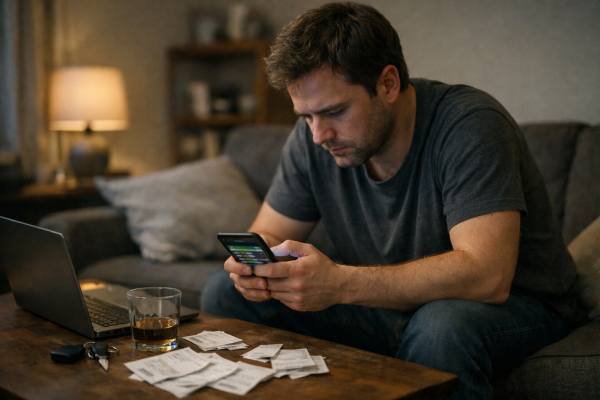
Gambling addiction, also called gambling disorder, can consume far more than money. It can absorb attention, distort judgment, erode trust, and turn hope into a repeating cycle of secrecy, chasing, and regret. A person may promise to stop after one last bet, then return within hours. They may hide losses, borrow money, miss work, withdraw from family, or feel briefly relieved only when the next wager is placed. What often looks like poor self-control from the outside is, in many cases, a serious behavioral addiction with emotional, financial, and mental health consequences.
Treatment works best when it addresses the full pattern, not only the gambling act. That means reducing access to gambling, understanding triggers, treating anxiety, depression, or substance use when present, rebuilding financial safety, and creating support that continues after the first crisis passes. Recovery is possible, but it usually begins with honest assessment and a structured plan rather than willpower alone.
Table of Contents
- When Gambling Needs Clinical Help
- What a Full Assessment Should Cover
- Reducing Access and Stopping the Chase
- Therapy That Targets the Gambling Cycle
- Treating Depression, Anxiety, and Other Overlap
- Family Support and Financial Repair
- Relapse Prevention and Long-Term Recovery
When Gambling Needs Clinical Help
Gambling needs treatment when it keeps happening despite clear harm and growing loss of control. That threshold is often crossed long before someone reaches the worst possible outcome. A person does not need to lose everything, commit a crime, or hit public ruin before care becomes appropriate. In fact, treatment tends to work better when it starts earlier, while relationships, finances, and daily functioning are still at least partly intact.
Many people delay help because gambling can be hidden for a long time. Online betting, sports wagering, casino apps, poker, slots, lottery products, and live-play platforms make it possible to gamble privately and repeatedly. Someone may continue going to work, paying some bills, and appearing outwardly fine while spending large parts of the day thinking about bets, planning the next deposit, or trying to win back what was lost. Family members often notice irritability, secrecy, and financial confusion before they understand the full pattern. Some people begin with one format and then migrate into online gambling, where access is faster and more constant.
Common signs that treatment is needed include:
- repeated loss-chasing after a bad night or bad week
- borrowing money, using credit, or selling possessions to keep gambling
- lying about time spent gambling or the size of losses
- feeling restless, angry, or panicked when trying to stop
- gambling during work hours, family time, or late at night despite exhaustion
- returning to gambling after promising loved ones or yourself that you were done
- using gambling to escape grief, stress, boredom, shame, or depression
- thinking about self-harm or feeling life is ruined after losses
Most people begin with outpatient treatment. That may include therapy, medical or psychiatric review if needed, practical support around money, and involvement of a trusted partner or relative. Outpatient care is often enough when the person can follow a safety plan and is not in immediate danger.
More intensive care may be needed when there is active suicidality, severe depression, heavy alcohol or drug use, violent conflict at home, psychosis, mania, or such poor control over money that the person cannot keep themselves safe between appointments. In those cases, stabilization comes first.
A key treatment message is that gambling disorder is not a character flaw. It is a pattern of compulsive behavior that can be treated. Recognizing that can reduce shame enough for the real work to begin.
What a Full Assessment Should Cover
A strong assessment should do more than ask how much money has been lost. Financial damage matters, but it is only one part of the clinical picture. Two people can lose the same amount and have very different levels of severity, risk, and treatment need. Good assessment aims to understand the full gambling cycle: what triggers it, what it provides in the short term, and what it costs over time.
A clinician will often start by mapping the gambling pattern in detail. That usually includes the forms of gambling involved, frequency of play, size of bets, time of day, access methods, deposits, borrowing, and whether the behavior has escalated. Someone may describe themselves as “just betting on sports,” but then reveal that they are also gambling on casino games, in-play markets, or other fast products between matches. Others shift between casino play, sports betting, fantasy contests, poker, or related behaviors depending on which one feels most urgent. Some people move between gambling and other speculative habits, including compulsive trading patterns, which can complicate recovery.
A careful assessment usually covers:
- Trigger states.
Does gambling spike during boredom, loneliness, conflict, payday, intoxication, or after a previous loss? - Chasing behavior.
Does the person increase bet size, take more desperate risks, or continue far longer than planned after losing? - Functional damage.
Has gambling harmed sleep, work, parenting, concentration, health, or relationships? - Financial reality.
What debts, hidden accounts, overdrafts, loans, or unpaid bills exist right now? - Mental health overlap.
Are anxiety, depression, ADHD, trauma, bipolar symptoms, or substance use making control harder?
Assessment should also explore what happens when the person tries to stop. Many people report irritability, intrusive thoughts, mental replay of bets, a strong urge to recover losses, or a sense of emptiness and restlessness when gambling is removed. That does not mean there is a physical detox in the same way seen with alcohol or opioids, but it does show how deeply the behavior can be tied to regulation of mood and reward.
Risk review is essential. A clinician should ask directly about suicidal thoughts, self-harm, domestic conflict, criminal acts used to fund gambling, and whether the person is safe with current access to money. Major losses can trigger acute hopelessness, especially when secrecy is breaking down.
The best assessments leave the person with a treatment map. They should understand not only that gambling is a problem, but what the specific cycle looks like in their own life and which points in that cycle are most important to change first.
Reducing Access and Stopping the Chase
One of the most practical parts of treatment is reducing the ease with which an urge turns into a bet. This step matters because gambling disorder often runs on speed. A stressful argument, a payday deposit, a sports notification, or a burst of shame can become a wager within minutes. When access stays immediate, even strong motivation can collapse under pressure.
This part of recovery is not symbolic. It is behavioral protection. The goal is to create enough friction between impulse and action that the person has time to think, reach out, and use treatment tools before money disappears again. Many patients resist this step because they want to prove they can stop through discipline alone. In practice, recovery becomes more reliable when the environment changes along with intention.
Common access-reduction steps include:
- deleting gambling apps and removing saved passwords
- blocking gambling websites and disabling app-store purchases
- turning off marketing emails, betting alerts, and promotional texts
- closing gambling accounts or using formal self-exclusion tools where available
- restricting access to cash, credit cards, or fast bank transfers
- asking a trusted person to oversee major financial transactions temporarily
- avoiding high-risk places and times, especially late nights, paydays, and sporting events that trigger betting urges
A critical part of this stage is stopping the chase. Chasing losses is one of the most destructive patterns in gambling disorder because it turns the next bet into an imagined rescue. Instead of treating the loss as damage that now needs containment, the person treats it as a problem the same system can solve. That thought pattern is emotionally powerful and often catastrophic financially.
Treatment plans work better when the person identifies their highest-risk chase moments in advance. These may include the first loss of the day, the third deposit, a near miss, a win that creates false confidence, or a feeling of humiliation after admitting losses. Some people are most vulnerable after sports results. Others relapse in response to casino-style products and fast games. A pattern that resembles casino gambling often needs especially strong access limits because the speed of play leaves almost no time for reflection.
Harm reduction may also be needed early on. Someone who cannot yet trust themselves with unrestricted money access may need temporary financial supervision. That can feel humiliating, but it often protects treatment from being undone by one impulsive hour.
This phase of care is not the whole recovery process. But it is often the first clear sign that treatment is becoming real. Without it, therapy can remain intelligent but fragile, always one trigger away from another damaging spiral.
Therapy That Targets the Gambling Cycle
Psychotherapy is the core treatment for gambling addiction because the problem is sustained by a repeatable cycle of thought, feeling, action, and short-lived relief. General advice about self-control or better budgeting rarely reaches that cycle deeply enough. A person usually needs treatment that helps them see the gambling process clearly, interrupt it sooner, and tolerate the distress that appears when it is no longer available.
Cognitive behavioral therapy is the best-supported psychological treatment for gambling disorder. In practice, CBT often focuses on several linked problems at once:
- distorted beliefs such as “I am due for a win” or “I can recover it if I stay calm”
- selective memory that highlights wins and minimizes full losses
- emotional triggers such as shame, loneliness, boredom, anger, and despair
- rituals around checking odds, deposits, or near-miss outcomes
- identity beliefs such as “winning proves I am not a failure”
A therapist may ask the person to examine one recent episode in detail: what happened just before the urge, what story was running through the mind, what feeling was present in the body, what action followed, what relief appeared, and what the consequence became later. This process turns a chaotic habit into a sequence that can actually be changed.
Motivational interviewing can also be helpful, especially early in care. Many people do want to stop, but they also do not want to let go of the fantasy that one more win could fix everything. Treatment has to respect that ambivalence while still challenging it. If the person feels judged or cornered, they may simply become more secretive.
Therapy also often includes practice with urges. A person may need to learn how to sit through a betting urge, delay action, call someone, leave a triggering setting, or survive the feeling of missing out without turning to a wager. That sounds simple on paper, but in the moment it can feel profoundly difficult. Skills borrowed from distress tolerance work can be useful here, especially for patients who move quickly from feeling to acting.
Different formats can help different people. Some benefit from individual therapy because privacy and complexity matter. Others gain a great deal from group treatment, where hearing familiar stories can reduce isolation and shame. Remote care can improve access. In-person work can sometimes strengthen accountability. The best format is the one the person will engage with consistently.
The purpose of therapy is not to lecture someone into better choices. It is to weaken the emotional and cognitive machinery that makes gambling feel like an answer, even after it has repeatedly caused harm.
Treating Depression, Anxiety, and Other Overlap
Gambling disorder often sits alongside other mental health problems, and treatment becomes more effective when those are addressed directly. Some people gamble to escape depression, low mood, or numbness. Others gamble because anxiety, stress, or internal emptiness becomes briefly bearable during play. Some are most at risk when alcohol lowers inhibition. Others show intense impulsivity linked to ADHD or become especially dangerous during mood instability.
Common overlaps that require direct attention include:
- depression after losses or after disclosure to family
- anxiety related to debt, secrecy, and uncertainty
- ADHD-related impulsivity and difficulty tolerating delay
- alcohol or stimulant use that fuels longer or riskier sessions
- trauma-related escape, self-punishment, or dissociation
- sleep disruption that worsens judgment and reactivity
One major reason this matters is suicide risk. Gambling losses can produce an unusually sharp combination of shame, panic, hopelessness, and perceived irreversibility. A person may feel that they have failed financially, morally, and relationally all at once. If they also fear exposure or legal consequences, the risk can rise quickly. Treatment should therefore include direct assessment of self-harm thoughts, not vague reassurance.
Medication can play a role, but usually not as the main treatment. There is no single medication universally established as standard treatment for gambling disorder. In selected patients, especially in specialist care, opioid antagonists such as naltrexone or nalmefene may be considered when urges remain severe or when psychosocial treatment alone has not been enough. These decisions should be individualized and monitored carefully because side effects, medical history, and co-occurring conditions matter.
More commonly, medication may be used for co-occurring depression, anxiety, ADHD, sleep problems, or bipolar disorder when those diagnoses are present. The purpose is not to medicate away gambling directly. It is to reduce the psychiatric burden that keeps gambling acting as an emotional crutch.
Substance overlap deserves especially clear treatment. If someone routinely gambles while drinking, their ability to follow a gambling recovery plan drops sharply. In those cases, care may need to address alcohol use disorder or other substance problems at the same time rather than treating them as secondary.
The broader principle is simple: gambling recovery becomes sturdier when the person no longer needs betting as their fastest route to stimulation, relief, or escape. Treating co-occurring mental health problems helps make that possible.
Family Support and Financial Repair
Gambling recovery is not only about stopping bets. It is also about repairing the financial and relational damage the disorder created. Many people entering treatment have hidden accounts, unpaid bills, broken promises, and family members who no longer trust what they hear. Treatment is stronger when it addresses that reality directly instead of pretending abstinence alone will solve everything.
Financial repair usually starts with clarity. The person may need one honest document that lists all debts, gambling-related loans, overdrafts, credit cards, unpaid bills, and any remaining protected assets. This can feel brutal, especially if the person has spent months keeping the truth fragmented. But without a full picture, recovery planning stays vague and fantasy-driven.
Family or partner involvement can be valuable when it is structured well. Helpful support often includes:
- reinforcing financial transparency
- helping manage money temporarily if agreed in treatment
- refusing to provide secret bailout money
- learning how to respond to relapse signs early
- separating support from endless rescue
- protecting children, housing, and essential bills first
Loved ones usually need support too. They may be dealing with anger, grief, fear, humiliation, and chronic hypervigilance around money. Some have been lied to repeatedly. Others have had to cover rent, shield children, or absorb the emotional fallout of the gambling cycle. Treatment that ignores their experience can make recovery harder for everyone.
This is also the stage where related patterns such as financial anxiety often become intense. The person may avoid opening bank statements, fear every unknown number, or panic when thinking about debt. Those reactions are understandable, but avoiding them can keep the damage active. Treatment works better when money repair is approached as a series of manageable steps rather than one overwhelming reckoning.
Interventions for affected others can be useful, particularly when they help family members set boundaries, reduce accommodation, improve coping, and encourage treatment without becoming responsible for controlling the addicted person. In practice, this means the family may learn how to stop participating in the gambling system while still offering real support.
Trust repair is gradual. It usually depends less on promises and more on repeated transparency over time. A person may need to tolerate being supervised financially for a while, answer difficult questions honestly, and accept that confidence will return more slowly than hope. That process can be painful, but it is often where recovery becomes believable to everyone involved.
Relapse Prevention and Long-Term Recovery
Recovery from gambling addiction is rarely secured by one decision. It is built through ongoing recognition of triggers, earlier response to risk, and a life that no longer depends on gambling to regulate stress, boredom, or self-worth. Relapse prevention should therefore begin during active treatment, not only after the person has already had a slip.
A useful relapse plan usually starts with identifying the person’s most reliable warning signs. These often include:
- thinking about wins far more than losses
- watching sports, odds, or casino content “just for interest”
- reinstalling apps or checking betting sites without telling anyone
- feeling unusually restless, under-stimulated, or resentful of limits
- increasing secrecy around money or time
- telling yourself that controlled gambling will work this time
- feeling ashamed after a bad day and wanting relief immediately
The strongest plans are concrete. Instead of saying “I will be careful,” the person writes down exactly what happens when those signs appear. That may include contacting one named support person within 24 hours, handing over cards, avoiding high-risk events for several days, attending an extra therapy or support session, reviewing a written record of past harms, or blocking financial transfers again before a lapse turns into a binge.
Long-term recovery also depends on rebuilding ordinary life. Gambling often narrows the world. Sleep becomes irregular, hobbies disappear, work becomes distracted, and relationships revolve around secrecy or conflict. As treatment progresses, recovery becomes more durable when these basic structures return: regular meals, exercise, social contact, calmer routines, and goals not built around rescue fantasies.
Some people remain vulnerable to switching forms of gambling rather than quitting the pattern itself. Someone may stop casino play but drift into sports wagering, lotteries, online poker, or fantasy-style betting. That is one reason treatment sometimes includes monitoring overlap with sports betting problems or other gambling channels, not just the one that caused the most recent crisis.
A lapse does not mean treatment failed. It means a trigger, belief, or environmental gap was stronger than the current plan. The most important response is speed. Early disclosure tends to shorten the relapse and reduce the damage. Shame and concealment tend to extend it.
The long-term goal is not simply avoiding bets. It is regaining honesty, freedom, emotional steadiness, and the ability to tolerate uncertainty without turning to gambling for relief. That kind of recovery is rarely dramatic. It is usually built through many small acts of restraint, honesty, and re-engagement with life outside the next wager.
References
- Gambling-related harms: identification, assessment and management 2025 (Guideline)
- Cognitive-behavioral treatment for gambling harm: Umbrella review and meta-analysis 2023 (Umbrella Review and Meta-Analysis)
- Psychological intervention for gambling disorder: A systematic review and meta-analysis 2023 (Systematic Review and Meta-Analysis)
- Pharmacological management of gambling disorder: A systematic review and network meta-analysis 2025 (Systematic Review and Network Meta-Analysis)
- Affected other interventions: a systematic review and meta‐analysis across addictions 2022 (Systematic Review and Meta-Analysis)
Disclaimer
This article is for educational purposes only and does not replace medical, psychiatric, psychological, legal, or financial advice. Gambling addiction and gambling disorder can be associated with severe debt, depression, substance misuse, family harm, and suicidal thinking. Diagnosis and treatment decisions should be made with a qualified clinician who can assess your specific symptoms, safety, and support needs. Seek urgent help right away if gambling losses have led to thoughts of self-harm, an inability to stay safe, severe intoxication, or danger to yourself or others.
If this article helped, please consider sharing it on Facebook, X, or another platform where it may help someone else.