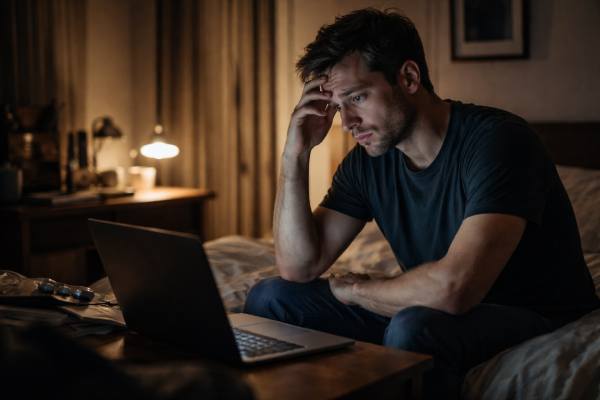
Porn addiction is a common phrase, but the real treatment question is more precise: has pornography use become repetitive, hard to control, and harmful enough to interfere with daily life, relationships, sexual well-being, or mental health? For some people, the pattern is not about sexual desire alone. It becomes a way to escape stress, numb loneliness, regulate mood, avoid intimacy, or chase stimulation late at night when judgment is low and secrecy is easy.
Good treatment starts from that reality. It should not shame sexual thoughts or ordinary private behavior, and it should not dismiss the distress of someone who feels caught in a cycle they no longer control. Recovery usually means more than deleting files or setting one blocker. It often involves assessment, therapy, mood support, relationship repair, digital habit change, and a relapse plan that works in private moments as well as public ones.
Table of Contents
- When Pornography Use Needs Professional Help
- Choosing Goals and Building an Initial Plan
- Therapies That Reduce Compulsive Use
- Secrecy, Relationships, and Sexual Function
- Anxiety, Trauma, ADHD, and Moral Distress
- Devices, Filters, and Trigger Management
- Long-Term Recovery and Relapse Prevention
When Pornography Use Needs Professional Help
Porn addiction is not a formal standalone diagnosis in major classification systems. In current clinical work, persistent, distressing, hard-to-control pornography use is more often considered within the broader framework of compulsive sexual behavior disorder or problematic pornography use. That distinction matters because treatment should focus on impairment, control, and distress rather than on labels alone.
Not every heavy pornography habit requires formal treatment. Some people use pornography frequently without clear loss of control or major life damage. Others, however, begin to feel trapped in a cycle that is repetitive, secretive, and increasingly disconnected from what they actually want. They may spend hours searching for the “right” content, stay up late despite exhaustion, skip work or study, lose sexual interest in partnered intimacy, or keep returning after promising themselves they would stop.
Professional help becomes more appropriate when the pattern includes:
- repeated failed attempts to cut down or stop
- using pornography longer or more often than intended
- persistent secrecy, lying, or deleting evidence to avoid discovery
- interference with work, school, sleep, or parenting
- escalation in time spent, intensity of material, or compulsive masturbation routines
- strong urges triggered by stress, boredom, loneliness, or conflict
- continued use despite relationship damage, guilt, or sexual difficulties
- feeling emotionally flat, agitated, or preoccupied when trying to stop
Assessment also has to separate compulsive behavior from distress driven mainly by shame, strict moral beliefs, or fear about sexual thoughts. Some people describe themselves as addicted because they feel intense guilt about any pornography use, even when the pattern is infrequent and not truly out of control. That does not mean their distress is fake. It means the treatment target may be different. They may need help with anxiety, scrupulosity, shame, or relationship conflict more than with addiction-style habit interruption.
A good clinician will therefore ask several kinds of questions. How often is the behavior happening? How much control is lost once it starts? What harms are occurring? What role does secrecy play? What emotions or situations make it more likely? And is the distress coming from the behavior itself, from the consequences, or from the meaning attached to it?
That fuller picture helps prevent two common mistakes: over-pathologizing ordinary private behavior, and underestimating a compulsive pattern that is already causing real harm. For readers who want a broader condition overview before focusing on treatment, the separate page on porn addiction symptoms and causes may help frame the issue.
Choosing Goals and Building an Initial Plan
Once the pattern is clear, treatment usually begins with goal setting and stabilization rather than immediate deep insight. Many people arrive in care after a crisis: discovery by a partner, loss of sleep, sexual performance concerns, a work problem, or a burst of self-disgust. At that stage, a vague wish to “use less” is often not enough. Recovery starts moving when the person and clinician define what problem is actually being treated and what counts as progress.
The first question is whether the goal is abstinence, structured reduction, or interruption of the most harmful form of use. There is no single correct answer for every patient. Someone whose behavior is tightly bound to secrecy, escalation, and repeated failure to stop may do better with a period of full abstinence from pornography. Another person may be better served by breaking compulsive rituals, reducing time lost, and restoring control without adopting an all-or-nothing model that becomes another source of shame. The treatment plan should match the actual pattern rather than forcing a moral position.
A practical initial care plan often covers five areas:
- Behavioral mapping. When does the behavior happen, for how long, and under what emotional conditions?
- Functional cost. What is being damaged: sleep, work, study, intimacy, mood, self-respect, finances, or privacy?
- Risk moments. Is use mostly late at night, during stress, after arguments, during travel, or when alone with a phone?
- Co-occurring problems. Are depression, anxiety, trauma, ADHD, substance use, or obsessive traits part of the loop?
- Immediate barriers. What can be changed this week to make automatic use less likely?
This early phase often includes simple but important steps: moving devices out of the bedroom, setting a sleep cutoff, pausing certain apps or platforms, reducing time spent alone in predictable risk windows, and identifying one or two people who know treatment has started. These are not complete solutions, but they create space for more thoughtful work.
It also helps to define a few measurable goals. Examples include no pornography after a certain hour, no use at work, reduced session length, more honest communication with a partner, regular therapy attendance, or restored sleep for two straight weeks. Clear goals make treatment feel less abstract and help the person notice progress before everything is “fixed.”
The opening stage is also a good time to normalize ambivalence. Many people want to stop and still miss what pornography gives them: novelty, intensity, quick relief, predictability, or a sense of escape. Treatment works better when that is discussed openly instead of treated as proof of bad faith. The more precisely the person understands what the behavior has been doing for them, the easier it becomes to build a plan that is realistic rather than purely aspirational.
Therapies That Reduce Compulsive Use
Psychotherapy is usually the center of treatment. Current reviews suggest that psychological treatment, especially cognitive behavioral therapy and related approaches, has the strongest support for reducing problematic pornography use and related compulsive sexual behavior. That does not mean one therapy fits everyone. It means that recovery usually improves when treatment focuses on triggers, beliefs, urges, habits, and the emotional functions the behavior serves.
In CBT, the therapist and patient map the cycle clearly: trigger, thought, urge, ritual, temporary relief, and later cost. That sequence matters because compulsive use rarely begins at the moment a website opens. It often begins earlier, with stress after work, shame after conflict, boredom at night, loneliness in a hotel room, or dread about a task that feels impossible. Once the person sees that sequence, treatment can intervene much earlier.
Common therapy targets include:
- all-or-nothing thinking such as “I already slipped, so the day is ruined”
- permission thoughts such as “I need this to relax before I can sleep”
- emotional avoidance, especially of loneliness, anger, rejection, or emptiness
- time-loss rituals like endless browsing, tab switching, and searching for novelty
- perfectionistic self-criticism after a lapse
- the belief that urges must be acted on rather than tolerated
Acceptance and commitment therapy can also be useful, especially when the problem is driven by the urgent wish to escape discomfort. ACT helps people notice cravings, shame, and sexual thoughts without obeying them automatically. For some patients, that is a major shift. Instead of trying to erase urges, they learn how to survive them without building their evening around them.
Motivational interviewing helps when the person feels divided. They may hate the consequences and still miss the intensity. A nonjudgmental therapist can explore both sides honestly, which often leads to stronger engagement than arguments about whether the behavior is “bad.”
Medication has a more limited and selective role. There is no medication specifically approved for porn addiction or problematic pornography use. In some cases, clinicians may consider off-label options such as selective serotonin reuptake inhibitors or naltrexone, particularly when the compulsive pattern is severe or when co-occurring conditions make medication reasonable. But medication is usually not first-line treatment on its own. Current guidance places psychoeducation and psychotherapy first, with medication considered in selected cases rather than as a standard answer.
For people comparing models, it can help to understand how different therapy approaches may be combined. In practice, effective treatment often blends CBT with motivational work, emotion-regulation skills, and relapse-prevention planning. The goal is not simply to reduce exposure to sexual material. It is to reduce compulsive responding and increase freedom of choice.
Secrecy, Relationships, and Sexual Function
Pornography problems often damage more than time management or mood. They can reshape intimacy, trust, sexual expectations, and the person’s relationship to their own body. That is why treatment works better when it addresses secrecy and sexual functioning directly rather than treating them as side effects that will automatically improve once use decreases.
Secrecy is often central. Many patients build elaborate routines around clearing histories, waiting for others to sleep, using incognito windows, or mentally splitting their “real” self from their online sexual life. That secrecy can intensify shame and make the behavior feel even more compulsive. In relationships, the secrecy itself may be as damaging as the pornography use. Partners often describe feeling lied to, shut out, or emotionally displaced long before they understand the full pattern.
Therapy may need to address:
- how and when disclosure should happen
- what honesty looks like after repeated secrecy
- how to rebuild trust without turning the relationship into constant surveillance
- how to discuss boundaries without humiliation or control battles
- how to reduce the cycle of use, shame, concealment, and reuse
Sexual function can also be affected. Some people report reduced arousal with a partner, delayed orgasm, erectile difficulties, narrowed preferences, or a sense that partnered sex feels less engaging than solitary pornography-driven stimulation. These problems are not universal, and they should not be oversimplified. But when they appear, treatment should address them directly and without panic.
A common mistake is assuming that stopping pornography instantly restores sexual function and relationship trust. Often there is a transition period. The person may feel flat, unsure, less stimulated, or anxious about what intimacy will feel like without the usual digital script. Couples may also need help tolerating that transition without interpreting every awkward moment as failure.
For some patients, relationship work or couples therapy is useful, especially when pornography use has become entangled with avoidance of emotional closeness, conflict, resentment, or sexual miscommunication. The treatment goal is not simply “confession.” It is learning how to be more honest, less compartmentalized, and more capable of intimacy that is not organized around secrecy.
This section also requires balance. Not every partner conflict about pornography means addiction, and not every sexual difficulty is caused by pornography. Good treatment avoids one-size-fits-all stories. It looks at the actual pattern: what the behavior replaced, what it disrupted, and what needs to be rebuilt. When the pattern overlaps with a broader compulsive sexual cycle, some readers may also relate to features seen in compulsive sexual behavior and sex addiction symptoms, though treatment should still be individualized rather than label-driven.
Anxiety, Trauma, ADHD, and Moral Distress
Problematic pornography use rarely exists in isolation. In many cases, it is woven into other conditions that make urges stronger and recovery more difficult. Anxiety, depression, trauma, ADHD, obsessive traits, loneliness, and chronic stress can all shape the behavior. If these issues are not assessed, treatment may end up fighting the symptom while ignoring the engine underneath it.
Anxiety is common. Some people use pornography to downshift after hyperarousal, social discomfort, or internal tension. Others turn to it after performance anxiety, rejection, or a day of feeling inadequate. Depression can shape the pattern differently. In low mood, pornography may become one of the few fast sources of stimulation, novelty, or temporary relief. The person is not always chasing pleasure. They may be trying to interrupt numbness.
ADHD matters because impulsivity, boredom intolerance, reward-seeking, and late-night time loss can all make compulsive online sexual behavior harder to regulate. A person with untreated ADHD may repeatedly end up in the same cycle of procrastination, overstimulation, guilt, and nighttime acting out. In those cases, treatment may need more than habit blocking. It may require a proper assessment of attention, impulsivity, and executive functioning.
Trauma can also be central. Some individuals use pornography to manage dissociation, emotional pain, or intense body-based stress. Others feel a clash between arousal and shame that is bound up with earlier experiences. Trauma-informed care is essential when use is tightly linked to numbing, intrusive memories, body disconnection, or relational fear.
An important nuance in this field is moral distress. Current expert reviews warn that not everyone who self-labels as “porn addicted” has a compulsive disorder. Some people experience severe distress mainly because their behavior conflicts with religious, moral, or identity-based values. That suffering is real, but the treatment approach may need to focus more on shame, fear, scrupulosity, or rigid beliefs than on addiction-style behavior change alone.
A careful clinician may therefore ask:
- what emotion usually comes right before use?
- what emotion comes right after?
- did the person struggle with anxiety, low mood, trauma, or attention problems first?
- does the distress come from loss of control, from consequences, or mainly from moral conflict?
- is the person trying to soothe, stimulate, punish, or avoid themselves?
This broader assessment makes treatment more effective and less shaming. When overlap with attentional or trauma-related patterns is strong, some readers may also recognize themes from ADHD and trauma overlap. The key point is that pornography use may be the visible behavior, but recovery often depends on treating the hidden reasons it became so compelling.
Devices, Filters, and Trigger Management
Pornography recovery is unusually shaped by technology because the trigger, the ritual, and the acting out can all happen on the same device in total privacy. A person can move from stress to search to use in under a minute. That is why digital trigger management is not a superficial add-on. It is part of treatment.
The first step is to map the real access route. Is the behavior happening on a phone in bed, during work breaks, after drinking, in the bathroom, while scrolling social media, or through a chain of suggestive content that gradually becomes explicit? Many people relapse not because they consciously “decide” to use, but because they drift through a familiar digital pathway until they are already deep in it.
Useful trigger-management steps may include:
- keeping phones and tablets out of the bedroom
- using filters or accountability software on high-risk devices
- disabling private browsing or deleting specific apps
- unfollowing accounts, subreddits, or channels that regularly lead into the pattern
- setting screen cutoffs before sleep
- avoiding isolated device use during known risk windows
- separating work devices from personal late-night browsing
These tools matter, but they are not magic. Filters can be bypassed, and accountability software can become symbolic if the person is determined to hide. The most effective use of digital tools happens when they are combined with behavioral planning. The person should know what to do when the urge hits, not just what to block.
A practical urge plan often includes:
- identifying the first bodily or emotional sign of a relapse sequence
- leaving the location where use usually happens
- delaying action for a set amount of time
- contacting someone or using a prewritten note to interrupt secrecy
- moving into a replacement activity with low friction, such as showering, walking, or starting a simple task
This is also where device behavior overlaps with broader digital compulsions. For some people, compulsive pornography use is part of a larger pattern of private, late-night phone-driven escape. Work on problematic smartphone use may therefore strengthen recovery, especially when endless checking, tab switching, and algorithm-driven novelty keep the system activated long before explicit content appears.
Trigger management works best when it is honest. If a person knows that certain hours, rooms, apps, or emotional states repeatedly lead to use, the plan should treat that as data, not as weakness. Recovery is easier when the environment stops arguing with the treatment goals every night.
Long-Term Recovery and Relapse Prevention
Long-term recovery from porn addiction is not simply the absence of viewing. It is the gradual return of flexibility, honesty, and self-respect. Many people assume they will either be “cured” quickly or trapped forever. In reality, recovery is usually more uneven and more practical. It involves learning how to respond to stress, boredom, desire, shame, and loneliness without automatically dropping into the old digital pathway.
Relapse prevention begins with recognizing that slips rarely come out of nowhere. Common warning signs include:
- more isolation and less structure
- late-night scrolling and poor sleep
- rising resentment, rejection, or relationship tension
- feeling emotionally flat and wanting stimulation fast
- telling oneself that looking briefly is harmless
- loosening device rules because things have been “better lately”
- increased shame after a minor slip, followed by secrecy
A strong relapse-prevention plan is usually written down. It should include personal warning signs, the most dangerous time windows, the first steps to take after a slip, and how treatment will be re-engaged if the pattern starts growing again. This matters because many relapses become worse through delay and secrecy, not through the first lapse itself.
Long-term recovery also improves when the person builds alternative reward and regulation systems. Pornography often occupies emotional territory that needs to be replaced, not merely removed. That may include:
- a stable sleep schedule
- regular movement and time outside
- work or study structure that reduces aimless drift
- offline intimacy or friendship
- hobbies that give absorption without secrecy
- skills for handling stress before the nightly crash arrives
Progress should be defined broadly. Some of the most meaningful markers are not dramatic. They include telling the truth sooner, spending less time in fantasy, interrupting a search before escalation, feeling less panicked by urges, and being able to experience difficult emotions without immediately escaping into pornography.
Not every recovery path is linear, and not every slip means the plan failed. The more useful question is: what happened before the slip, what was missing, and what change now makes the next one less likely? This stance helps people stay engaged instead of falling into a shame spiral.
Over time, many people find that recovery is less about fighting desire and more about living with fewer blind spots and fewer automatic escapes. Practical stress-management skills become important here because the old pattern often thrived in moments of overload, fatigue, and emotional avoidance. When those moments are handled differently, the whole system begins to loosen.
References
- Psychotherapy for problematic pornography use: A comprehensive meta-analysis 2025 (Meta-Analysis)
- Evaluation and treatment of compulsive sexual behavior: current limitations and potential strategies 2025 (Review)
- Assessment and treatment of compulsive sexual behavior disorder: a sexual medicine perspective 2024 (Review)
- Treatment Approaches for Problematic Pornography Use: A Systematic Review 2024 (Systematic Review)
- The World Federation of Societies of Biological Psychiatry guidelines on the assessment and pharmacological treatment of compulsive sexual behaviour disorder 2022 (Guideline)
Disclaimer
This article is for educational purposes only and is not a substitute for medical, psychological, or relationship advice from a qualified professional. Distressing or compulsive pornography use can overlap with depression, anxiety, trauma, ADHD, obsessive symptoms, sexual dysfunction, and severe shame. Seek urgent help if the behavior is linked with suicidal thoughts, self-harm, coercive or unsafe sexual behavior, or a rapid decline in daily functioning. Diagnosis and treatment decisions should be made with a licensed clinician who can assess the full pattern and any co-occurring conditions.
If this article helped, please consider sharing it on Facebook, X, or another platform where it may help someone find thoughtful, reliable support.