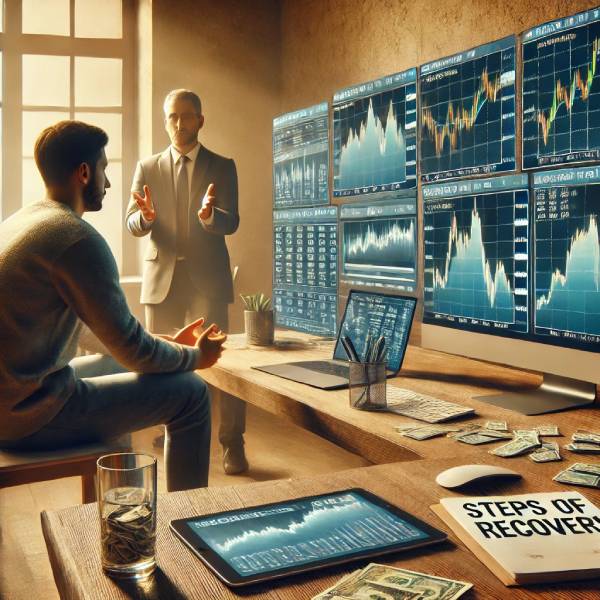
Forex trading can begin as a serious attempt to learn markets, build income, or gain financial control. For some people, though, the market stops being a tool and becomes an emotional trap. The signs are often concrete: checking currency pairs before getting out of bed, staying awake for overseas sessions, increasing leverage after losses, hiding account statements, and promising that one more trade will fix everything. At that point, the issue is no longer just poor strategy. It is a pattern of compulsion, impaired control, and harm.
Treatment for forex trading addiction focuses on more than “better discipline.” It usually involves a careful assessment, therapy that targets the chase-and-reward cycle, practical barriers that limit access to trading, help with money damage and relationship strain, and a long-term relapse plan. Recovery is possible, but it usually gets stronger when treatment addresses both the trading behavior and the stress, shame, or mental health issues feeding it.
Table of Contents
- Starting Treatment at the Right Time
- What a Full Assessment Should Cover
- Therapy That Targets the Trading Cycle
- Building Barriers Between You and the Market
- Treating Anxiety, Depression, and Other Risks
- Repairing Finances and Rebuilding Trust
- Relapse Prevention and Long-Term Recovery
Starting Treatment at the Right Time
Many people wait too long to seek help for forex trading addiction because the behavior can look respectable from the outside. Trading is easy to frame as ambition, research, or entrepreneurship. That makes denial powerful. A person may keep saying, “I’m learning,” even while debts grow, sleep breaks down, work performance drops, and family members lose trust. One reason treatment is often delayed is that speculative trading can resemble a financial skill on the surface while functioning more like gambling disorder underneath.
A good rule is simple: treatment should start when trading keeps happening despite clear harm. Harm may include:
- repeated loss-chasing after bad trades
- lying about account balances, loans, or missed bills
- borrowing money or using credit to keep trading
- staying awake for market sessions and becoming exhausted or irritable
- neglecting work, school, parenting, or relationships
- panic, hopelessness, or suicidal thoughts after losses
- switching from careful investing to compulsive, high-frequency, high-risk trading
Most people begin with outpatient care. That can include weekly therapy, medical or psychiatric review when needed, debt or financial counseling, and support from a trusted relative or partner. Outpatient treatment works best when the person still has enough daily stability to attend sessions, follow money safeguards, and step away from the platform between appointments.
A higher level of care may be needed when risk is acute. Warning signs include active suicidal thinking, severe depression, heavy alcohol or stimulant use, manic symptoms, violence at home, theft or fraud to fund trading, or such poor control over money that the person cannot keep themselves safe. In those cases, the immediate goal is not market insight. It is stabilization.
Early treatment goals are often practical and direct. For many people, the safest short-term target is full abstinence from leveraged, short-term forex trading rather than “controlled trading.” That is especially true when the person has been chasing losses, trading secretly, or making impulsive deposits. Later questions about long-term investing can be handled only after stability returns.
The most important point is that treatment does not require someone to “hit rock bottom.” The earlier help begins, the easier it is to protect finances, relationships, and mental health.
What a Full Assessment Should Cover
A proper assessment for forex trading addiction should go far beyond asking, “How much money have you lost?” Losses matter, but they do not tell the whole story. Two people can lose the same amount and have very different levels of addiction severity. The deeper question is how trading functions in the person’s life and why it keeps taking priority over safety, rest, and judgment.
A thorough clinician will usually explore the pattern in detail. That often includes:
- when trading started and when it became harder to control
- what instruments are being traded, with what leverage, and how often
- whether the person trades at certain emotional times, such as after arguments, boredom, shame, or income stress
- whether there is a cycle of losses followed by larger or riskier positions
- how much time is spent watching charts, reading forums, or waiting for entries
- whether the person has shifted into related behaviors such as problematic stock trading or other speculative markets
- whether money has been borrowed, hidden, or taken from savings, rent, or family funds
- what role trading plays psychologically, such as escape, excitement, numbness, control, or self-worth
Good assessment also looks at damage outside the platform. A clinician may ask about missed work, conflict at home, declining concentration, insomnia, neglect of meals or exercise, panic after losses, and whether there have been thoughts like “I have ruined everything” or “my family would be better off without me.” These questions are not dramatic. They are necessary.
Co-occurring conditions matter too. Anxiety, depression, ADHD, bipolar spectrum symptoms, trauma history, substance misuse, and other impulse-control problems can all shape how the addiction behaves and how treatment should be sequenced. Sometimes the trading problem is the center of the picture. Sometimes it is one part of a wider mental health pattern.
Assessment should also identify strengths. These might include a supportive partner, willingness to hand over financial control temporarily, insight after a recent loss, motivation to repair trust, or a job that still offers structure. Recovery planning works better when it uses what is already intact.
By the end of a strong assessment, the person should have a map, not just a label. That map explains the triggers, the behavior loop, the harm, the risks, and the treatment priorities. Without that clarity, recovery advice often stays too vague to work.
Therapy That Targets the Trading Cycle
The best-established treatment model for trading addiction usually comes from the same evidence base used for gambling-related harms. In practice, that means therapy should be specific, structured, and focused on the cycle that keeps the person returning to the screen. General encouragement helps, but it is rarely enough on its own.
Cognitive behavioral therapy is often the core treatment. In gambling-focused care, CBT is commonly offered either as group treatment or individual treatment, and it is usually delivered as a defined course rather than open-ended weekly support forever. A typical structured course may involve around 8 to 10 sessions in group care or 6 to 8 sessions individually, though some people need more.
In forex trading addiction, CBT often works on several linked problems at once:
- distorted beliefs such as “I can win it back tonight” or “I am due for a reversal”
- illusions of control, especially after short winning streaks
- emotional triggers such as shame, boredom, anger, loneliness, or panic
- behavioral rituals like opening charts first thing in the morning, checking trades at night, or moving stop losses impulsively
- identity beliefs such as “If I quit, I have failed”
A good therapist will often help the person break down individual episodes in detail: what happened before the urge, what story ran through the mind, what action followed, what the short-term payoff was, and what the later cost became. This makes the cycle visible. Once visible, it becomes easier to interrupt.
Motivational interviewing can be especially useful early on, when the person is ambivalent. Many people with trading addiction do want help, but they also fear giving up the fantasy of the big recovery trade. Motivational interviewing does not argue with them. It helps them face the gap between what trading promises and what it is actually doing to their life.
Group treatment can be powerful because it cuts through secrecy and shame. Hearing someone else describe hiding losses, trading through the night, or lying to a partner often breaks the feeling of being uniquely damaged. Individual therapy may be better when privacy, complex trauma, severe depression, or highly specific financial harm needs closer attention.
Remote therapy can improve access and convenience. In-person work can sometimes strengthen engagement and accountability. The best format is the one the person will actually attend consistently.
Peer support can also help. It does not replace therapy, but it can reinforce recovery by offering shared language, honest examples, and support after lapses.
Building Barriers Between You and the Market
Insight alone does not stop a compulsive trading habit. Recovery becomes more durable when treatment includes practical barriers that make impulsive trading harder to do. This is one of the clearest differences between sincere recovery and good intentions. A person may say they want to stop, but if the app is still on the phone, deposits are still instant, leverage is still available, and charts are still open on three monitors, the urge has a direct path to action.
This section of treatment is sometimes called stimulus control or access reduction. The idea is simple: reduce the speed with which an urge becomes a trade.
Common recovery steps include:
- Remove immediate access.
Delete trading apps, saved passwords, browser bookmarks, and alert systems. Log out across devices. If possible, close accounts rather than just “taking a break.” - Create money friction.
Move savings to a separate institution, reduce transfer limits, remove linked cards, and consider having a trusted person temporarily oversee major transfers. - Restrict the environment.
Keep phones out of the bedroom, avoid market commentary channels, unsubscribe from promotional emails, and stop following influencers who glorify fast profits and extreme leverage. - Set emergency rules.
Examples include a 24-hour delay before any financial decision, no solo access to large sums, and no market news consumption after a triggering loss. - Replace the ritual.
Many people need a substitute for the high-alert state trading created. This may be a brisk walk, resistance training, journaling, calling a support person, or attending a peer meeting at the usual trading hour.
Forex trading addiction usually does not involve a medical detox in the way alcohol or sedative dependence can. But early recovery can still feel intense. People often report agitation, restlessness, irritability, fear of missing out, emptiness, and a strong urge to “just check the market.” Those feelings matter. They do not mean treatment is failing. They mean the person is moving away from a learned reward loop.
One overlooked issue is timing. If a person always traded during the London open, New York open, or after major economic releases, those windows may need special planning. Recovery works better when high-risk hours are filled on purpose, not left empty.
The more friction placed between impulse and execution, the more room therapy has to work.
Treating Anxiety, Depression, and Other Risks
Forex trading addiction rarely exists in a vacuum. Many people arrive in treatment carrying more than one problem at once: depressed mood after major losses, panic about debt, ADHD-related impulsivity, alcohol or stimulant misuse, insomnia, trauma, or a long-standing pattern of using risk to regulate emotion. If those issues are ignored, treatment often becomes fragile. The person may stop trading for a few weeks but remain overwhelmed, ashamed, sleepless, and vulnerable to relapse.
That is why good care looks for concurrent treatment needs from the start. In some people, the mental health problem came first and helped create the addiction. In others, the addiction intensified anxiety, depression, or suicidal thinking. Often both are true. A person may begin trading to escape stress, then become more distressed because of the trading.
Co-occurring issues that often need direct attention include:
- depression, hopelessness, and suicidal thoughts after losses
- anxiety and panic tied to debt, secrecy, or account volatility
- ADHD traits such as novelty-seeking, urgency, and difficulty with delay
- bipolar spectrum symptoms, especially if there are bursts of decreased sleep, grandiosity, or reckless financial decisions
- alcohol, cocaine, or stimulant use that lowers inhibition
- chronic sleep disruption, which worsens judgment and impulse control
For some people, treating financial anxiety becomes a central part of recovery. The body can stay in a constant threat state long after trading stops. That may show up as chest tightness, obsessive account checking, shame spirals, avoidance of bills, or fear of opening messages from lenders. Therapy often has to work on both the addiction and the nervous system response to money stress.
Medication may have a role, but it is usually not the first or only answer. There is no widely approved medication that “cures” forex trading addiction. In gambling-related care, specialist guidance may consider naltrexone when a proper course of psychological therapy has not achieved the needed outcome or when repeated relapse continues despite therapy. In those cases, it should be started and monitored by an experienced clinician, with attention to liver and kidney status and avoidance of opioid use. Medication for depression, anxiety, ADHD, or sleep may also be appropriate when clinically indicated.
Immediate risk must always be taken seriously. If trading losses lead to suicidal thinking, threats of self-harm, severe intoxication, or inability to stay safe, urgent mental health support is needed. Recovery planning should never wait until a crisis becomes irreversible.
Repairing Finances and Rebuilding Trust
Stopping the trades is only one part of recovery. Most people also need a parallel repair process for money, relationships, and credibility. This stage can feel humbling because it removes the fantasy that one winning position will solve everything. But it is also where recovery becomes real.
Financial repair starts with clear numbers. Treatment often goes better when the person creates one honest document showing:
- all trading accounts and balances
- total debt, including cards, loans, and borrowed money from relatives
- fixed monthly expenses
- missed payments, arrears, or tax issues
- any assets that remain protected
This document should be factual, not dramatic. The goal is to replace secrecy with reality. Many people feel temporary panic when they first lay everything out, but that same clarity is what allows a workable plan.
In many cases, recovery also requires temporary loss of financial autonomy in specific areas. That might mean a partner co-signs transfers, a relative manages access to savings, or the person receives a weekly budget rather than unrestricted cash flow. These measures can feel humiliating at first, but they are often protective, not punitive.
Family involvement should be thoughtful. Loved ones can help with accountability, emotional support, and practical safeguards. They should not be used as endless emergency funding. Secret bailouts, repeated debt rescue, and vague promises tend to keep the cycle alive. Better support looks like structure: transparent accounts, agreed limits, regular check-ins, and clear consequences if trading resumes.
Trust repair also depends on language. A person in recovery usually needs to move from minimizing phrases such as “It was just a rough month” to direct ownership: “I hid trades, I lied about losses, and I need a system that protects everyone while I recover.” That shift matters because families are not only reacting to money. They are reacting to broken reality.
Some people will also need outside help for debt management, housing strain, workplace issues, or legal problems. Those needs do not sit outside addiction treatment. They are part of it. A person cannot focus well in therapy if eviction, collection calls, or employment discipline are escalating.
Loved ones may need support for themselves too. They often carry anger, exhaustion, hypervigilance, and grief. Recovery is stronger when the family system gets help, not just the trader.
Relapse Prevention and Long-Term Recovery
Recovery from forex trading addiction is rarely a one-time decision. It is an ongoing process of recognizing risk earlier, responding faster, and building a life that does not depend on market stimulation to feel bearable. That is why relapse prevention should begin during treatment, not after treatment ends.
A relapse plan usually starts by identifying the person’s highest-risk triggers. These often include:
- boredom after work or late at night
- shame after financial setbacks
- loneliness and unstructured time
- exposure to trading influencers, Discord groups, or chart alerts
- the urge to “make back” money after a bill, breakup, or job problem
- confidence inflation after watching others post gains
- switching from forex into another speculative lane such as cryptocurrency trading
The strongest plans are specific. Instead of “I will be careful,” the person writes down what happens at the first warning signs. For example: tell one named support person within 24 hours, hand over cards if urges intensify, attend an extra therapy or peer session that week, avoid financial media for 72 hours, and review the written harm record from the last relapse.
A key treatment message is that relapse is not proof of failure. It is information. It shows that a trigger, belief, or practical gap was stronger than the current recovery system. Shame tends to push people back into secrecy. Faster disclosure tends to shorten the relapse.
Long-term recovery also depends on rebuilding ordinary life. That includes regular sleep, exercise, work structure, meals, non-market hobbies, and relationships not centered on money talk. The brain recovers better when excitement is not the only available source of stimulation.
Ongoing follow-up matters. Some people need months of therapy. Others benefit from step-down care, such as monthly sessions, peer groups, or periodic financial reviews. Rapid re-entry is important too. Someone who starts slipping should not have to wait until the situation is catastrophic to return to treatment.
The final goal is not simply “not trading.” It is regaining honesty, judgment, emotional stability, and freedom from the constant pull of the next position. That kind of recovery is rarely dramatic. It is built through repetition, structure, and many small decisions that slowly return a person to themselves.
References
- Gambling-related harms: identification, assessment and management 2025 (Guideline)
- Cognitive-behavioral treatment for gambling harm: Umbrella review and meta-analysis 2023 (Meta-Analysis)
- Psychological intervention for gambling disorder: A systematic review and meta-analysis 2023 (Systematic Review and Meta-Analysis)
- Problematic trading: gambling-like behavior in day trading and cryptocurrency investing 2024 (Editorial)
- Gambling disorder comorbidity a narrative review 2025 (Narrative Review)
Disclaimer
This article is for educational purposes only and is not a substitute for medical, psychiatric, psychological, legal, or financial advice. Forex trading addiction can be associated with severe debt, depression, substance misuse, and suicidal thoughts. If you are in immediate danger, thinking about self-harm, or unable to stay safe, seek emergency help right away. Diagnosis and treatment decisions should be made with a licensed clinician who can assess your specific symptoms, risks, and treatment needs.
If this article helped, please consider sharing it on Facebook, X, or any platform your audience uses most.