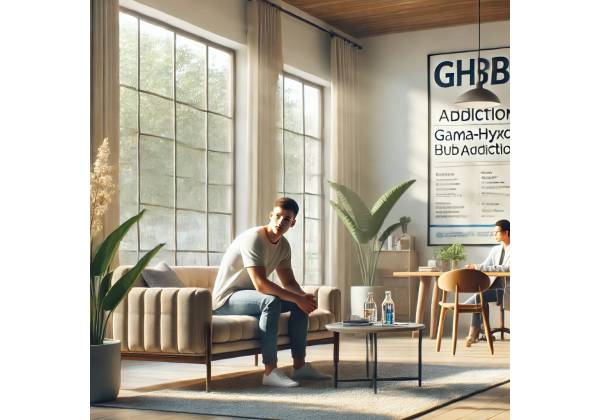
Gamma-hydroxybutyrate, usually called GHB, is a short-acting central nervous system depressant with a narrow margin between desired effects and dangerous overdose. That narrow margin is one reason GHB addiction can develop into a high-risk condition quickly. Some people begin using it for euphoria, relaxation, sleep, sexual enhancement, or social disinhibition. Others encounter its related compounds, gamma-butyrolactone and 1,4-butanediol, which are converted into GHB in the body and can create a similar pattern of dependence.
What makes GHB addiction especially serious is not only intoxication, but the speed with which tolerance, round-the-clock dosing, and severe withdrawal can appear. A person may move from occasional use to dosing every few hours just to avoid crashing. Understanding that progression matters because GHB addiction is not simply “party drug misuse.” It can become a life-threatening sedative use disorder with rapid relapse pressure, dangerous withdrawal, and a real risk of coma or death.
Table of Contents
- What GHB Addiction Looks Like
- Why Dependence Develops So Fast
- Signs, Symptoms, and Daily Patterns
- Causes, Triggers, and High-Risk Contexts
- Withdrawal, Cravings, and Relapse Pressure
- Overdose, Polydrug Use, and Long-Term Harms
- Emergency Warning Signs
What GHB Addiction Looks Like
GHB addiction is a sedative use disorder marked by compulsive use, loss of control, tolerance, withdrawal, and continued use despite clear harm. The substance is unusual because it is short-acting, rapidly absorbed, and capable of producing both desired effects and serious toxicity within a small dosing range. That means the line between feeling relaxed and becoming medically unstable can be much thinner than many users realize.
The disorder may involve GHB itself or its precursors, especially gamma-butyrolactone and 1,4-butanediol. Those substances are often discussed together because they are metabolized into the same active compound in the body and can create the same dependence pattern. In real life, many users do not move around with precise medical dosing. They may measure by caps, milliliters, or informal household methods, which increases the risk of both overdose and uncontrolled escalation.
Clinically, the problem becomes clear when use starts to revolve around maintenance rather than occasional effect. Someone may begin by taking GHB at parties, in nightlife settings, before sex, or to help with sleep. Over time, the pattern can change. They may begin taking it several times a day, then every few hours, then overnight to avoid waking in withdrawal. At that stage, the drug is no longer only about pleasure or social enhancement. It has become a substance the body expects.
Common signs that the pattern has become addictive include:
- repeated use despite blackouts, collapse, or frightening intoxication
- inability to predict or control dose
- keeping the drug nearby at all times
- waking at night to redose
- structuring work, sex, sleep, or social life around timing the next dose
- continuing despite conflict, medical problems, or obvious fear
Another defining feature is how quickly life can narrow around GHB. Because the drug has such a short duration of action, people with dependence often do not have long periods of stable functioning between doses. They may be thinking about use, recovering from use, or trying to prevent withdrawal most of the day. That creates a different rhythm than some other sedatives, where the effects may last longer and the cycle feels slower.
A full treatment discussion belongs on a separate page about gamma-hydroxybutyrate treatment options. But the condition itself is best understood as a fast-moving sedative addiction with a particularly unstable pattern: rapid intoxication, frequent redosing, and a withdrawal syndrome that can become dangerous very quickly.
Why Dependence Develops So Fast
One of the most important things about GHB addiction is how quickly dependence can form compared with what many users expect. The drug acts rapidly, wears off rapidly, and often needs frequent redosing to maintain the desired effect. That short cycle can train the brain and body into dependence faster than a person realizes.
GHB works mainly as a central nervous system depressant with complex effects involving GHB-specific pathways and the GABA system, especially GABA-B activity at higher doses. In the short term, that can produce relaxation, sociability, lowered inhibition, drowsiness, and in some settings a feeling of warmth or emotional ease. But because the drug clears quickly, those effects do not last long. As the level drops, anxiety, restlessness, tremor, and internal discomfort may begin early in dependent users.
This is why dependence can become self-reinforcing. A person does not only take GHB to feel good. They may begin taking it to stop feeling bad. That shift from reward use to relief use is one of the clearest signs that the addiction cycle is strengthening.
Several factors make GHB dependence develop unusually fast:
- very short duration of action
- steep dose-response curve
- rapid tolerance
- frequent redosing across the day
- overnight withdrawal that pushes nighttime use
- polydrug use that blunts warning signs
- informal measuring methods that normalize repeated dosing
People with dependence often report taking GHB every one to four hours, sometimes around the clock. That pattern is not a minor detail. It changes the whole character of the addiction. Instead of a few isolated episodes, the drug becomes woven into the rhythm of every day and night. Sleep becomes fragmented. Meals are missed. Normal responsibilities begin to bend around the next dose. The body does not get much time to reset.
The speed of dependence is also why GHB can be so deceptive. Someone may believe they are still using recreationally because the calendar time has not been long. But with GHB, the number of daily dosing cycles can become very high in a short period. A few weeks of frequent use may create a much more entrenched physical pattern than people expect.
This rapid dependence also helps explain why GHB withdrawal can feel so abrupt. The body is not adapting to a substance with a long, gentle tail. It is adapting to repeated sharp rises and falls. When the drug stops, the rebound can come fast. That rebound is part of what makes GHB more dangerous than its casual reputation suggests.
The core point is simple: GHB addiction often accelerates because the drug’s pharmacology encourages repetition. The same qualities that make it feel immediately effective can also make it hard to leave alone, hard to measure safely, and hard to stop without consequences.
Signs, Symptoms, and Daily Patterns
GHB addiction often shows itself through a distinctive daily pattern. Unlike some substances that create one long intoxication or a once-a-day ritual, GHB dependence can produce a constant cycle of short intoxication, brief stability, and early withdrawal. That rhythm shapes how symptoms appear in ordinary life.
During or soon after use, a person may seem relaxed, disinhibited, sleepy, euphoric, sexually uninhibited, or emotionally warm. At higher doses, they may become confused, clumsy, nauseated, slowed, or suddenly unresponsive. Because the transition from mild intoxication to dangerous sedation can be rapid, people around them may not realize how unstable the situation is until it changes abruptly.
Common intoxication-related symptoms include:
- drowsiness
- slowed thinking
- poor coordination
- slurred speech
- confusion
- nausea or vomiting
- slowed breathing
- sudden sleep-like collapse
- amnesia for parts of the episode
As dependence develops, the pattern between doses becomes just as important as the period of intoxication. A person may begin to show:
- anxiety or agitation as the dose wears off
- sweating
- tremor
- fast heart rate
- insomnia
- irritability
- frequent clock-watching
- urgency about getting home or carrying the drug
- nighttime waking to redose
The daily behavior pattern can be highly revealing. People with significant GHB dependence may:
- carry bottles or dosing containers everywhere
- avoid long meetings, travel, or social settings where dosing is harder
- wake through the night to prevent withdrawal
- appear unusually sedated one hour and intensely restless the next
- structure food, sex, sleep, and work around redosing windows
- underestimate how impaired they are because the cycle feels familiar
This makes GHB addiction different from a simple “party drug problem.” In advanced cases, the drug is no longer confined to weekends or nightlife. It becomes an around-the-clock maintenance behavior. That is one reason daily functioning often deteriorates faster than outsiders expect. Someone can look relatively composed between doses while still being deeply unstable overall.
There can also be psychological symptoms beyond obvious intoxication. People may become more emotionally labile, more secretive, more suspicious about interruption, or more willing to take risks to avoid withdrawal. Sleep disruption can worsen concentration, memory, and mood. Over time, the person may begin to feel that ordinary life is impossible without the drug’s fast relief.
Some of these symptoms overlap with other sedative disorders, but GHB’s short cycle gives them a distinctive tempo. It is not only what symptoms occur, but how quickly they repeat. When intoxication, relief, anxiety, and redosing are happening over and over in a single day, the pattern is no longer casual use. It is a strong sign that GHB addiction has taken hold.
Causes, Triggers, and High-Risk Contexts
There is no single reason people develop GHB addiction. More often, the disorder grows from a combination of drug effects, context, and personal vulnerability. The same substance can serve different functions in different lives. One person may use it for nightlife and social ease. Another may use it for sex, sleep, anxiety relief, or emotional escape. A third may begin with occasional use and later keep taking it simply to avoid withdrawal.
Several common drivers can contribute:
- the drug’s rapid onset and brief, repeatable effects
- relief from anxiety or internal tension
- social reinforcement in club, party, or chemsex settings
- curiosity and belief that small doses are manageable
- easy access to GBL or 1,4-butanediol in some settings
- polydrug use with alcohol, stimulants, or benzodiazepines
- prior addiction history
- depression, trauma, loneliness, or chronic stress
High-risk contexts matter a great deal. GHB is often discussed in nightlife scenes and sexualized drug use settings because its effects can include disinhibition, increased sociability, and enhanced sexual interest in some users. Those environments can normalize repeated dosing, delayed sleep, and mixing substances. When social belonging, sexual reward, and chemical relief all line up together, the behavior can become deeply reinforced.
Another important cause is self-medication. Some people begin using GHB because it seems to solve something quickly: sleeplessness, anxiety, inhibition, loneliness, or emotional discomfort. But rapid, short-lived relief is often exactly what makes a substance more addictive. The person learns that distress can be changed fast, and then learns that the changed state disappears fast too. That combination drives repetition.
Triggers for continued use are often both internal and external. Common ones include:
- stress after work or conflict
- inability to sleep
- nightlife cues, friends, and familiar venues
- loneliness
- sexual situations associated with prior use
- the first signs of tremor, agitation, or sweating between doses
- fear of the withdrawal that will come if use stops
This is one reason GHB addiction can overlap with other compulsive or high-risk patterns. A person may not only crave the drug itself. They may crave the context in which the drug feels most effective or meaningful. That may include parties, certain partners, or a social scene where use is normalized and risk is minimized.
There is also a stigma problem. Some users avoid seeking help because they fear being judged, disbelieved, or associated only with criminal narratives around “date rape drugs.” That can delay support and leave people isolated with a very dangerous dependence pattern. The behavior may continue to intensify in private long after it would have been easier to interrupt.
In short, GHB addiction develops where fast pharmacology meets repeated reinforcement. The drug’s short cycle, the context of use, and the person’s emotional needs can lock together in a way that makes stopping much harder than it first appears.
Withdrawal, Cravings, and Relapse Pressure
GHB withdrawal is one of the defining reasons this addiction is so dangerous. Unlike many people assume, withdrawal is not limited to feeling anxious, tired, or unwell for a day or two. In dependent users, it can begin quickly after the last dose and can escalate with alarming speed. This is why GHB addiction is treated as a high-risk sedative use disorder rather than a mild club-drug problem.
Early withdrawal can begin within hours, especially in people dosing frequently. At first, symptoms may seem manageable:
- anxiety
- tremor
- sweating
- insomnia
- fast heart rate
- restlessness
- nausea
- rising internal panic
But in more severe cases, the syndrome can progress into hallucinations, paranoia, severe agitation, delirium, seizures, and dangerous autonomic instability. That fast progression is one reason GHB withdrawal can require inpatient medical care. The shift from “I feel awful” to “this is a medical emergency” can happen more quickly than families expect.
Cravings during withdrawal are intense because the drug provides fast relief from the very state its absence creates. If a person begins to shake, sweat, or panic a few hours after the last dose, taking GHB may make those symptoms recede rapidly. That immediate relief teaches the brain a powerful lesson: use stops the crisis. Unfortunately, it also deepens the cycle.
A common pattern looks like this:
- The last dose wears off.
- Anxiety, tremor, or sleeplessness appears.
- The person fears what is coming next.
- A dose brings fast relief.
- The brain learns that redosing is the solution.
- Dependence tightens further.
This is why relapse pressure can be relentless. The person is not only missing the desired effects. They may be trying to escape a terrifying rebound state. Some people begin dosing overnight or first thing in the morning simply to keep withdrawal at bay.
The emotional side of withdrawal matters too. Alongside the physical symptoms, people may feel frightened, ashamed, confused, or emotionally flattened. Periods of abstinence can bring a sense that normal life has lost its color or ease. That flattening can overlap with anhedonia, especially after heavy use and disrupted sleep.
One practical point is crucial: withdrawal severity does not always match how “functional” the person looked while using. Someone who was still working, talking clearly, or appearing socially active can still develop severe withdrawal if their dosing was frequent enough. That is why history matters more than appearances.
Detailed detox protocols belong in treatment-focused material, not here. But understanding the condition requires a clear statement: GHB withdrawal can be rapidly progressive and life-threatening. Any person using around the clock, redosing overnight, or showing early withdrawal signs after frequent use should be viewed as medically high risk rather than simply uncomfortable.
Overdose, Polydrug Use, and Long-Term Harms
The overdose risk in GHB addiction is unusually high because the dose-response curve is steep and small changes in amount, concentration, or timing can produce a very different outcome. A person may feel relaxed and sociable at one dose, then become profoundly sedated or comatose not far above it. Informal measurement makes this worse. Street GHB, GBL, and 1,4-butanediol are not standardized, and users may not know the exact strength of what they have.
This risk rises sharply with polydrug use. Mixing GHB with alcohol, benzodiazepines, opioids, or other sedatives can greatly increase respiratory depression, loss of consciousness, vomiting, aspiration, and death. Mixing with stimulants can also be dangerous because the stimulant may mask some sedative warning signs while not protecting the person from overdose once the stimulant effect changes.
Common overdose or toxicity features include:
- sudden heavy sedation
- collapse or inability to wake fully
- slowed or irregular breathing
- vomiting
- confusion or unresponsiveness
- slowed heart rate
- repeated drifting in and out of consciousness
- aspiration risk if vomiting occurs while unconscious
Long-term harms go beyond acute poisoning. Chronic GHB addiction is associated with poorer mental and physical health, disturbed sleep, social dysfunction, and impaired work performance. People may lose jobs not because of one dramatic overdose, but because the whole structure of life has been bent around dosing, withdrawal prevention, secrecy, and recovery from disrupted nights.
Other harms can include:
- chronic sleep disruption
- memory and concentration problems
- emotional volatility
- relationship strain
- risky sex in intoxicated states
- accidental injury
- financial instability
- repeated emergency presentations
- broader decline in self-care
Sleep deserves special attention. Because many dependent users wake to redose, the nervous system may go for long stretches without stable, restorative sleep. That alone can worsen mood, cognition, and judgment. Over time, the interaction between chemical sedation and fragmented sleep can begin to resemble serious sleep deprivation, with effects on attention, mood control, and physical resilience.
Another distinctive harm is social invisibility. GHB addiction may hide longer than alcohol or opioid addiction because the person can appear relatively normal between short cycles of intoxication and withdrawal. By the time the pattern becomes obvious to others, the dependence may already be severe.
Perhaps the most dangerous combination is this: a substance that is easy to underestimate, easy to redose, and hard to stop once the body adapts. That is why GHB addiction causes disproportionate harm relative to how casually some people speak about it. The drug’s short action, narrow safety margin, and severe withdrawal profile make it one of the more medically unstable forms of sedative addiction.
Emergency Warning Signs
GHB addiction should be treated as urgent when the person is showing signs of overdose, severe withdrawal, or rapidly worsening instability. The biggest mistake families and friends make is assuming the person is “just sleeping it off” or “just anxious because they have not used yet.” With GHB, those assumptions can be dangerous.
Emergency signs related to overdose include:
- the person cannot be woken or keeps slipping back into unresponsiveness
- breathing is slow, shallow, noisy, or stops at intervals
- vomiting occurs while the person is unconscious or barely responsive
- lips or skin look blue or gray
- the person collapses suddenly after seeming only mildly impaired
- there is suspicion of mixing with alcohol, opioids, or benzodiazepines
Emergency signs related to withdrawal include:
- severe agitation
- hallucinations or marked paranoia
- confusion or disorientation
- tremor with rapidly rising distress
- seizure activity
- severe insomnia with escalating autonomic symptoms
- delirium, violent behavior, or inability to stay grounded in reality
A few practical red flags should raise concern even before a visible emergency:
- using every few hours, including overnight
- waking in panic or tremor if a dose is delayed
- having a history of severe withdrawal
- repeated collapse episodes
- needing larger or more frequent doses to get the same effect
- regular mixing with other depressants
The emergency threshold should also be lower when the person lives alone, is dosing from an unmarked liquid, or is in a sexual or party setting where others may not know what was taken. In those environments, collapse can be mistaken for ordinary intoxication and life-saving care may be delayed.
Another serious concern is mental state after heavy use or repeated withdrawal. Severe anxiety, hopelessness, confusion, or collapse in overall functioning should not be minimized. Someone may not fit the stereotype of a critically ill patient and still be in real danger.
The practical rule is simple: unresponsiveness, abnormal breathing, severe confusion, seizures, or rapidly escalating withdrawal symptoms after GHB use are emergencies. So is any situation where the person may have mixed GHB with alcohol or other sedatives. The condition is too fast-moving to watch casually at home when serious signs are present.
GHB addiction is one of those disorders where timing matters. Early recognition can prevent catastrophe. Delay can allow a manageable crisis to turn into a coma, delirium, or fatal overdose. When in doubt, it is safer to treat the situation as urgent than to assume the person will stabilize on their own.
References
- Pharmacological Treatment of GHB Withdrawal Syndrome 2024 (Review)
- Management of γ-hydroxybutyrate intoxication and withdrawal 2023 (Clinical Review)
- GHB: a life-threatening drug complications and outcome of GHB detoxification treatment—an observational clinical study 2023 (Observational Study)
- Current Insights on the Impact of Gamma-Hydroxybutyrate (GHB) Abuse 2022 (Narrative Review)
- Characterization of the GHB Withdrawal Syndrome 2021 (Observational Study)
Disclaimer
This article is for educational purposes only and is not a diagnosis or a substitute for medical care, addiction treatment, or emergency evaluation. Gamma-hydroxybutyrate addiction can involve life-threatening overdose, dangerous withdrawal, and serious complications when mixed with alcohol, benzodiazepines, opioids, or other depressants. Seek immediate emergency help for unresponsiveness, slowed breathing, seizures, severe agitation, hallucinations, delirium, or rapidly worsening withdrawal symptoms.
If this article was helpful, please share it on Facebook, X, or another platform you prefer so more people can recognize the warning signs of gamma-hydroxybutyrate addiction before the risks escalate.