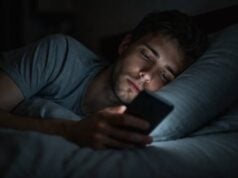
Streaming service addiction is not a formal psychiatric diagnosis, but the pattern behind the term is real enough to deserve careful attention. Some people move from casual viewing into a cycle of compulsive streaming, repeated “just one more episode” decisions, delayed sleep, neglected responsibilities, and a growing sense that stopping is harder than it should be. What makes the problem tricky is that streaming feels normal, social, and low-risk. It happens at home, often on a couch, and it can look like harmless relaxation. Yet for a smaller group, the behavior starts to resemble other problematic digital habits: craving, loss of control, emotional reliance, and continued use despite harm. The issue is less about loving a show and more about whether viewing has become compulsive enough to disrupt sleep, mood, work, relationships, or self-regulation. Understanding that shift is the key to recognizing when entertainment has started to take over.
Table of Contents
- What streaming service addiction usually means
- How streaming platforms keep the loop going
- Signs, symptoms, and daily behavior patterns
- Cravings, withdrawal, and the one-more-episode cycle
- Why problematic streaming can develop
- Sleep, mood, and functional risks
- How the problem is recognized
What streaming service addiction usually means
Streaming service addiction is a practical, everyday term for a pattern of compulsive viewing in which streaming stops being a leisure activity and starts acting more like a controlling habit. In research, the problem is more often discussed as binge-watching, problematic binge-watching, or problematic streaming use. That wording matters. It reflects an important distinction: not everyone who watches several episodes in one sitting has a disorder, and high engagement is not the same thing as addiction.
The central issue is loss of control. A person may plan to watch one episode and end up watching four. They may stay up far later than intended, cancel tasks, skip routines, or keep watching even when they feel physically tired and mentally checked out. Instead of feeling restored, they feel trapped in a loop of anticipation, autoplay, and regret.
A useful way to separate ordinary use from problematic use is to look at what the behavior is doing in the person’s life. Healthy viewing usually stays flexible. It fits around sleep, work, social life, and responsibilities. Problematic streaming starts to narrow that flexibility. The viewer may feel driven to continue, irritated when interrupted, and unable to stop even when the experience is no longer especially enjoyable.
This is why the term “addiction” can both help and mislead. It helps because some people do show addiction-like features: craving, repeated overuse, relapse after trying to cut down, and ongoing use despite harm. It misleads when it implies that all enthusiastic streaming is pathological. Research on binge-watching repeatedly suggests that there is a difference between high but non-harmful engagement and a more problematic form marked by distress, impulsivity, habit, and negative consequences.
The behavior also overlaps with other digital patterns, especially compulsive TV and screen-based habits. Still, streaming has some distinct features. It is on-demand, highly personalized, endlessly available, and built around serialized content designed to keep viewers emotionally invested. That combination makes it especially easy for watching to slide from chosen entertainment into automatic consumption.
So the better question is not, “Do I watch a lot?” It is, “Can I stop when I mean to, and is this behavior taking more from my life than it gives back?” When the answer points toward compulsion, distress, and repeated interference with daily functioning, the term streaming service addiction becomes more clinically meaningful, even if it remains an informal label rather than a settled diagnosis.
How streaming platforms keep the loop going
Streaming service addiction is not only about personal weakness or poor self-control. Platform design matters. Modern streaming services are built to reduce friction, extend attention, and turn single viewing decisions into long sessions. That does not mean every platform is intentionally creating addiction in a clinical sense, but it does mean the environment strongly favors continuation over stopping.
Several design features are especially important:
- Autoplay: the next episode begins before the viewer has fully decided whether to continue.
- Cliffhangers: episodes end at the point of highest tension, which keeps curiosity active.
- Personalized recommendations: viewers are quickly offered another title likely to match their preferences.
- Seamless access: content is available across phones, tablets, laptops, and televisions with almost no effort.
- Season drops: full seasons allow hours of uninterrupted viewing rather than weekly pauses.
These features work together in a way that can override intention. A person may stop making active choices after the first episode or two. Watching turns from deliberate entertainment into passive continuation. The platform handles the next step, and the viewer simply follows it.
Serialized storytelling adds another layer. Stories built around unanswered questions, relationship tension, plot twists, and emotional escalation create a powerful pull toward closure. The viewer wants relief from uncertainty, but the relief is delayed to the next episode and then delayed again. That structure is especially potent late at night, when tiredness weakens self-control and “I will stop after this one” becomes harder to enforce.
Habit is also reinforced by cues. People may start streaming automatically after dinner, during stress, while folding laundry, or when they feel lonely. Over time, the platform becomes linked with transition moments and emotional states. That is one reason the habit can resemble other digital loops discussed in work on why attention-hijacking screen behaviors feel addictive. The person is not always chasing pleasure. Often they are chasing relief, distraction, or an easier state of mind.
Another subtle factor is the disappearance of natural stopping points. Traditional television had schedules, ad breaks, and weekly spacing. Streaming removes many of those boundaries. Without them, the viewer has to supply all the stopping power internally. That works well when the person is rested and deliberate. It works poorly when they are stressed, isolated, exhausted, or already using shows as an escape route.
This matters because it shifts the problem from simple entertainment to behavioral conditioning. Each time the platform makes continuation effortless, the habit deepens. Each time the viewer stays longer than intended and still comes back the next night, the loop becomes more automatic. In that sense, streaming service addiction is not caused by design alone, but design can make vulnerability much easier to act on.
Signs, symptoms, and daily behavior patterns
Streaming service addiction often shows itself through repeated daily patterns rather than a dramatic crisis. The person may still go to work, attend class, or meet family obligations, but a growing share of mental energy and free time begins revolving around streaming. The habit becomes less flexible, more automatic, and harder to interrupt.
Common signs include:
- Watching longer than intended on most viewing days.
- Repeatedly delaying bedtime for “one more episode.”
- Thinking about shows, episodes, or viewing plans throughout the day.
- Neglecting chores, exercise, meals, or social plans to keep watching.
- Feeling irritable when interrupted.
- Continuing to watch even when no longer enjoying the content very much.
- Promising to cut down and then returning to the same pattern.
Many people also experience a split between intention and behavior. They know they should stop, and part of them wants to stop, but that wish has little effect once viewing begins. This loss of control is one of the clearest warning signs. It is not just a matter of poor time management. It is a repeated failure to bring behavior back in line with personal goals.
Emotional symptoms can develop alongside the behavior. Some viewers use streaming primarily to decompress, but over time they may start relying on it for emotional regulation. Stress, boredom, loneliness, and low mood become cues to open a platform. The person may feel flatter, more restless, or more uncomfortable when they are not streaming, even if they once had many other ways to unwind.
Behavioral signs often include secrecy or minimization. A person may downplay how many hours they watch, hide viewing from a partner, or tell themselves they are “relaxing” when the experience is really compulsive. Others rationalize the habit by focusing on the prestige or quality of the content, as though a well-made series cannot still be used in an unhealthy way.
There may also be body and performance effects. Viewers can start eating mindlessly during long sessions, becoming physically stiff, skipping basic nighttime routines, or waking exhausted after late-night binges. Attention and motivation may drop the next day. In students and remote workers, this sometimes shows up as procrastination disguised as reward: “I’ll watch a little first and then start,” followed by lost hours.
These signs overlap with broader screen patterns, including compulsive device use, but streaming has a distinct rhythm because the content is narrative, emotionally sticky, and built to continue. That is why the problem can feel so deceptively respectable. The person is “just watching shows,” yet the behavior may already be working like a self-reinforcing habit that is taking over more space than they intended to give it.
Cravings, withdrawal, and the one-more-episode cycle
Streaming service addiction can produce craving and withdrawal-like experiences, though these are usually psychological and behavioral rather than medically dangerous. The person may not be withdrawing from a chemical substance, but they can still feel a marked sense of agitation, emptiness, or irritability when they cannot watch. These experiences are often what make the habit feel more serious than ordinary overindulgence.
Cravings tend to appear in several forms. Some are cue-based: the couch at night, headphones on a commute, eating dinner alone, or seeing the platform icon on a phone. Some are emotion-based: stress after work, boredom, loneliness, and the urge to shut the mind off. Some are story-based: unresolved tension, curiosity about what happens next, or a feeling of being emotionally mid-scene even after the screen is off.
Typical craving experiences include:
- A strong urge to resume a series quickly.
- Difficulty focusing on other tasks because the next episode is on the mind.
- Restlessness when trying to delay viewing.
- Repeated mental bargaining, such as “just twenty minutes” or “just until this plotline ends.”
Withdrawal-like reactions are usually milder but still meaningful. When the person cannot stream, they may feel irritable, flat, under-stimulated, or oddly uncomfortable with silence and unstructured time. Some describe a hollow feeling at night, as though the day has not properly ended unless a show is playing. Others become more aware of anxiety, loneliness, or mental clutter that streaming usually helps them mute.
The “one more episode” cycle is especially important because it shows how craving and impaired stopping interact:
- The person starts with a modest plan.
- A cliffhanger or strong emotional beat triggers continuation.
- They tell themselves the next episode will be the last.
- Fatigue rises, but self-control falls faster.
- They stop only when external pressure or exhaustion forces it.
This cycle becomes more intense when it overlaps with bedtime delay and nighttime avoidance patterns. For some viewers, the problem is not just wanting another episode. It is resisting the end of the day itself. Streaming gives a sense of private time, escape, or emotional decompression, so stopping feels like surrendering that last protected space.
One important nuance is that craving does not always mean the content is still enjoyable. Many compulsive viewers continue past the point of pleasure. They are no longer watching because the episode is uniquely good. They are watching because the loop is already open, and closing it feels harder than continuing. That shift from enjoyment to compulsion is one of the strongest indicators that the behavior has moved into more problematic territory.
Why problematic streaming can develop
Problematic streaming usually develops from the interaction of personal vulnerability, emotional need, routine, and platform design. There is rarely one cause. More often, streaming becomes excessive because it performs a useful function at first and then gradually becomes the person’s default response to discomfort, fatigue, or free time.
Several common drivers can contribute:
- Escapism during stress, anxiety, or low mood.
- Loneliness and a desire for companionship through characters and story worlds.
- Boredom and low tolerance for unstructured time.
- Habit formation after repeated evening use.
- Poor sleep boundaries and easy access at night.
- Procrastination, especially when tasks feel difficult or aversive.
Emotional regulation is one of the strongest themes. Streaming can soothe, distract, and absorb attention quickly. For someone under pressure, that is appealing. The problem begins when the behavior becomes the main or only way to shift mood. A stressful day leads to streaming, a lonely weekend leads to streaming, uncertainty leads to streaming, and soon the brain begins expecting that route each time discomfort appears.
Escapism is not inherently unhealthy. Everyone needs relief. The difference is whether the relief remains proportionate and chosen. In problematic streaming, the person does not simply choose a show. They disappear into it, often to avoid thoughts, feelings, or obligations that feel harder to face directly. The platform becomes less a source of entertainment and more a method of emotional displacement.
Personality and mental health patterns may also matter. People who struggle with impulsivity, anxiety, depressive symptoms, or high emotional reactivity may be more vulnerable to compulsive viewing. So may people who have few alternative recovery habits. If a person lacks stable ways to rest, connect, or unwind, streaming can take on an outsized role.
Social normalization plays a part too. Binge-watching is culturally familiar and often joked about rather than questioned. That can delay recognition of harm. Because many people stream heavily at times, the person may find it harder to notice when their own behavior has crossed into loss of control.
A related factor is attention fatigue. After a cognitively demanding day, people often do not want effortful leisure. Streaming offers immediate, low-friction reward. Over time, that can crowd out reading, hobbies, movement, and face-to-face interaction. It also intersects with broader concerns about fragmented attention and difficulty sustaining healthier routines.
In short, problematic streaming often develops because the behavior works too well in the short term. It eases tension, fills emptiness, and postpones demands. But the more often it plays that role, the harder it becomes to stop, and the more likely it is to create the very fatigue, isolation, and emotional strain that keep the cycle alive.
Sleep, mood, and functional risks
The harms of streaming service addiction are usually cumulative rather than dramatic. A single late-night binge rarely changes a life. The trouble comes when the pattern repeats often enough to reshape sleep, mood, concentration, relationships, and physical routine. What looks like “just staying up too late” can slowly become a broader impairment problem.
Sleep is one of the first and clearest areas affected. Many viewers start watching at the point in the evening when self-control is already dropping. Episodes continue past the intended stop time, sleep is delayed, and the next day begins with fatigue. That fatigue then makes the person more likely to seek easy relief and passive entertainment again that night. Over time, the cycle can contribute to problems closely related to sleep disruption and mental health strain.
Common short-term and medium-term harms include:
- Reduced sleep duration and poorer sleep quality.
- Daytime tiredness, brain fog, and irritability.
- Lower productivity and more procrastination.
- Missed exercise, meal preparation, or self-care routines.
- More conflict with partners, roommates, or family members.
Mood can also shift. Some people initially use streaming to escape distress, but heavy, repeated use may leave them feeling more flat, lonely, anxious, or dissatisfied when the screen turns off. This is especially true when streaming crowds out social contact or when the person spends large parts of free time in a passive state rather than actively recovering.
There are social risks as well. Long solo viewing sessions can reduce time for conversations, intimacy, shared routines, and offline hobbies. People may withdraw without fully noticing it. They feel “occupied” and emotionally engaged, but that engagement is with fictional worlds rather than their own lives.
Physical risks are less dramatic but still real. Hours of sedentary viewing can worsen stiffness, disrupt eating patterns, and reinforce low-activity routines. Some viewers snack automatically through episodes or ignore hunger until late at night. Others remain physically still for long stretches and feel increasingly depleted.
A high-stakes misunderstanding is to assume that because streaming is legal and familiar, it cannot be seriously disruptive. In truth, the main danger is not toxicity or overdose. It is erosion. Sleep erodes first, then attention, then routine, then confidence in self-control. The person may not notice how much functioning has narrowed until the pattern is deeply established.
The risk becomes more clinically important when streaming is consistently interfering with school, work, parenting, mental health, or relationships, or when it acts as the main strategy for avoiding distress. At that point, the issue is no longer simply screen time. It is a repetitive behavior that is beginning to restructure daily life in a harmful direction.
How the problem is recognized
Streaming service addiction is recognized clinically by pattern and consequence rather than by a single formal test. Because it is not an established diagnosis in major manuals, clinicians usually look at the broader question of whether streaming behavior has become compulsive, impairing, and difficult to control. The focus is less on the label and more on the role the behavior is playing.
A good assessment often asks:
- How many hours are being spent streaming, and at what times?
- Does the person repeatedly watch longer than intended?
- What happens emotionally when they try to stop or cannot watch?
- Has the behavior started to disrupt sleep, work, school, or relationships?
- Is streaming mainly entertainment, or is it also being used to escape distress, loneliness, or avoidance?
Recognition also involves distinguishing high engagement from problematic use. Someone may watch a full season over a weekend and then return to normal life with no distress or fallout. That is different from someone who loses sleep most nights, hides usage, repeatedly fails to cut down, and feels unable to unwind without streaming.
Clinicians often pay close attention to context. Is the behavior tied to depression, anxiety, isolation, ADHD-like attention problems, burnout, or chronic stress? Sometimes streaming is the main problem. Sometimes it is the most visible symptom of another struggle. That distinction matters, because compulsive viewing can be both a habit in its own right and a way of coping with something deeper.
A practical marker is flexibility. Can the person choose not to stream without disproportionate discomfort? Can they stop after one episode if they intend to? Can they tolerate evenings that are quiet, unstructured, or emotionally flat without needing immediate digital absorption? When the answer is consistently no, concern increases.
It is also useful to ask whether the behavior feels chosen or automatic. Problematic streaming often has an “I was doing it before I fully decided to” quality. That automaticity, especially when combined with regret and repeated functional consequences, is a strong sign that the pattern has become more than harmless entertainment.
This article is focused on the condition itself, not on treatment in detail. More specific help belongs in separate resources on recovery and management for streaming dependence. Even before treatment is considered, though, accurate recognition matters. It helps people move away from the two least helpful conclusions: “everyone does this, so it is nothing,” and “I have no control, so there is nothing to do.” The more accurate middle ground is that problematic streaming is a real behavioral pattern, and it becomes clinically meaningful when it starts taking away freedom, sleep, and daily function.
References
- Binge-Watching and Mental Health Problems: A Systematic Review and Meta-Analysis 2022 (Systematic Review and Meta-analysis)
- Relationships between problematic binge-watching behavior with psychological and social states 2025 (Observational Study)
- Online Binge-Watching Among Chinese College Students: Implications for Loneliness, Anxiety, and Depression 2024 (Observational Study)
- Associations of Problematic Binge-Watching with Depression, Social Interaction Anxiety, and Loneliness 2021 (Observational Study)
- Understanding the Phenomenon of Binge-Watching-A Systematic Review 2020 (Systematic Review)
Disclaimer
This article is for educational purposes only and is not a diagnosis, treatment plan, or substitute for care from a qualified mental health professional. Streaming service addiction is not a formal psychiatric diagnosis, and heavy viewing can reflect a mix of habit, stress, loneliness, sleep problems, depression, anxiety, or other mental health concerns. If streaming is affecting your sleep, work, school performance, relationships, safety, or emotional stability, consider speaking with a licensed clinician. Seek urgent help if heavy screen use is occurring alongside severe depression, self-harm thoughts, or inability to manage basic daily responsibilities safely.
If this article was helpful, please consider sharing it on Facebook, X, or another platform where it may help someone else recognize the pattern sooner.