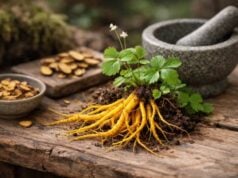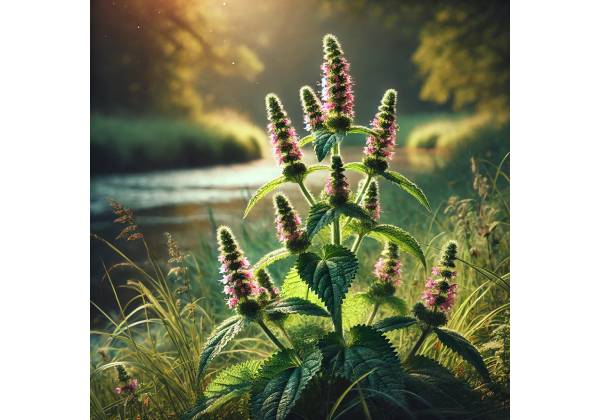
Chinese motherwort (Leonurus japonicus), known in traditional East Asian practice as Yi Mu Cao, is an herb best recognized for its relationship with women’s health and circulation. It has a long history of use for menstrual irregularity, cramps linked with “stagnation” patterns, and postpartum recovery support—especially when the goal is to encourage uterine tone and normal lochia flow under professional guidance. Modern research has helped clarify why: Chinese motherwort contains distinctive alkaloids and related compounds that can influence uterine smooth muscle activity, blood vessel signaling, oxidative stress pathways, and inflammatory mediators.
At the same time, it is not a casual “daily tonic.” The same properties that make Chinese motherwort useful in some contexts can make it inappropriate in others, particularly during pregnancy or when bleeding risk is a concern. This guide walks you through what Chinese motherwort is, what it contains, what it may realistically help with, how it is commonly prepared, and how to approach dosing and safety with the caution this herb deserves.
Key Facts for Chinese Motherwort
- Often used for menstrual discomfort and postpartum recovery support when “blood stasis” patterns are suspected.
- Common traditional decoction range is about 9–30 g/day of dried aerial parts (professional guidance recommended).
- Avoid during pregnancy due to uterine-stimulating potential.
- Use caution with anticoagulants, antiplatelet drugs, and heavy menstrual bleeding.
- People with bleeding disorders or upcoming surgery should generally avoid concentrated forms.
Table of Contents
- What is Chinese motherwort?
- Key ingredients and actions
- Does it help menstrual symptoms?
- Circulation and heart support
- How to use Chinese motherwort
- How much per day?
- Safety, interactions, and evidence
What is Chinese motherwort?
Chinese motherwort (Leonurus japonicus) is a flowering herb in the mint family (Lamiaceae). In traditional Chinese medicine (TCM), the aerial parts (leafy tops and stems) are most commonly used after drying, while some preparations may emphasize specific fractions or standardized extracts. In classical language, it is often described as supporting “blood circulation” and “regulating menstruation,” with additional traditional uses related to swelling and urination patterns. In practical modern terms, it is best known for gynecologic applications and postpartum care—usually as part of a broader plan rather than a stand-alone solution.
A frequent point of confusion is the name “motherwort.” European motherwort (Leonurus cardiaca) and Chinese motherwort (Leonurus japonicus) are related plants, but they are not interchangeable. They differ in traditional indications, common preparation styles, and chemical emphasis. European motherwort is often discussed in the context of nervous system tension and palpitations, while Chinese motherwort is more strongly associated with menstrual and postpartum contexts. If you are buying a product, confirm the botanical name on the label, not just the common name.
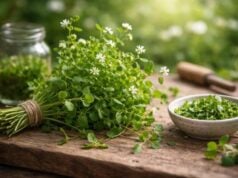
Another important safety issue is plant identification. Several wild plants resemble “chervil-like” or “parsley-like” leaves, and foraging mistakes can be dangerous. Chinese motherwort products should come from reputable sources that test for identity and contaminants (heavy metals, pesticides, and adulteration). This matters because Chinese motherwort is sometimes used in concentrated or clinical-style preparations in some regions, and quality should match that level of seriousness.
From a user perspective, it helps to think of Chinese motherwort as a targeted herb:
- Most appropriate when symptoms match its traditional pattern logic (for example, cramping with a “stuck” sensation, dark clots, or postpartum recovery needs under supervision).
- Less appropriate as a generic wellness tea without a clear goal.
- Inappropriate when pregnancy is possible, bleeding risk is high, or medication interactions are likely.
If you approach Chinese motherwort with the same respect you would give any bioactive botanical, it becomes easier to use it well: focus on the right context, the right form, and the right safety boundaries.
Key ingredients and actions
Chinese motherwort is chemically complex, and its effects come from multiple compound families working together rather than a single “magic ingredient.” The two most discussed groups are alkaloids (especially leonurine-related compounds) and betaine-type constituents (often discussed alongside stachydrine/proline betaine), supported by flavonoids, phenolic acids, diterpenoids, and other secondary metabolites. The exact profile varies by plant part, harvest time, processing, and extraction method—one reason tea, decoctions, tinctures, and standardized products can behave differently.
Key compound groups commonly discussed in modern literature include:
- Alkaloids (leonurine and related): Often linked with uterine activity, vascular signaling, antioxidant behavior, and modulation of inflammatory pathways. In preclinical work, these compounds are frequently explored for effects on endothelial function, oxidative stress balance, and tissue protection under strain.
- Betaine-type constituents (including stachydrine/proline betaine discussions): Studied for broad cardiometabolic and vascular relevance, including anti-inflammatory signaling, oxidative stress modulation, and tissue-protective effects in experimental models.
- Flavonoids and phenolic acids: Common in many herbs, these compounds support antioxidant capacity and may influence inflammatory mediators in a gentle, cumulative way when used at food-like exposures. Extract-level exposures can be higher and less predictable.
- Terpenoids and diterpenes: Often contribute to antimicrobial and signaling properties in plants; in humans, they are mainly relevant as part of the herb’s overall pharmacology.
How these compounds translate into “medicinal properties” can be summarized in a few practical mechanisms:
- Uterine smooth muscle effects: Chinese motherwort is often described as supporting uterine tone and contractility, which helps explain postpartum and menstrual-related traditional use. The same property also explains a major safety boundary: pregnancy.
- Microcirculation and vascular signaling: Many studies focus on pathways related to nitric oxide signaling, oxidative stress balance, and endothelial function. This does not automatically mean it “treats heart disease,” but it does fit the traditional “promote circulation” framing.
- Inflammation and oxidative stress modulation: Rather than acting like a single anti-inflammatory drug, Chinese motherwort appears to influence multiple signaling nodes (in experimental settings), which may support comfort and tissue resilience in some contexts.
- Fluid balance traditions: Some traditional use references diuretic-like support. This is usually mild in herbal practice, but it becomes more relevant if someone is on medications that affect blood pressure or fluid status.
The core takeaway is that Chinese motherwort is bioactive. The more concentrated the form (strong extracts, injections, high-dose capsules), the more you should treat it like a therapeutic agent rather than a culinary herb.
Does it help menstrual symptoms?
Chinese motherwort is most commonly associated with menstrual discomfort and cycle irregularity in traditional East Asian practice, especially when symptoms are framed as “blood stasis” or impaired flow. Translating that into modern symptom language, people often reach for it when they experience cramping with a heavy, dragging sensation, dark or clotted flow, or cycles that feel “stuck” and slow to start. It is also discussed for postpartum recovery in supervised contexts, where encouraging normal uterine involution and lochia flow is part of care.
Where it may be a reasonable fit
Chinese motherwort is typically considered when the goal is to support normal physiologic movement rather than suppress symptoms. In practical terms, it may be used to:
- Support comfort in dysmenorrhea patterns where cramping is prominent
- Encourage more regular flow patterns when cycles feel delayed or sluggish
- Support postpartum recovery under professional oversight, particularly in traditions that monitor lochia, uterine tone, and overall recovery markers
Many of these uses are supported more strongly by traditional practice and mechanistic research than by large, modern, placebo-controlled human trials of oral herb forms. That matters for expectations: you are more likely to notice subtle, pattern-specific support than a dramatic, immediate painkiller-like effect.
Where caution is essential
Menstrual symptoms can be a signal of underlying conditions that should not be self-treated without evaluation, including endometriosis, fibroids, thyroid disorders, anemia from heavy bleeding, or pelvic inflammatory conditions. Chinese motherwort should not be used to “push through” severe pain or unusually heavy bleeding.
It is also important to recognize that Chinese motherwort is not primarily a “hormone herb” in the way some people use that term. If your main goal is cycle regulation through endocrine signaling (for example, luteal phase support or prolactin-related issues), a different herb is often discussed in that niche. For a comparison point, you can review vitex for hormone-balancing applications and consider whether your symptoms are more hormone-patterned or more flow-and-stasis patterned.
Practical, realistic outcomes
When it helps, the most common “real-life” improvements people report are:
- Less congested, heavy, or stuck feeling in the pelvis
- More predictable onset of flow (when irregularity is mild)
- A smoother postpartum recovery experience when used within a supervised plan
If you need fast pain control, or if symptoms are severe, treat Chinese motherwort as supportive at best—not as primary treatment. Symptom tracking, medical evaluation when indicated, and safe boundaries matter more than any single herb choice.
Circulation and heart support
Chinese motherwort is traditionally described as supporting circulation, and modern research often explores this through the lens of vascular signaling, oxidative stress pathways, and inflammation balance. For readers, the key is to translate “circulation support” into realistic goals: better comfort related to sluggish flow patterns, support for microvascular resilience, and complementary lifestyle alignment—not treatment of heart disease.
What “circulation support” can realistically mean
In a practical wellness context, circulation support may show up as:
- A feeling of reduced heaviness or congestion during the menstrual cycle
- Support for normal vascular tone and endothelial function (as part of a broader plan)
- A mild supportive effect on fluid balance in some traditional frameworks
Research on leonurine-related compounds and stachydrine-type constituents often highlights antioxidant and anti-inflammatory pathways that are also relevant in cardiometabolic discussions. These findings are promising as mechanisms, but they do not replace clinical evidence for outcomes like preventing heart attack, treating hypertension, or reversing vascular disease.
Cardiometabolic and vascular signaling themes in research
Across experimental models, researchers commonly explore:
- Endothelial protection under oxidative stress
- Nitric oxide-related signaling (vascular relaxation pathways)
- Modulation of inflammatory cytokines and oxidative markers
- Tissue-protective effects in cardiac and vascular strain models
This helps explain why some people consider Chinese motherwort when they are also working on stress, sleep, activity, and diet. Still, the strongest evidence-based steps for heart health remain lifestyle and medical care when needed.
How to integrate it thoughtfully
If you are considering Chinese motherwort for circulation-themed goals, it helps to anchor your plan to the basics:
- Daily movement (even short walks)
- Adequate hydration and mineral intake
- Fiber-forward eating patterns
- Sleep consistency and stress regulation
Chinese motherwort, if used, should be a small part of a larger picture. If your primary interest is heart support with a deeper human evidence base in herbal literature, you may also compare it with hawthorn for cardiovascular support, which is commonly discussed in a different clinical tradition and symptom set.
When to avoid the “circulation” framing
Avoid using circulation-promoting herbs as a DIY approach if you:
- Have unexplained bruising or bleeding
- Are taking anticoagulants or antiplatelet drugs
- Have upcoming surgery
- Have diagnosed bleeding disorders
In those cases, “supporting circulation” can overlap with bleeding risk in ways that are not worth guessing about.
How to use Chinese motherwort
Chinese motherwort can be prepared in several ways, and the form you choose strongly influences both effects and safety. Traditional practice often emphasizes decoctions (simmered preparations) using dried aerial parts, while modern products may offer granules, tinctures, capsules, or standardized extracts. In hospital settings in some regions, specialized preparations such as injections have been used, but those are not comparable to home use and should not be treated as a model for self-dosing.
Common forms and what they are best for
- Decoction (simmered tea): Often considered the classic method. Simmering can extract a broader range of water-soluble constituents. This is typically used for short courses aligned with symptom timing, not year-round “maintenance.”
- Infusion (steeped tea): Faster and milder than a decoction. It may be more appropriate for people who want gentler exposure, but it can also be less consistent in strength.
- Granules: Concentrated, standardized-to-some-degree powders designed to dissolve in hot water. They can be easier for dose consistency than loose herb.
- Tincture: A liquid extract (often alcohol-based). Convenient for dosing, but strength varies widely by ratio and product quality.
- Capsules or tablets: Useful for convenience, but quality varies. Look for clear labeling of plant part, extraction ratio (if applicable), and daily serving size.
Preparation basics for tea and decoction
If you are using dried aerial parts:
- Rinse the herb quickly if it is loose and dusty.
- For a decoction, simmer gently (not a rolling boil) and keep the lid slightly ajar to prevent overflow.
- For a milder infusion, steep covered to preserve volatile fractions, then strain.
- Keep strength moderate unless you are working with a clinician or trained herbalist.
Many traditional approaches combine Chinese motherwort with other herbs rather than using it alone, especially when the goal is to balance warmth, movement, and comfort. For example, some people pair movement-focused herbs with gentle warming botanicals when cramps feel cold and tight. If you want a familiar culinary comparison for “warming support,” see ginger’s active compounds and common uses, while remembering that ginger is generally food-like in safety compared with motherwort’s stronger gynecologic profile.
Quality and sourcing tips that actually matter
- Prefer products that list Leonurus japonicus clearly.
- Avoid “proprietary blends” that hide ingredient amounts if you are trying to assess effect and safety.
- Choose suppliers that test for heavy metals and pesticide residues.
- Avoid essential oil use unless supervised; concentrated volatile fractions are not the same as traditional tea.
The simplest rule is this: the more concentrated the form, the more carefully you should approach dose, duration, and interactions.
How much per day?
Dosing for Chinese motherwort depends on the form, the reason you are using it, and your safety profile. Because products vary widely, there is no single universally “correct” dose. A safer and more useful approach is to understand typical traditional ranges, then start on the conservative end and reassess—preferably with professional guidance, especially for postpartum or complex menstrual situations.
Traditional dried herb ranges (decoction)
In many traditional references, the dried aerial parts are used in a broad range that often falls around:
- About 9–30 g per day of dried herb as a decoction, usually divided into 1–2 servings
This range is intentionally wide because the “right” dose is traditionally adjusted to the person and the pattern. If you are new to the herb, start low within that range and avoid long, open-ended use.
Tea-style infusion ranges
For a milder approach:
- 1–2 g of dried herb per cup (about 250 mL), steeped 10–15 minutes
- 1–2 cups daily for short periods, depending on tolerance and goal
Infusions tend to be less intense than decoctions, but they can still be bioactive.
Tinctures, granules, and capsules
Because concentrations vary, follow product labeling and prioritize transparency:
- Tincture: commonly used in small measured doses (often a few mL per dose), but ratios vary widely
- Granules: dosing depends on concentration; many products provide a gram-based daily amount
- Capsules/extracts: prefer products that list the daily amount of herb equivalent or extract ratio
If a product highlights a specific compound (for example, leonurine), treat it as more pharmacologically targeted and use extra caution with duration and interactions.
Timing, cycle strategy, and duration
Many people time use to symptom windows rather than using it continuously:
- Menstrual discomfort: short courses leading up to the period and during the first days of flow are sometimes used in tradition, depending on symptom pattern.
- Irregular cycles: longer courses are sometimes used, but persistent irregularity warrants medical evaluation.
- Postpartum: do not self-manage; postpartum bleeding patterns can change quickly and need clinical oversight.
A reasonable self-checkpoint is 2–4 weeks for tea or moderate-dose preparations. If you do not see a meaningful, consistent benefit, continuing indefinitely usually increases risk more than reward.
Safety, interactions, and evidence
Chinese motherwort sits firmly in the “use with intention” category. It has credible traditional indications and growing modern research interest, but its strongest effects overlap with areas where safety matters most: uterine activity and bleeding risk.
Who should avoid Chinese motherwort
Avoid Chinese motherwort (especially concentrated forms) if you are:
- Pregnant or trying to conceive (uterine-stimulating potential is a major concern)
- Experiencing unusually heavy menstrual bleeding, unexplained bleeding, or suspected miscarriage
- Diagnosed with a bleeding disorder
- Preparing for surgery or dental procedures where bleeding risk matters
- Using high-dose extracts without clinician supervision
Breastfeeding is a gray area: culinary-level exposure is not the same as medicinal dosing, and postpartum situations can be complex. If you are breastfeeding and considering medicinal use, involve a clinician.
Medication interactions to take seriously
Chinese motherwort may interact with:
- Anticoagulants and antiplatelet agents (for example, warfarin, apixaban, clopidogrel, aspirin at therapeutic doses): increased bleeding risk is the primary concern.
- NSAIDs (for example, ibuprofen, naproxen): combined effects may increase gastrointestinal or bleeding-related risk in some people.
- Blood pressure medications: if you experience dizziness or low blood pressure symptoms, stop and reassess with a clinician.
- Uterotonic or hormone-related therapies: postpartum and gynecologic treatments require professional coordination.
Possible side effects
Side effects are more likely with higher doses or concentrated products. Reported concerns include:
- Cramping or increased uterine sensation (especially if dosing is too strong or poorly timed)
- GI upset (nausea, loose stool)
- Dizziness or lightheadedness in sensitive individuals
- Allergic reactions (rare, but possible with any herb)
Stop use and seek medical care urgently for heavy bleeding, severe abdominal pain, fainting, swelling of the face or throat, or breathing difficulty.
What the evidence actually says
Modern evidence for Chinese motherwort is uneven across forms:
- Mechanistic and compound-level research (leonurine and stachydrine-related work) is substantial and helps explain traditional use patterns.
- Clinical evidence is more developed for certain medical preparations used in specific settings (for example, postpartum hemorrhage prevention protocols in some regions), but these do not directly translate to home tea use.
- High-quality, large, placebo-controlled trials of oral herb forms for menstrual symptoms are still limited relative to the herb’s popularity.
The most balanced conclusion is this: Chinese motherwort has plausible mechanisms and selective clinical application evidence, but it should be used as a targeted, short-course herb with clear safety boundaries—not as a daily, long-term supplement.
References
- Leonurine: a comprehensive review of pharmacokinetics, pharmacodynamics, and toxicology – PMC 2024 (Review)
- Exploring stachydrine: from natural occurrence to biological activities and metabolic pathways – PMC 2024 (Review)
- Motherwort Injection for Preventing Uterine Hemorrhage in Women With Induced Abortion: A Systematic Review and Meta-Analysis of Randomized Evidence – PMC 2022 (Systematic Review and Meta-Analysis)
- Effects of Motherwort Injection Versus Intramuscular Oxytocin for Preventing Postpartum Hemorrhage Among Women Who Underwent Cesarean Section – PubMed 2022 (Clinical Study)
- Leonurus japonicus (Chinese motherwort), an excellent traditional medicine for obstetrical and gynecological diseases: A comprehensive overview – PubMed 2019 (Review)
Disclaimer
This article is for educational purposes and does not replace medical advice, diagnosis, or treatment. Chinese motherwort can affect uterine activity and may increase bleeding risk, especially in concentrated forms or when combined with certain medications. Do not use Chinese motherwort during pregnancy, and seek professional guidance for postpartum use, fertility concerns, heavy menstrual bleeding, or chronic pelvic pain. If you take anticoagulants, antiplatelet medications, or have a bleeding disorder, consult a qualified clinician before using this herb. Seek urgent medical care for severe abdominal pain, heavy bleeding, fainting, or signs of an allergic reaction.
If you found this article helpful, please consider sharing it on Facebook, X (formerly Twitter), or your favorite platform so others can make informed, safety-first decisions.