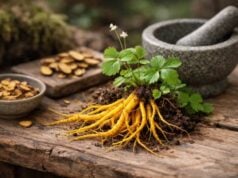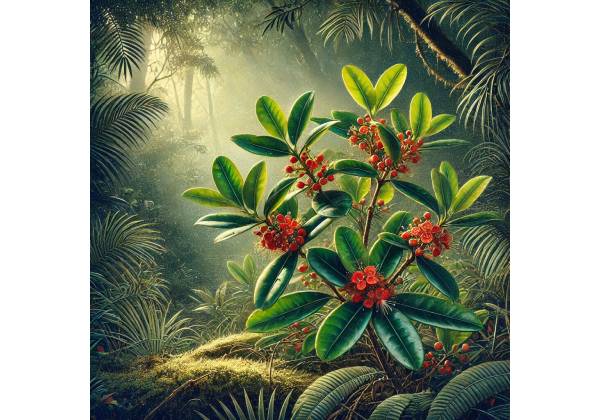
Christmas bush (Alchornea floribunda) is a forest shrub or small tree native to tropical Africa, traditionally valued both as a practical household remedy and as a potent ritual plant. Depending on the part used, it has been prepared as a leaf decoction for digestive upsets, applied topically for minor skin problems and wounds, or used more controversially as a stimulating intoxicant from the root bark. That “two-faced” profile is exactly why it deserves careful, informed handling.
In modern herbal conversations, Christmas bush is most often discussed for its antimicrobial and anti-inflammatory potential, and for the alkaloids and tannins that may explain its strong taste and noticeable effects. But it is not a casual herb: reports of intense stimulation followed by deep depression, and the possibility of dangerous effects at higher doses, place safety at the center of any responsible use. This guide focuses on what it is, what it contains, what it may help with, how it is used in practice, and how to approach dosage and risk with a conservative, evidence-aware mindset.
Quick Overview for Safe Use
- May support short-term topical care for minor skin irritation when used conservatively.
- Lab research suggests antimicrobial and anti-inflammatory activity, but human evidence is limited.
- Typical conservative tea range is 1–2 g dried leaf per 250 mL, up to 1 cup daily.
- Root bark products can cause intense stimulation followed by severe depression and should be avoided.
- Avoid if pregnant or breastfeeding, under 18, or if you have heart or blood pressure conditions.
Table of Contents
- What is Christmas bush
- Key compounds in Alchornea floribunda
- Potential health benefits and uses
- How to use Christmas bush
- How much and when to take it
- Side effects interactions and who should avoid
- What the research actually shows
What is Christmas bush
Christmas bush in this article refers specifically to Alchornea floribunda (family Euphorbiaceae). It grows in rainforest understorey and forest edges across parts of West and Central Africa. In daily life, it has been harvested from the wild or home gardens and used fresh, dried, or powdered. Depending on region and language, you may also see it called “niando” or “alan,” with “alan” often appearing in discussions of ritual use.
One practical complication is that “Christmas bush” is not a single-species name. In some contexts, the same common name is used for other plants—sometimes even for close botanical relatives. This matters because the strongest effects attributed to A. floribunda are dose-sensitive and can be risky. If you are purchasing a product rather than harvesting a verified plant, look for clear botanical labeling (Alchornea floribunda), part used (leaf vs root bark), and a reputable supplier with batch testing. Avoid any product marketed as “hallucinogenic,” “legal high,” or “iboga substitute,” since that tends to correlate with higher-risk preparations and poor quality control.
From a traditional perspective, A. floribunda sits in two overlapping categories:
- Household medicine: leaf decoctions for diarrhea or stomach discomfort; topical applications for ringworm, eczema, and minor wounds; and other region-specific uses.
- Stimulant and intoxicant use: dried root bark powder or macerations in alcohol-like local beverages as a tonic—an approach associated with strong central nervous system effects.
Because the same species can be used in very different ways, it helps to think “part-first.” Leaf preparations are generally discussed as milder and more practical; root bark preparations are the ones most often associated with intense stimulation and a difficult “come-down.” Any responsible discussion of benefits has to keep that distinction front and center.
Key compounds in Alchornea floribunda
Christmas bush contains several families of plant chemicals that may help explain why it has both everyday herbal uses and more dramatic stimulant effects. The most talked-about group is its alkaloids, alongside tannins and a broader set of polyphenols and other secondary metabolites.
Alkaloids
The plant is known for imidazopyrimidine alkaloids, commonly described as including alchorneine as a major alkaloid in stem bark and root bark, with isoalchorneine and alchorneinone also reported in certain parts. Alkaloids often have noticeable effects at relatively small doses, especially on the nervous system and cardiovascular system. That aligns with traditional descriptions of strong stimulation and with warnings that effects vary by dosage, individual sensitivity, and habit.
A key practical point: the alkaloid profile can differ by plant part (leaf vs stem bark vs root bark) and by preparation (water decoction vs alcohol maceration vs powder). That variability is one reason standardized dosing is difficult and why cautious use matters.
Tannins and astringent constituents
Leaves and bark are often described as relatively tannin-rich. Tannins have an astringent feel (drying, tightening) and can bind to proteins. In traditional herbal logic, that profile often maps to uses like:
- soothing “weeping” skin irritation,
- supporting minor wound care,
- and helping settle watery stools.
Tannins can also irritate sensitive stomachs in higher concentrations, so “more” is not always “better.”
Polyphenols and anti-inflammatory candidates
Across Alchornea species, researchers frequently investigate flavonoids and related phenolics for antioxidant and anti-inflammatory behavior in lab settings. In A. floribunda, these may contribute to observed activity in topical or immune-related assays. Still, it’s important to treat these as mechanistic clues, not guarantees of clinical benefit.
If you want a simple way to interpret the chemistry: leaf preparations tend to emphasize tannins and polyphenols, while root bark preparations emphasize alkaloids—and that difference largely drives the safety profile.
Potential health benefits and uses
Christmas bush is best understood through the lens of traditional use plus early-stage research. Many of its reported benefits come from ethnobotanical records and laboratory studies rather than well-powered human trials. With that in mind, here are the most plausible and commonly discussed use areas, framed conservatively.
Topical support for minor skin issues
Traditional practice includes rubbing leaf or root sap on affected areas or applying leaf pulp to minor wounds and common skin problems. The logic is straightforward: astringent tannins plus antimicrobial activity may help reduce surface irritation and support clean healing. Practical, low-risk use tends to focus on diluted, external applications, such as a cooled leaf infusion used as a compress.
Antimicrobial potential
Lab studies have evaluated extracts from different plant parts against common bacteria. While this is not the same as proving a treatment in humans, it supports why the plant appears in traditional approaches to skin, respiratory, urinary, and gastrointestinal complaints. The key limitation is that lab potency does not automatically translate to safe, effective internal use.
Inflammation and pain-related traditions
Christmas bush leaves are used in some settings for aches (including toothache and rheumatism-like complaints). Plant compounds with anti-inflammatory behavior could plausibly contribute to perceived relief—especially topically. If inflammation support is your main goal, it’s usually safer to start with better-studied options; for example, evidence-backed boswellia approaches for inflammatory discomfort may offer a clearer risk-benefit profile.
Digestive upsets and diarrhea
Leaf decoctions are traditionally used for diarrhea and stomach discomfort. Here, tannins may contribute by reducing intestinal “seepiness” and calming watery stools. The practical caution is dehydration risk: persistent diarrhea should be treated with fluids and medical evaluation when appropriate, rather than escalating herbal dosing.
Stimulant and aphrodisiac claims
Root bark use as a stimulating intoxicant and aphrodisiac is widely reported. However, the same tradition emphasizes that effects can become unpleasant or dangerous at higher doses. From a modern safety perspective, this is the least appropriate reason to experiment with Christmas bush, especially in concentrated root preparations.
How to use Christmas bush
Because Christmas bush can mean very different things depending on the part used, the safest approach is to start with low-intensity, leaf-based preparations and to avoid root bark products unless supervised by a qualified professional who understands the risks and sourcing issues.
Common forms
- Dried leaf (tea or decoction): typically used for short-term digestive support or general traditional “tonic” use in mild form.
- Fresh leaf (poultice): leaf pulp applied to minor skin irritation or small superficial wounds.
- Washed compress: cooled tea used externally on skin.
- Root bark powder or maceration: traditionally used for stimulant and aphrodisiac effects; this is the highest-risk category.
Leaf tea for conservative use
A practical method is an infusion rather than a long-boiled decoction:
- Use dried, properly identified leaf material.
- Add hot water, cover, and steep 10–15 minutes.
- Strain and drink plain. Avoid mixing with alcohol or other stimulants.
If you are new to the herb, start with a weaker tea and assess tolerance before considering any increase.
Topical compress or wash
For skin use, a cooled infusion can be used as a compress:
- Brew a mild tea, let it cool completely, then apply with clean cloth for 10–15 minutes.
- Patch-test first on a small area to check for irritation.
- Avoid applying to deep wounds, punctures, or signs of serious infection.
Some people compare this style of use to other topical botanicals. If you want a clearer, widely discussed topical option, tea tree topical uses and limitations can be a helpful reference point—especially for understanding dilution and skin sensitivity.
Uses that deserve extra caution
Traditional records include root sap as eye drops and use with scarification practices. These carry meaningful risk (infection, contamination, dosing unpredictability) and are not recommended for home use.
In short: leaf-based, external, and diluted preparations are the safest “starting lane.” Root bark products sit in a very different risk category.
How much and when to take it
There is no universally established, clinically validated dosing standard for Christmas bush. That means the most responsible guidance is conservative and use-case specific, with clear stop rules.
Conservative leaf tea range
For adults who are not pregnant, not breastfeeding, and without significant heart, blood pressure, psychiatric, kidney, or liver conditions, a cautious range often used for herbal teas is:
- 1–2 g dried leaf per 250 mL hot water, steep 10–15 minutes
- Up to 1 cup daily to start, for 3–7 days for a short-term goal
If you notice agitation, dizziness, nausea, unusual fatigue, palpitations, headache, or mood changes, stop and do not increase the dose.
Timing
- If using internally, take earlier in the day until you know how it affects you.
- Avoid combining with caffeine, nicotine, or other stimulants at first, because overlap can increase jitteriness or heart symptoms.
Topical use
For compresses or washes:
- Use a mild infusion (similar strength to tea).
- Apply once daily initially.
- Stop if redness, burning, itching, or swelling increases.
Root bark dosing and why it is risky
Traditional references describe one teaspoon of root bark powder daily for impotence in some settings. This should not be interpreted as “safe for everyone.” Root bark is also described as producing intense excitement followed by deep depression depending on dose and individual sensitivity, and severe outcomes have been reported. Because the most dramatic risks cluster around the root bark, this guide treats root preparations as inappropriate for self-experimentation.
When to stop and seek help
Stop using Christmas bush and seek medical advice if symptoms are severe, if a condition worsens, or if you have signs of dehydration, infection, chest pain, fainting, or major mood disturbance. Herbs are best used as supportive tools, not as substitutes for evaluation when red flags appear.
Side effects interactions and who should avoid
Christmas bush has a wider safety range when used as a mild leaf preparation, but it becomes significantly riskier with concentrated extracts, alcohol macerations, or root bark products. The safest way to think about it is: the more “stimulating” the preparation, the more carefully you should avoid it.
Possible side effects
Depending on part and dose, reported or plausible side effects include:
- Nervous system effects: agitation, restlessness, insomnia, anxiety, or an uncomfortable “crash” in mood after stimulation
- Mood changes: unusual low mood, irritability, or emotional blunting
- Cardiovascular effects: palpitations, dizziness, blood pressure swings, headache
- Digestive effects: nausea, stomach upset, constipation or worsening cramps (tannins can irritate some people)
Because some traditional accounts describe intense stimulation followed by deep depression (sometimes severe), mood-related effects deserve special respect.
Interactions to consider
Avoid combining Christmas bush—especially root bark—with:
- Stimulants: high caffeine intake, nicotine, stimulant medications
- Blood pressure drugs: unpredictable opposing effects can complicate management
- Psychiatric medications: especially those affecting serotonin, norepinephrine, or dopamine
- Alcohol and sedatives: increased impairment risk and harder-to-predict mood effects
If you are comparing it to other herbs with known interaction profiles, kava safety considerations can be a useful model for how seriously to treat liver and medication interactions in plant-based products—though the risks and mechanisms are not the same.
Who should avoid Christmas bush
Avoid use (internal and usually topical) if you are:
- Pregnant, trying to conceive, or breastfeeding
- Under 18
- Living with heart rhythm problems, uncontrolled blood pressure, or a history of fainting
- Managing anxiety disorders, depression, bipolar disorder, psychosis, or substance use disorder
- Taking anticoagulants, blood pressure medications, or psychiatric medications without clinician guidance
- Using it for eye conditions or applying it to open, deep, or infected wounds
Quality and identification risks
Mislabeling, contamination, and plant mix-ups are realistic concerns. Only use products with clear botanical identity and part labeling. If you cannot verify what you have, the safest choice is not to use it.
What the research actually shows
The evidence picture for Christmas bush is best described as promising but incomplete. There is meaningful documentation of traditional use and several laboratory studies that explore mechanisms, yet there is a shortage of rigorous human trials that would let us define reliable benefits, dosing standards, and long-term safety.
Where the evidence is strongest
- Ethnobotanical documentation: Multiple sources record consistent use patterns (digestive complaints, topical wound and skin care, stimulant root bark use, and occasional ritual contexts).
- Laboratory antimicrobial work: Extracts from different plant parts have shown activity against several bacteria in controlled settings, supporting why it is traditionally used for infection-adjacent complaints.
- Mechanistic plausibility: Alkaloids, tannins, and polyphenols provide reasonable hypotheses for stimulation, astringency, and inflammation-related effects.
Where the evidence is weak or missing
- Human clinical trials: Reports of “clinical experiments” for conditions like hepatitis exist, but they are not widely available in a form that allows confident clinical interpretation (study design, dose, outcome measures, and safety monitoring).
- Standardization: Chemical composition varies by plant part, preparation, and likely growing conditions. Without standardization, dosing guidance remains approximate.
- Long-term safety: There is not enough high-quality evidence on chronic use, especially for root bark products.
How to use this evidence in real life
A practical interpretation is:
- Treat Christmas bush as a high-variability traditional botanical, not a standardized supplement.
- If you choose to use it at all, focus on mild leaf preparations and short timeframes.
- Do not treat stimulant or aphrodisiac claims as “validated,” especially given the risk profile.
If your goal is liver support or recovery, consider options with clearer clinical discussion and safety monitoring. For example, milk thistle evidence for liver support may offer a more research-accessible starting point, alongside professional care.
The bottom line: the plant’s traditional role and early research justify interest, but not casual experimentation—particularly not with root bark products.
References
- Self-directed and prosocial wound care, snare removal, and hygiene behaviors amongst the Budongo chimpanzees 2025 (Observational Study)
- Studies on the iboga cults. IV. The ethnobotanical complex 2025 (Ethnobotany)
- Medicinal plants used in the traditional management of infectious respiratory diseases in Burkina Faso and Cameroon over a twenty-five-year period (1999–2023): A review 2024 (Review)
- Antibacterial activity of the roots, stems and leaves of Alchornea floribunda 2014 (Research Article)
- Alchornea floribunda (PROTA) – Pl@ntUse 2014 (Database Monograph)
Disclaimer
This article is for educational purposes only and does not provide medical advice, diagnosis, or treatment. Herbal products can vary widely in strength and purity, and Christmas bush (Alchornea floribunda) may cause serious adverse effects—especially when using root bark, concentrated extracts, or products of uncertain identity. If you are pregnant, breastfeeding, have a medical condition, or take prescription medications, consult a qualified clinician before using any herbal product. Seek urgent medical care for severe symptoms, chest pain, fainting, significant mood changes, or signs of infection or dehydration.
If you found this guide useful, consider sharing it with friends or colleagues on Facebook, X (formerly Twitter), LinkedIn, or your favorite community forum so others can make safer, better-informed choices.